Things to do
12-
Bo-Kaap
Steep cobbled streets above the city centre hold the painted houses of the Cape Malay quarter, settled by enslaved Muslims brought from Southeast Asia and by their descendants. A small museum on Wale Street explains the architecture and the community. Houses here are lived in, so photographs are taken from the street, and a cooking class is the better way in.
-
Boulders Beach
A colony of African penguins nests among granite boulders on the False Bay shore at Simon's Town, watched from boardwalks that keep the birds undisturbed. Swimming is possible in the sheltered coves alongside. Entry is ticketed and the site fills by mid morning in summer, so arriving at opening time makes the difference.
-
Camps Bay
White sand and a strip of restaurants face the Twelve Apostles ridge on the Atlantic side, filling through the afternoon and emptying at sunset. The water here stays cold enough that swims are short. Parking on Victoria Road is scarce in season, and the tidal pools towards Clifton suit children better than the open beach.
-
Cape of Good Hope
Signposted as the southwestern tip of Africa, this rocky headland sits inside a reserve of fynbos, ostriches and empty beaches at the end of the peninsula. A funicular and a steep path climb to the old Cape Point lighthouse, where the wind usually wins. Baboons raid open cars and unguarded food, and the drive down and back takes a full day.
-
Chapman's Peak Drive
Cut into the cliff face between Hout Bay and Noordhoek, this toll road bends around a series of buttresses with the sea directly below. Laybys allow stops for the view down to the surf. Rockfall and wind close the road without much warning, and the Cape Town Cycle Tour shuts it for a Sunday each March.
-
District Six Museum
Inside a former Methodist church on Buitenkant Street, a hand drawn street map across the floor records the district bulldozed under apartheid after it was declared white in 1966. Former residents have written their own addresses onto it. Guides are often ex residents themselves, and an hour here changes how the empty ground uphill reads.
-
Kirstenbosch
Planted on the eastern slopes of Table Mountain, this botanical garden grows southern African species alone, from protea beds to a cycad amphitheatre. A curved walkway called the Boomslang lifts walkers into the tree canopy. Spring brings the fynbos into flower, and the summer Sunday concerts on the lawn sell out well ahead of the date.
-
Lion's Head
Spiralling up a cone between Table Mountain and the sea, the path to this summit takes a couple of hours and ends on chains and staples bolted into rock. Full moon evenings draw a procession of head torches. Anyone uneasy with exposure can stop at the contour path and still take in the bowl and the Atlantic.
-
Robben Island
Ferries leave from the Waterfront for the low island in Table Bay where Nelson Mandela spent eighteen years in a cell measuring a few paces across. Former prisoners guide the prison section, which is what gives the tour its weight. Sailings are cancelled in heavy swell, so an early booking and a spare day in reserve both help.
-
Table Mountain
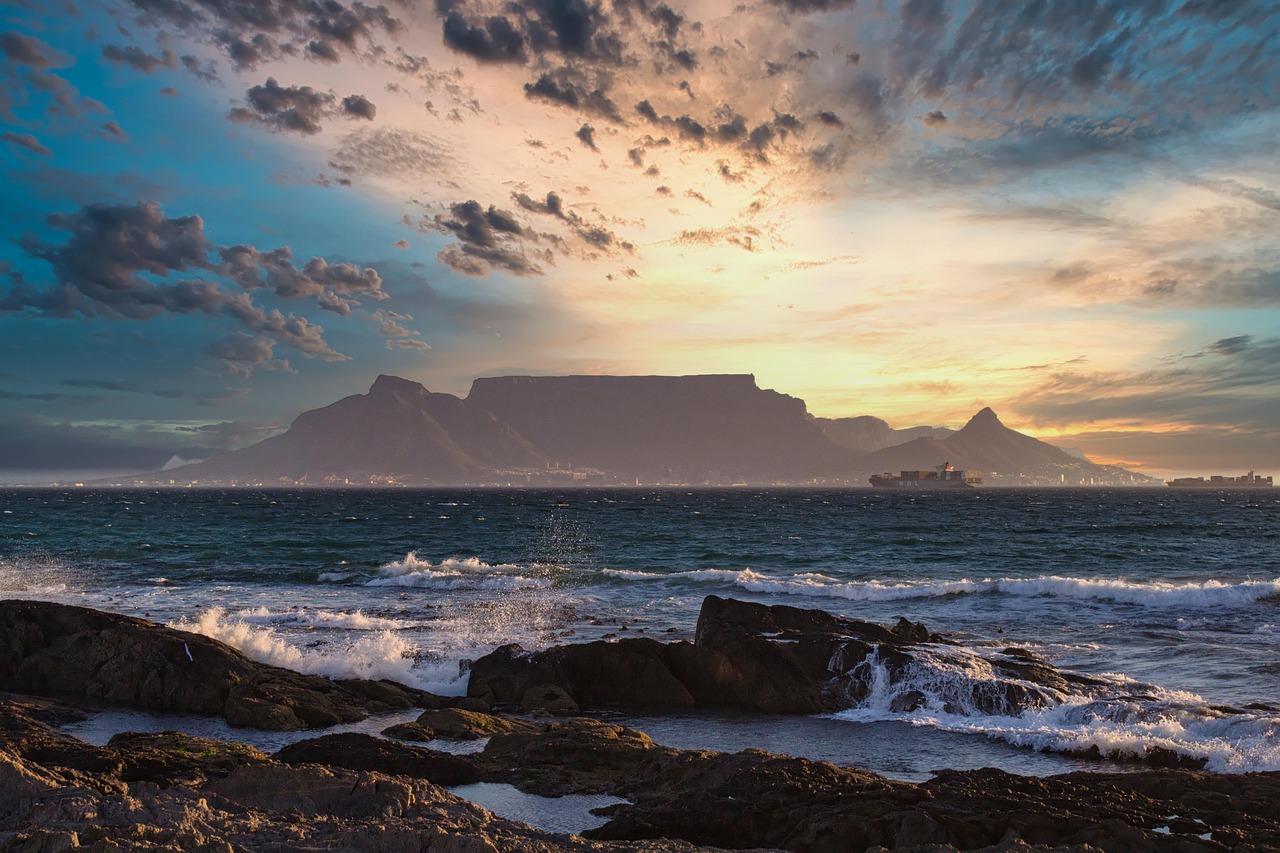
A flat sandstone summit rises above the city bowl, reached by a rotating cableway from Tafelberg Road or walked up through Platteklip Gorge. Wind closes the cableway often, sometimes for days, so the mountain is worth taking on the first clear morning of a trip. The tabletop carries fynbos, dassies and a network of paths across its plateau.
-
V&A Waterfront
Cape Town's working harbour was rebuilt around its Victorian basins, and tugs and seals still share the water with restaurants, a wheel and the ferry quay for Robben Island. It stays open late and runs busy through the summer holidays. The Watershed hall gathers craft and design under one roof, and the aquarium sits at the far end.
-
Zeitz MOCAA
Forty two concrete grain silos at the Waterfront were carved into a vaulted atrium to house contemporary art from Africa and its diaspora. Galleries run over nine floors, and the rooftop sculpture garden looks across the harbour to the mountain. Two hours covers the collection, and the cut atrium itself is worth the walk in.