 Submit a photo
Ninety seconds on Kruger National Park
As of November 2026, entrance gates open at 05:30 from October to March and at 06:00 from April to September. They close at 18:30 from November to February, at 18:00 in March, April and August to October, and at 17:30 from May to July. Times can change without notice, so the park asks visitors to confirm before arrival.
Phabeni Gate lies about 10 km from Hazyview, and Skukuza Rest Camp is 39 km beyond it. Paul Kruger Gate, reached from Hazyview on the R536, lies 12 km from Skukuza.
Not usually, but the park caps the number of visitors entering each day. Once the cap is reached, only guests with booked overnight accommodation are let in, which tends to happen on public holidays and long weekends. Day visits can be booked and paid in advance through SANParks Online Bookings or a reservation office.
Winter, from April to September, traditionally gives the best game viewing, because the bush thins and water is confined to rivers and waterholes. The days are warm and dry and the nights cold. The rainy summer from October to March turns the park green, but the extra foliage makes animals harder to see.
Yes. Kruger lies in South Africa's malaria area, though the risk is usually low and highest from November to April. The park advises consulting a doctor about prevention before travel, and mosquitoes bite most between dusk and dawn. Resident doctors are based at Skukuza.
You drive your own car through nearly two million hectares of bush looking for all of the Big Five, then sleep in a rest camp inside the park.
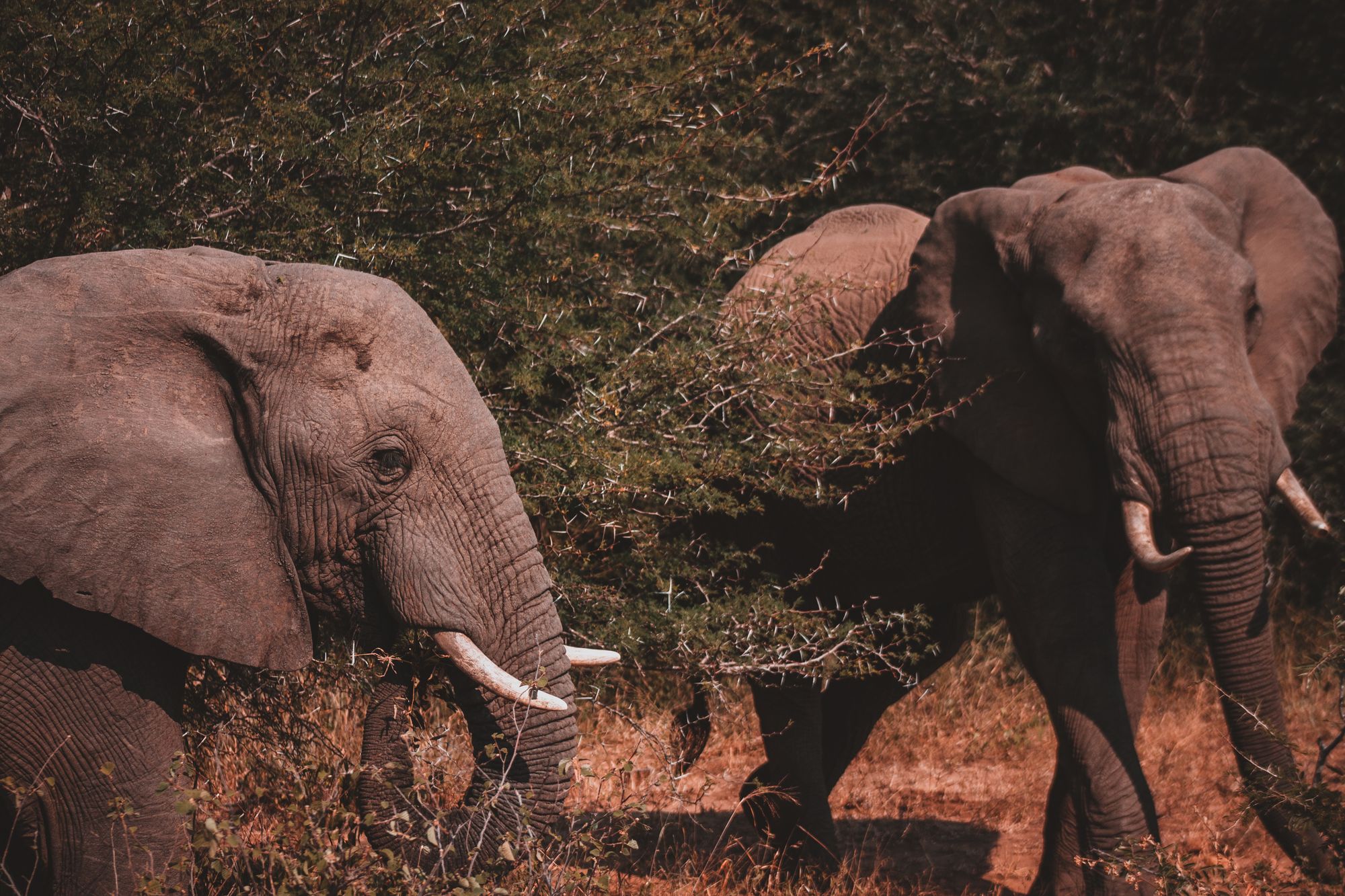
An estimated 1,500 lions and 1,000 leopards live in Kruger, alongside elephant, buffalo, black and white rhino, hippo, giraffe and zebra. Large carnivores also include cheetah, wild dog and spotted hyena.
Skukuza, the largest rest camp and the park's headquarters, sits on the southern bank of the Sabie River. All of the Big Five are readily seen in the country around it, and wild dog are another animal to look for there.
The camp's river front is the place to watch for hippo and buffalo, especially in early morning, under large sycamore figs and jackalberry trees. After dark, genets, thick-tailed bush babies and fruit bats live inside the camp itself.
At midday the animals retreat into the shade, so that is the time to sit at a camp bird hide. One is Lake Panic Hide, off the S42 just before Skukuza.
Many visitors drive themselves. Download and complete the Gate Registration and Indemnity Form before you arrive, then hand it over at the gate with a passport or ID, pay the conservation fee and collect a green permit listing the park rules.
From Hazyview, Phabeni Gate and Paul Kruger Gate both lead to Skukuza. A first drive from Phabeni stops at Nyamundwa Dam on the S1, then has breakfast at Skukuza. From there the H4-1 runs towards Lower Sabie, past Nkuhlu Picnic Spot and Sunset Dam just before the camp.
Drive slowly and stop often. The limit is 50 km/h on tar and 40 km/h on gravel, and the park recommends an average of 30 km/h. The sightings board at each camp reception shows where animals were seen that day.
You stay in your car except in designated areas, such as the day visitor areas at every main rest camp and the picnic sites along the roads. Plan three to four days on a first visit, moving between several main rest camps or the smaller bushveld, satellite and bush lodge camps.
Fuel is sold at the main rest camps, which take bank cards or cash, but the only ATMs are at Skukuza and Letaba. Pack binoculars, a hat and sunscreen, and warm clothing for a night drive.
Put all food away before you head out for the day, because the camp monkeys and baboons have learnt to open fridges and cupboards. Outdoor lighting in the camps is limited, so carry a torch after dark.
Last updated