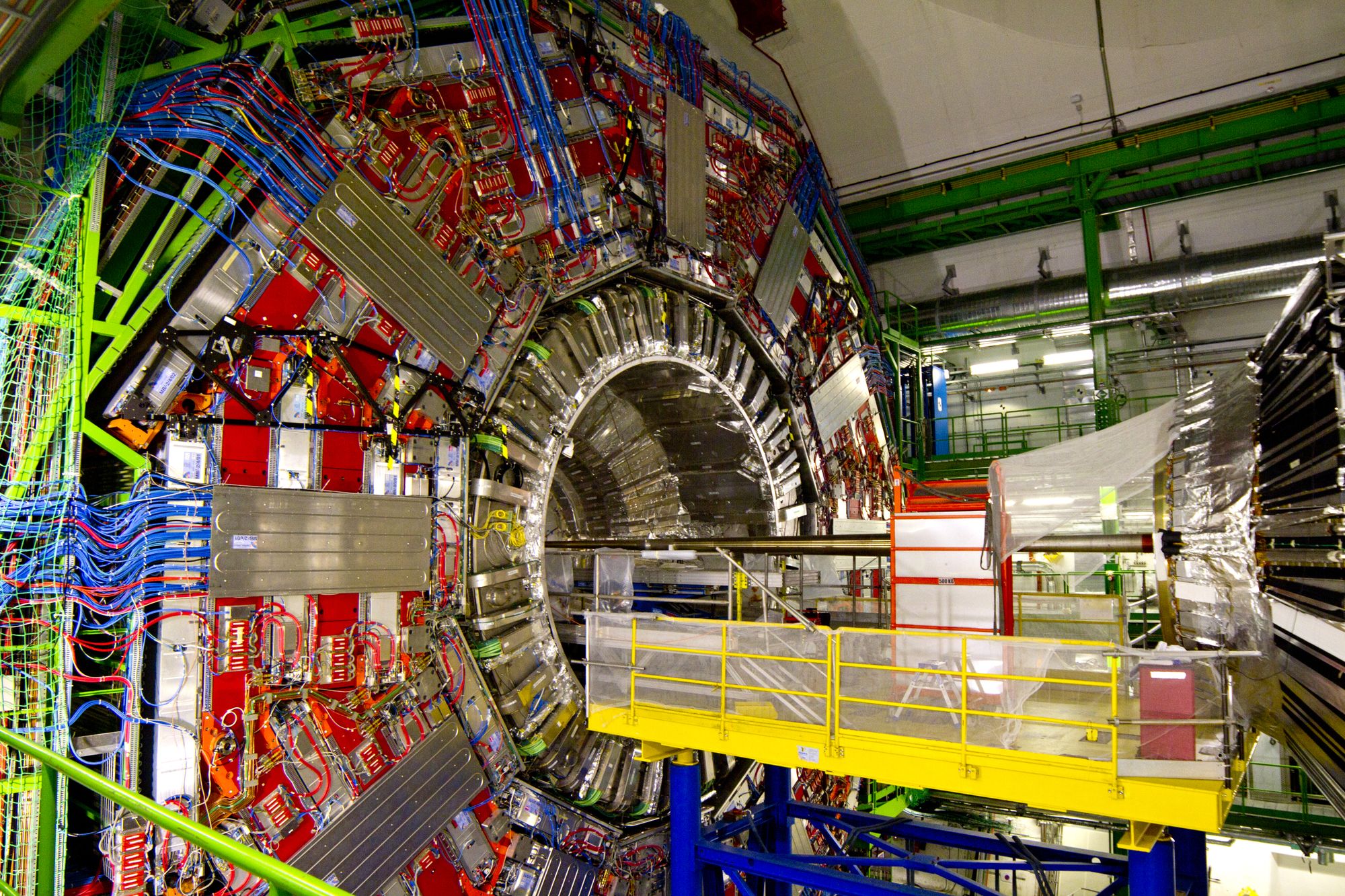
Ninety seconds on CERN Science Gateway
Worth the tram ride out of Geneva, CERN's Science Gateway puts you on the site of the laboratory that found the Higgs boson, and its exhibits let you try the physics for yourself.
The centre is two long tubes raised off the ground, built to look like CERN's accelerators. A raised bridge joins them and crosses the main road in front of CERN.
Inside, the pavilions cover particle physics, the Big Bang and the discovery of the Higgs boson. The exhibits mix hands-on experiments with real scientific objects and immersive rooms, and there is an antimatter display and a planetarium-style dome.
CERN is where the Higgs boson was found in 2012, a discovery that won a Nobel prize. The guided tour visits the control centre of ATLAS, one of the two experiments that found it.
Across the road, the Globe of Science and Innovation houses a further exhibition. Stop at the ribbon-like steel sculpture in front of it, which is laser-cut with hundreds of great physics discoveries through the ages.
The tour also reaches CERN's first accelerator, the synchrocyclotron, installed in 1957. Beside it, real objects from a typical workplace rebuild daily life at CERN before computers and digital cameras existed.
Stepping off the tram at the door, you start at reception, where your booking is checked. Every visitor needs one: book online up to a month ahead, or ask at reception on the day if there is space.
Once inside, open CERN's web app straight away to see the day's guided tours and sign up if a slot is open. Then walk the exhibitions at your own pace: they are designed to be self-visited, and CERN guides in the halls answer questions.
Cross the bridge over the main road to see both sides of the centre. The Big Bang Café by reception serves coffee before you head back.
A guided tour is the only way beyond the exhibitions, and places are scarce. Tours are led by CERN staff in English or French, for groups of 24 in one language, and last 90 minutes. They are recommended from age 14 and are not suitable for young children.
Only about one visitor in ten gets a tour or lab workshop. Sign-up for each tour opens in the web app two hours before it starts, to everyone on site at the same moment. CERN advises coming in the morning to improve your chances, but an early arrival gives you no priority.
Some tours cross the Swiss-French border, so bring an identity document if you join one. The tunnel of the Large Hadron Collider is not on any tour.
Travel light: luggage and large bags are not allowed in the centre or on tours. The free lockers near the Big Bang Café take small bags only, and you must empty yours before the centre closes.
Wear closed, flat shoes if you hope to join a tour, because they are required. Pay nobody who claims CERN is charging for a visit. Photos for your own use are allowed, as long as you respect other visitors' privacy.
Explore the rest of Geneva

The European headquarters of the United Nations, built in the 1930s for the League of Nations in a park given to the city, with the Salle…
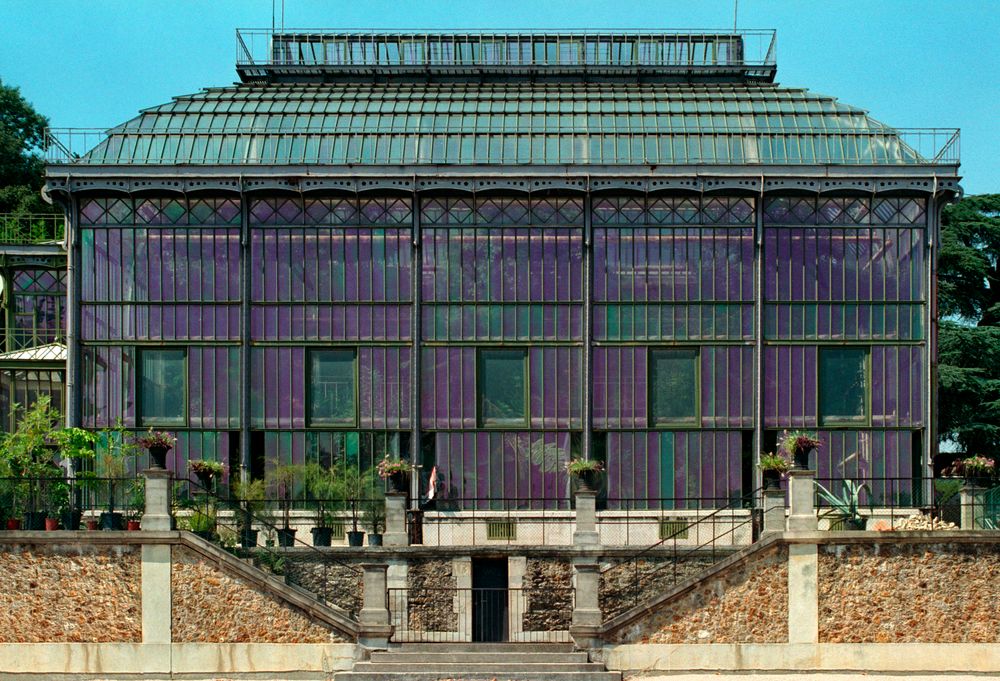
Between the lake and the Palais des Nations, the city's botanical garden spreads over terraces, a rock garden, glasshouses and a small…
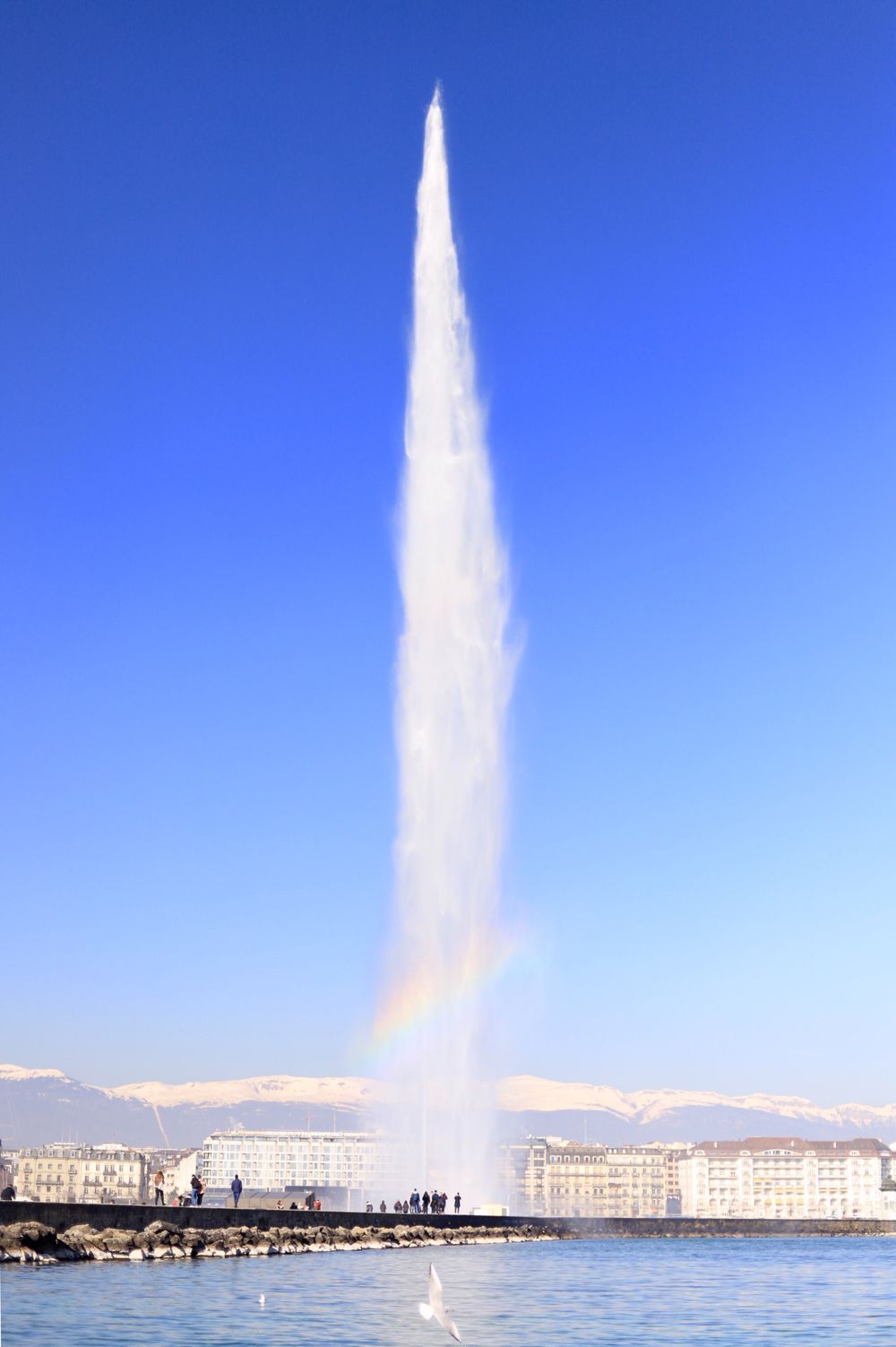
From a stone jetty on the left bank, where the lake drains into the Rhone, the fountain throws five hundred litres a second to more than…