Ninety seconds on Fethiye Mosque
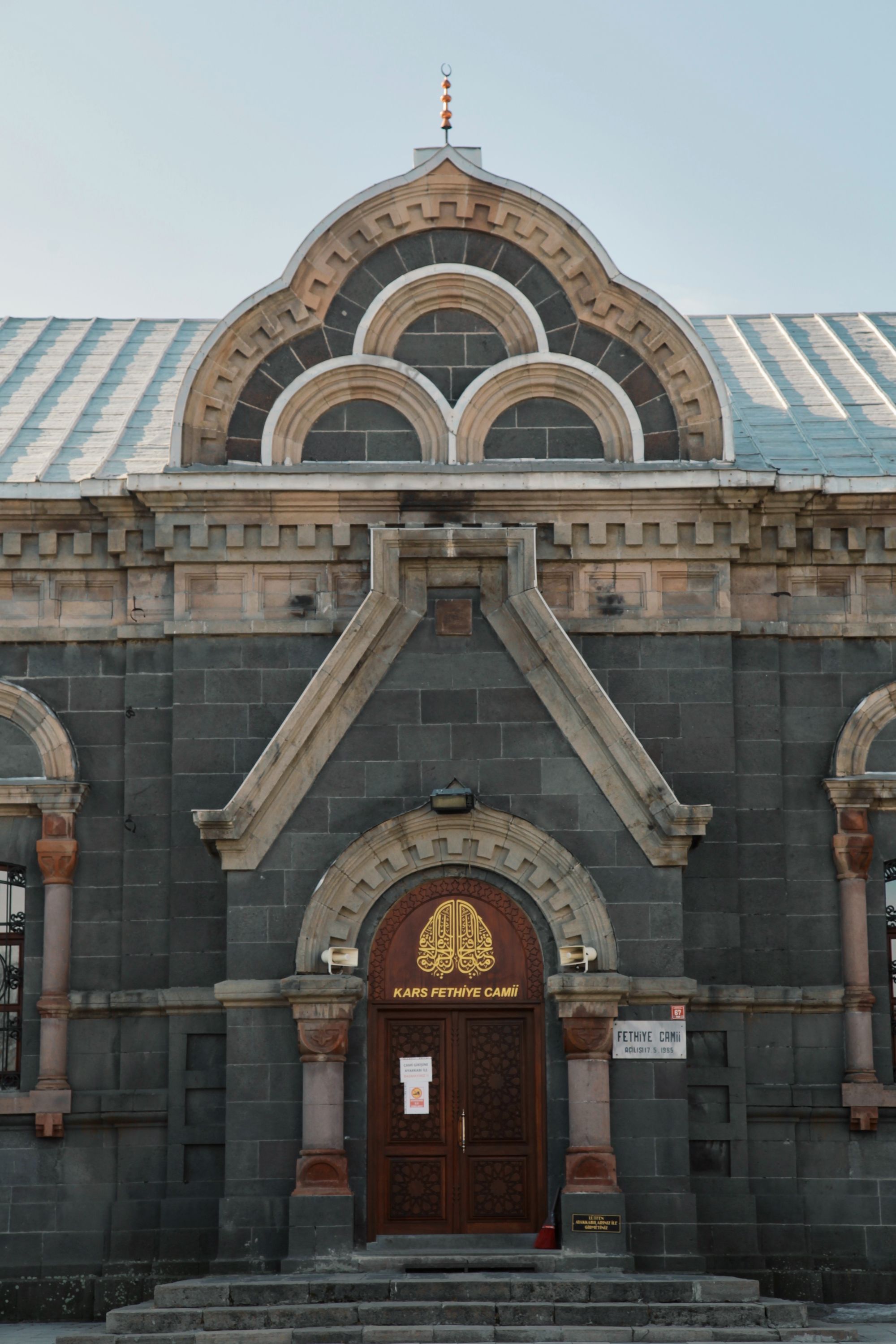
Fethiye Mosque began as the Russian cathedral of Kars, and you can still read the church in its long stone nave, set square on the town's grid of Russian-era streets.
What you are looking at is a Russian Orthodox church, laid out as a long rectangle running east to west. It was built in the late nineteenth century, when Kars was part of the Russian Empire, and two minarets were added when it became a mosque.
Look up at the roofline for the trefoil, a three-lobed curve that is one of the Baltic-style touches on the building. Below it rises the tall central dome.
The onion domes came off in 1953 and the bell tower is gone, so the top you see now is plainer than the church as built.
Inside, the church shape holds while the furnishings have changed. The walls are painted soft blue with Ottoman-style calligraphy, and the carved wooden pulpit, the geometric chandeliers and the tiled mihrab are the pieces to find.
The streets around it share the style: a grid of pastel stone buildings from the same Russian decades, protected today as part of the town's heritage.
Between the daily prayers, you can go in, since the building is still a working mosque and visits keep clear of prayer times. Start outside on the square and walk the full length of the building, so you see the nave and roofline together.
Then go in, dressed for a place of worship, and stand under the dome to take in the interior. Photographs are allowed as long as you do not disturb anyone at prayer, and food and drink stay outside.
If you are staying the night, walk the historic centre again in the evening.
The Kars Museum is the place to see what the church looked like before it lost its domes and bell tower.
In winter, bring serious cold-weather clothing, since the first part of this visit is spent outside on the square.
Explore the rest of Kars
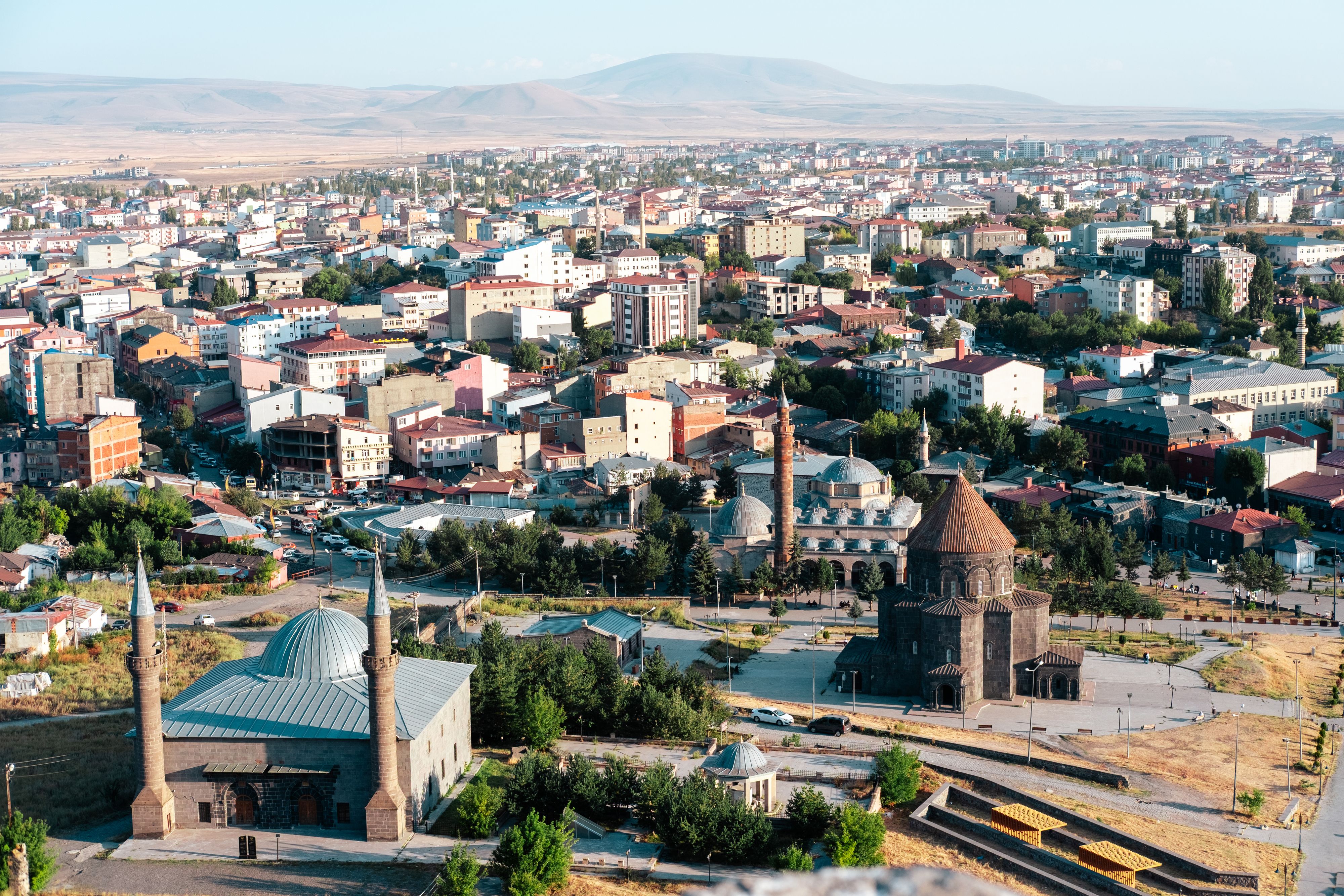
Stone houses built in a Baltic style during forty years of Russian rule after 1878 still line the centre, a look found nowhere else in…
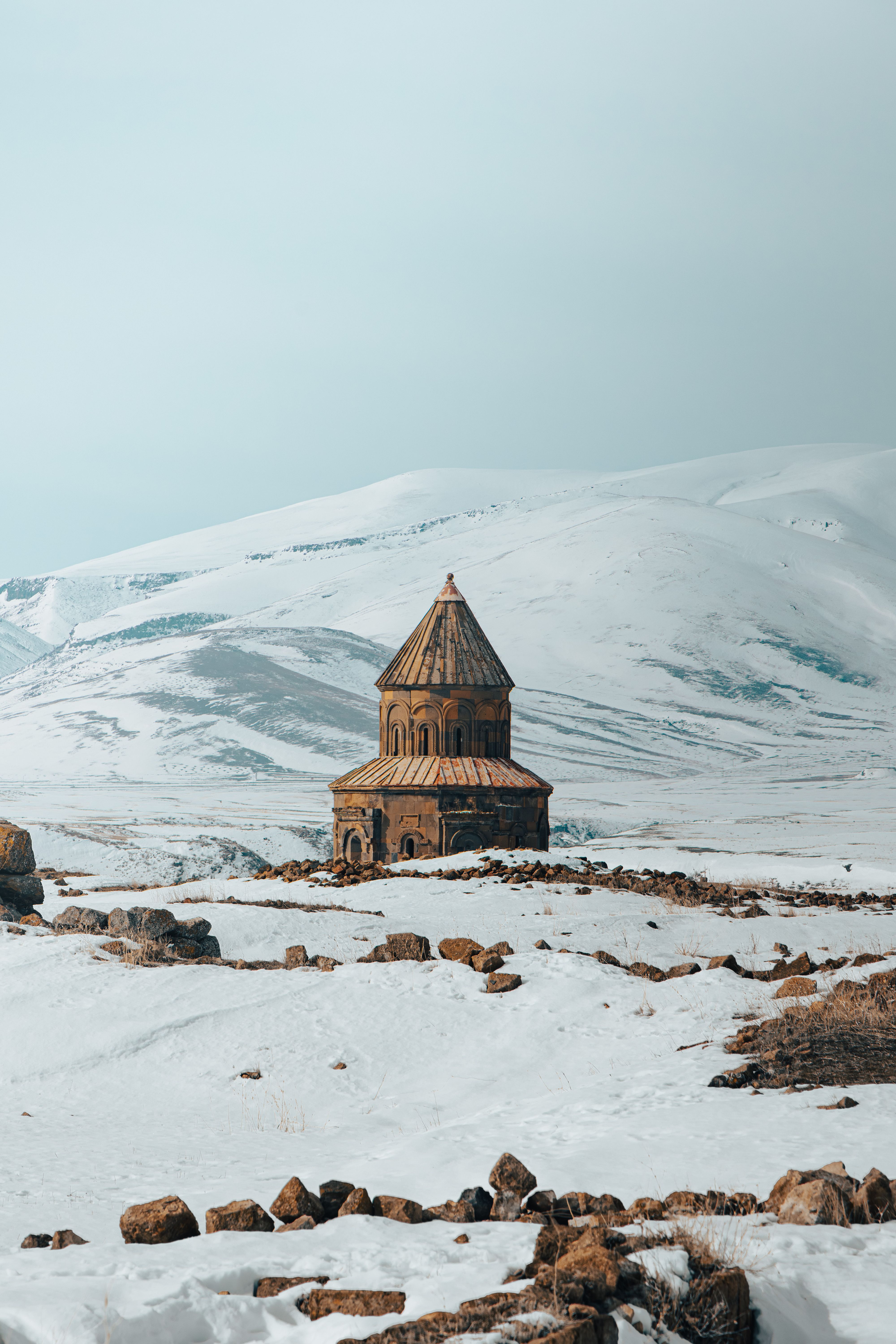
An Armenian church of the tenth century, built for King Abas at the foot of the citadel, which has since served as a mosque, a Russian…
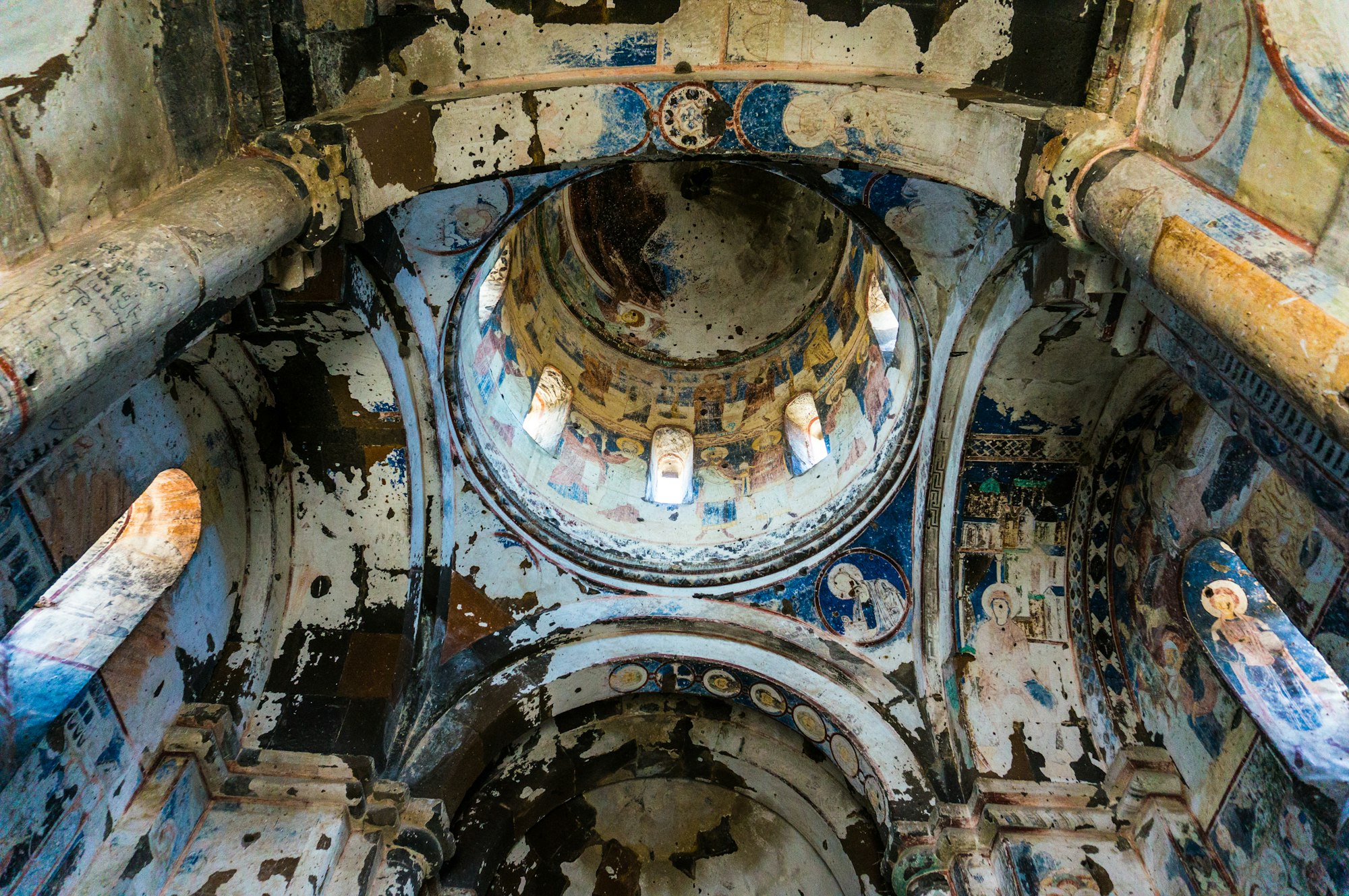
The provincial museum occupies a purpose-built hall opened in the early 1980s, on the road that forks off towards Ani in the northeast of…