Globe Countries Cities Dispatches World's Best Events Get the App
The arches of the Great Hall at the Metropolitan Museum of Art, New York

Metropolitan Museum of Art

Museum · Art from every era and continent
Add this to your itinerary
Museum  ·  New York, United States 40.7794°N   73.9633°W

The museum at a glance

The art of every era, from an Egyptian temple to Van Gogh

Time needed
3 to 4 hoursFirst floor, then up
Must-sees
6 worksEach with its gallery
Hours
10am to 5pmFri and Sat to 9pm
Closed
WednesdaysLast entry 30 min before
Best time
10am on a weekdayOr Fri, Sat evening
Tickets
TicketedNY residents set the fee
Access
Fully accessibleWheelchairs at 81st St
The collection

What kind of art is in the Met?

Almost every kind: Egyptian, Greek and Roman antiquities, armour, Asian and Islamic art, European paintings up to Van Gogh, and American art in its own wing.

Entry

Is the Met free?

No, entry is ticketed for most visitors. New York State residents, and students from New York, New Jersey and Connecticut, can pay what they wish with ID.

Closed day

What day is the Met closed?

Wednesday. It opens at ten on the other days and closes at five, or at nine on Friday and Saturday. Last entry is half an hour before closing.

Temple of Dendur

Where is the Temple of Dendur in the Met?

On the first floor, in Gallery 131, a glass-walled hall in the Egyptian galleries that looks out on Central Park.

Van Gogh

Where are the Van Goghs in the Met?

On the second floor, in Galleries 822 to 825 of the European paintings. Cypresses and the Self-Portrait with a Straw Hat hang in Gallery 825.

Time

How long do you need at the Met?

Three to four hours for a first visit. Choose two departments, such as Egypt and the European paintings, rather than trying to see the whole building.

Entrance

Which Met entrance has the shortest line?

The side entrance on 81st Street, just south of the main steps, usually has shorter lines for tickets and the coat check.

By lunchtime you can have walked into an Egyptian temple, passed a hall of armoured riders and climbed to Vermeer and Van Gogh. Choose two departments before you go in, and arrive at ten.

What hangs here, and what doesn't

The Met collects almost every kind of art. Egyptian temples, Greek and Roman sculpture, armour, Asian and Islamic art and European painting up to Van Gogh are all here, with American art in a wing of its own. You cannot see it all in one visit, so choose two departments before you arrive.

For medieval European art, go to The Cloisters, the Met's second museum, in Fort Tryon Park at the top of Manhattan.

Five thousand years, in one building

  1. 1900s BCEgypt
  2. 10 CETemple of Dendur
  3. 1650sVermeer
  4. 1787David
  5. 1851Leutze
  6. 1889Van Gogh
  7. TodayStill collecting

For more of the twentieth century, MoMA in Midtown and the Guggenheim up Fifth Avenue take over.

How the museum is organised

You enter through the Great Hall on Fifth Avenue at 82nd Street, or by the side entrance on 81st Street. The Costume Institute has its own galleries beside the Great Hall.

The first floor holds Egypt with the Temple of Dendur, Greece and Rome, the medieval galleries and the Arms and Armor hall. The Engelhard Court links the main building to the American Wing.

The Grand Stairway climbs from the Great Hall to the European paintings on the second floor. The Vermeers are in Gallery 614 and Van Gogh in Galleries 822 to 825, and the American paintings are on the same floor around Gallery 760.

When to come

Arrive at ten on a weekday and see the first floor before the afternoon crowds. Weekend afternoons are the busiest time of the week.

On Friday and Saturday the museum stays open until nine, and the galleries are calmer after five. Between May and October the roof garden is open over Central Park, and on those evenings you may queue for the lifts up to it.

Use the 81st Street entrance, where the lines are usually shorter. Large backpacks and luggage must be checked at the coat check there, so bring a small bag.

What you came for

Six works and one court, each with its gallery number and the best way to see it.

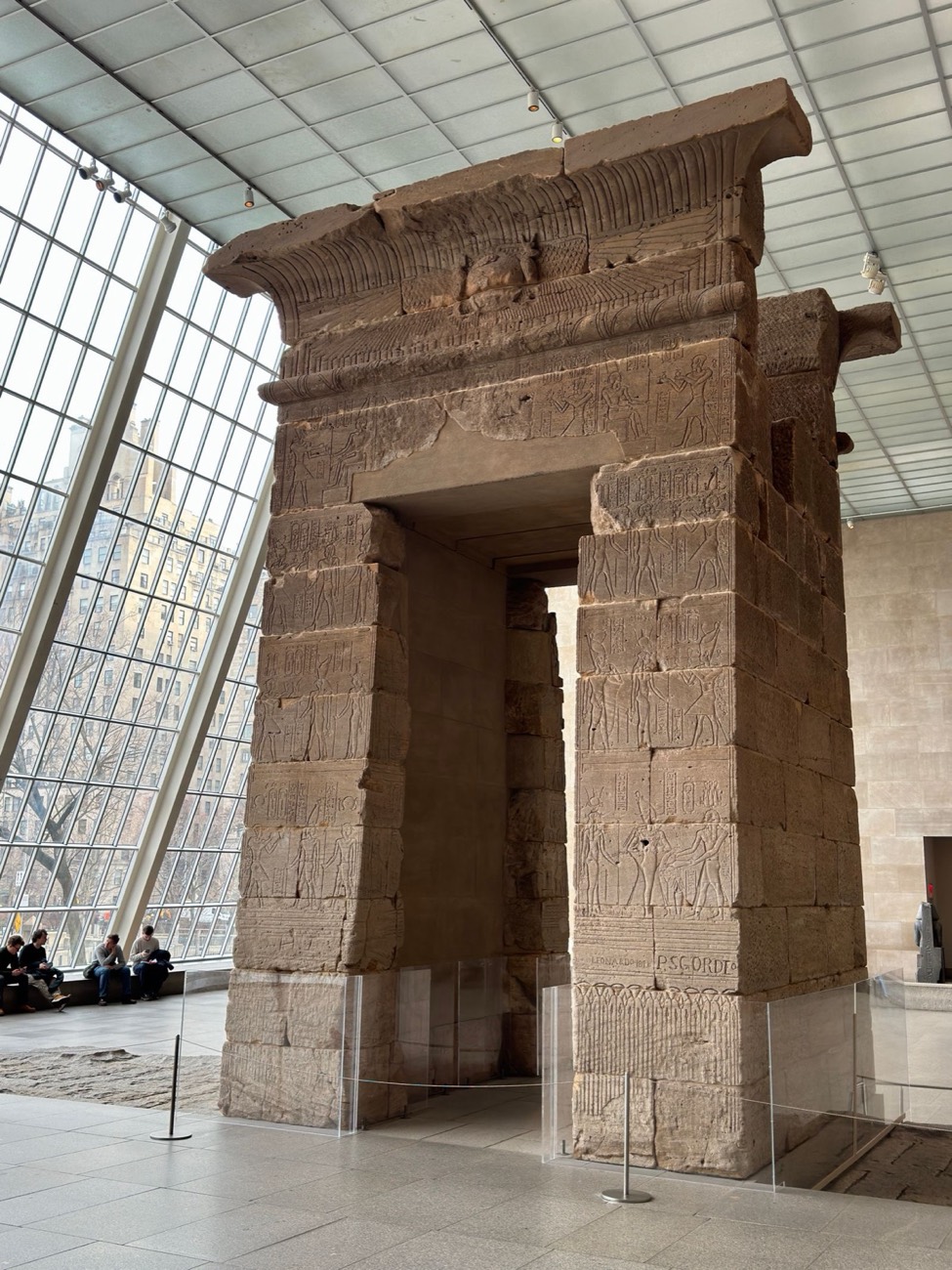
The gateway of the Temple of Dendur in its glass-walled hall at the Met

The Temple of Dendur

Roman Egypt, built for Augustus, completed by 10 CE
Gallery 131Egyptian Art, First floor

A sandstone temple from Roman-era Nubia, given to the United States by Egypt when the Aswan High Dam flooded its site. It stands whole in Gallery 131, a glass-walled hall facing Central Park. Rest on the benches along the glass before you go upstairs.

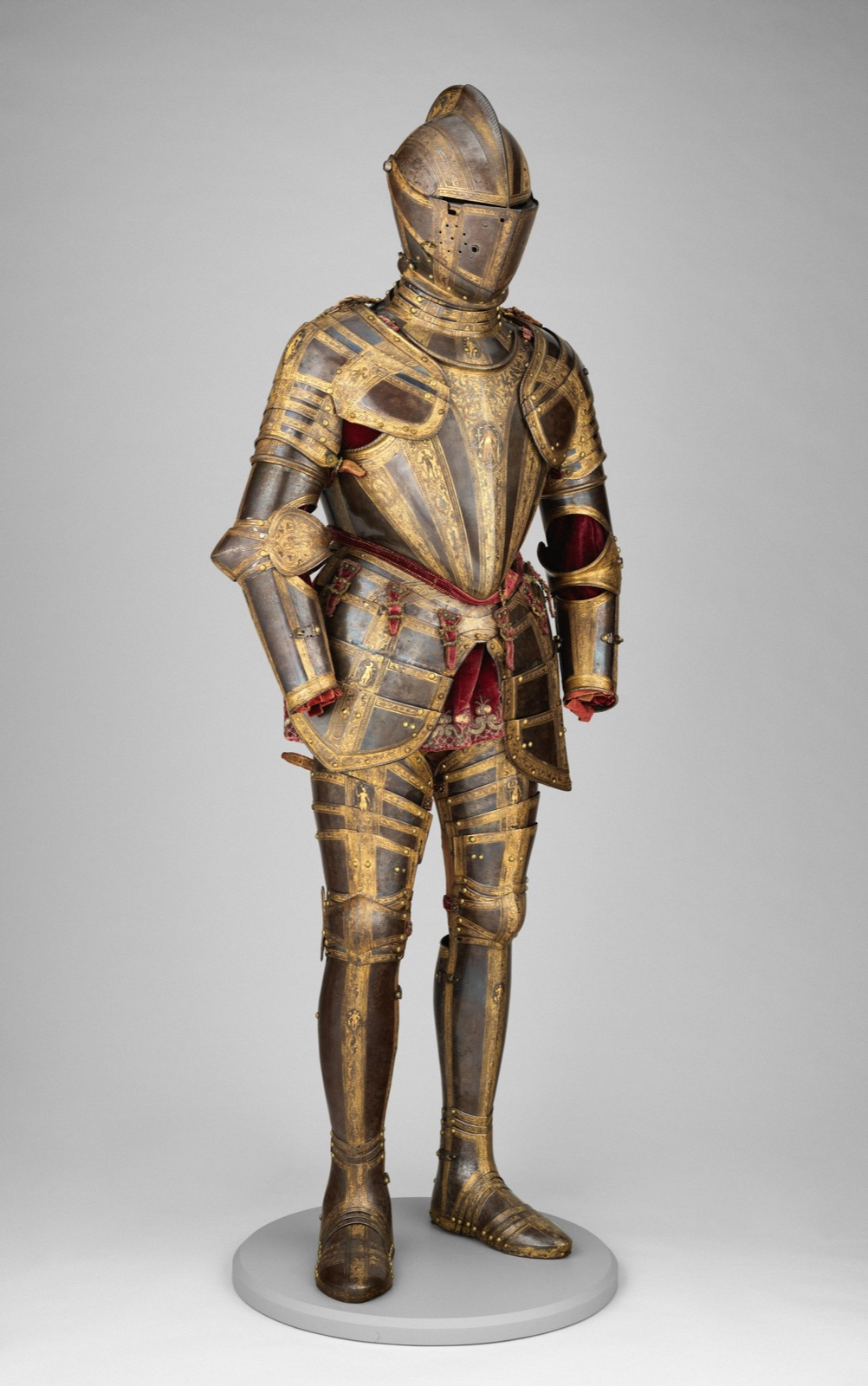
A steel armour etched and gilded with gold bands, on a stand

Armor for Field and Tournament

Italian, probably Milan, about 1575 to 1580
Gallery 371Arms and Armor, First floor

This steel armour was made in Italy, probably Milan, for both battle and the tournament, and decorated in gold and silver. It weighs almost 24 kilograms. It stands in Gallery 371, off the first-floor hall where armoured riders on horseback line the walls.

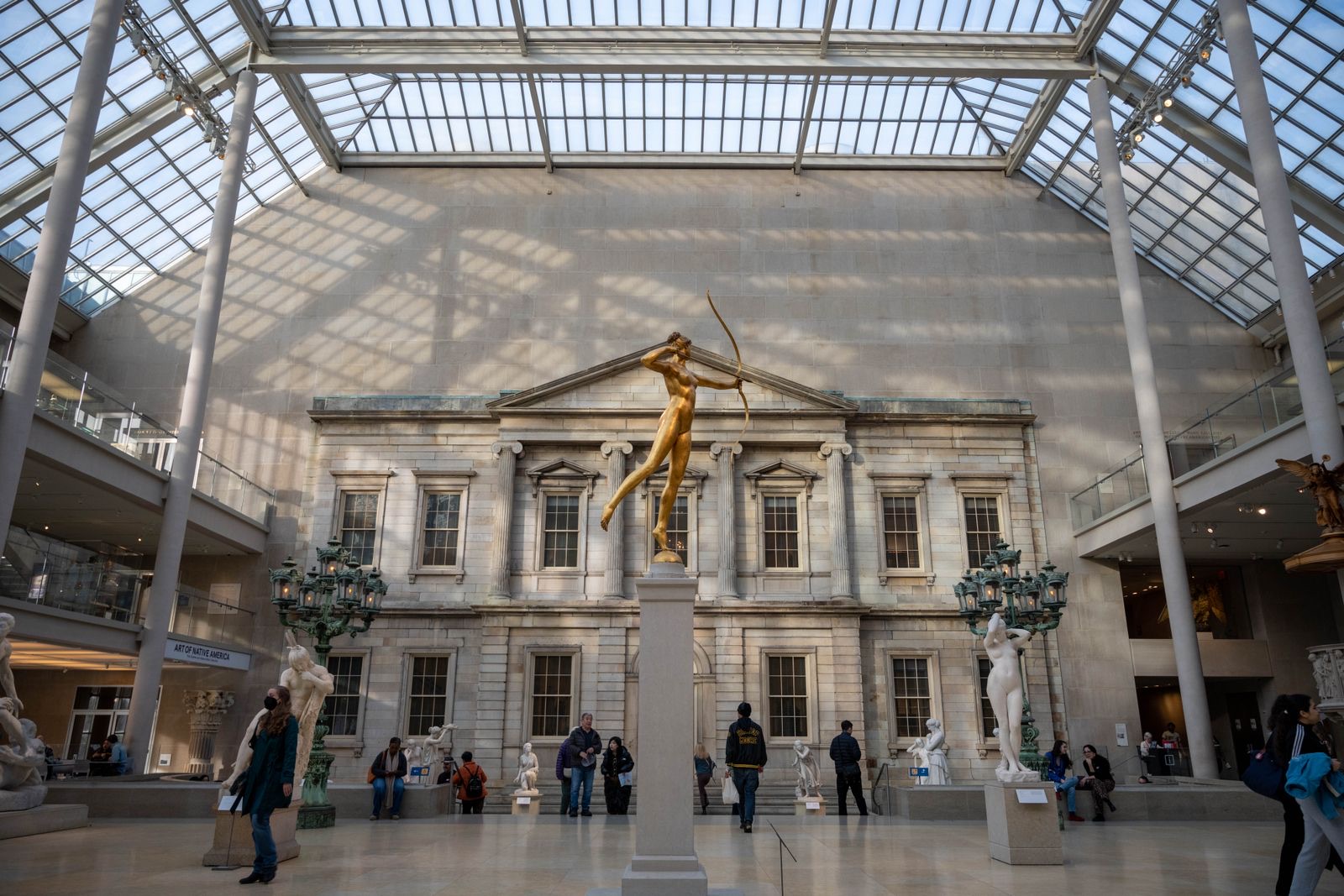
The glass-roofed Engelhard Court with a gilded statue on a column in front of a marble bank facade

The Charles Engelhard Court

American WingThe American Wing, First floor

This glass-roofed court joins the American Wing to the main building. It holds large sculpture, stained glass and the marble front of an old Wall Street bank, and its benches make a calm stop between Egypt and the paintings upstairs.

Emanuel Leutze's painting of George Washington standing in a boat among ice floes

Washington Crossing the Delaware

Emanuel Leutze, 1851
Gallery 760The American Wing, Second floor

More than six metres wide, in a gilt frame topped by an eagle, it fills the grand gallery of the American Wing. Leutze painted it in Germany in 1851 as a call to Europe's reformers. Look at it from across the room first, then walk up close to see the ice in the river.

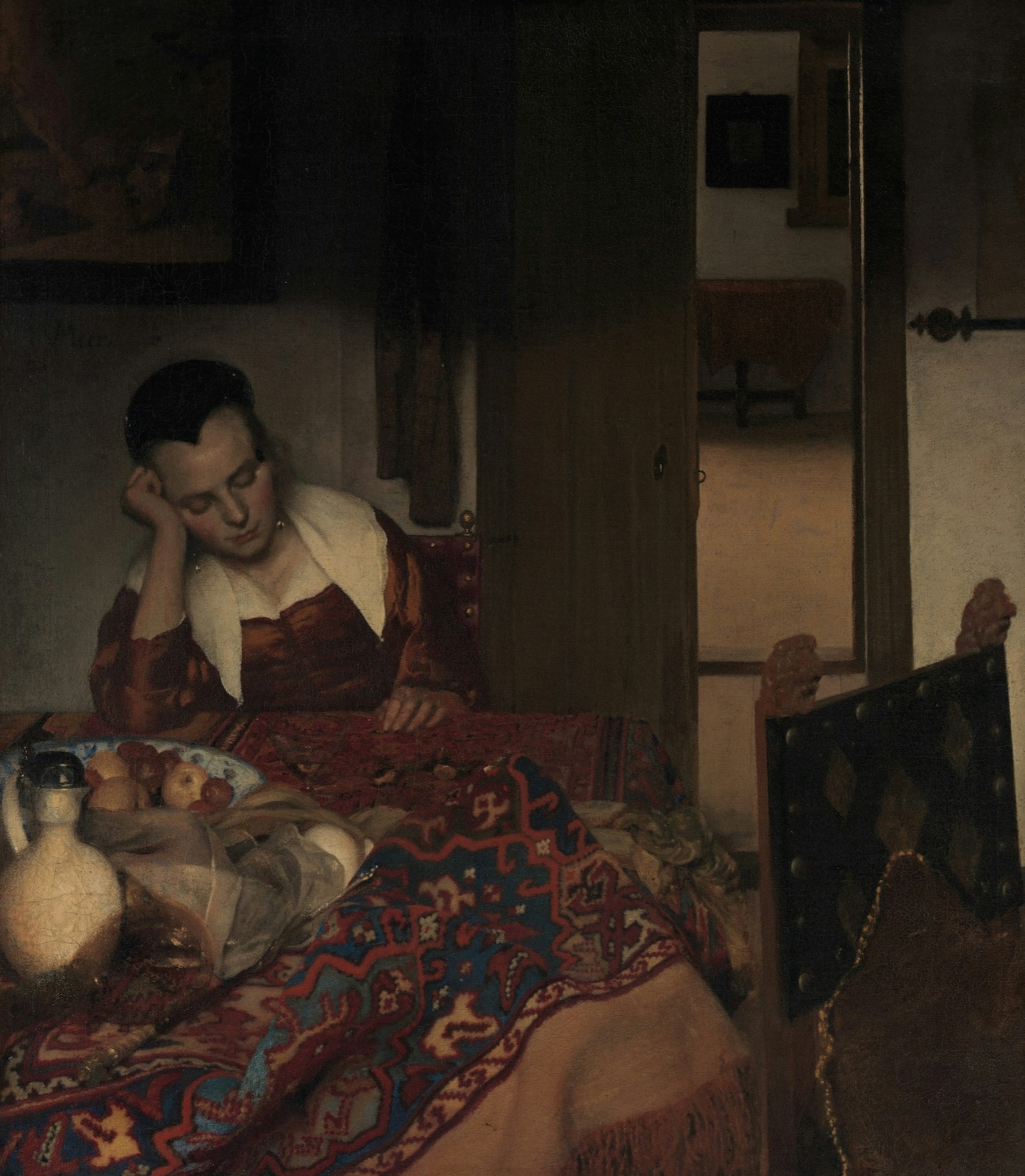
Vermeer's painting of a young woman asleep at a table covered with a rug

A Maid Asleep

Johannes Vermeer, about 1656 to 1657
Gallery 614European Paintings, Second floor

This early Vermeer can never be lent, under the donor's will, so Gallery 614 is the only place to see it. The Met's other Vermeers, Young Woman with a Water Pitcher and Young Woman with a Lute, hang beside it. All three are small, so give the room ten minutes.

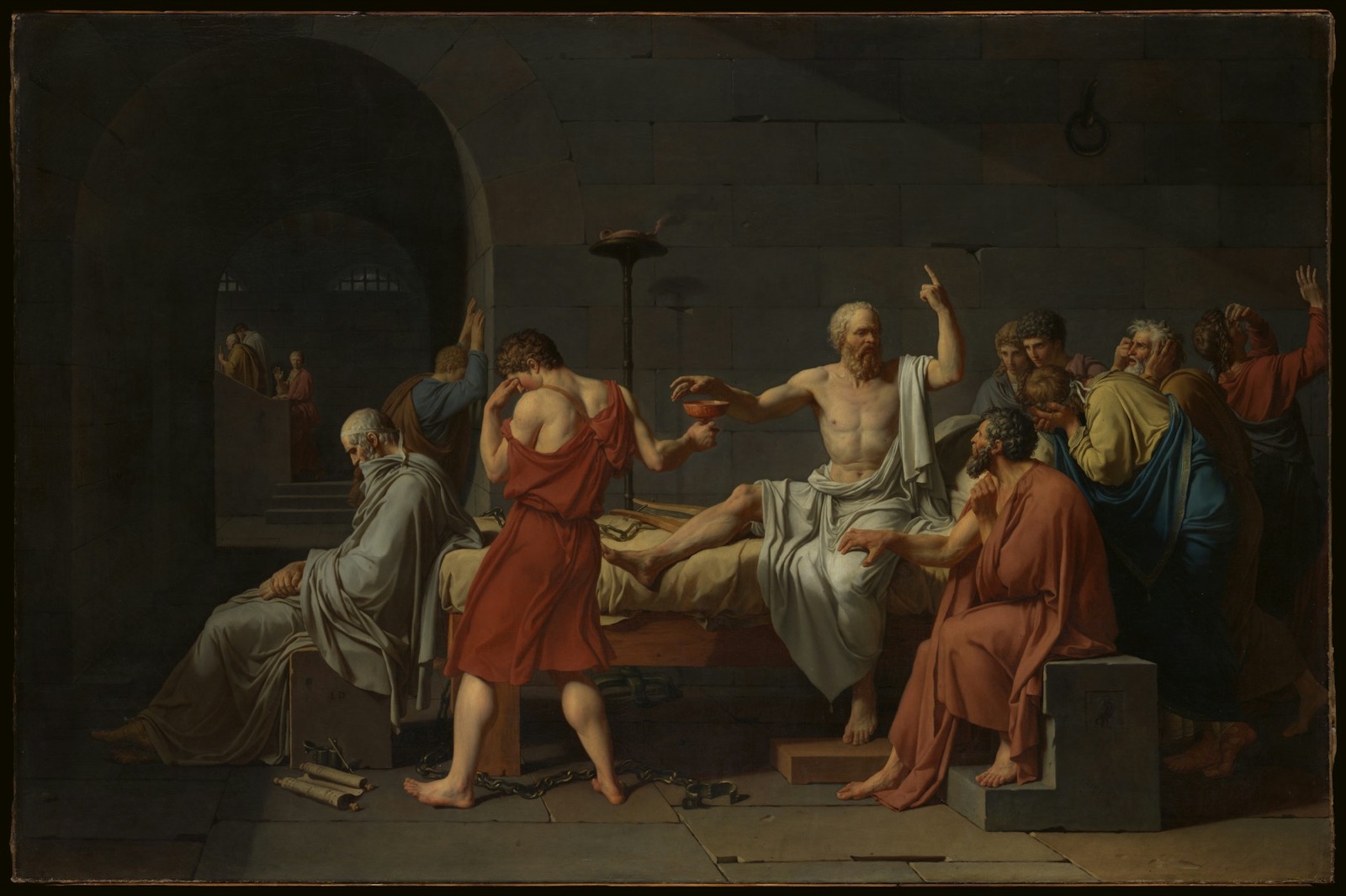
David's painting of Socrates on his bed reaching for a cup, surrounded by grieving pupils

The Death of Socrates

Jacques Louis David, 1787
Gallery 634European Paintings, Second floor

Sentenced to die, Socrates reaches for the cup of hemlock while he goes on teaching his grieving pupils, the scene Plato tells in the Phaedo. Watch his raised hand: he is still talking as he takes the poison.

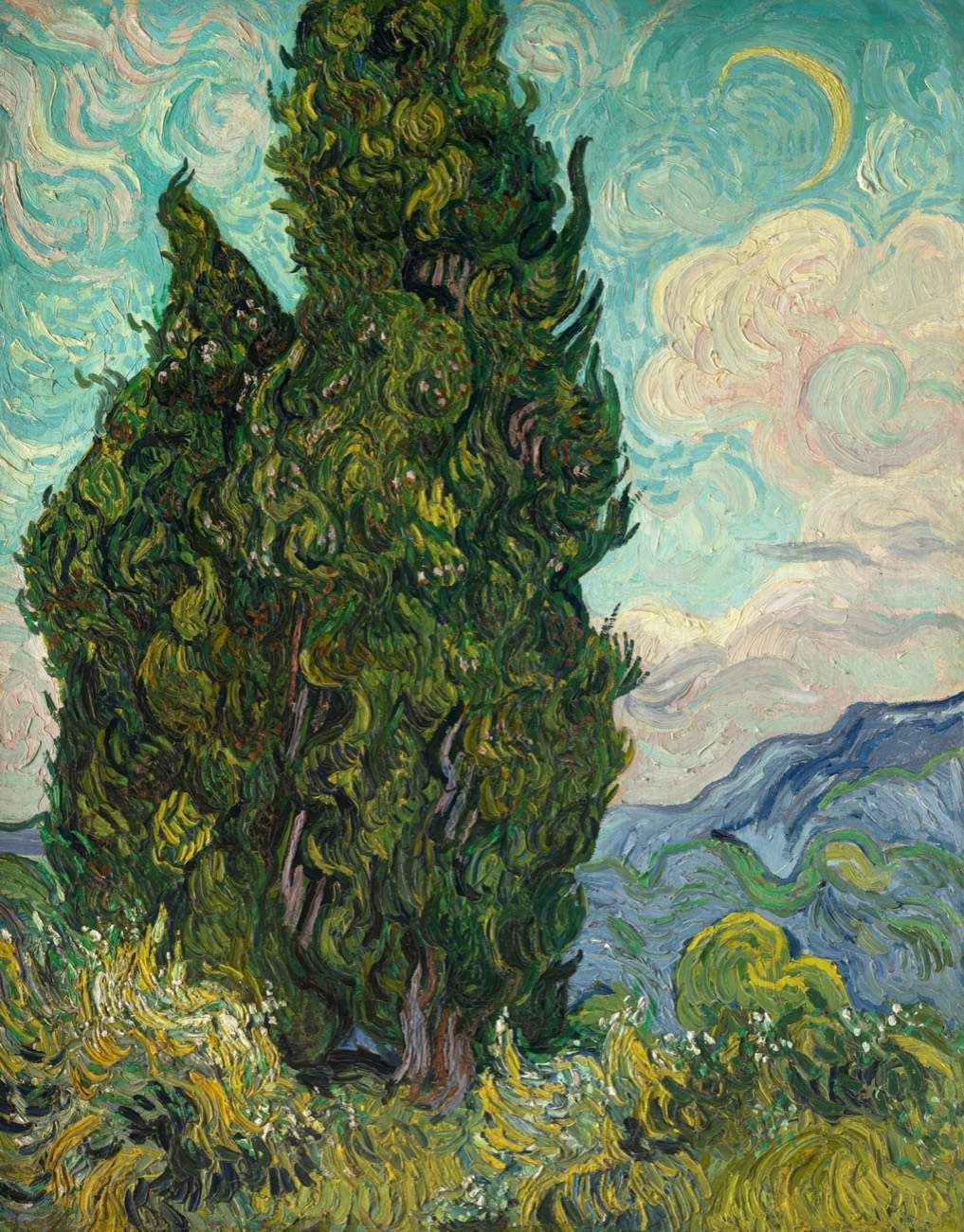
Van Gogh's painting of two swirling green cypress trees under a pale sky

Cypresses

Vincent van Gogh, 1889
Gallery 825European Paintings, Second floor

Van Gogh painted it at the asylum in Saint-Rémy and compared cypresses to Egyptian obelisks. It hangs in Gallery 825 with his Self-Portrait with a Straw Hat. Up close you can see how thickly the paint is laid on.

What is on this week

Temporary exhibitions change every few months: see the current exhibitions on metmuseum.org.

Know before you goClosed on Wednesdays. Open from ten until five on the other days, and until nine on Friday and Saturday; last entry is half an hour before closing. Entry is ticketed, and New York State residents and students from New York, New Jersey and Connecticut pay what they wish with ID. Large backpacks and luggage must be checked at the coat check by the 81st Street entrance, so bring a small bag.

Nearby

More of the art in New York

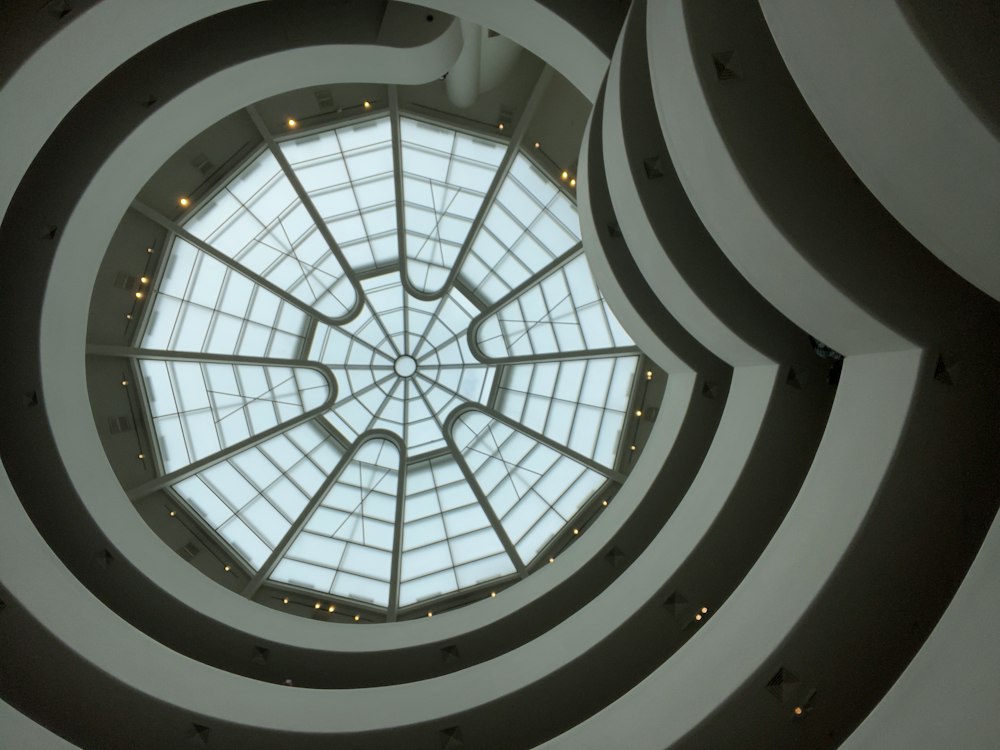
Solomon R. Guggenheim Museum
Museum · Up Fifth Avenue

Solomon R. Guggenheim Museum

Modern art up a spiral ramp, in Frank Lloyd Wright's building a short walk north along the park.

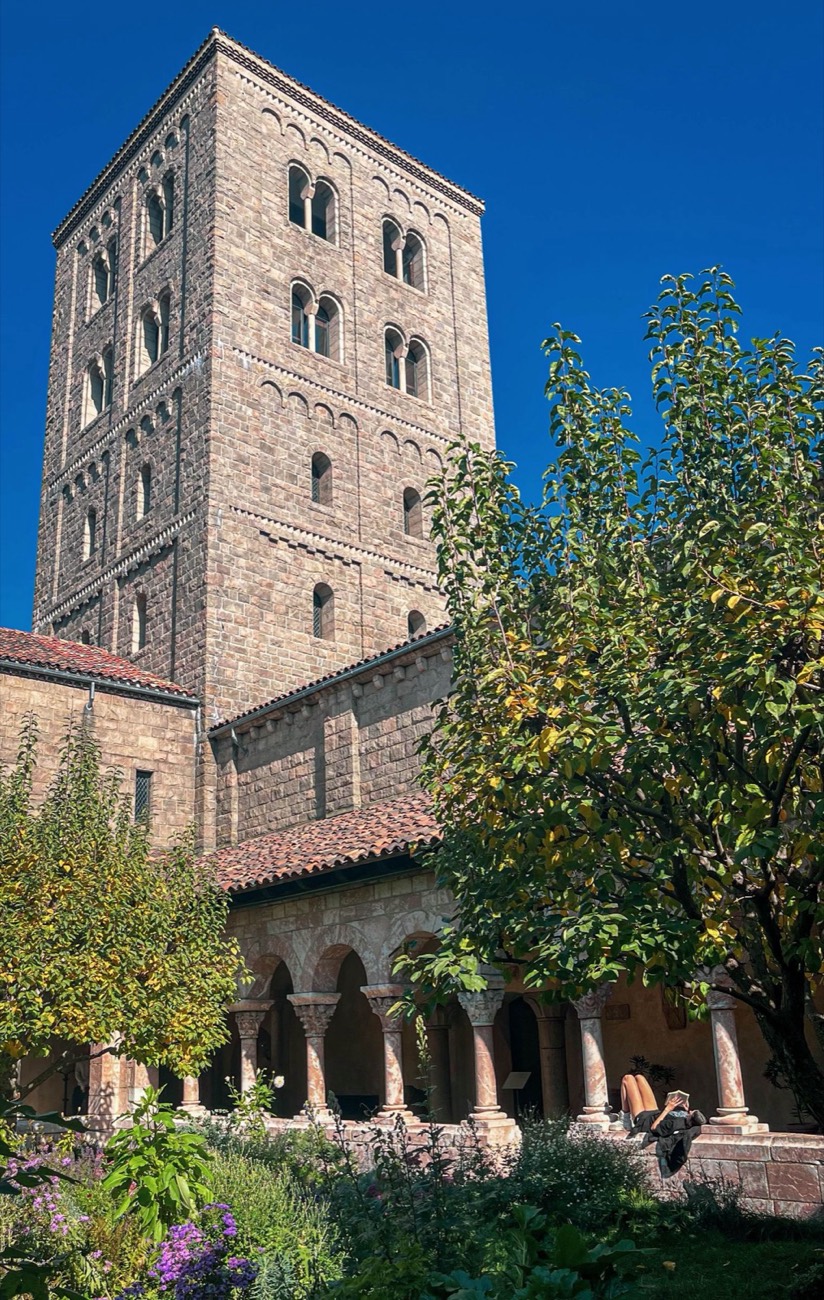
The Met Cloisters
Museum · The Met's second home

The Met Cloisters

The Met's medieval art, in cloisters and gardens in Fort Tryon Park at the top of Manhattan.