Things to do
5-
Other
Bai Tu Long Bay
Northeast of the main bay, the same drowned karst continues into water that carries a fraction of the traffic: the permit zone here holds far fewer overnight boats. Cruises anchor off forested islands, call at Vung Vieng fishing village by rowed sampan and pass into Bai Tu Long National Park. Itineraries run two nights as often as one, which is what the extra distance buys.
-
Cat Ba Island
Over three hundred square kilometres of limestone and forest, and the largest island in its archipelago, with a national park covering more than half of it. The golden-headed langur found on this island alone survives in numbers under a hundred. Ferries cross from Cat Hai in about forty minutes, and a cable car does it in ten. Lan Ha Bay lies off the southern shore.
-
Cua Van Floating Village
Households here were moved ashore in 2014, ending the resident community that had lived on the water for generations. What remains is a cluster of moored houses and a floating cultural centre holding fishing gear and archaeological finds from nearby caves. Visits come by rowed boat or kayak from a cruise tender, and last about an hour. Some former residents still work the water by day.
-
Other
Ha Long Bay
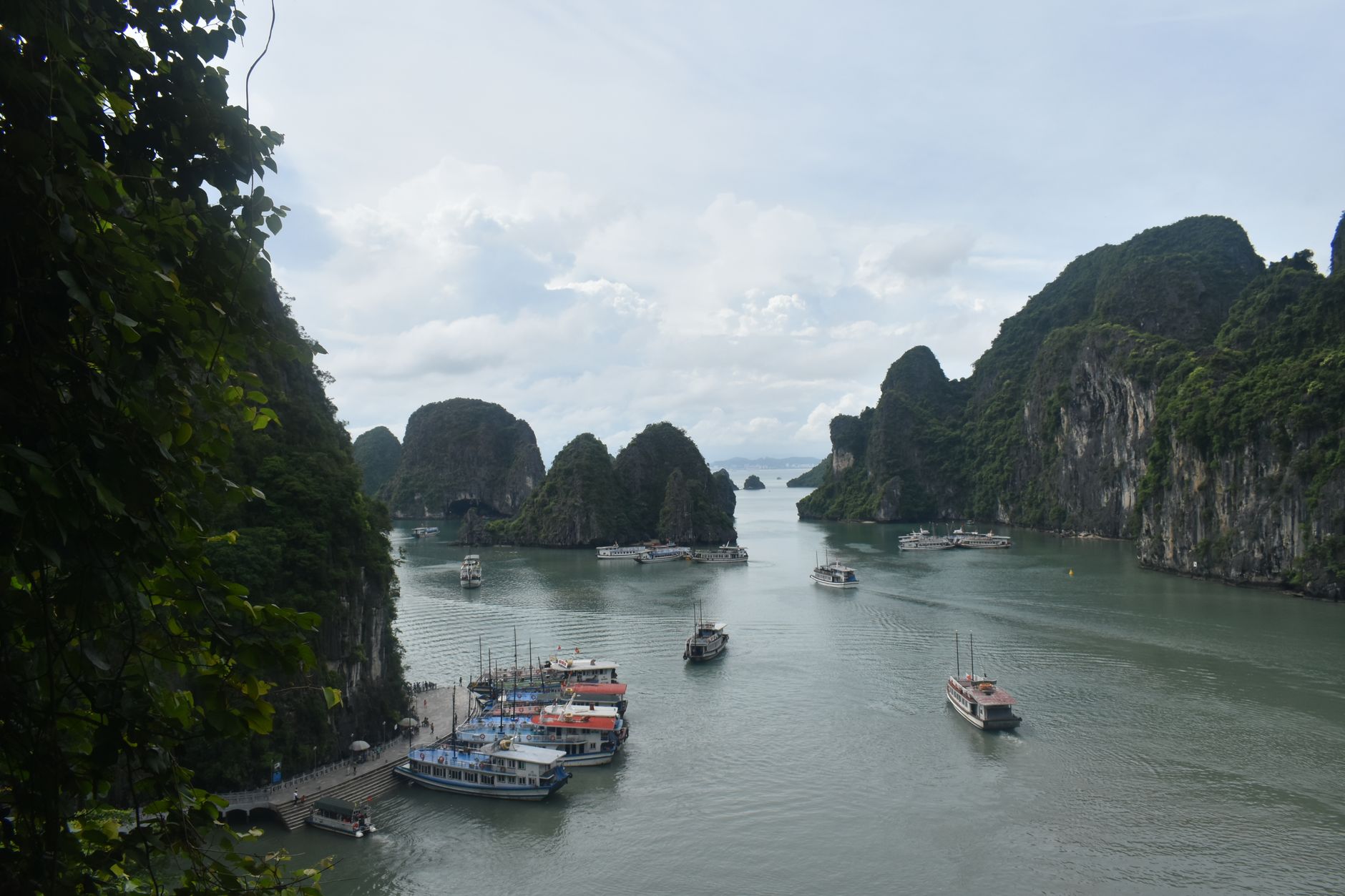
Roughly 1,600 limestone islands and islets stand in the Gulf of Tonkin here, listed by UNESCO in 1994 for the drowned karst landscape they form. Overnight cruises are the standard way in, with kayaking, a cave stop and a night at anchor. Day trips from Hanoi cover four hours of road for a few hours on the water.
-
Sung Sot Cave
Cruise tenders drop at a jetty on Bo Hon Island, from where steps climb to a narrow slot in the rock. Inside, two chambers open out across more than ten thousand square metres, lit and railed along a one-way loop. A French survey in 1901 called it the grotto of surprise. Boats converge in late morning, so an early or late slot is quieter.