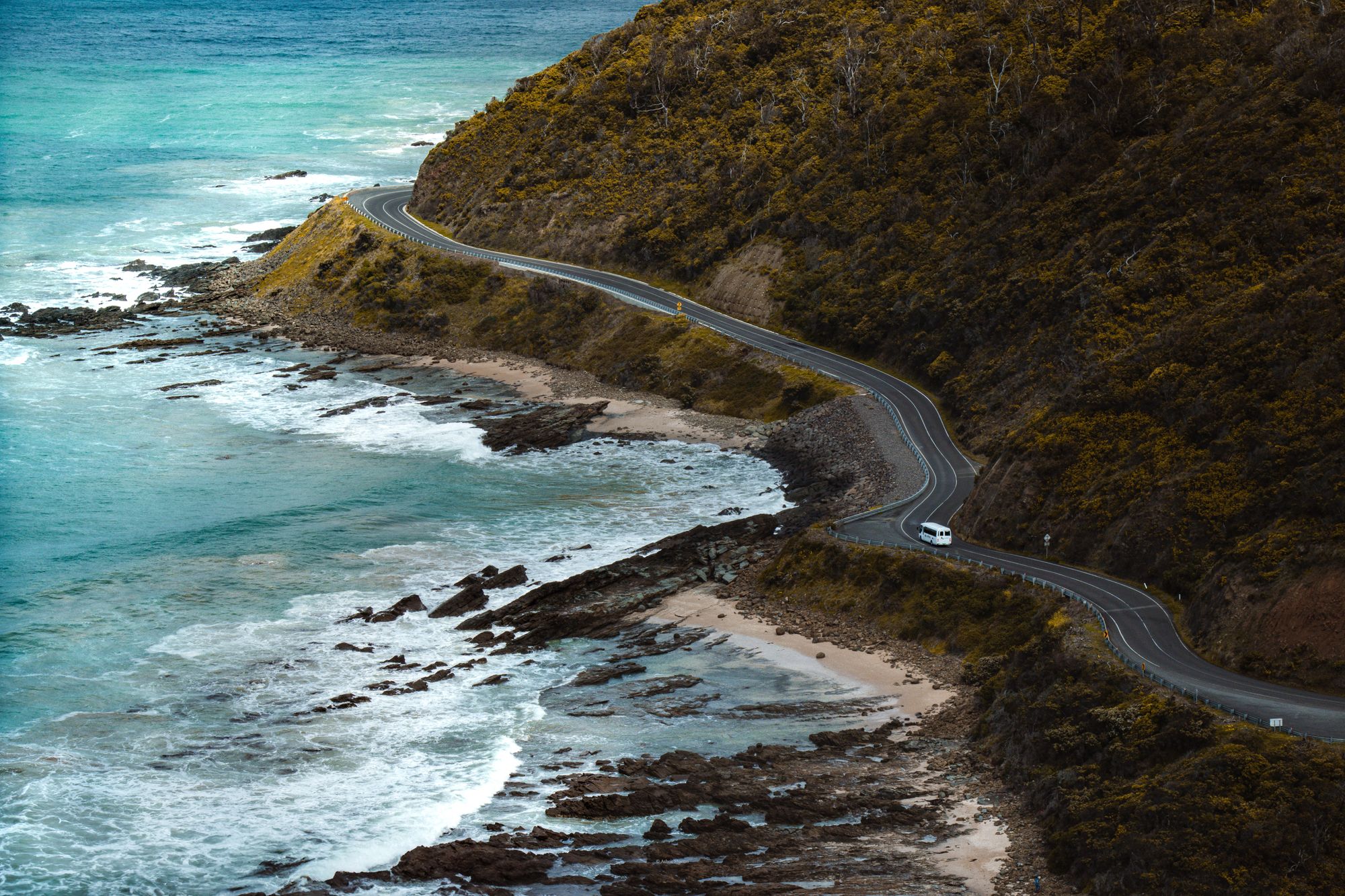
Drive west and the ocean stays on your side: surf beaches first, then a road cut into the cliffs, a forest of giant trees, and the Twelve Apostles near the end.
Scenic drive, Melbourne. Meridian Dispatch.
About 4.5 hours at the wheel for the 243 km from Torquay to Allansford. Photo stops bring it to 6 to 8 hours at least, and most travellers spread it over two or three days.
West, from Torquay. Traffic keeps left in Australia, so the sea is on the near side and the lookouts are reached without crossing oncoming cars. The afternoon light is the best on the Twelve Apostles, and westbound drivers reach them later in the day.
The Twelve Apostles and back is possible in one day, but the regional tourist board advises against it, because much of the nature and wildlife on the way goes unseen. Allow one night at least, in Apollo Bay or Port Campbell.
Yes. Entry is timed and covers the car park and the viewing areas. Anyone with hours to wait for a slot can fill them at Gibson Steps or Loch Ard Gorge, a few minutes along the road.
Outside the summer holidays, from late December to January, and the Easter long weekend, which are the peak season. Whales pass the coast from May to September.
The official site of Great Ocean Road is visitgreatoceanroad.org.au.
visitgreatoceanroad.org.au →The line is the driving route along the B100, drawn on OpenStreetMap, with distances measured along it from Torquay. It measures 243.1 km to the centre of Allansford and the published length is 243 km. Detours are pinned where they are, off the road.
West of Lorne the road is cut into the side of steep hills, with the Southern Ocean straight below the outside lane. Cape Patton and Teddy's Lookout are the places to stop and look down on it.
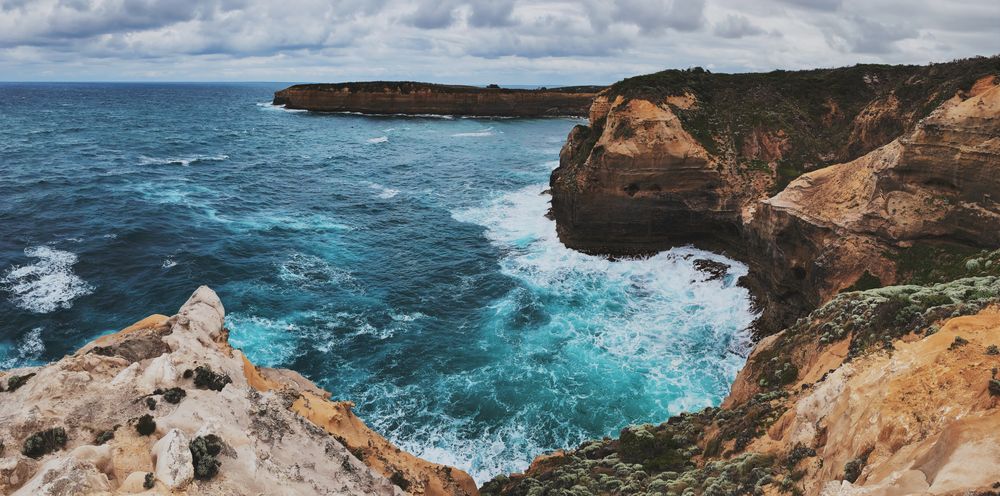
Past Apollo Bay the road leaves the sea for tall wet forest, and at Princetown it comes out on flat limestone country, worn by the sea into gorges, arches and stacks. Loch Ard Gorge and London Arch are both on this last part.
Most of it was dug by hand by some 3,000 returned servicemen, as a memorial to those killed in the First World War. Plaques along the verge mark it, and the arch at Eastern View spans the road.
Torquay to Lorne is the easy part: 45 km of wide road and gentle bends, with several towns. A caravan has no trouble here.
The cliff section comes next, Lorne to Apollo Bay. It is another 45 km of narrow road and tight bends, signed at 80 km/h, and most cars average 50 to 60. Use the slow-vehicle pull-offs to let a queue past, and stop only in signed parking areas.
From Apollo Bay to Princetown the road runs through rainforest and the Otway hills, with few places to overtake and patchy mobile signal, so download the map first. Kangaroos and wallabies move at dawn and dusk.
The Shipwreck Coast, west of Princetown, is open and quick between stops. Watch for cars swinging in and out of the car parks. Rejoin the Princes Highway at Allansford for the inland run home.
Where the drive begins, and what to add to it, then the rest of Melbourne

Pick up the car here and give the city its own days before or after the coast.
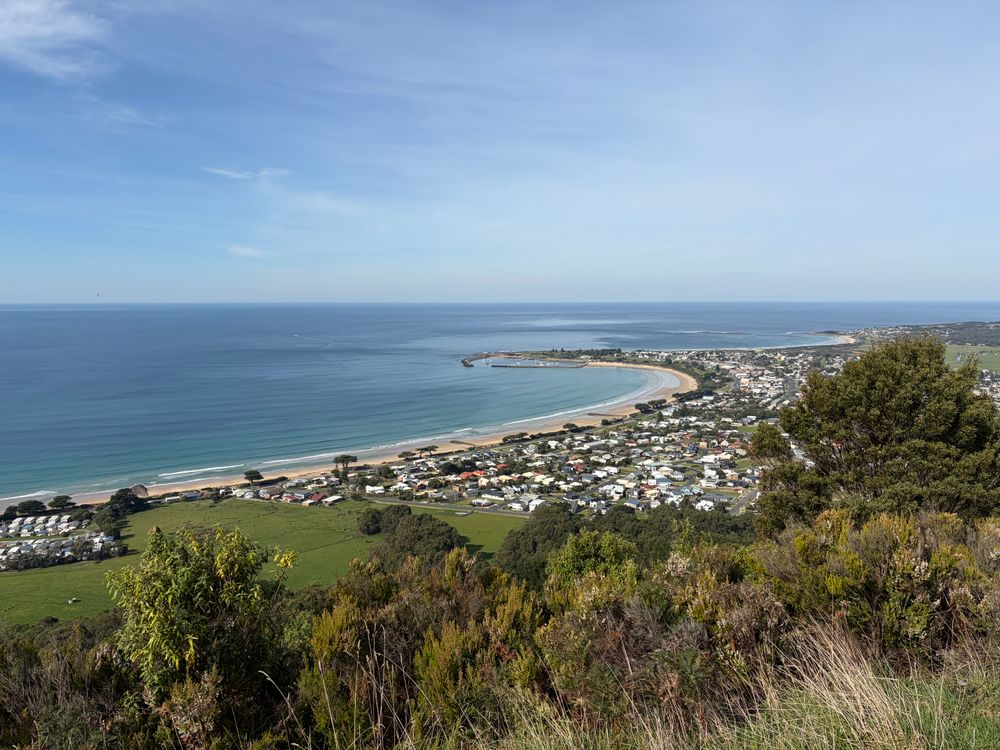
A harbour and a long curved beach front the main street of this town on the Great Ocean Road, about three hours' drive from Melbourne.…
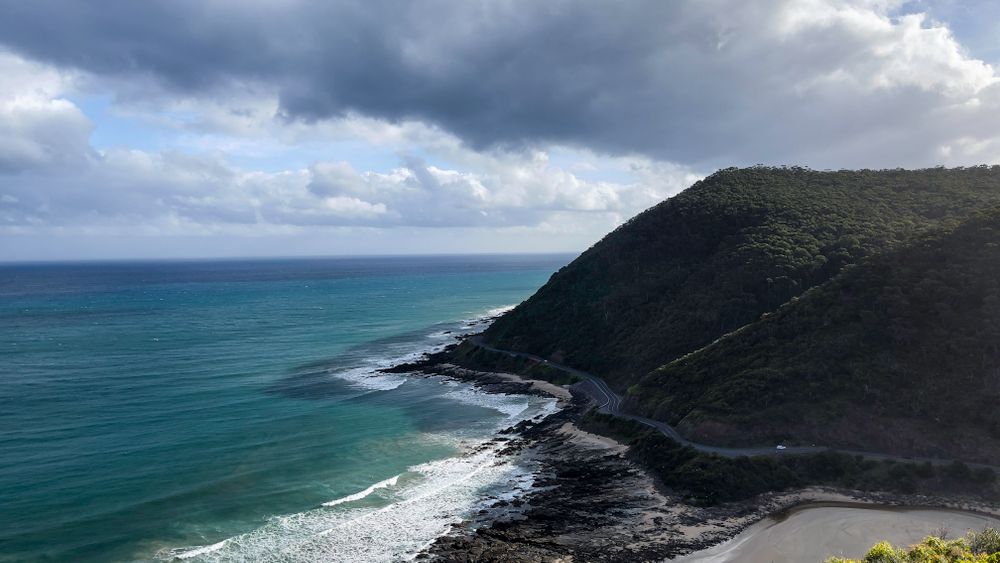
On Loutit Bay, about 145 km from Melbourne by road, Lorne has its beach, foreshore and main street side by side. The Great Ocean Road runs…
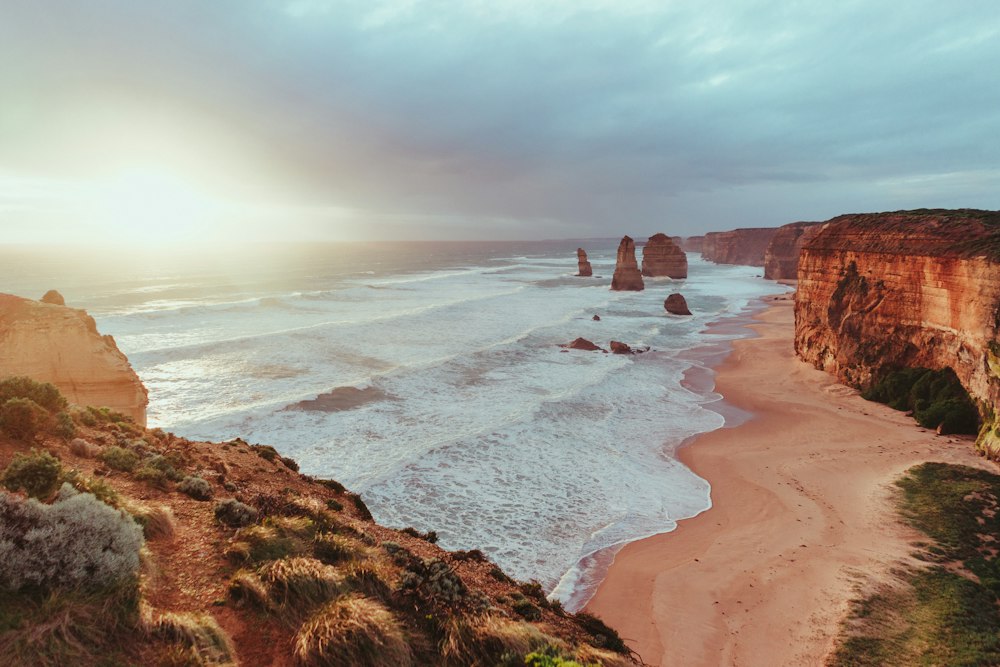
Limestone stacks stand in the surf off the cliffs of Port Campbell National Park, and seven can be counted from the main platform. Sealed…
Food, fuel and beds sit close together around a small harbour here, about a ten-minute drive from the Twelve Apostles. Sheltered from most…
La Perouse Lorne has four rooms at 26 William Street, a short walk from the main street and the beach. All have an ensuite bathroom and a…




Save Great Ocean Road to your Australia trip in the Meridian Dispatch app and build the day around it, with the best of Melbourne pinned on one map.
Download on the App StoreLast updated