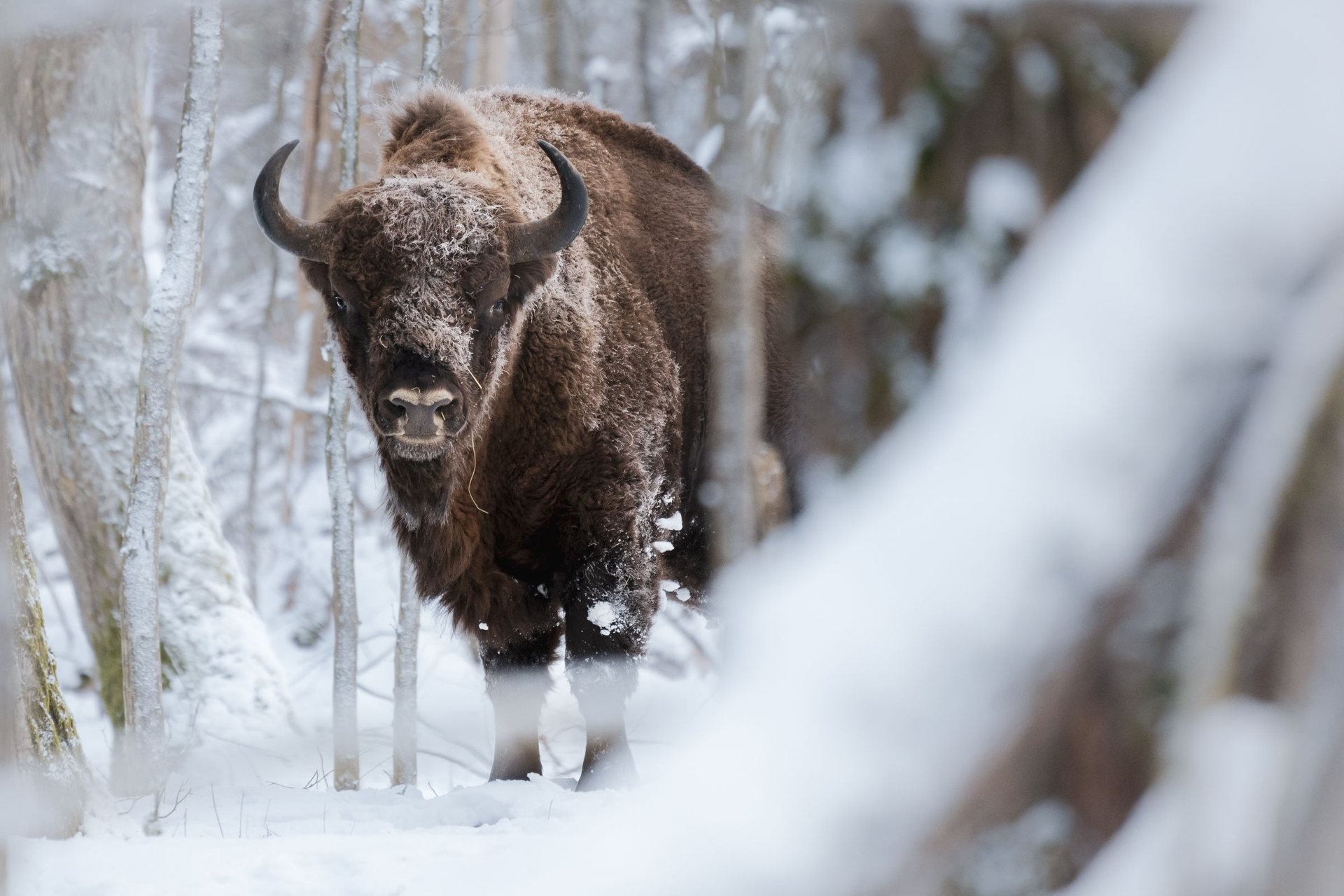
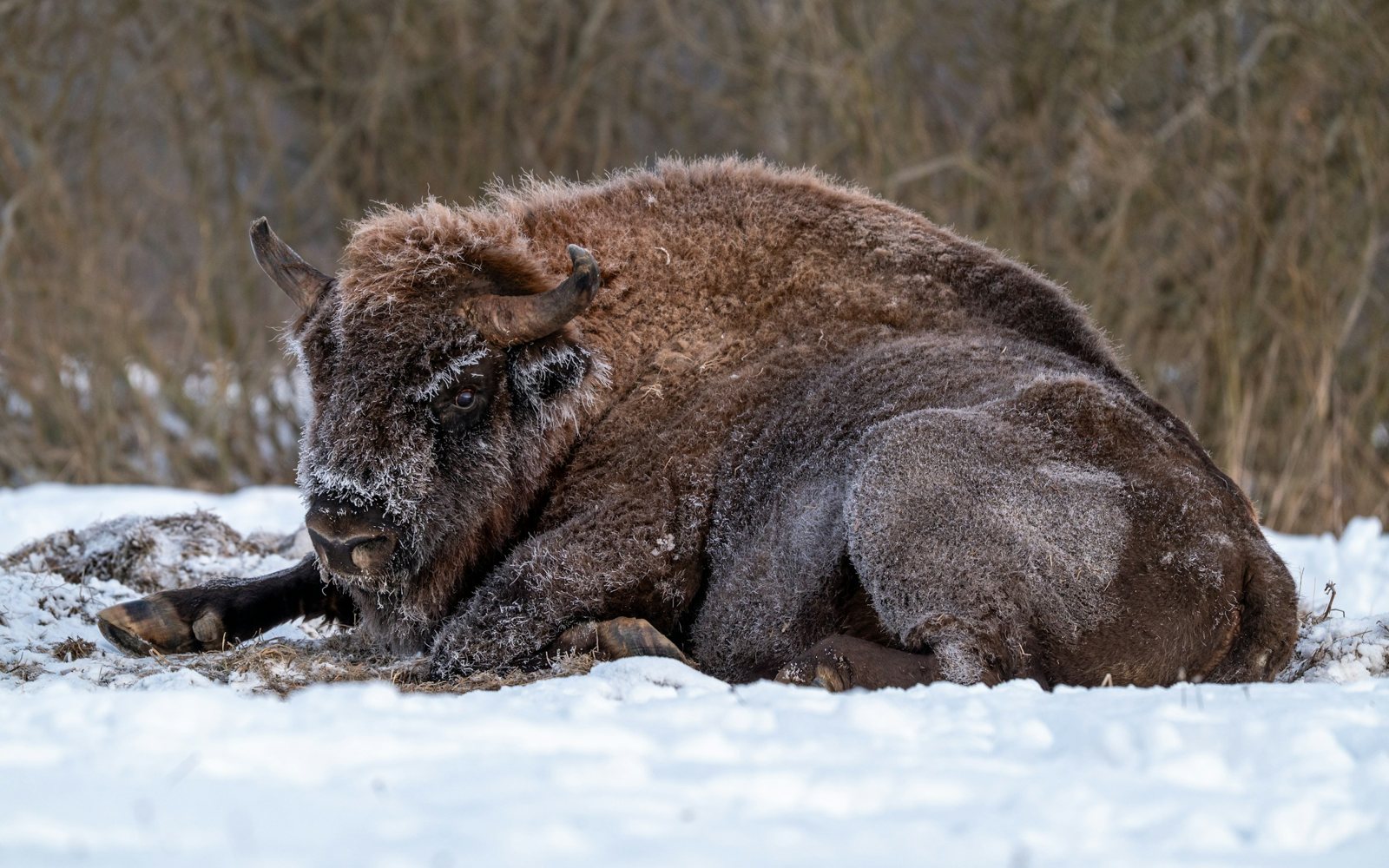
On a winter morning near Białowieża, a herd of wild bison walks out of the forest onto the snow at first light, and you can watch it from a car parked at the edge of the field. A century ago there were none left in the wild.
The last one was shot in this forest in 1919. Every bison now living, including the free herd of around a thousand on the Polish side of Białowieża, descends from about a dozen animals in zoos, and the first two came home here in 1929.
Białowieża itself is a village of wooden houses and painted shutters at the end of the road from Hajnówka, close to the Belarus border. Give it two or three nights in winter; every morning starts in the dark.
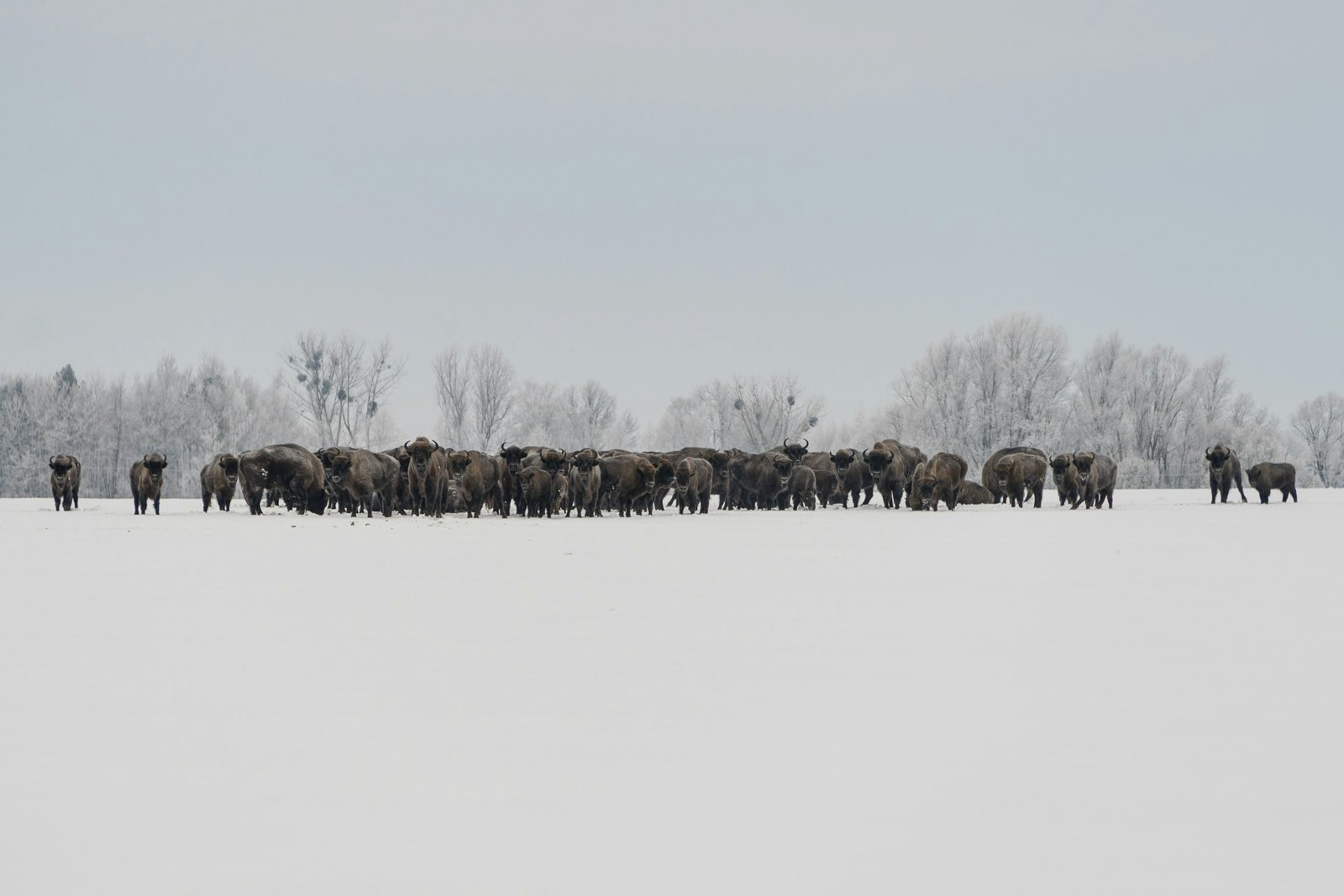
Winter is when the herds can be found. In summer they graze the forest edges for half an hour around sunrise and then go back under the trees, and a morning on the meadows can easily come up empty. From November, foresters and the park put out hay, the animals gather into bigger groups near it, and snow drives them out onto the fields around the forest villages until March.
The fields around Teremiski and Budy, a few kilometres from Białowieża, are where herds turn up most often. The feeding points themselves are kept away from roads, so the trick is knowing which field the herd crossed the day before, and that is what a local guide with a car is for. Book a dawn drive through the PTTK office for your first morning rather than your last, so a blank morning leaves time for another try. Some guides also run evening trips with thermal cameras.
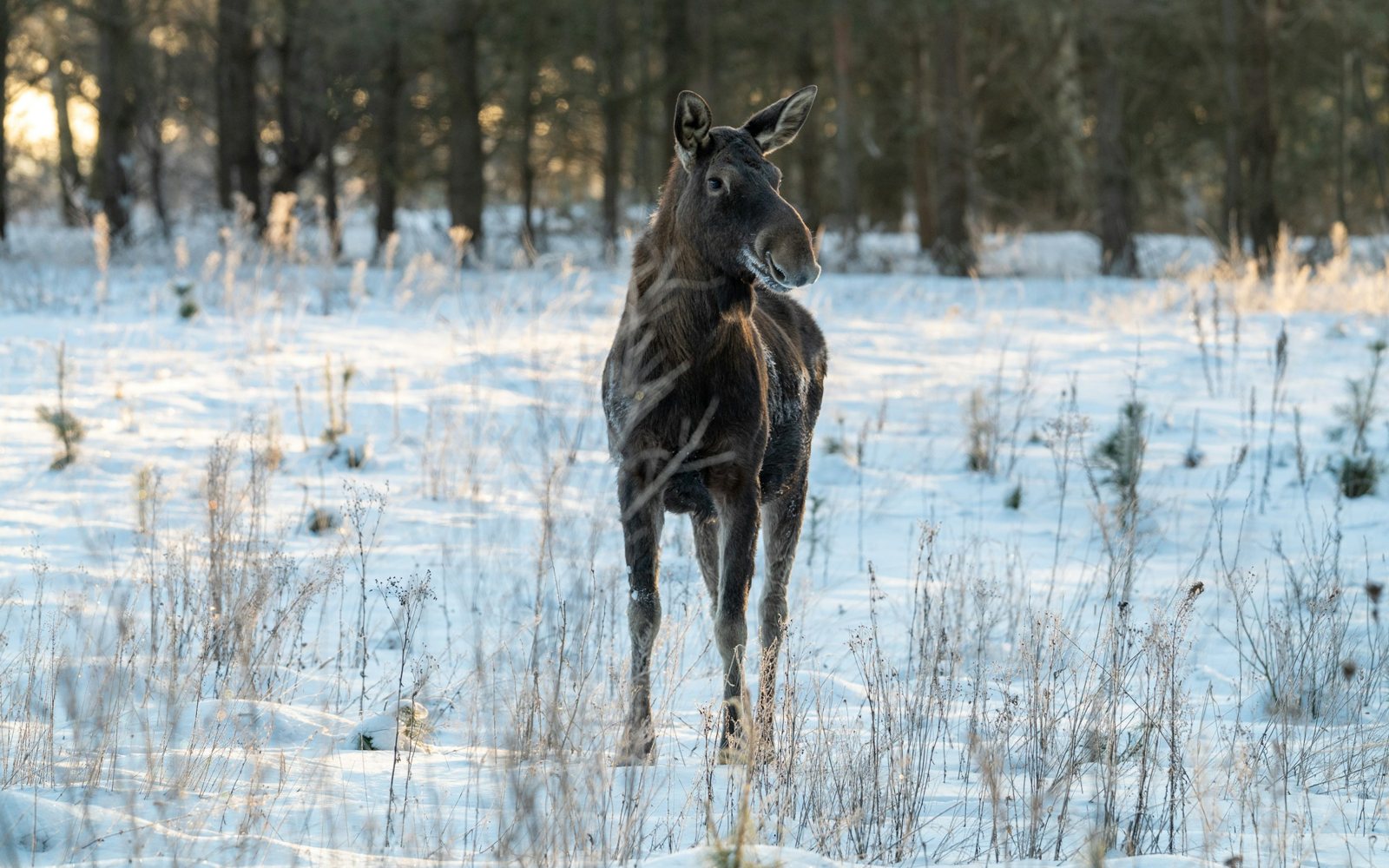
In early January the sun rises at about half past seven, and the hour before it is the coldest of the day. Dress for sitting still, bring a flask, and keep the engine off. In a hard winter the Narewka river runs half frozen past the meadows, white-tailed eagles pass overhead, and elk come out onto the same snow.
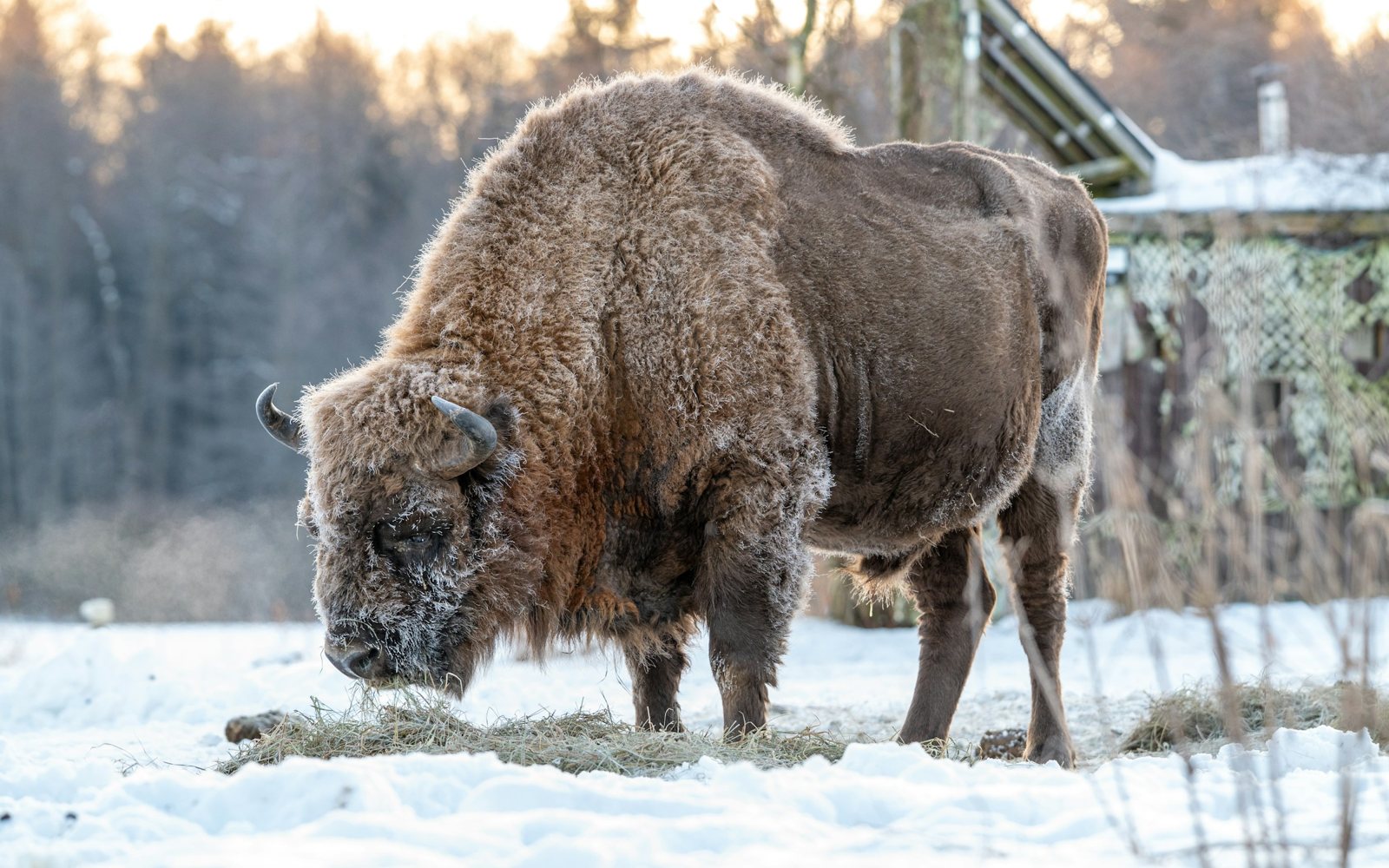
When the herd does appear, stay in the car or at least fifty metres back, the distance the park asks for. A bull weighs about as much as a small car and turns faster than it looks. At Teremiski in October 2025 one charged a visitor who had walked up for a photograph, and the visitor ended up in hospital.
If the fields stay empty, the European Bison Show Reserve, a few kilometres west of the village, keeps bison, elk, wolves, a lynx and small tarpan-type ponies in large forest enclosures. Walk there on Żebra Żubra, a free boardwalk of about 2.7 kilometres through wet alder and ash, in boots with grip, because the planks ice over. The reserve closes on Mondays from mid-October to mid-April.
Spend the afternoon in the strict reserve. It covers about six thousand hectares of oak, lime, hornbeam and spruce where dead trees stay where they fall, so the floor is heaped with trunks going soft under moss and fungus. The biggest oaks are more than six metres round, and under them it is very quiet.
In snow the guide reads the morning's traffic across the path: deer, elk, fox, bison and, often, wolf. Between thirty-five and forty-eight wolves live on the Polish side, and you will almost certainly hear one before you see one. Lynx, fewer than fifteen across the whole forest, are seen by almost no one.
The walk follows one unmarked path to an oak named after the king Jagiełło and back, takes about three hours, and goes in groups of no more than ten. Book the guide before you arrive, through the same PTTK office, which stands at the southern edge of the Palace Park. Entry tickets are sold separately on bilety.bpn.com.pl and do not include a guide. After heavy rain or a fast thaw the park can stop the walks, so keep a spare morning.
Dress for sitting still, bring a flask, and keep the engine off.
Trains run direct to Hajnówka from Białystok in about an hour and from Warszawa Wschodnia in about two and a half, though only a couple a day make the through run from Warsaw. The last twenty kilometres are by bus or taxi, and the buses are few and finish in the afternoon. By car, Warsaw is about three and a half hours, and in winter a car is what makes the dawn work unless the guide drives.
The Belarus border, a short way east, is closed and fenced, with no crossing. A buffer zone along it shuts some forest roads near the line, but none of the places in this piece lie inside it. Carry your passport or ID card all the same, because Border Guard patrols around the village can ask to see it.
Sleep in the village, which saves a drive in the dark at both ends of the day. Hotel Stoczek 1929 serves venison with forest mushrooms, and village menus carry babka ziemniaczana, a baked potato cake, and kartacze, potato dumplings stuffed with meat. The more unusual bed is at Carska, the restaurant in Białowieża's old goods station, which lets rooms in railway carriages on the siding and in the station's water tower.