 Submit a photo
Ninety seconds on Angkor Wat
Travellers usually reach the temple from Siem Reap by tuk-tuk or car. A driver or guide in Siem Reap can schedule the trip in advance, and a pre-arranged pick-up is recommended.
Angkor Wat itself is open daily from 5:00 am to 5:30 pm, and the wider Angkor park closes at 6:30 pm. The Bakan, the top level, runs on shorter hours, from 7:40 am to 5:00 pm. On the four Buddhist holy days each month, only Cambodian visitors may enter the Bakan.
Tickets cannot be bought at the temple. They can be bought on the official website, in the official app, at a kiosk or counter, or through a tour guide. The single-day ticket takes in the Small Circuit, while multi-day tickets extend to the Grand Circuit. Multi-day tickets need a photo for identification, and the single-day ticket does not.
The suggested time for the temple itself is two to three hours. The Small Circuit of temples takes around six to nine hours, and the larger circuit is a full day.
The official code of conduct prohibits shorts and skirts above the knees and bare shoulders in sacred places. Checks are strictest at the top level, where a sleeveless top covered only by a wrap is often turned away at the last checkpoint.
No. Children under 12 cannot enter the top level, the Bakan, because its steep steps are open only to visitors aged 12 and above. Pregnant women may not climb to the top either.
Carved deities, armies and dancers cover more than 1,000 square metres of Angkor Wat's outer gallery, and you can follow their stories panel by panel along the walls of the temple on Cambodia's national flag.
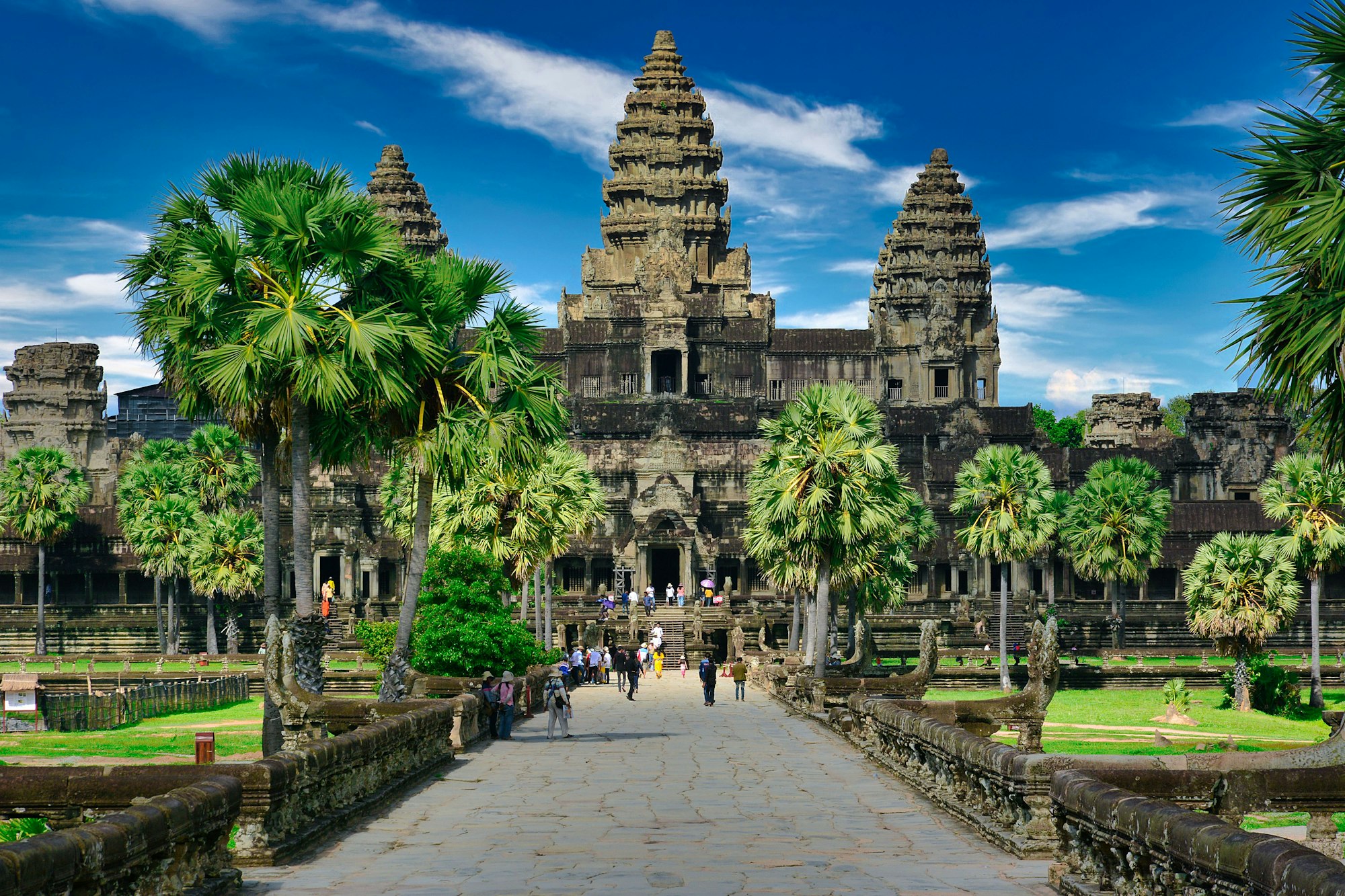
The temple is a model of Mount Meru, the home of the gods in Hindu myth. The group of towers at its centre, one at each corner and one in the middle, stands for the mountain's peaks, and three rectangular galleries rise toward them, one above the next.
The walls of the outer gallery are carved from end to end. On the east side, the Churning of the Ocean of Milk shows Vishnu standing on a tortoise between rows of asuras, or demons, and devas, or gods. Another wall shows two armies marching at each other from opposite sides, both heading to their own destruction.
One panel shows Suryavarman II, the king who built the temple, in procession, with a small inscription carved in his elephant's tail. In the heaven and hell panel, Yama, the judge, rides a bull at the centre of three tiers.
More than 1,700 apsaras and devatas, heavenly dancers and female deities, are carved across the temple. In the Churning scene the apsaras dance in the sky, one leg bent and the other raised behind them.
Unlike most Khmer temples, Angkor Wat faces west. Its formal approach comes from that side, through the grandest of its gateways and along a causeway about 350 metres long across the moat. At the very top, called the Bakan, walk round to the porticos at the corners and on the western side for the view down over the galleries.
A tuk-tuk drops you in the dark at the western entrance. Cross the bridge and walk east to the two ponds in front of the temple. The classic reflection photograph is taken from the north pond, and the south pond beside it is the alternative.
Stand right at the edge of the water, where nobody can step in front of you. If one pond is packed, try the other.
Once the sun is up, most of the crowd leaves for breakfast and the temple goes quiet. Walk in and start with the carved galleries on the lower levels, then join the queue for the top level and climb before the heat takes hold around ten.
Choose the pass by how much of the wider park you want to see. A one-day pass covers the Small Circuit of temples, which takes six to nine hours in full, and a three-day or seven-day pass adds the Grand Circuit. It is checked at every temple and nobody else can use it, so keep it on you.
Bring a light layer for the cool breeze at dawn and insect repellent for the ponds, and dress for the top level's rules from the start. Pack snacks and more water than you expect to need.
Leave the backpack, tripod and high heels at the hotel if you can, since all three are discouraged inside. For a higher view of the sunrise, climb the steps of one of the two library buildings.
Explore the rest of Siem Reap
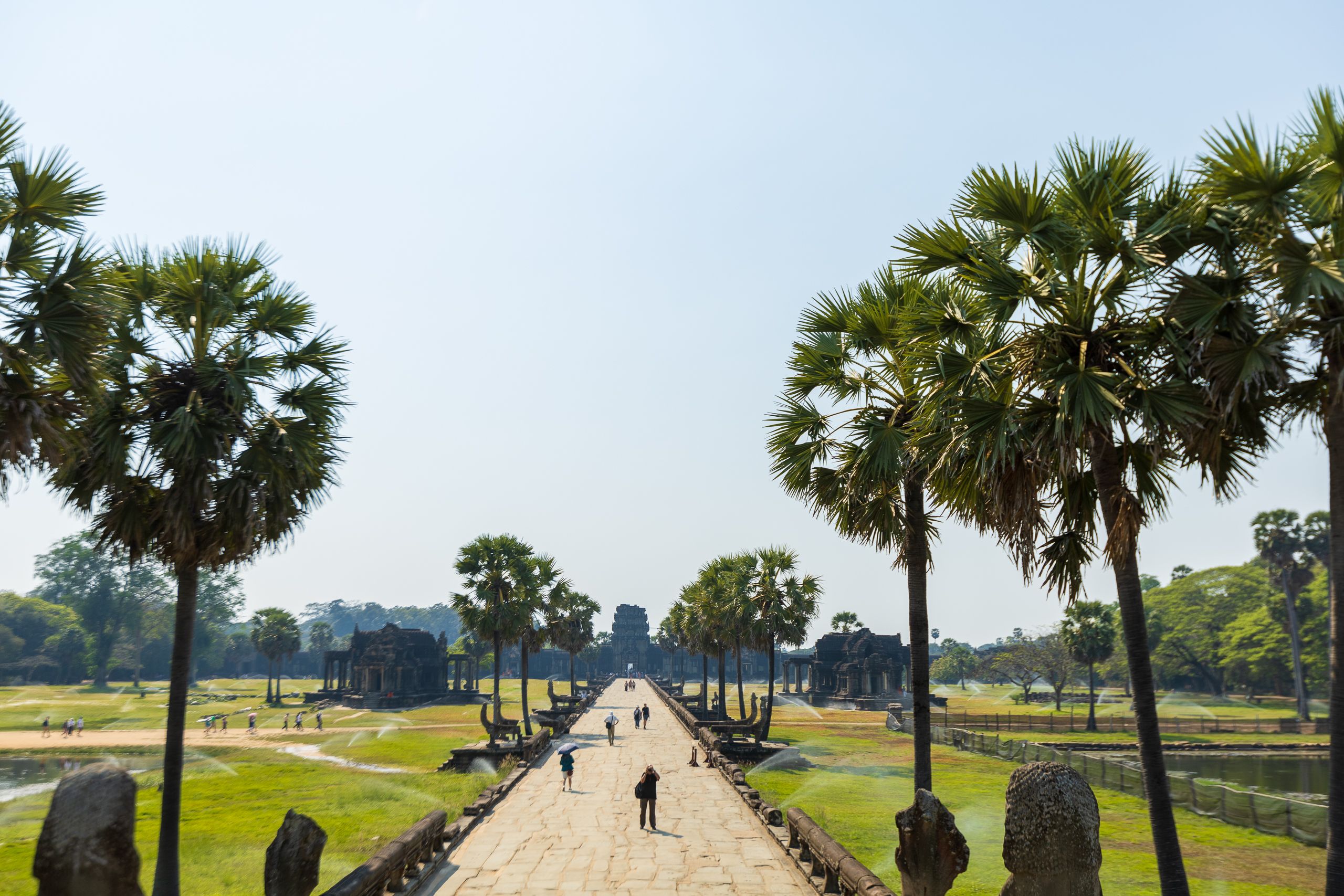
Northwest Cambodia's temple town sits a few kilometres south of the Angkor Archaeological Park, on the floodplain above the Tonle Sap. It…
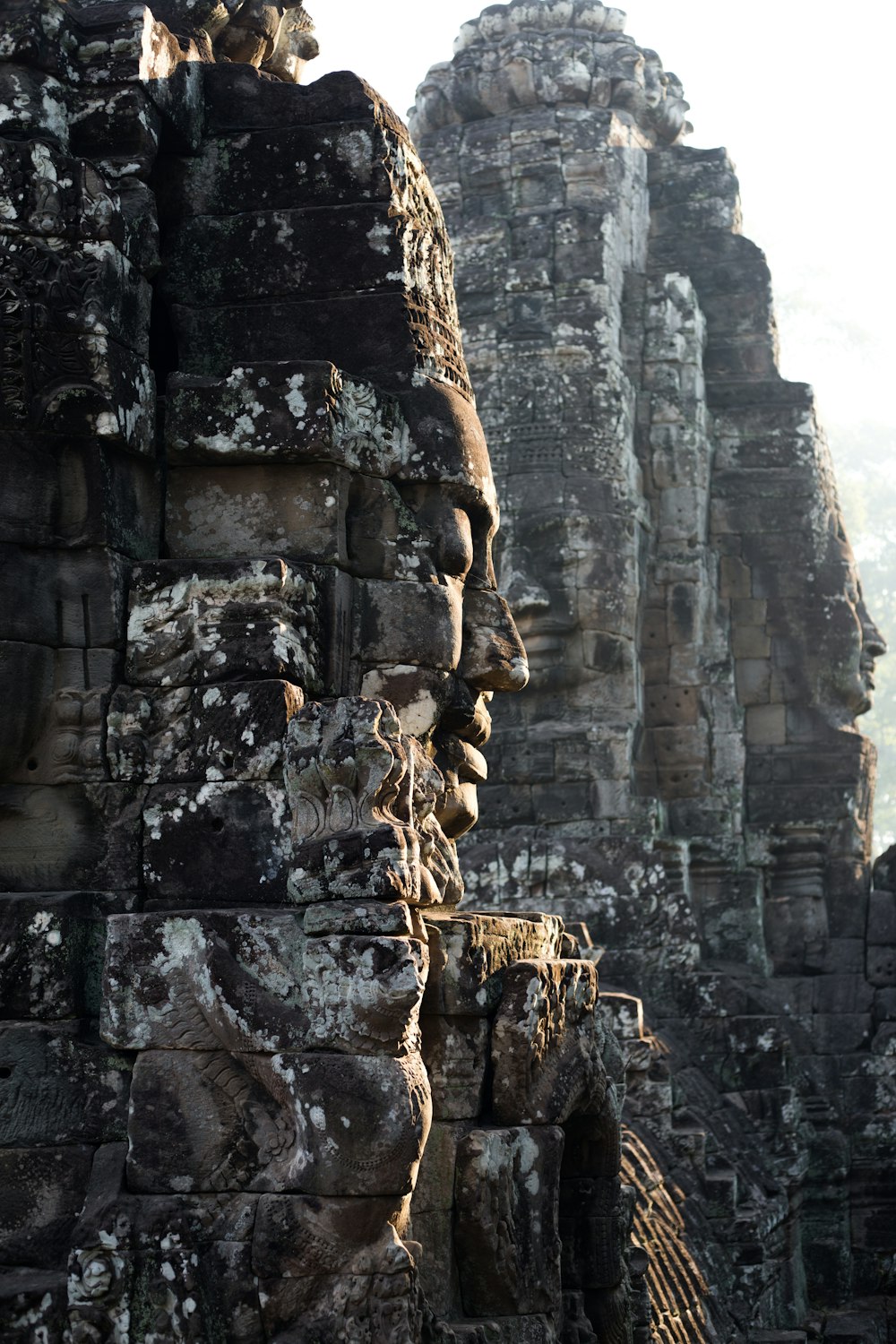
Two hundred odd stone faces look out from the towers at the centre of Angkor Thom, carved under Jayavarman VII and read variously as the…
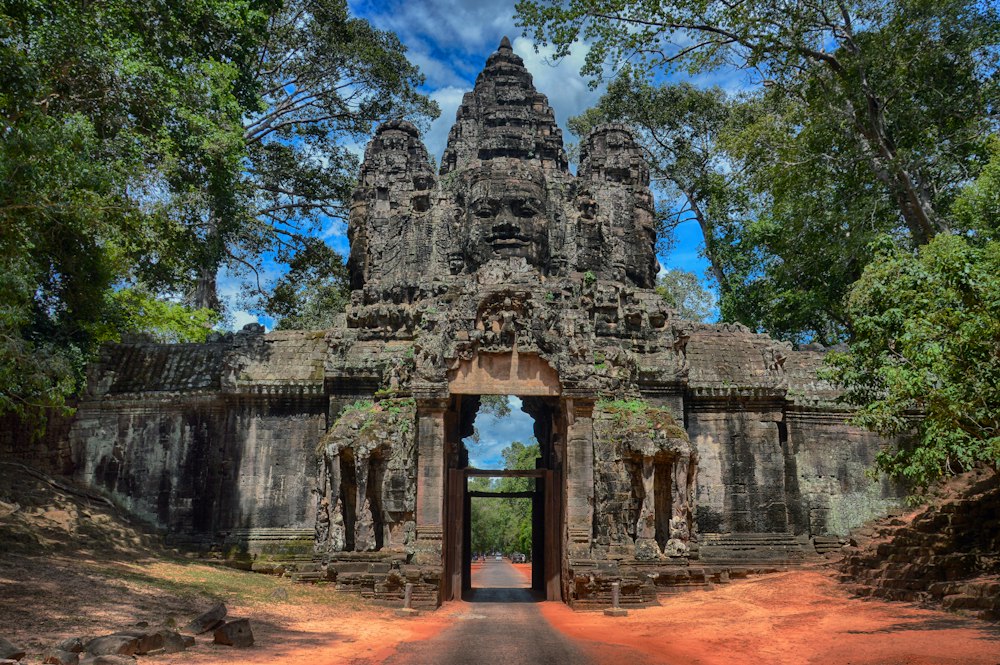
Jayavarman VII's walled capital covers nine square kilometres behind a square rampart and moat, with the Bayon at its centre and the…
Last updated