Things to do
12-
Angkor National Museum
Eight galleries in a modern building on the road into town set out Khmer sculpture by theme, with a hall of a thousand Buddha images and rooms on Suryavarman, Jayavarman and the Angkorian religions. Labels supply the context the temples themselves do not carry. An hour or two here before the first temple day pays off more than an hour after it.
-
Angkor Thom
Jayavarman VII's walled capital covers nine square kilometres behind a square rampart and moat, with the Bayon at its centre and the Terrace of the Elephants running along the old parade ground. Entry is through five monumental gates, and the south gate keeps the fullest line of gods and demons hauling their serpent. Half a day covers the enclosure at a walking pace, more if the outer gates are included.
-
Angkor Wat
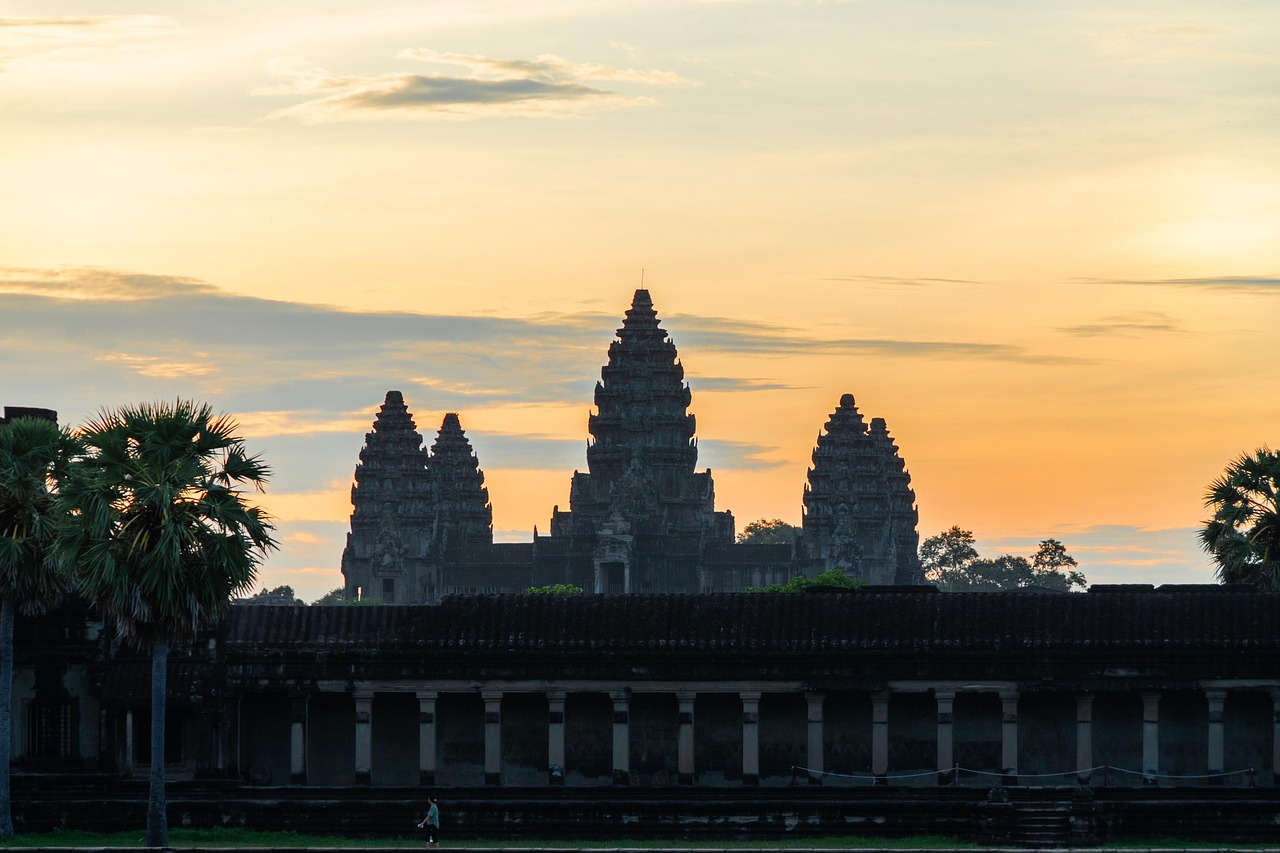
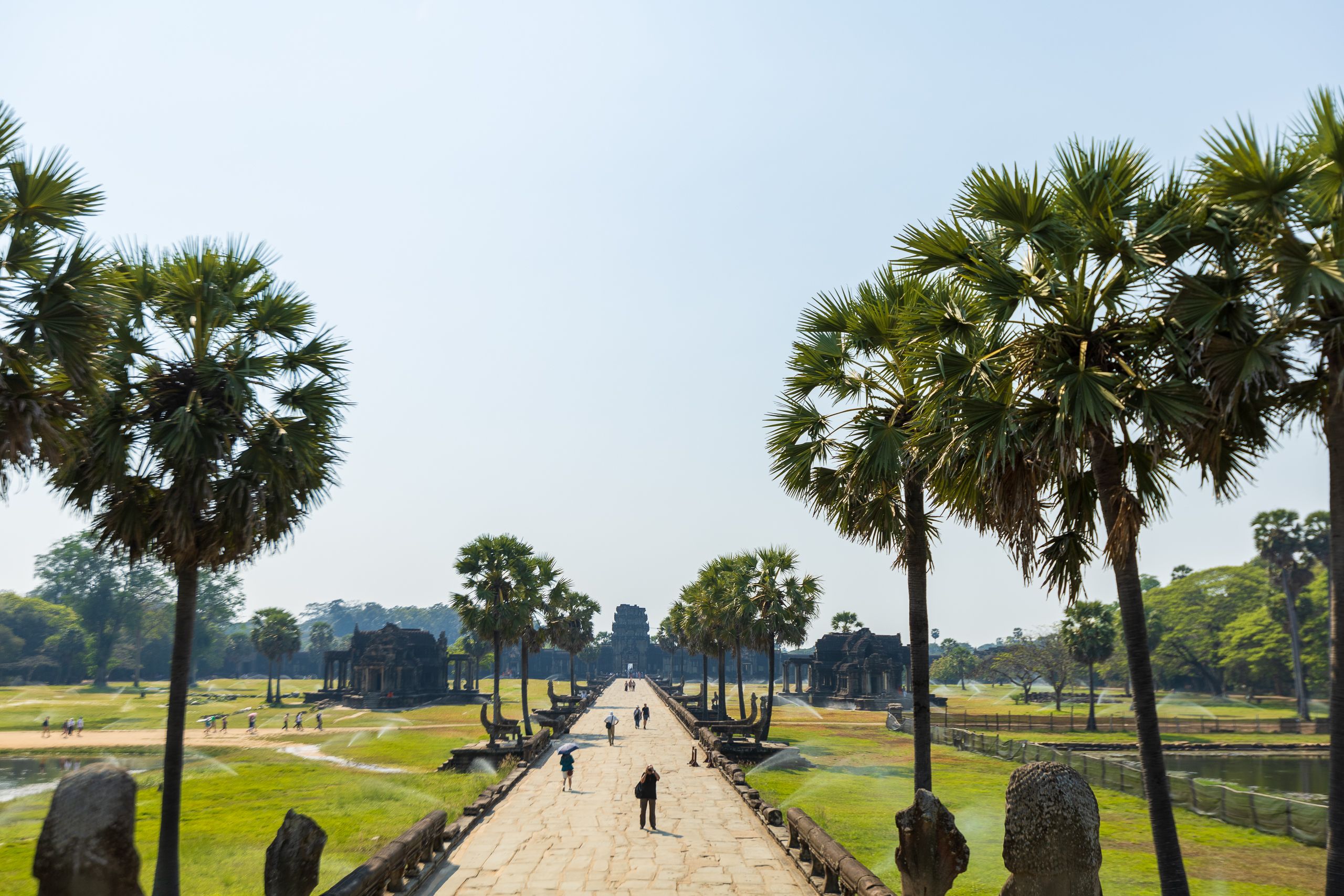
Suryavarman II raised this temple mountain in the twelfth century as a Vishnu sanctuary and his own funerary monument, and it has never been fully abandoned since. Five towers rise behind a moat wide enough to read as a lake. Sunrise draws a dense crowd to the northern pond; the bas-relief galleries are quietest in the late afternoon, when the western face takes the light.
-
Banteay Srei
Pink sandstone takes detail that grey stone cannot, which is why this small tenth-century Shiva temple carries the sharpest carving in the Angkor group: lintels of Rama, Shiva and Kali cut almost in the round. It sits about 25km northeast of the main park, so it pairs naturally with Kbal Spean or Beng Mealea. Midday sun flattens the relief, so morning or late afternoon suits the stone.
-
Bayon
Two hundred odd stone faces look out from the towers at the centre of Angkor Thom, carved under Jayavarman VII and read variously as the bodhisattva Avalokiteshvara or as the king himself. Scale is deceptive from the entrance causeway, and the faces only resolve on the upper terrace. Morning light catches the eastern group, and the crowd thins once the tour buses leave for lunch.
-
Beng Mealea
Collapsed galleries and a forest floor of tumbled blocks make this twelfth-century temple feel closer to how Angkor looked before clearance began. A raised boardwalk crosses the centre, though much of the interest lies in the scrambling routes off it. Roughly 65km east of Siem Reap on a sealed road, it works as a half day paired with Koh Ker further north.
-
Kulen Mountain
A sandstone plateau north of the main temples, this is where Jayavarman II declared himself universal monarch in 802 and founded the Khmer empire before Angkor existed. Draws now are a waterfall with a pool below it, a reclining Buddha carved into the summit rock, and the riverbed lingas at Kbal Spean. The access road runs one-way by time of day, so the descent follows a different route from the climb.
-
Phnom Bakheng
A late ninth-century state temple crowns a hill between Angkor Wat and Angkor Thom, and the terrace at the top looks west over forest to the towers of Angkor Wat. Numbers on the summit are capped and a queue forms well before sunset, so arriving early or coming at another hour both work. The climb takes about twenty minutes on a sandy ramp.
-
Preah Khan
Built as a monastery and a university on the site of a battlefield victory, this sprawling complex once housed thousands of attendants and still runs long dim corridors that narrow doorway by doorway. Vegetation has been cleared selectively, leaving collapsed lintels and a curious two-storey pavilion on round columns. Walking in from the east and out to the west avoids doubling back.
-
Pub Street
Bars, barbecue grills and fruit-shake carts pack a short pedestrianised strip in the old French quarter, loud from dusk until the small hours. The lanes either side hold the calmer end of it: Kandal Village boutiques, the night markets and the alley restaurants doing amok and Khmer barbecue. Anyone planning an early temple start sleeps better a few streets back.
-
Ta Prohm
Silk-cotton and strangler fig roots grip the galleries of a Buddhist monastery founded in 1186, left deliberately unrestored so the forest still holds the stone together. Wooden walkways now steer visitors past the celebrated root formations, which makes the route short and the queue at each one long. Early opening is the only reliable way round that.
-
Tonlé Sap
Southeast Asia's largest freshwater lake reverses its flow each monsoon, swelling far beyond its dry-season shore and carrying the fish catch that feeds much of Cambodia. Floating and stilted villages such as Kampong Phluk and Kampong Khleang sit on the water south of Siem Reap. Water levels govern which of them a boat can reach, and pressured souvenir stops are common on the short runs from town.