 Submit a photo
Ninety seconds on Mutianyu Great Wall
By tourist shuttle, public bus or car. The shuttle leaves from Dongzhimen, and the public route is bus 916, about an hour to Huairou, then a local bus. An early morning drive from downtown takes up to an hour and a half.
The gates open at 7:30 in peak season, which runs from mid-March to mid-November. Closing is at 18:00 or 18:30 depending on the day, and ticket sales stop an hour before. Shorter winter hours apply from mid-November to mid-March, and the official site posts them.
Yes. The scenic area recommends buying in advance through its official Mutianyu Great Wall account. Daily slots can sell out, above all around the national holidays.
It depends on which end of the wall is the goal. The enclosed cable car serves Tower 14 and is the warmer ride in winter. The toboggan comes down from the Tower 6 side, paired with the open lift up.
About half a day. Expect two to four hours on the wall itself, plus the shuttle bus and the lifts at each end, and longer if the toboggan queue is long.
For a quieter visit, yes. Badaling draws far bigger crowds than Mutianyu, even on busy days, so a walk at Mutianyu leaves far more room on the wall and at the towers.
Choose your end of the wall before you ride up: the steep western climb from Tower 14 for the big mountain views, or the quiet eastern ridge from Tower 6, where some stretches can be yours alone.
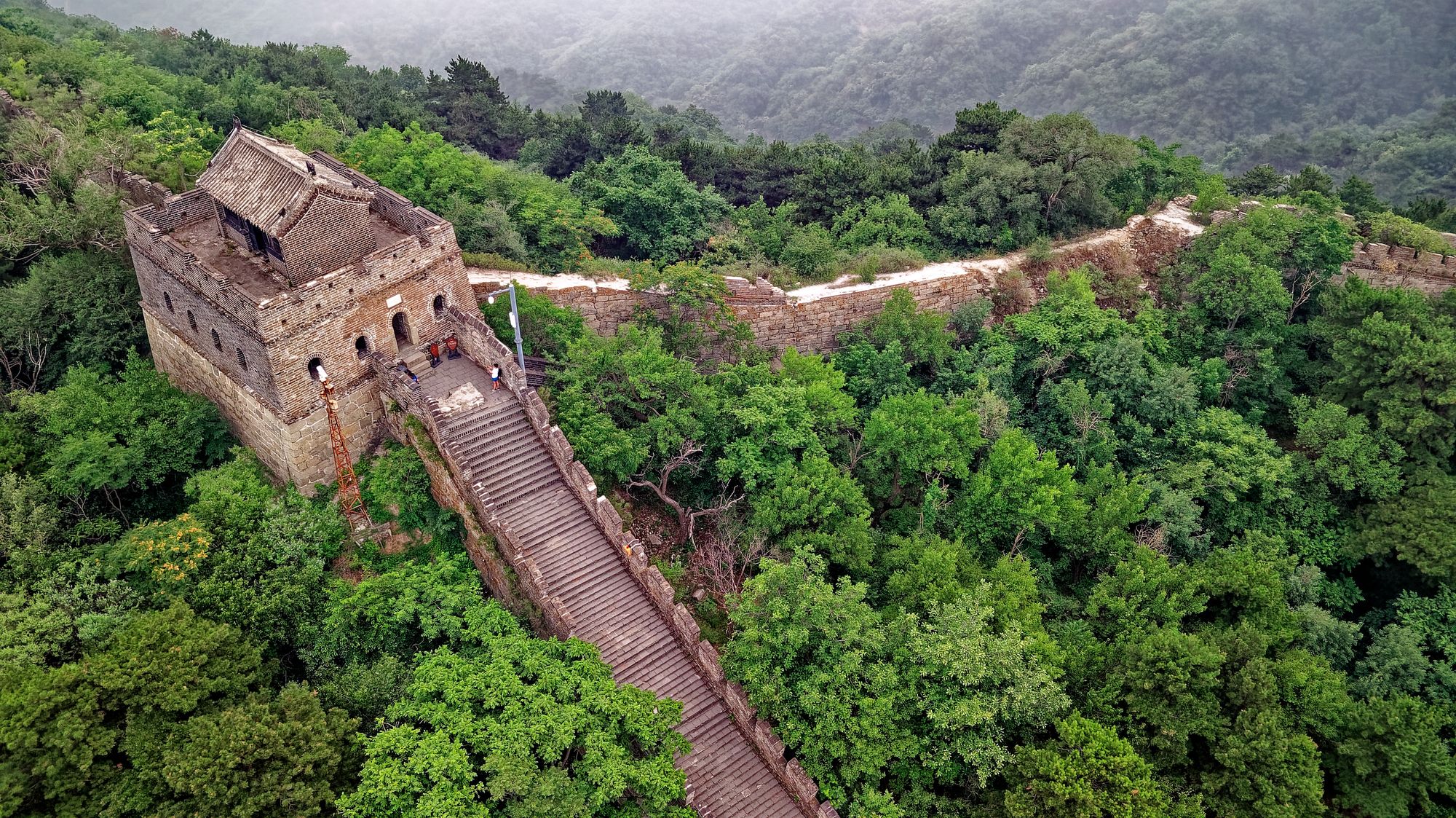
Granite slabs make up the wall, which is crenellated on both sides. Embrasures known as archer holes, for archers to shoot through, pierce the battlement walls. The scenic area forbids climbing onto the battlements themselves, so keep to the walkway.
The restoration keeps the rampart safe to walk without making it look new, so the stone still shows its age.
Building here began under the Northern Qi dynasty, long before the Ming. The wall under your feet is the Ming rebuild, laid on that original foundation.
Tower 20 is the highest point on the Mutianyu section, at the top of the steepest stairs on its western stretch. That final climb is closed for works; see Know before you go.
The visit starts with a compulsory shuttle bus. From the car park, walk to the service area and through the shopping street, then ride the shuttle up to the lift stations. If you booked the lift or the toboggan, enter through the Slide Ticket Gate.
Choose one of two routes. For the big mountain views, ride the enclosed cable car to Tower 14 and walk west to the end of the open wall, where the closure begins. Then walk back east past the cable car station to Tower 6.
For the quieter end, ride the open lift to Tower 6, follow the ridge east to Tower 1 and walk back. Either way, finish at Tower 6 and ride the toboggan down, steering your speed with its hand brake.
To walk up instead of riding, start at the North Entrance Gate and climb the northern wall path to Tower 10.
Book a guided day trip if you want the transfer, the tickets and the timing handled for you. Going on your own works well by public bus, and you buy the bus ticket from the conductor on board.
Expect taxi touts to board the bus on the way and announce an early stop for the wall; stay on to your planned stop. Taxis at Mutianyu are not metered, so agree the fare before you get in.
Stock up before the shuttle. The souvenir stalls and small shops are in the lower visitor area, and there is barely any shade on the wall, where the sun is strong even on cool days.
Carry water, snacks and a power bank for the walk, and drink as you go, because the climbs are tiring. On busy days the toboggan queue can last longer than the ride, so take the lift down instead.
Beijing, and further afield
China's capital sits on the northern plain where the mountains close in, a city of imperial axes, hutong lanes and a ring road grid laid…
Capital under the Tang and the eastern end of the Silk Road, this walled city on the Guanzhong plain is the base for the Terracotta Army,…
China's largest city sits where the Huangpu meets the Yangtze estuary, a treaty port that became the country's financial centre. The…
The official pages this guide was checked against.
Last updated