 Submit a photo
Submit a photo
Submit a photo
Ninety seconds on Rovinj Old Town
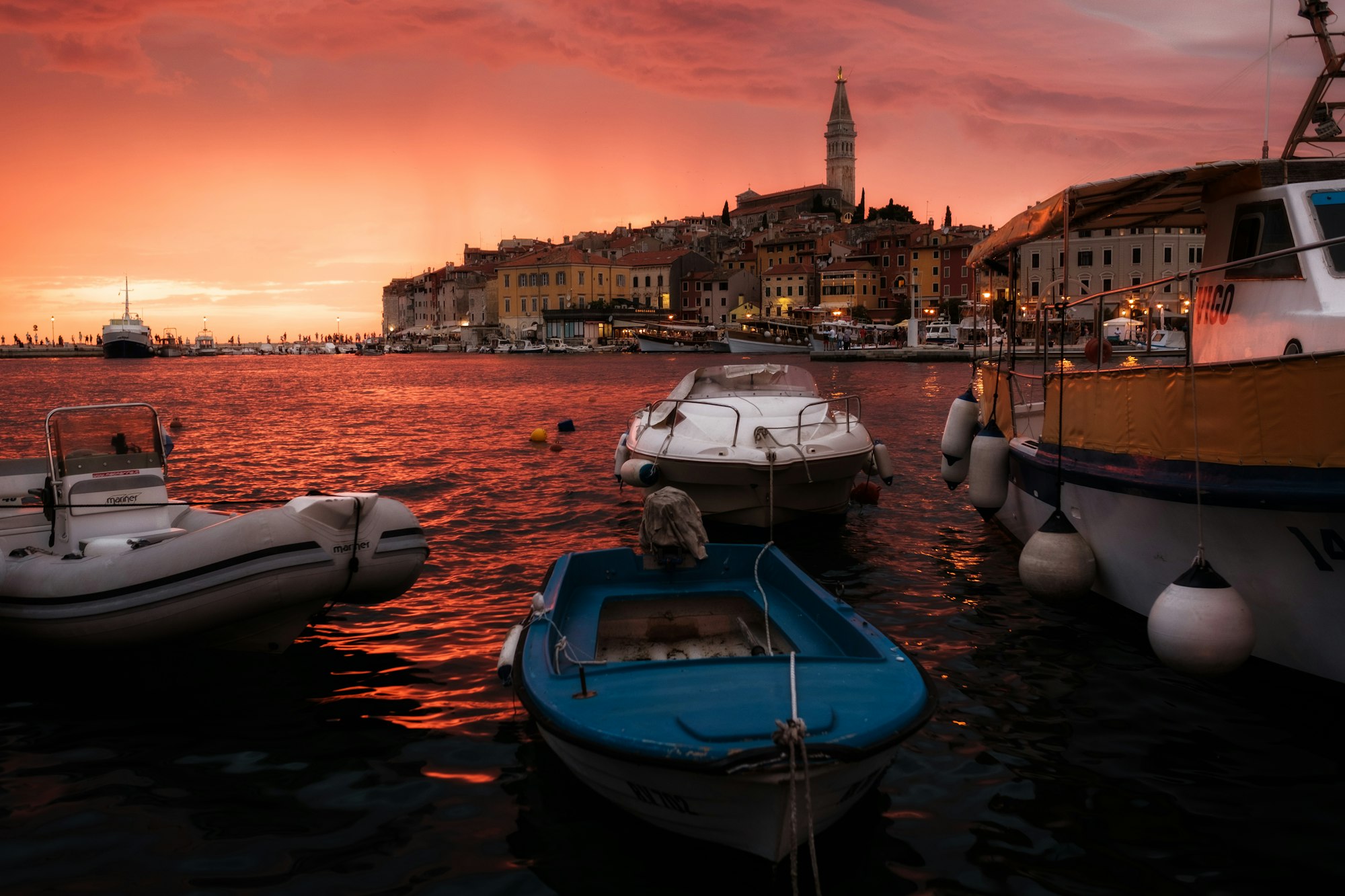
Outside the middle of the day, when the coaches are in, you have the maze of lanes almost to yourself as you climb through red-painted houses to the church at the top.
The lanes bend, narrow and climb because they were laid out as a deliberate maze to slow anyone attacking the town. Pieces of the two rows of walls that once ringed the town are still standing.
Balbi's Arch is the stone gateway in from the harbour square, and the Venetian lion carved on top is the detail to look up for. Through it, Grisia climbs to the top, lined with small galleries, studios and shops, which is why it is known as the town's open-air gallery. The houses on either side are painted in Venetian reds.
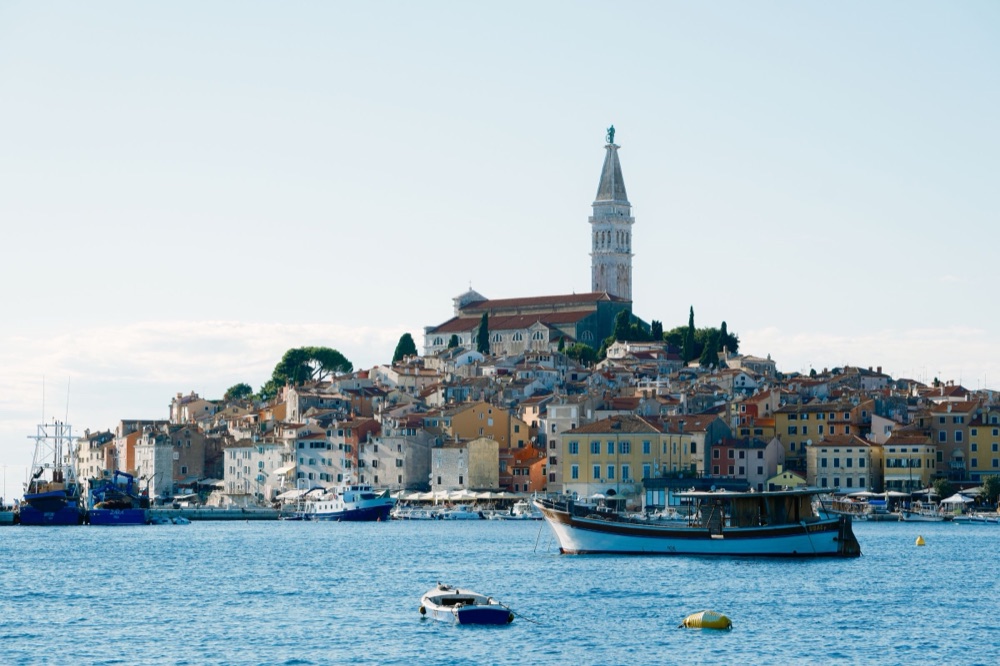
St Euphemia closes the climb and dominates the skyline. Its bell tower, about 60 metres high, resembles the campanile of St Mark's in Venice.
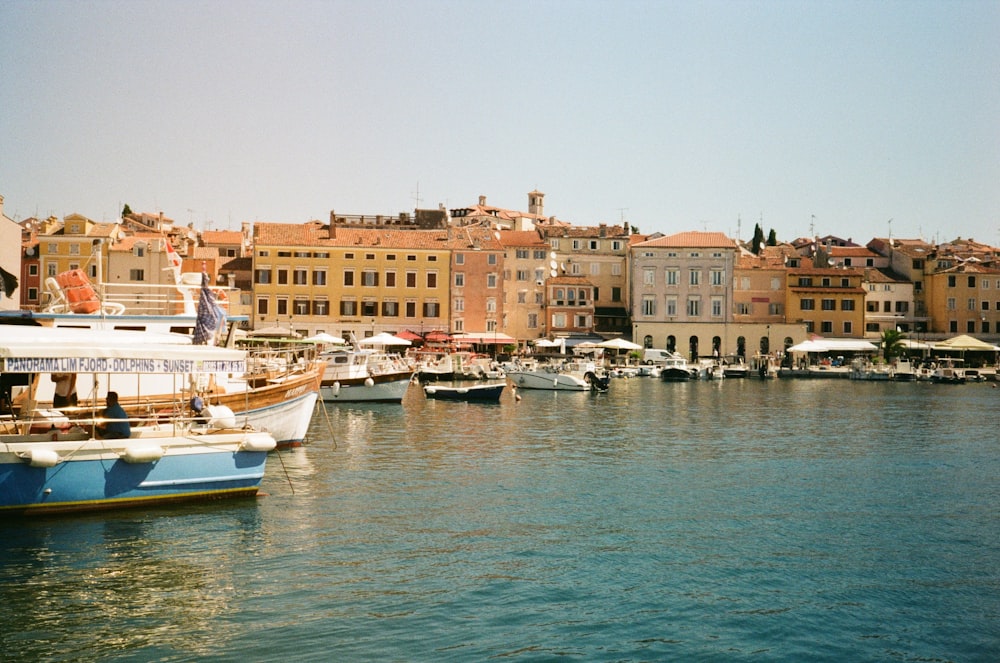
Down on the harbour, a working fishing fleet still ties up beside the cafe terraces, and the boats that run trips round the archipelago moor alongside them.
Start at the market on Trg Valdibora, a couple of streets from the pink clock tower, where the daily catch and local produce are sold from 7am to 4pm. From there, walk round to the harbour square and go in through Balbi's Arch.
Grisia, the main street, climbs from the arch to the church at the top. Take it slowly, because the ascent is moderately steep.
At the top, the churchyard gives the widest view in town over the archipelago. If you are reasonably fit, the bell tower is more than two hundred steep wooden steps to a platform over the whole town, and it is ticketed. Come down through the side lanes and finish on the harbour, where the archipelago trips are sold beside the fishing boats.
You do not need a guide: the lanes are public and Grisia leads you straight up to the church. A guided walk is worth it if you want the stories behind the houses and the gates, while on your own you keep your own hours. Book a guided walk ahead in peak season rather than on the day.
Wear shoes with real grip; sandals and flip-flops make hard going of a long walk. In summer, bring a refillable water bottle, a hat, sunscreen and sunglasses. If you only have one evening, turn the walk round and finish in the churchyard at sunset, when the view over the islands is at its best.
Explore the rest of Rovinj
Three of Croatia's fourteen Michelin-starred restaurants stand in one small Istrian town, among them the only two-star kitchen in the…
Founded in 1954 in a baroque palace on the main square. The museum's own catalogue lists a collection of old masters, a numismatic one and…
Dated 1680, this baroque gate stands where the old town's seaward entrance used to be, and it carries a Venetian lion above the arch with a…
Last updated