Globe Countries Cities Itineraries World's Best Hotels Events Login
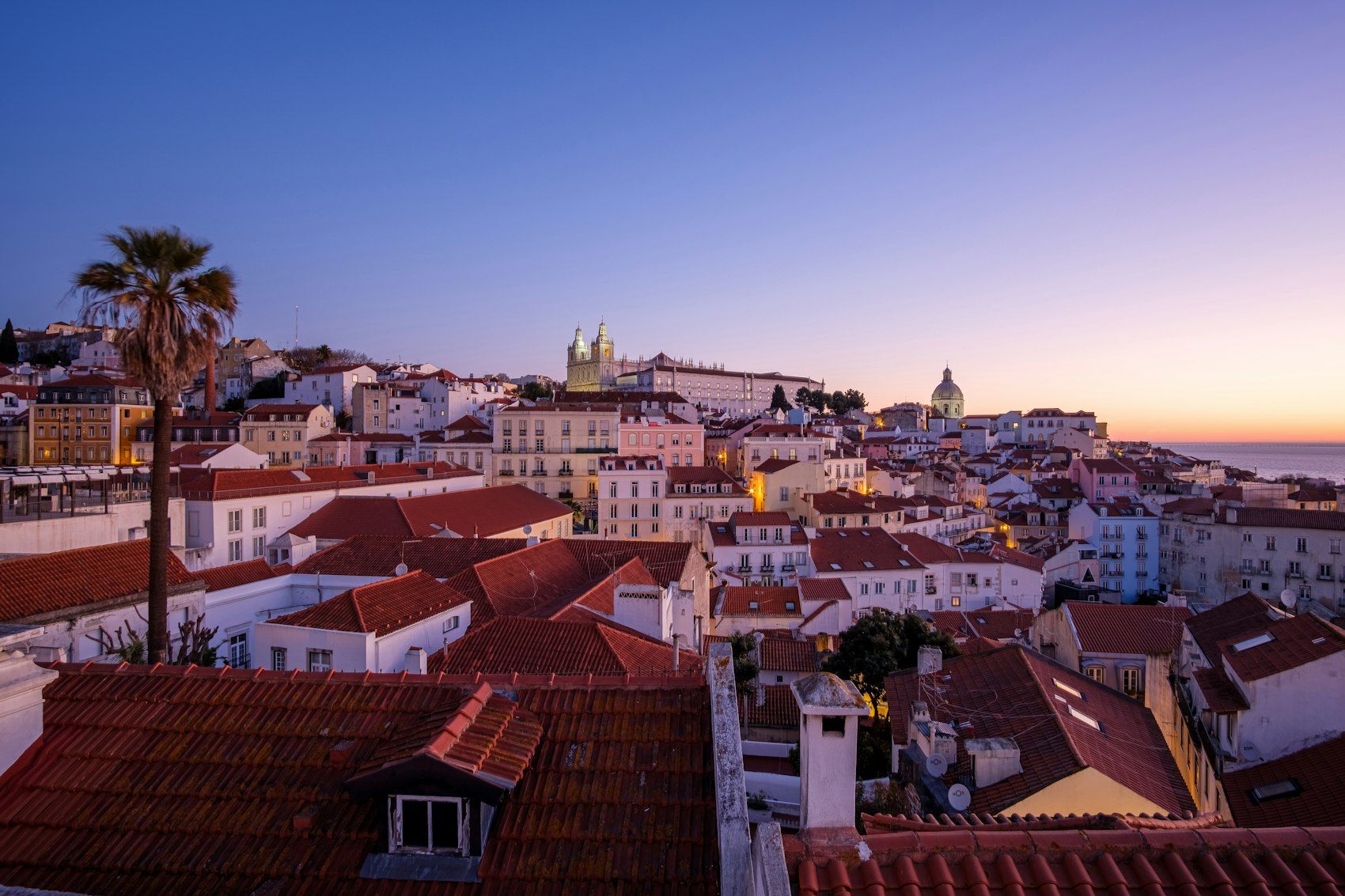
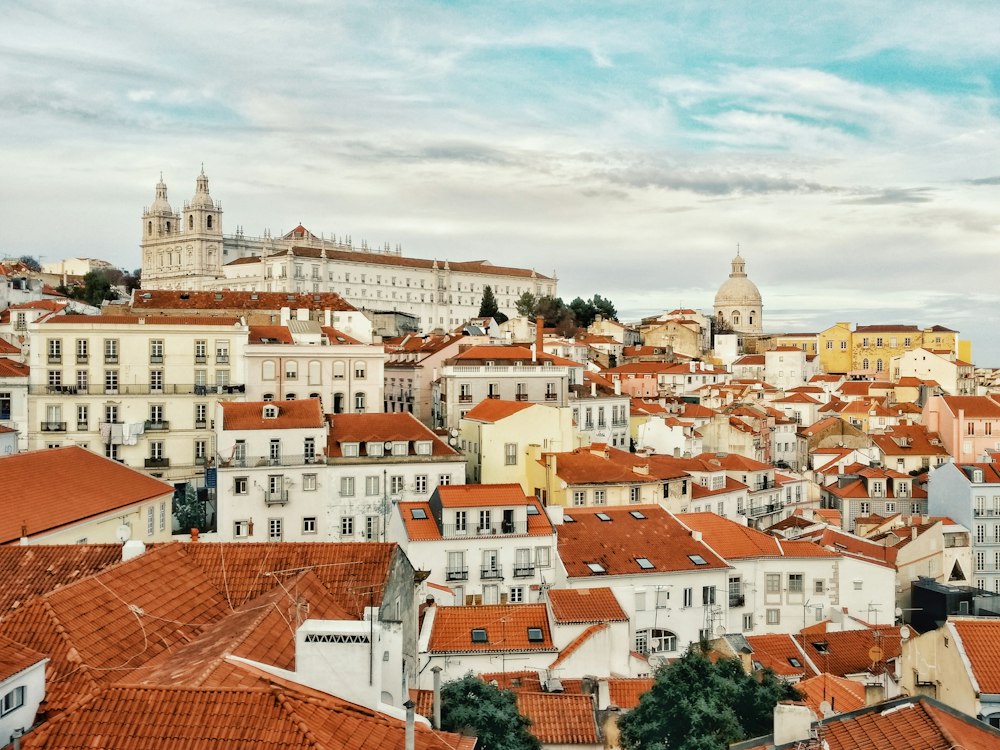
The rooftops of Alfama in Lisbon at dusk, the river beyond
Benjamin Pazdernik
Portugal  ·  38.72°N 9.14°W

Lisbon on Foot

Written by Meridian Dispatch  ·  20 June 2026  ·  Updated

Four days in the tiled city, good shoes and no fixed plan, taking the seven hills the only way that makes any sense of them: slowly, on foot.

Baixa → Alfama → Bairro Alto → Belém

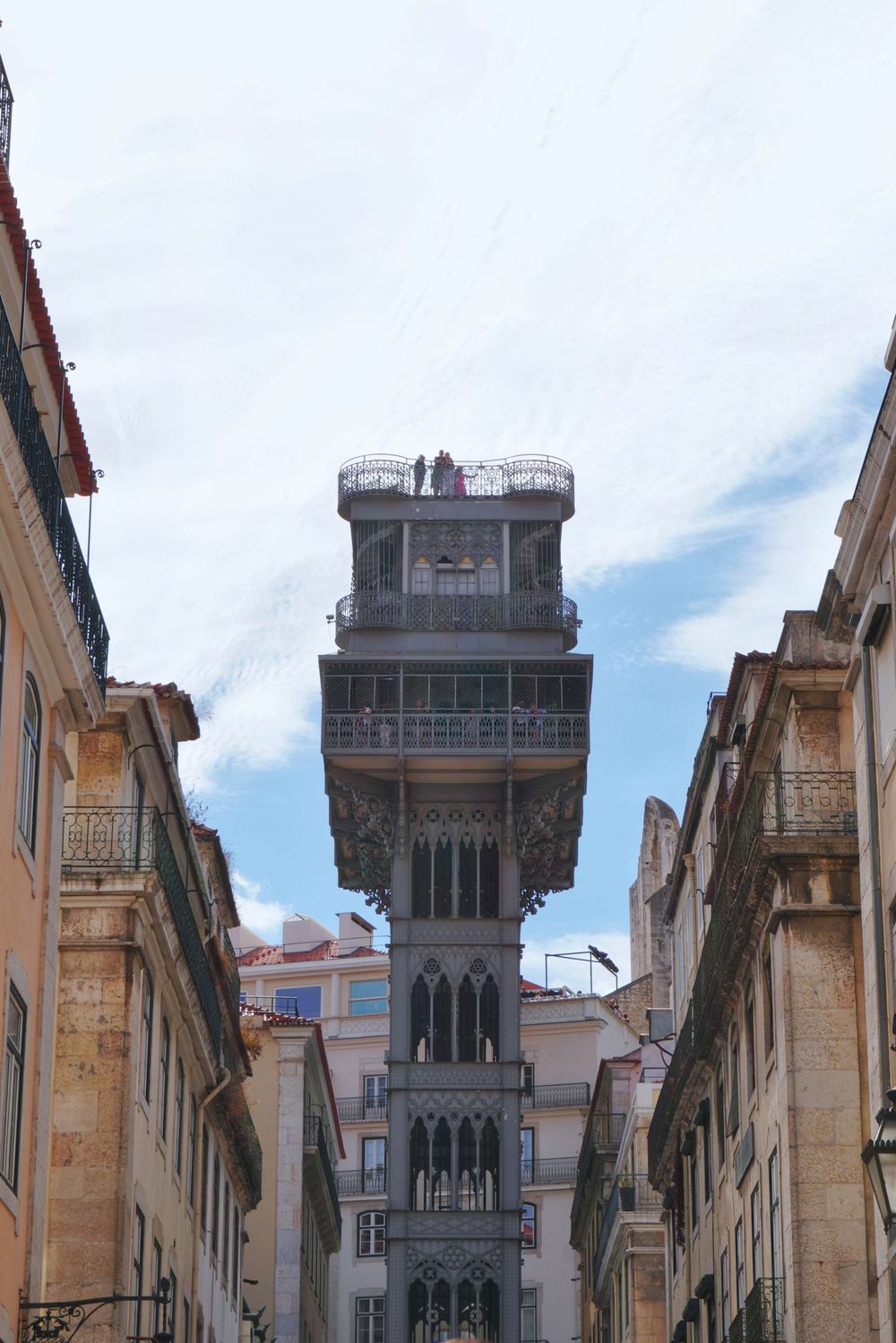
Lisbon was built on seven hills, tiled most of them, and paved the gaps with calçada portuguesa, the little limestone cobbles four hundred years of feet have polished to an ice rink. June brings the heat and the week of Santo António, when Alfama hangs paper streamers across its lanes and grills sardines on the doorstep until two in the morning. The Santa Justa lift and the funiculars take the sting out of the first gradient, but the city is best walked, at the pace it sets rather than the one a schedule wants.
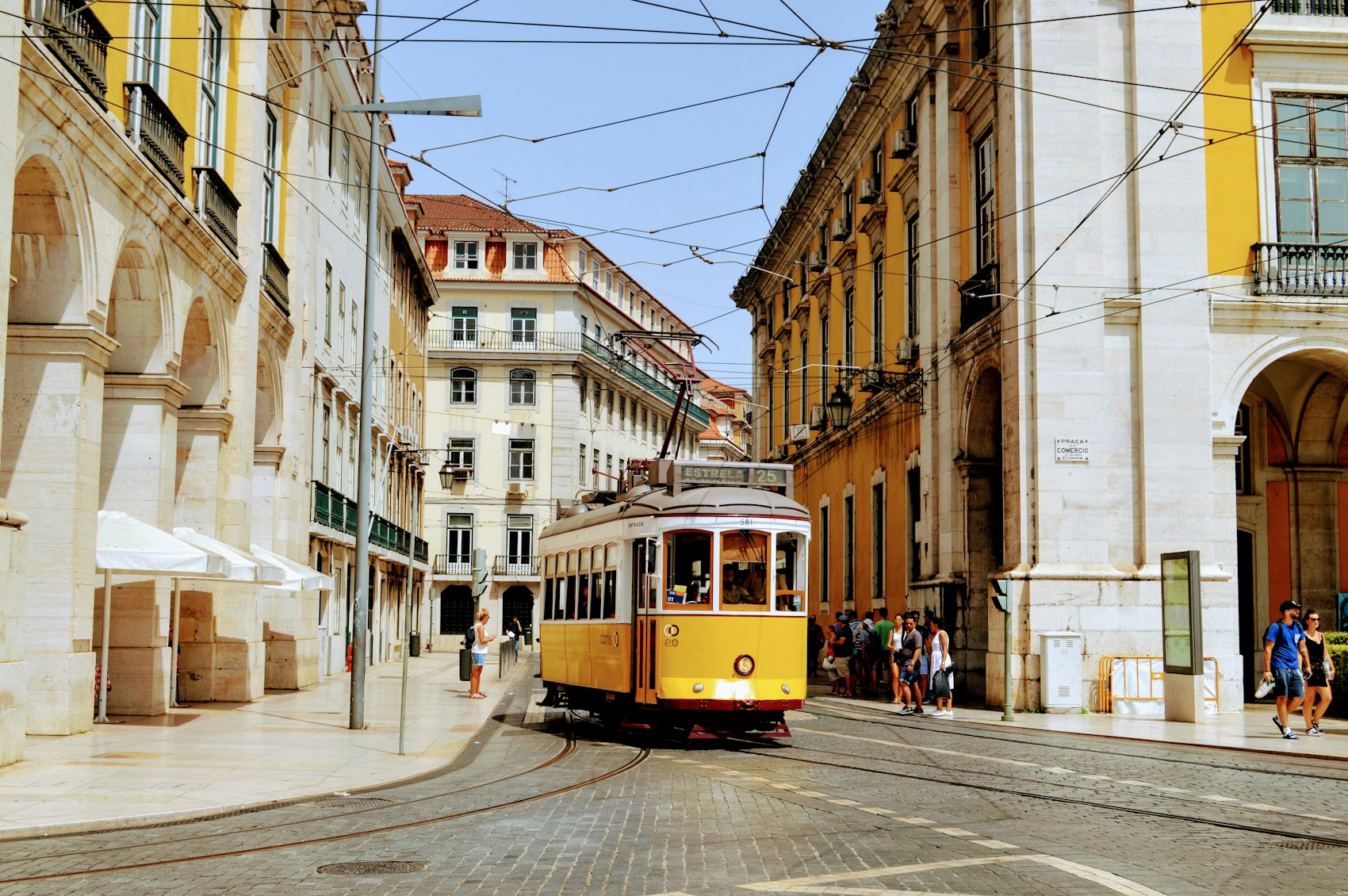
A yellow number 28 tram in the Baixa district of Lisbon
The 28 in the Baixa. Board it up at Martim Moniz or you will stand the whole wayPhotograph by Aayush Gupta

The only flat ground is the Baixa, the grid the Marquês de Pombal threw up after the 1755 earthquake levelled the old town, matching arches and chessboard streets running back from the river at Praça do Comércio. It does not last. Every street that leaves the water tilts within a block, and the payoff for the climb is a miradouro, a railed terrace with a view and usually a kiosk selling cold beer. The good ones repay the effort: Santa Luzia, tiled and hung with bougainvillea, the old men slapping down cards; Portas do Sol next door, looking clean over the roofs of Alfama to the cruise ships; and Senhora do Monte up in Graça, highest of all, where half the city comes at dusk to watch the light go and somebody always has a guitar.

Above the Baixa the streets knot into Alfama, the Moorish quarter the earthquake spared, too steep for cars and too crooked for sense, the washing strung overhead and a cat on every warm step. On a Tuesday or a Saturday the Feira da Ladra, the thieves' market, lays its junk along the railings by the white dome of the Pantheon: a dead man's medals, a single odd cup, a cassette of somebody's wedding. After dark a real voice carries out of A Baiuca, a room the size of a kitchen where the neighbours take turns singing fado; you eat what you are given, and you clap when you are told.

The best of Lisbon costs nothing and happens on foot, worn out one hill at a time.

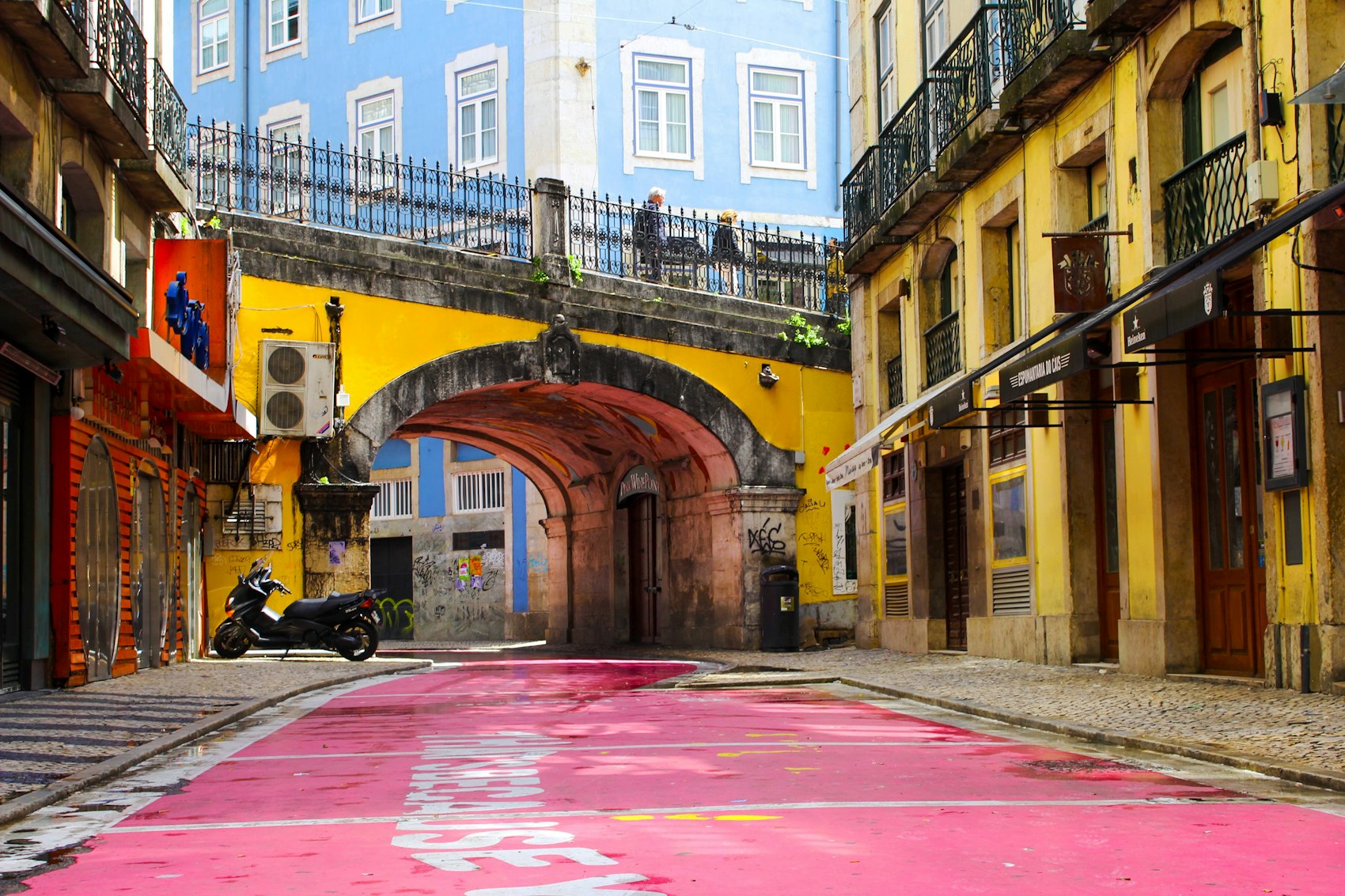
Chiado is where the city puts on a collar: the bronze Pessoa outside A Brasileira for the tourists to pose with, the old bookshops, the trams squealing past the statue of Camões. From there the Bica funicular hauls itself up a street so steep the houses look to be tripping downstairs. The thing to drink before any of it is a ginjinha, and the place is A Ginjinha by Rossio, a doorway that has poured nothing but sour-cherry liqueur since 1840, a euro forty a shot, com or sem, with the boozy cherry or without. Order it com. After dark the noise climbs to Bairro Alto, where the bars are the size of front rooms and the party is out on the cobbles, or drops to Cais do Sodré and the pink stretch of Rua Nova do Carvalho, an old sailors' street now lined with bars, one of them, Pensão Amor, a former brothel that kept the wallpaper. Eat first: Cervejaria Ramiro is worth the queue for garlic prawns and a plate of percebes, the goose-barnacles that look like dinosaur toes, and, against all reason, a steak sandwich to finish.
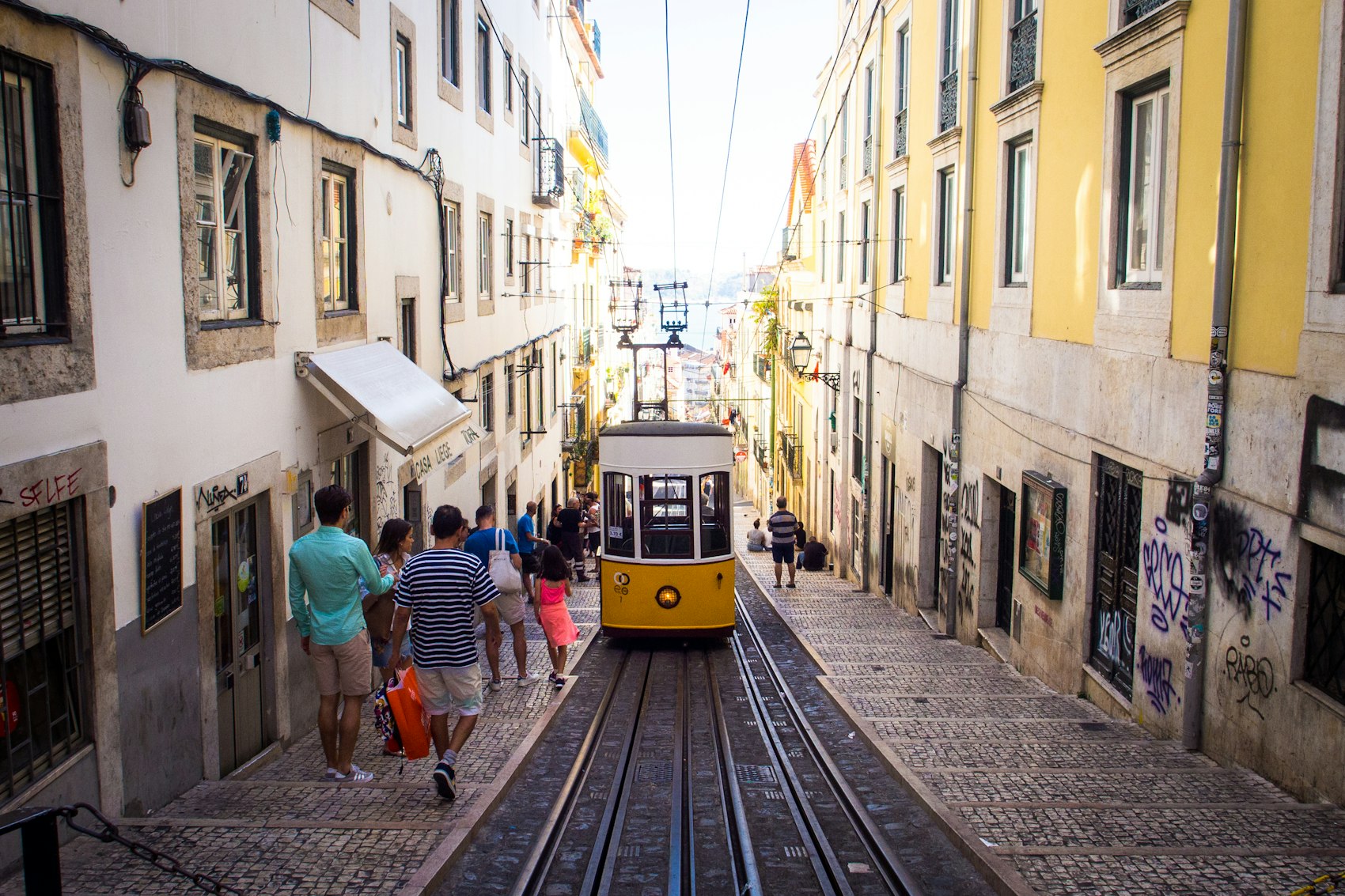
The yellow Bica funicular climbing a steep narrow street in Lisbon
The Bica, hauling itself up toward ChiadoClaudio Schwarz
The pink-painted Rua Nova do Carvalho, the Pink Street of Cais do Sodre
Pink Street, Cais do Sodré, sleeping off the nightSara Darcaj

West along the river, on the 15 tram, is the grand, monumental Lisbon, the one the coaches come for: the Mosteiro dos Jerónimos, a monastery carved like it had time to spare, with Vasco da Gama tucked inside, and the little tower out in the water where the caravels shoved off for the edge of the map. Then the queue that actually matters, at Pastéis de Belém, the shop that has guarded its recipe since 1837: take a deli ticket and wait, and a warm tart arrives with a scorched top and a loose custard middle, cinnamon and icing sugar on the counter to wreck it properly. They are the best in the city, except for the ones at Manteigaria back in Chiado, where a bell rings every time a fresh tray lands. Which of the two is better is a genuine Lisbon argument, and more eating never settles it.
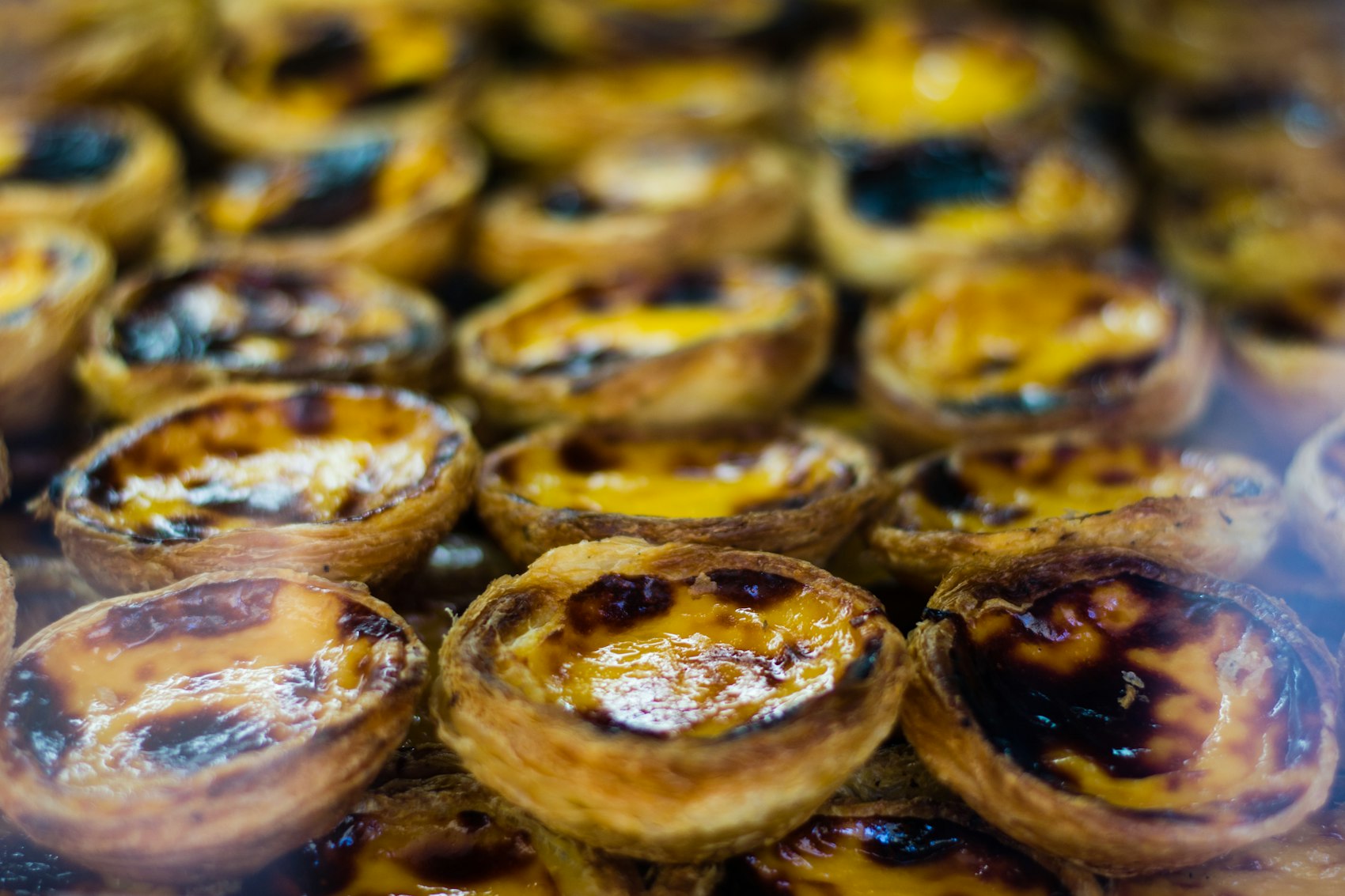
A tray of pastéis de nata with scorched tops, fresh from the oven
The only queue in this dispatch worth joiningDiogo Nunes
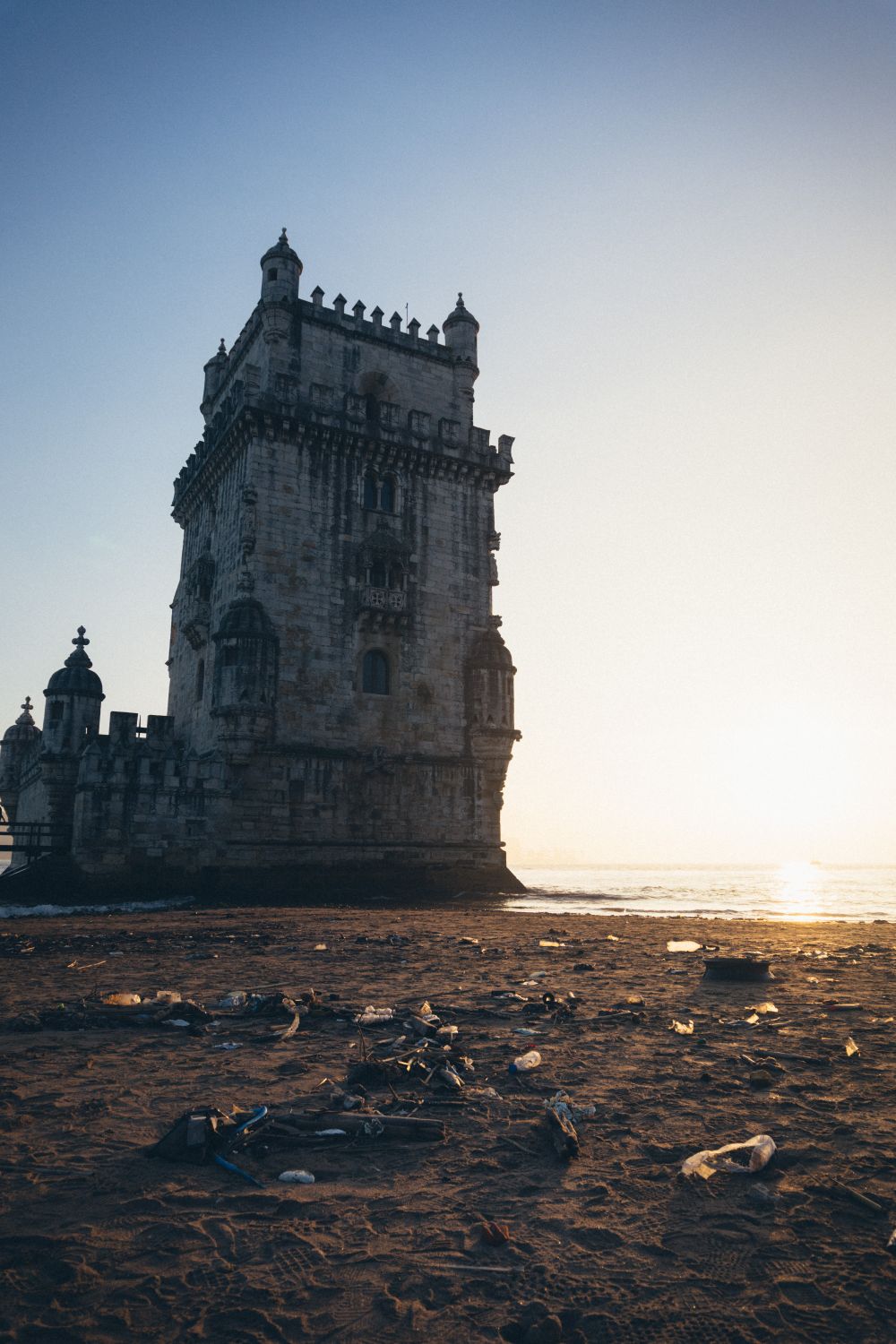
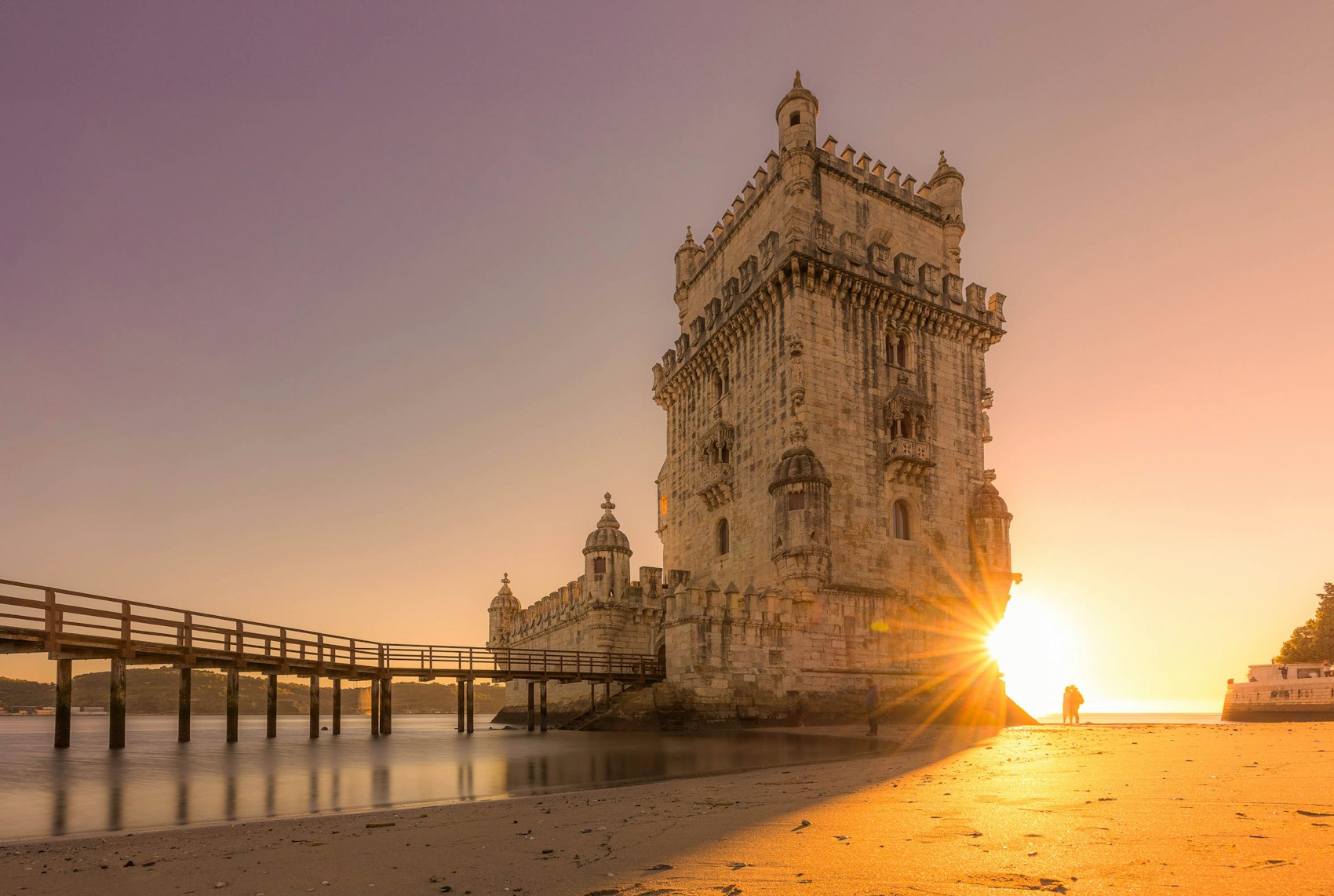
The Belém Tower standing in the water at sunset in Lisbon
The Torre de Belém, where the caravels leftEdoardo Bortoli

The best last view of the city is from across the water: from Cais do Sodré a battered orange ferry crosses to Cacilhas on the south bank in ten minutes, where the seafood is cheaper and the view comes back the other way, the whole tiled city stacked up its hills under the big red bridge the Americans built to look like San Francisco's. Ponto Final sets its tables so close to the edge the river laps the legs, and the grilled fish is the reason to book one. Four days is enough to learn the shape of the hills, and to stop fighting them.
← All dispatches
Places on record

Every place in this dispatch

  1. Old Town
    Alfama
    Old Town

    Alfama

    The oldest district, a Moorish tangle of stairways and alleys on the slope below the castle, which came through the earthquake because it stands on solid rock. Washing hangs over the lanes and sardines are grilled in the street during the June festival. Fado houses open in the evening. The number 28 tram squeals through it, packed; walk downhill from the top viewpoint.

  2. Landmark
    Santa Justa Lift
    Landmark

    Santa Justa Lift

    A forty-five metre iron tower with two wood-panelled cabins, opened in 1902 to carry pedestrians from the low town up to the Carmo district. Its engineer had trained under associates of Eiffel and the filigree shows it. The queue at the bottom often exceeds an hour. Walk up to Carmo square instead and step onto the upper platform from behind.

  3. Landmark
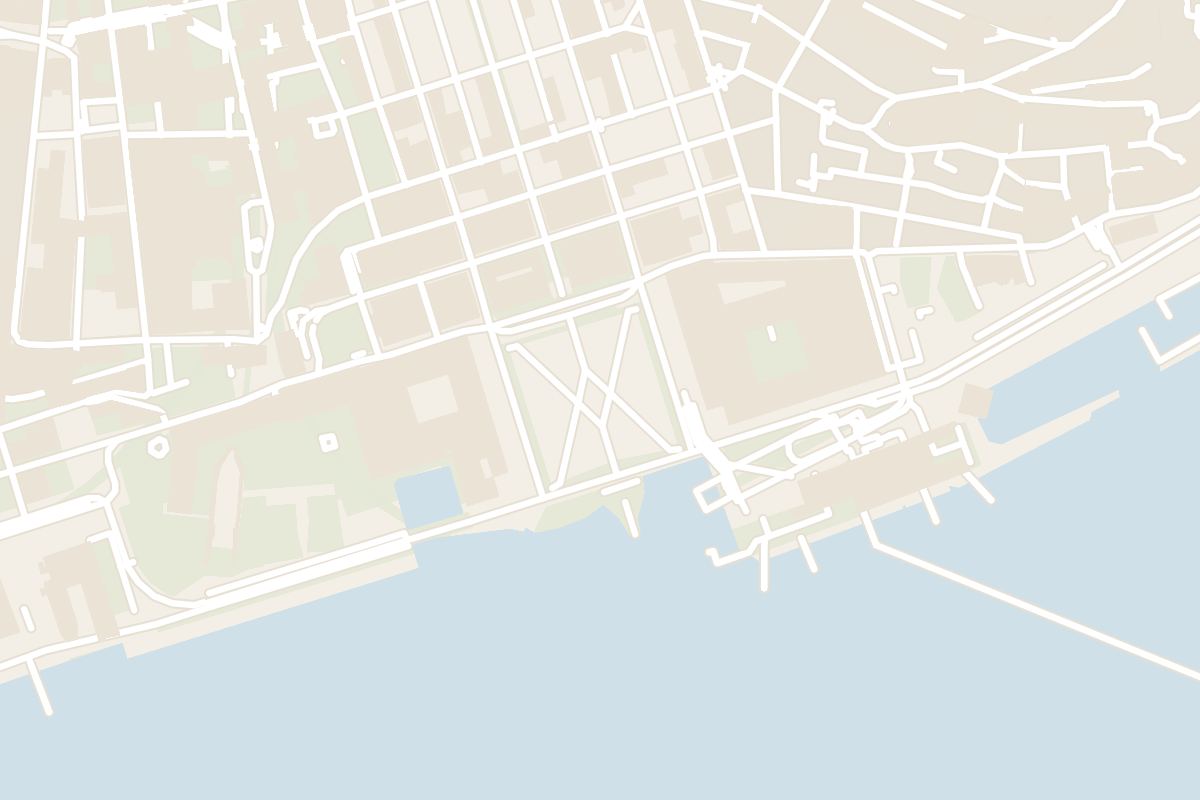
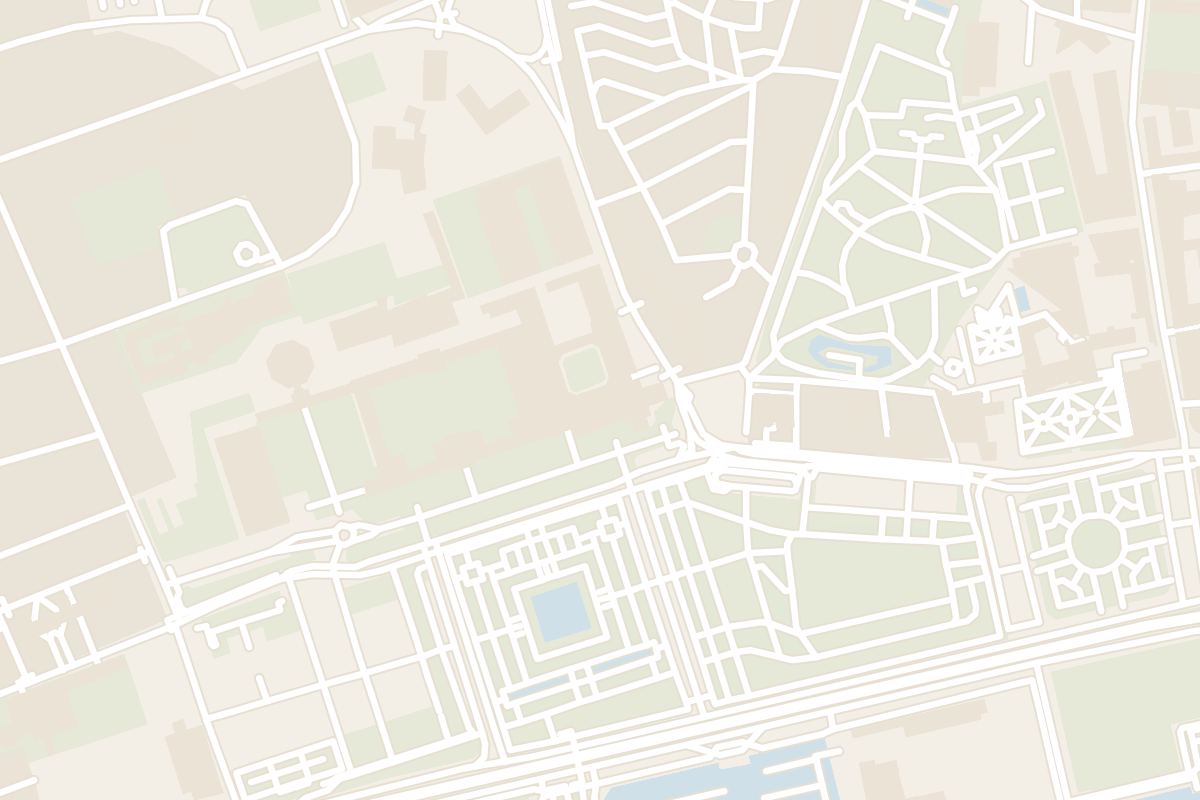
    Map of Praça do Comércio
    Landmark

    Praça do Comércio

    A huge arcaded square open on one side to the Tagus, laid out over the ruins of the royal palace that the 1755 wave carried away. A triumphal arch leads north into the rebuilt grid of the Baixa, and visitors can ride a lift to the top of it. The king and his heir were shot dead in a carriage at the north-west corner in 1908.

  4. Tower
    Belém Tower
    Tower

    Belém Tower

    A small fortress of pale limestone set in the shallows of the Tagus, completed in 1519 to guard the approach to the city, and the last sight of home for departing fleets. Its corner turrets, shield battlements and carved rhinoceros are best seen from the shore. Inside are bare rooms and one narrow stair with a traffic light. The exterior is the point.

  5. Museum
    Calouste Gulbenkian Museum
    Museum

    Calouste Gulbenkian Museum

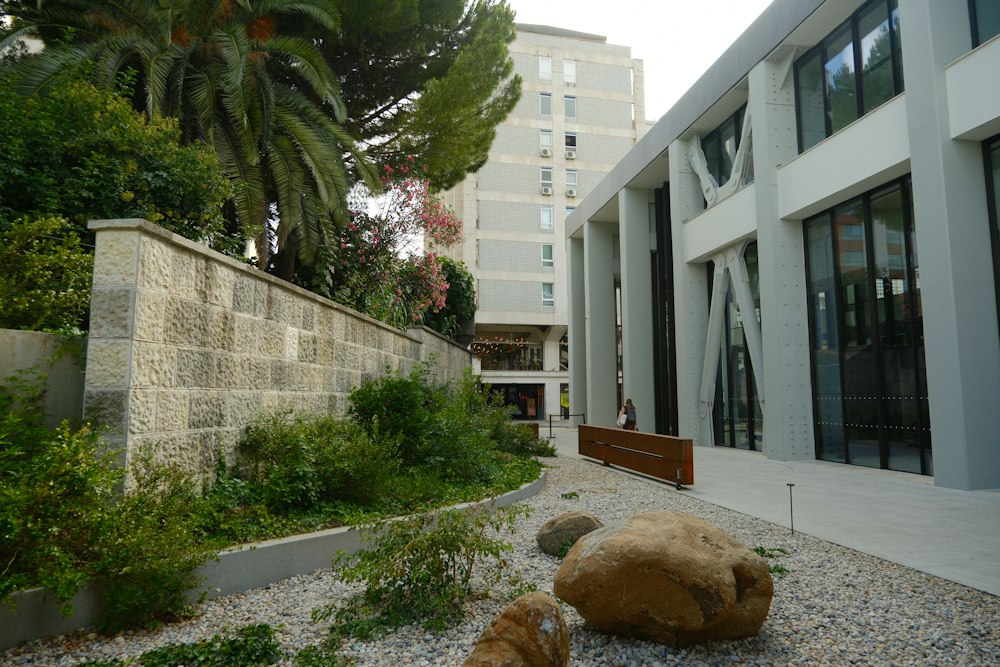
    An Armenian oil financier who took five per cent of every deal left his private collection to Lisbon, where he spent his last years. It is small and of astonishing quality: Egyptian reliefs, Persian carpets, Rembrandt, Turner, and a room of Lalique jewellery made for him personally. The low concrete building sits in a landscaped garden with ponds, a favourite lunch spot for the neighbourhood.

  6. Aquarium
    Lisbon Oceanarium
    Aquarium

    Lisbon Oceanarium

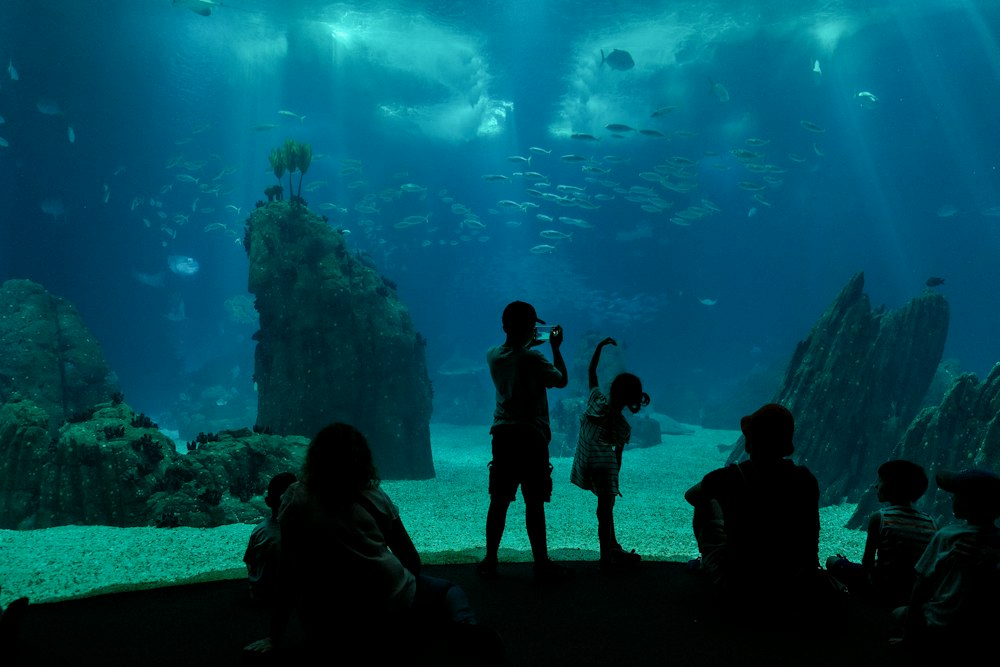
    Built for the 1998 world fair on the redeveloped eastern docks, around one enormous central tank that is viewed from two levels and four sides. Sharks, rays, shoals of tuna and a slow, improbable sunfish share it. Four surrounding habitats hold sea otters, penguins and puffins. It is the best wet-weather option in the city, and weekday afternoons avoid the school groups.

  7. Monument
    Sanctuary of Christ the King
    Monument

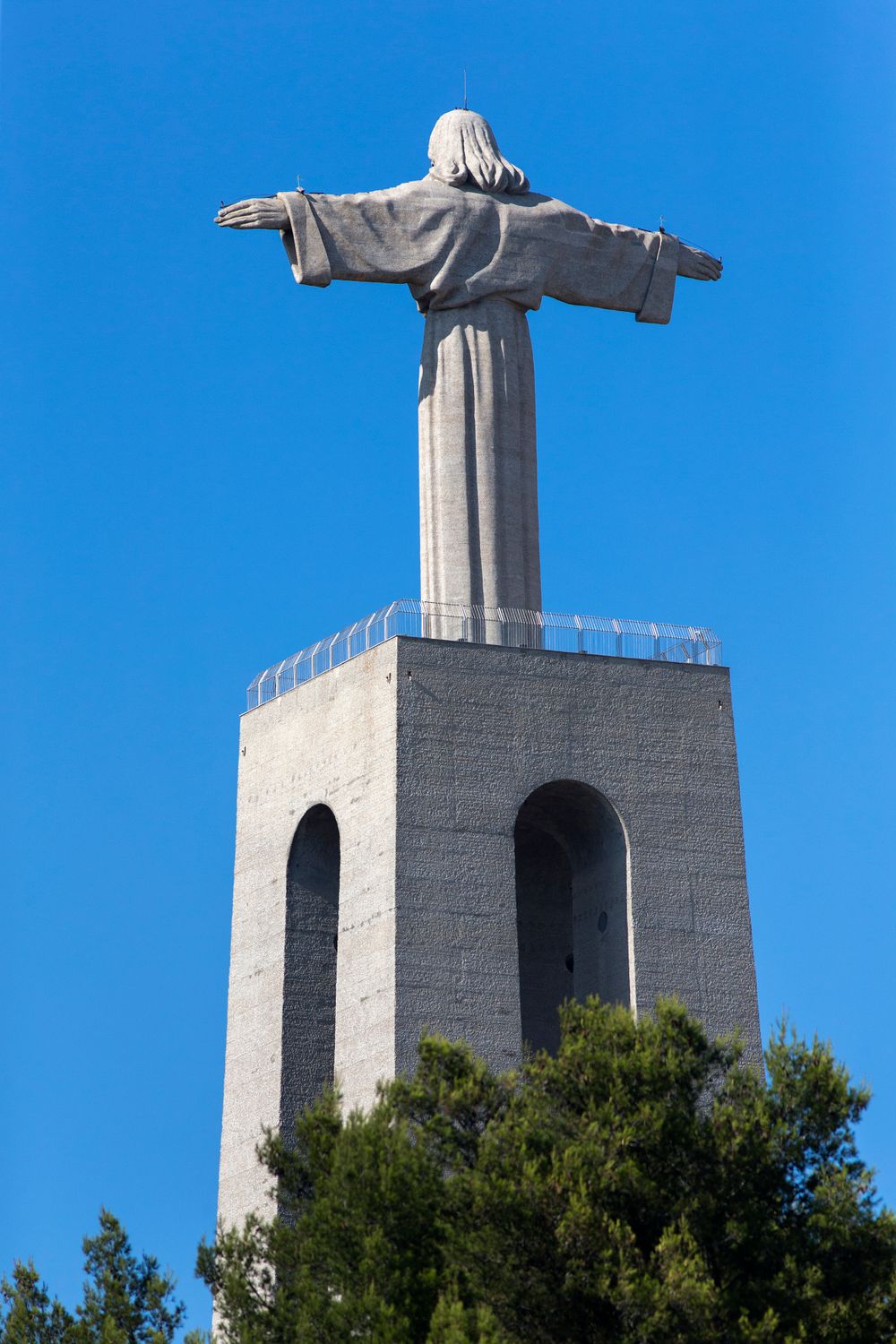
    Sanctuary of Christ the King

    A statue of Christ with arms outstretched on a tall concrete portal, facing the city from the south bank of the Tagus. Portuguese bishops vowed to build it if the country was spared the Second World War, and it was inaugurated in 1959. A lift climbs to a platform eighty metres up. Take the ferry to Cacilhas and a bus from the quay.

  8. Castle
    São Jorge Castle
    Castle

    São Jorge Castle

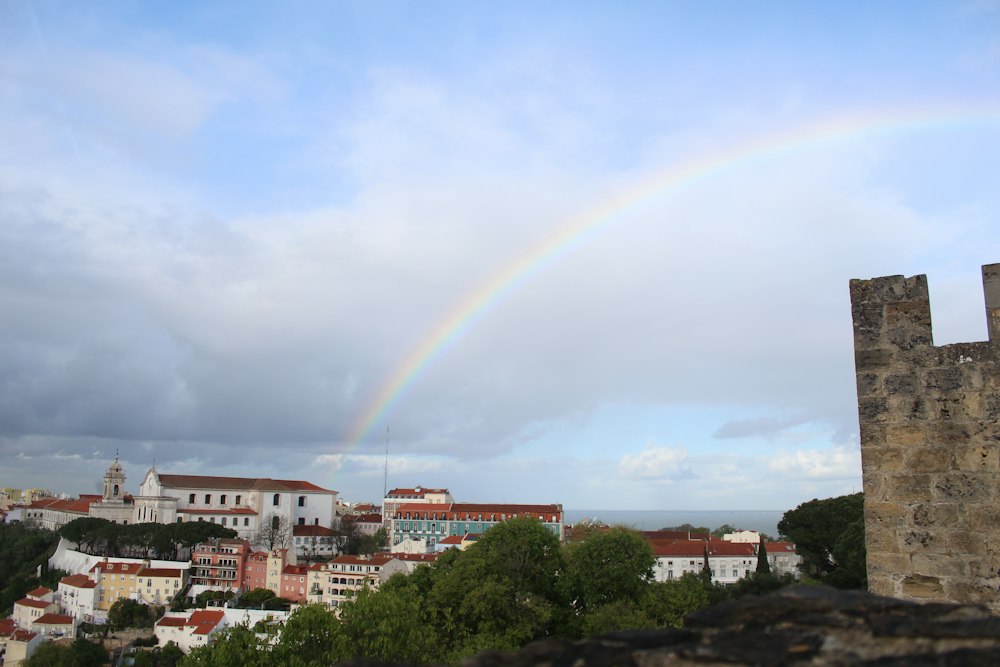
    The hilltop citadel of Moorish Lisbon, taken by the first Portuguese king with the help of passing crusaders in 1147. The walls and eleven towers owe a good deal to a twentieth century restoration. Visitors walk the full circuit of the ramparts among pines and wandering peacocks. The terrace gives the classic view over the rooftops, the river and the long red bridge.

  9. Market
    Time Out Market Lisboa
    Market

    Time Out Market Lisboa

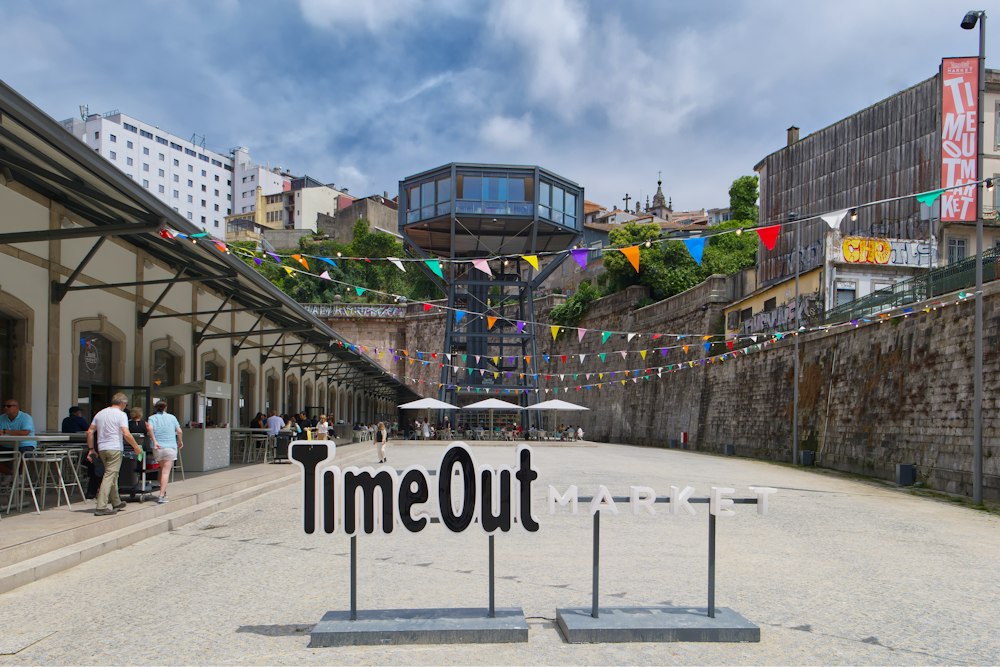
    Half of the 1882 Ribeira market hall still sells fish, fruit and flowers in the morning. The other half became a food hall in 2014, with counters run by well-known Lisbon chefs and restaurants around communal tables. It is a quick way to sample the local cooking, from salt cod fritters to custard tarts. Seats are scarce at lunch and dinner; go mid-afternoon.

  10. Ruins
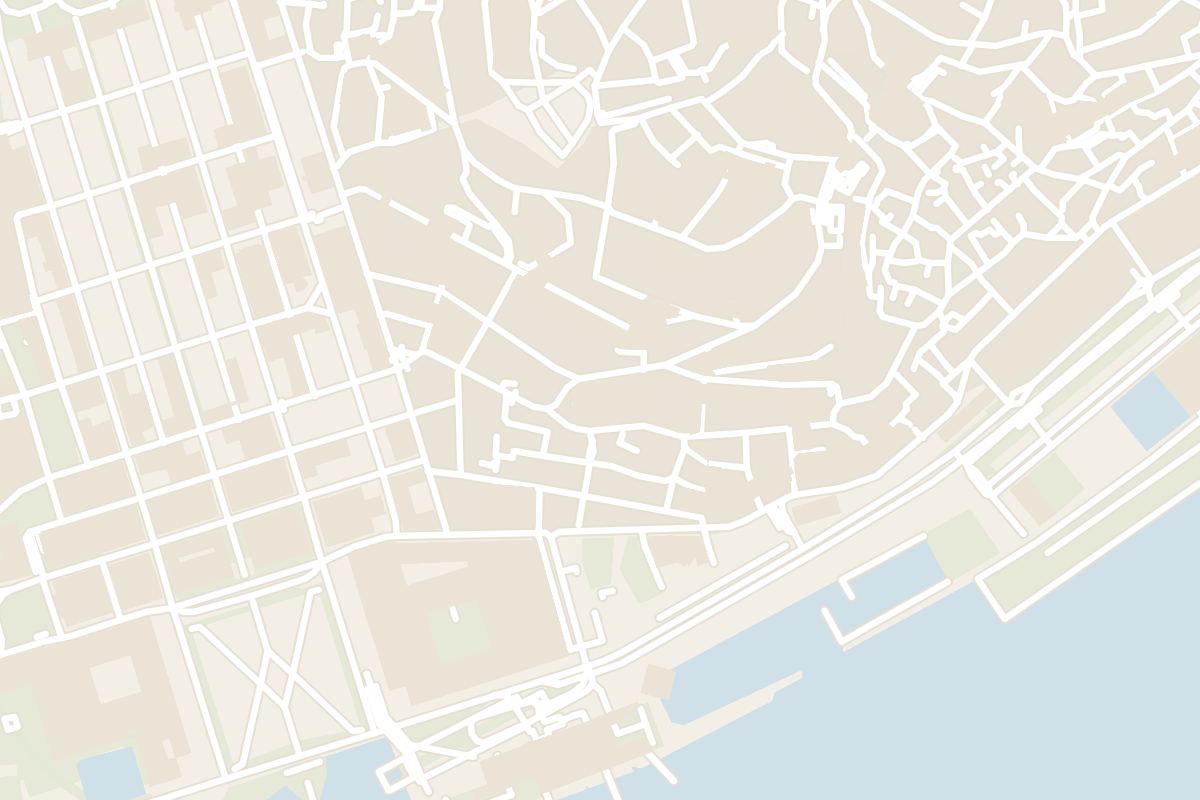
    Map of Carmo Convent
    Ruins

    Carmo Convent

    The great Gothic church of the Carmelites lost its roof on the morning of the earthquake, during mass, and was never repaired. Its pointed arches still stand open to the sky above a lawn, the city's most eloquent memorial to the disaster. A small archaeological museum in the surviving chancel holds tombs, tiles and two Peruvian mummies. The square outside is where the 1974 revolution ended.

  11. Monastery
    Map of Jerónimos Monastery
    Monastery

    Jerónimos Monastery

    Begun in 1501 on the beach where Vasco da Gama's crew prayed before sailing for India, and paid for with a tax on the spices that followed. The stone is carved with ropes, coral, armillary spheres and sea monsters, the Portuguese late Gothic at its richest. Da Gama lies just inside the church door, which is free to enter. The two-storey cloister is ticketed and the queue is long by eleven.

  12. Cathedral
    Map of Lisbon Cathedral
    Cathedral

    Lisbon Cathedral

    Twin crenellated towers and a rose window give the cathedral the look of a fortress, which in 1147 it partly was: the conquerors built it at once on the site of the main mosque. Earthquakes have shaken it repeatedly and the inside is a patchwork of Romanesque, Gothic and later repairs. Excavations in the cloister have exposed Roman, Visigothic and Moorish layers.

Explore

More of Portugal

Town guide

Lisbon

Alfama, the Belém Tower, the cathedral and the Gulbenkian.

Town guide

Sintra

Pena Palace, Quinta da Regaleira, Monserrate and Cabo da Roca.

Meridian Dispatch for iPhone

Plan the trip.
Keep the story.

Every other travel app asks you to start logging. Meridian Dispatch opens with years of your travel already written, from the photographs you already took.