Things to do
13-
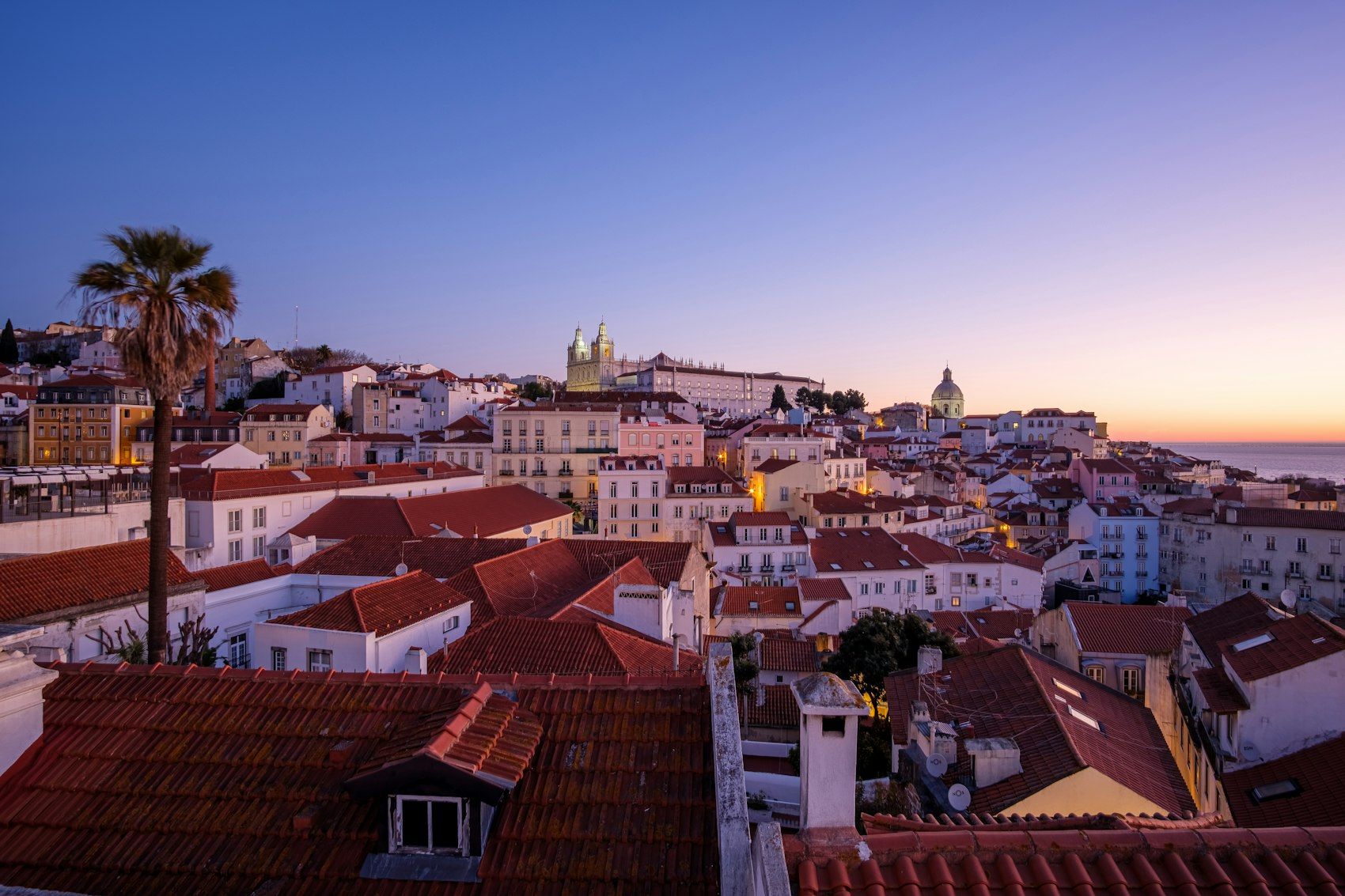
Alfama
The oldest district, a Moorish tangle of stairways and alleys on the slope below the castle, which came through the earthquake because it stands on solid rock. Washing hangs over the lanes and sardines are grilled in the street during the June festival. Fado houses open in the evening. The number 28 tram squeals through it, packed; walk downhill from the top viewpoint.
-
Belém Tower
A small fortress of pale limestone set in the shallows of the Tagus, completed in 1519 to guard the approach to the city, and the last sight of home for departing fleets. Its corner turrets, shield battlements and carved rhinoceros are best seen from the shore. Inside are bare rooms and one narrow stair with a traffic light. The exterior is the point.
-
Calouste Gulbenkian Museum
An Armenian oil financier who took five per cent of every deal left his private collection to Lisbon, where he spent his last years. It is small and of astonishing quality: Egyptian reliefs, Persian carpets, Rembrandt, Turner, and a room of Lalique jewellery made for him personally. The low concrete building sits in a landscaped garden with ponds, a favourite lunch spot for the neighbourhood.
-
Carmo Convent
The great Gothic church of the Carmelites lost its roof on the morning of the earthquake, during mass, and was never repaired. Its pointed arches still stand open to the sky above a lawn, the city's most eloquent memorial to the disaster. A small archaeological museum in the surviving chancel holds tombs, tiles and two Peruvian mummies. The square outside is where the 1974 revolution ended.
-
Jerónimos Monastery
Begun in 1501 on the beach where Vasco da Gama's crew prayed before sailing for India, and paid for with a tax on the spices that followed. The stone is carved with ropes, coral, armillary spheres and sea monsters, the Portuguese late Gothic at its richest. Da Gama lies just inside the church door, which is free to enter. The two-storey cloister is ticketed and the queue is long by eleven.
-
Lisbon Cathedral
Twin crenellated towers and a rose window give the cathedral the look of a fortress, which in 1147 it partly was: the conquerors built it at once on the site of the main mosque. Earthquakes have shaken it repeatedly and the inside is a patchwork of Romanesque, Gothic and later repairs. Excavations in the cloister have exposed Roman, Visigothic and Moorish layers.
-
Lisbon Oceanarium
Built for the 1998 world fair on the redeveloped eastern docks, around one enormous central tank that is viewed from two levels and four sides. Sharks, rays, shoals of tuna and a slow, improbable sunfish share it. Four surrounding habitats hold sea otters, penguins and puffins. It is the best wet-weather option in the city, and weekday afternoons avoid the school groups.
-
National Tile Museum
Five centuries of the painted tiles that cover Portuguese churches, stations and house fronts, shown in a former convent east of the centre. The convent's own church is a blaze of gilt wood and blue panels. Upstairs a panorama twenty-three metres long shows the Lisbon waterfront as it stood before 1755. It is a bus or taxi ride out, and seldom busy.
-
Praça do Comércio
A huge arcaded square open on one side to the Tagus, laid out over the ruins of the royal palace that the 1755 wave carried away. A triumphal arch leads north into the rebuilt grid of the Baixa, and visitors can ride a lift to the top of it. The king and his heir were shot dead in a carriage at the north-west corner in 1908.
-
Sanctuary of Christ the King
A statue of Christ with arms outstretched on a tall concrete portal, facing the city from the south bank of the Tagus. Portuguese bishops vowed to build it if the country was spared the Second World War, and it was inaugurated in 1959. A lift climbs to a platform eighty metres up. Take the ferry to Cacilhas and a bus from the quay.
-
Santa Justa Lift
A forty-five metre iron tower with two wood-panelled cabins, opened in 1902 to carry pedestrians from the low town up to the Carmo district. Its engineer had trained under associates of Eiffel and the filigree shows it. The queue at the bottom often exceeds an hour. Walk up to Carmo square instead and step onto the upper platform from behind.
-
São Jorge Castle
The hilltop citadel of Moorish Lisbon, taken by the first Portuguese king with the help of passing crusaders in 1147. The walls and eleven towers owe a good deal to a twentieth century restoration. Visitors walk the full circuit of the ramparts among pines and wandering peacocks. The terrace gives the classic view over the rooftops, the river and the long red bridge.
-
Time Out Market Lisboa
Half of the 1882 Ribeira market hall still sells fish, fruit and flowers in the morning. The other half became a food hall in 2014, with counters run by well-known Lisbon chefs and restaurants around communal tables. It is a quick way to sample the local cooking, from salt cod fritters to custard tarts. Seats are scarce at lunch and dinner; go mid-afternoon.