You descend to the best-known of ancient Alexandria's surviving cemeteries, a Roman-era tomb where Egyptian and Greek art share the walls.
Archaeological Site, Alexandria. Meridian Dispatch.
A careful visit takes about 45 minutes to an hour. That is enough time for the tomb chamber and the corridors below it, plus the climb back up the stair.
As of November 2026, the catacombs open daily from 09:00, and last entry is at 16:00. In Ramadan, last entry moves to 15:00, so a visit then is best planned for the morning.
Entry is ticketed. Students pay a separate rate if they show valid ID and are no older than 24. Tickets are sold at the site and online at egymonuments.com, the ticket website of the Ministry of Tourism and Antiquities.
Yes, with a phone. Mobile phone photography is free of charge under the ministry's visit rules. Flash is prohibited, because the light can damage the ancient artwork below ground.
Generally, for children over 8 who like tunnels and ancient history. Children under 6 enter free, and the spiral stair that leads down has to be climbed again on the way out.
Yes. The catacombs lie near the Serapeum, the site of Pompey's Pillar, so the two fit into one outing. Allow 45 to 60 minutes for the pillar and the Serapeum ruins.
Kom El Shoqafa means Mound of Shards. The tombs were tunnelled into the bedrock in the second century AD and lay forgotten until 1900, when a donkey fell into the access shaft.
The principal tomb chamber has a temple-like front. Two columns topped with papyrus, lotus and acanthus leaves hold up a relief of a winged sun-disk between Horus falcons. Carved snakes guard the inner door, each under a shield showing a Medusa.
Inside, three huge stone sarcophagi line the sides of the chamber, decorated with garlands and the heads of Greek gods. The central panel shows the jackal-headed Anubis in Roman soldier's dress, mummifying a body on a lion bed.
Figures of a man and a woman are cut into the wall. His stiff pose is Egyptian and his head is Greek, while she wears a Roman hairstyle.
Beyond the tomb, more than 100 wall graves and sarcophagus tombs fill the levels below ground. The complex also holds a chapel.
Buy a ticket at the entrance. A spiral staircase then takes you down to a rotunda. The open centre of the stair was once used to lower the dead into the tombs.
On the left, off the vestibule, is the banquet hall, where family and friends sat on stone couches at burials and on later visits. Carry on to the main tomb, then walk the long corridors of burial niches.
A gap broken through the rotunda wall leads into the Hall of Caracalla, where the bones of horses and humans were found. From there you climb back up to street level.
Bring a light jacket or sweater, since the catacombs can be cool and damp, and wear shoes that grip well on stone.
Little written information is posted inside, so a guide, or some reading before you go, helps you make sense of the reliefs and the gods they show.
Alexandria, Egypt: Egypt's second city and main port runs some 40 km along the Mediterranean, a place of sea air, trams and seafront cafés where Greek.
Read the Alexandria guideExplore the rest of Alexandria
Egypt's second city and main port runs some 40 km along the Mediterranean, a place of sea air, trams and seafront cafés where Greek, Roman…
Built to recall the ancient library and opened in 2002, the building is a tilted glass disc about 160 metres across, its grey granite outer…
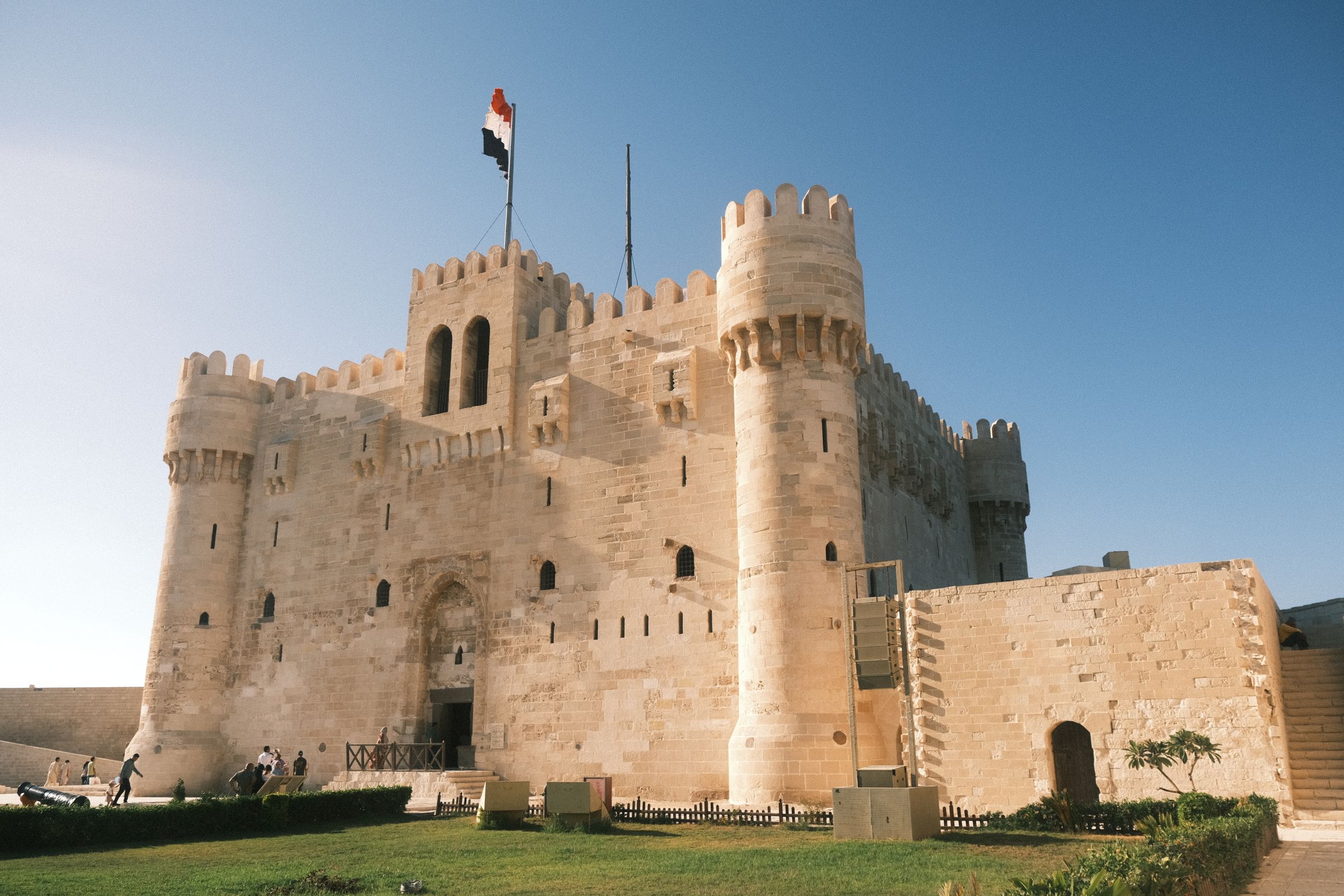
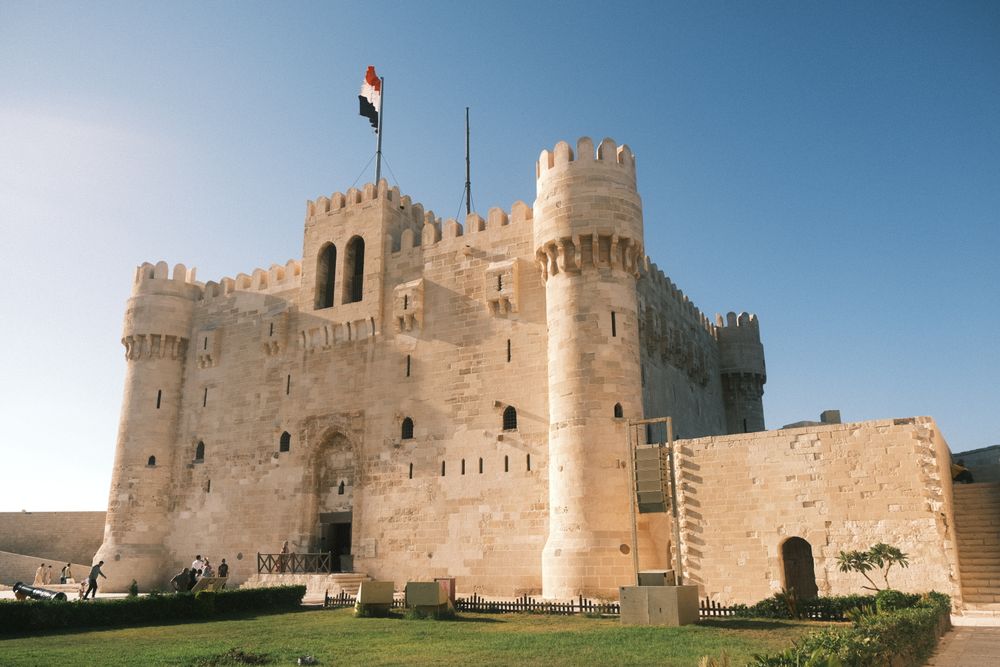
Sultan Qaitbay raised this fort in 1477 on the eastern tip of Pharos Island, on the spot where the ancient lighthouse once stood. Visitors…


Save Catacombs of Kom El Shoqafa to your Egypt trip in the Meridian Dispatch app and build the day around it, with the best of Alexandria pinned on one map.
Download on the App StoreLast updated