Columns, 134 of them, fill the Great Hypostyle Hall in the Great Temple of Amun at Karnak, one of the largest religious complexes ever built. You walk among them on the temple's main route.
Temple, Luxor. Meridian Dispatch.
As of November 2026, Karnak opens daily from 06:00 to 17:00, with last entry at 16:00. The site then closes to day visitors and reopens in the evening for the Sound and Light Show.
Yes. The main Karnak ticket covers Karnak Temple and the Open-Air Museum. The Temple of Mut is sold separately, so a visit there takes a second ticket on top of the main one.
Very little. Most of the site lies open to the sun, and in the hottest hour, 13:00 to 14:00, the Great Hypostyle Hall is the shaded part to head for. Carry at least a litre of water.
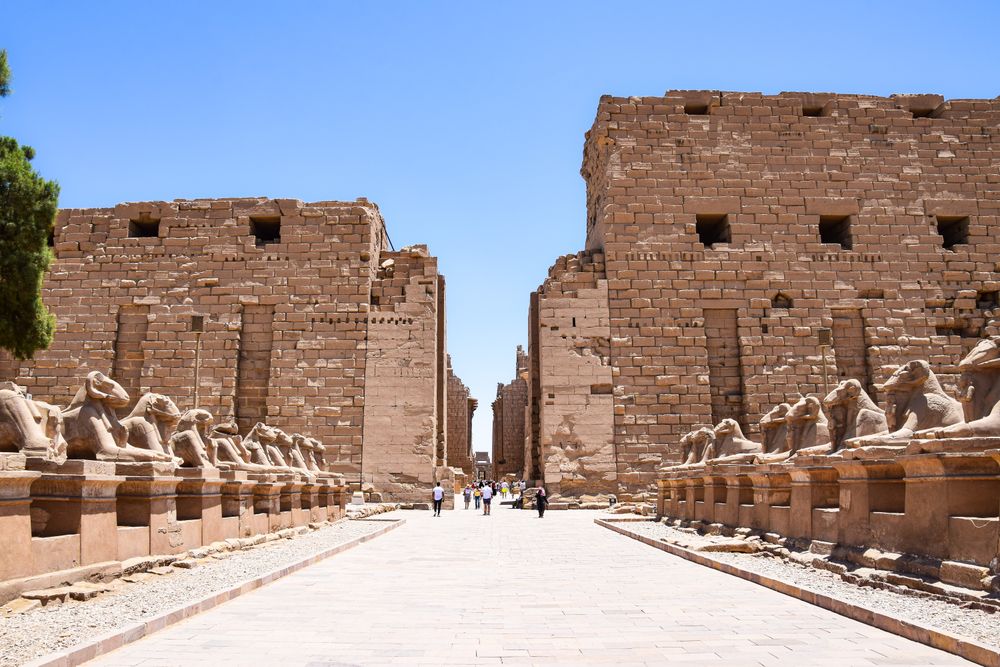
Yes, along the Avenue of Sphinxes, the processional way that linked the two temples, which is open to walkers along its full length. Karnak lies about 2.7 km north, 30 to 40 minutes on foot in mild weather and hard going at midday. A common plan is Karnak in the afternoon, then Luxor Temple at dusk.
Late afternoon, after 15:00, once the heat and the crowds ease. That leaves two hours before the 17:00 close for the main precinct and the lake. Late morning is best avoided, when the heat rises and the crowds peak.
The official site of Karnak is egymonuments.gov.eg.
egymonuments.gov.eg →What stands at Karnak today is a complex of temples in several zones, not one building. The largest zone by far is the Amun Precinct.
The Great Temple of Amun is built on an east to west axis. Inside it stands the Great Hypostyle Hall, a forest of columns.
At the eastern end stands the Akh-menu, the temple of Thutmose III. The Sacred Lake, where priests purified themselves before temple rituals, can still be seen.
A complete temple to Khonsu stands inside the same enclosure walls. Beside it is the temple of Opet, a hippopotamus goddess of childbirth.
The Precinct of Mut lies outside the Amun Precinct walls, to the south.
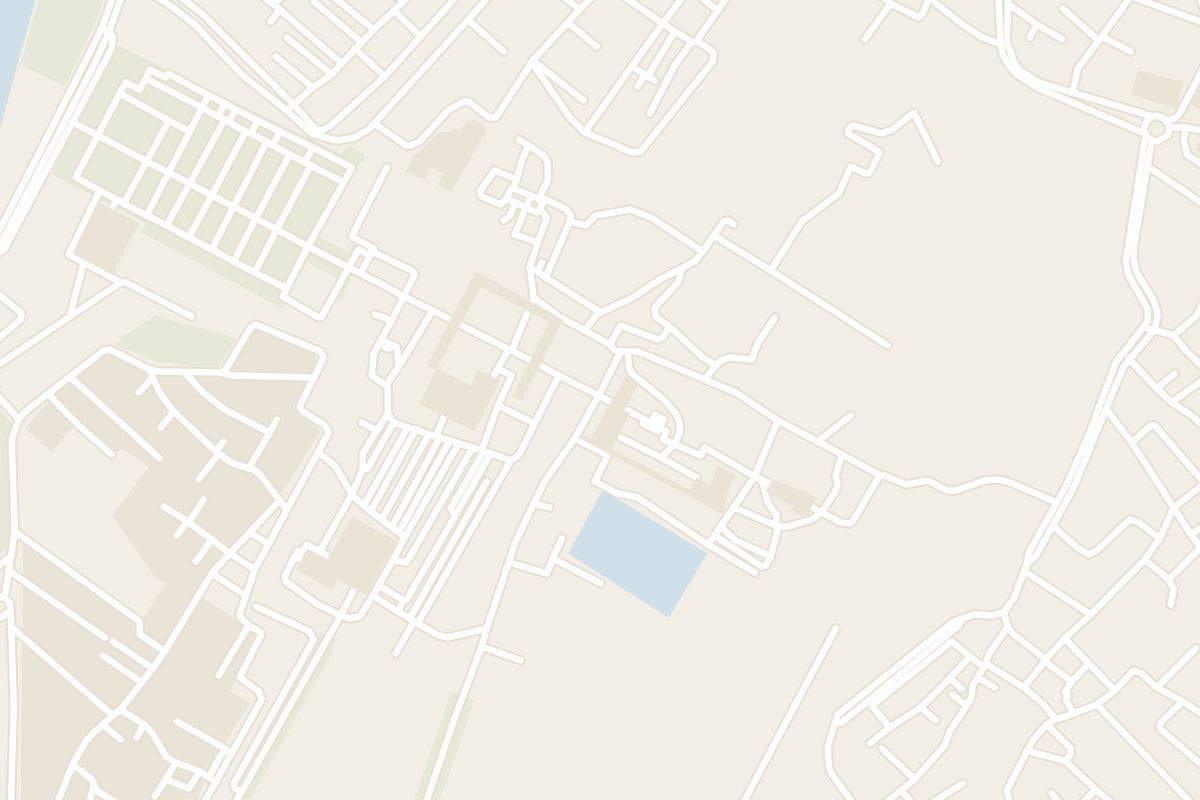
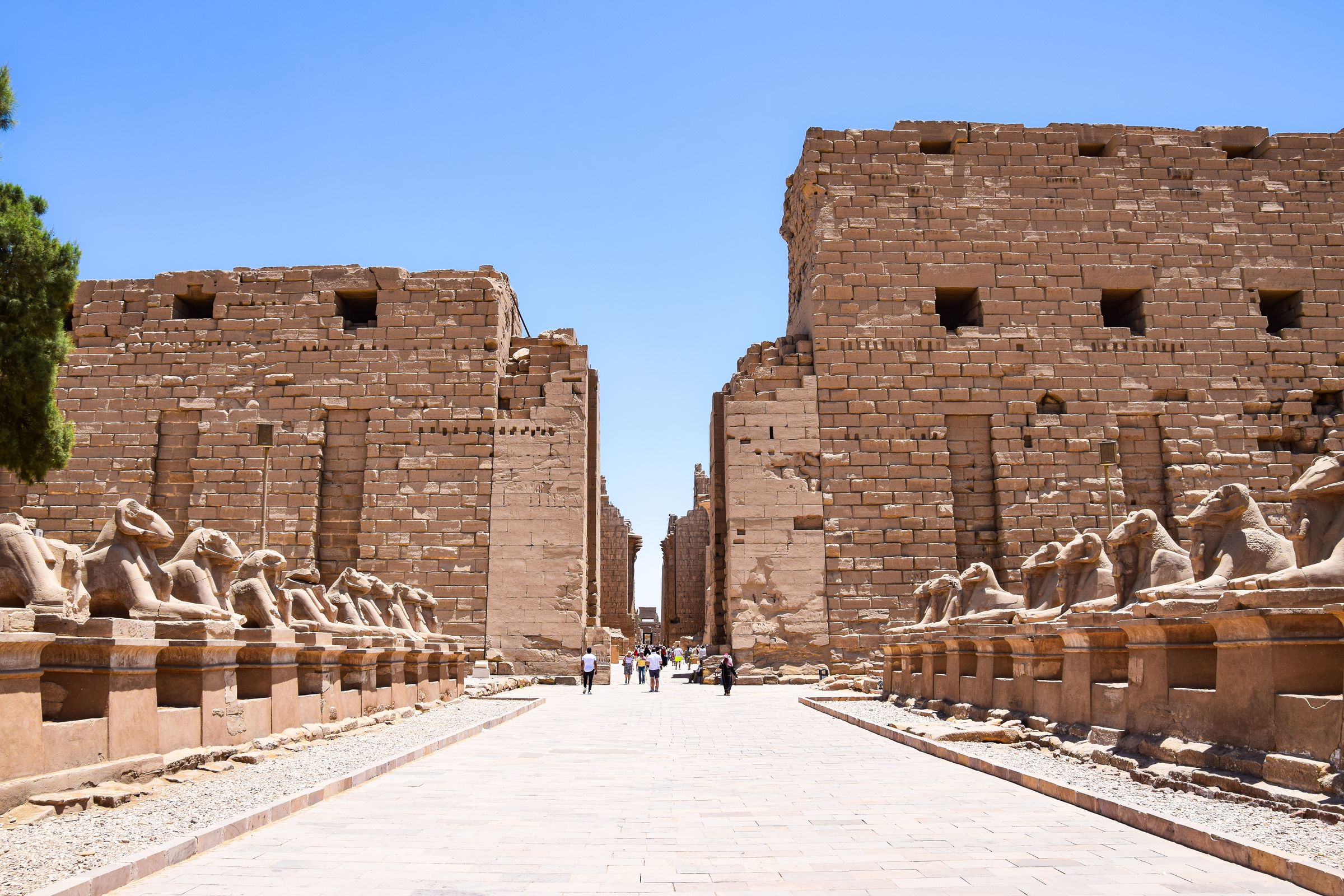
Start at the ram-headed sphinxes outside the First Pylon and cross the Great Court. Step into the Temple of Ramesses III off the court, then go through the Second Pylon into the Great Hypostyle Hall.
Past the hall, look for the surviving obelisks, Hatshepsut's among them. Carry on east to the Akh-menu, then the Sacred Lake.
Finish at the Open-Air Museum, then walk to the southwestern corner of the enclosure for the Temples of Khonsu and Opet before heading back out.
Dress for strong sun, with breathable clothing, a sun hat and sunscreen. Choose shoes with a good grip, because the floors and paths are uneven stone across the site.
For pleasant weather and a quieter site than the winter peak, plan for March, April, October or November.
Luxor, Egypt: Ancient Thebes, the capital of Egypt at the height of its power, lies under and around this provincial town of half a million. Luxor Temple.
Read the Luxor guideExplore the rest of Luxor
Ancient Thebes, the capital of Egypt at the height of its power, lies under and around this provincial town of half a million, split by the…
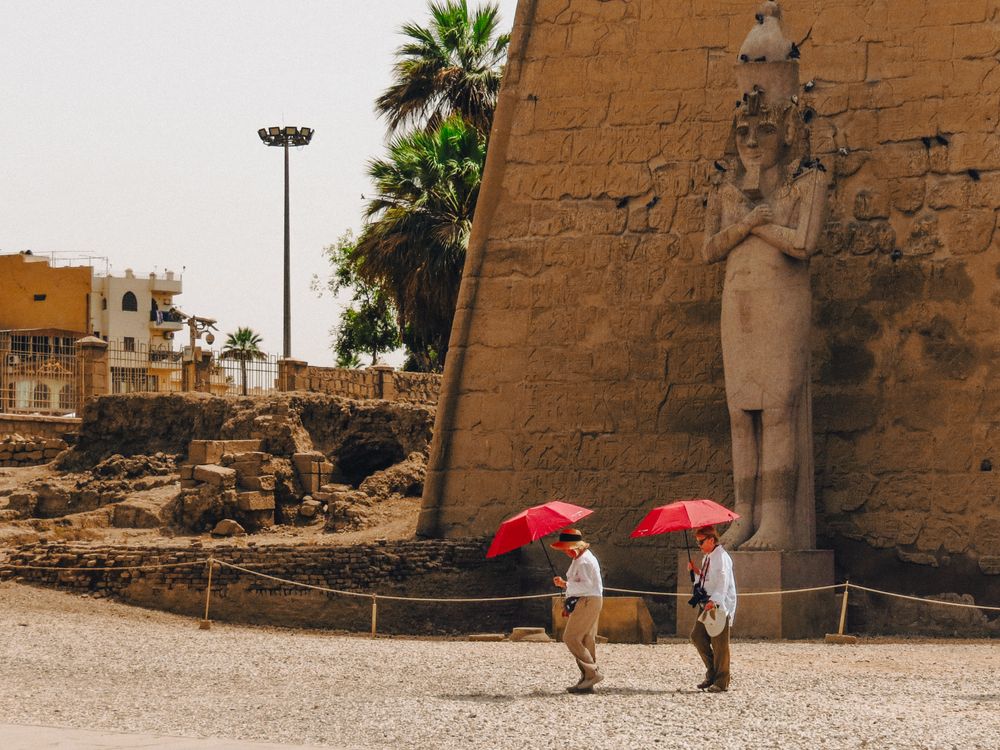
Set in the middle of town on the corniche, open into the evening and at its best floodlit after dark. One obelisk stands before the…
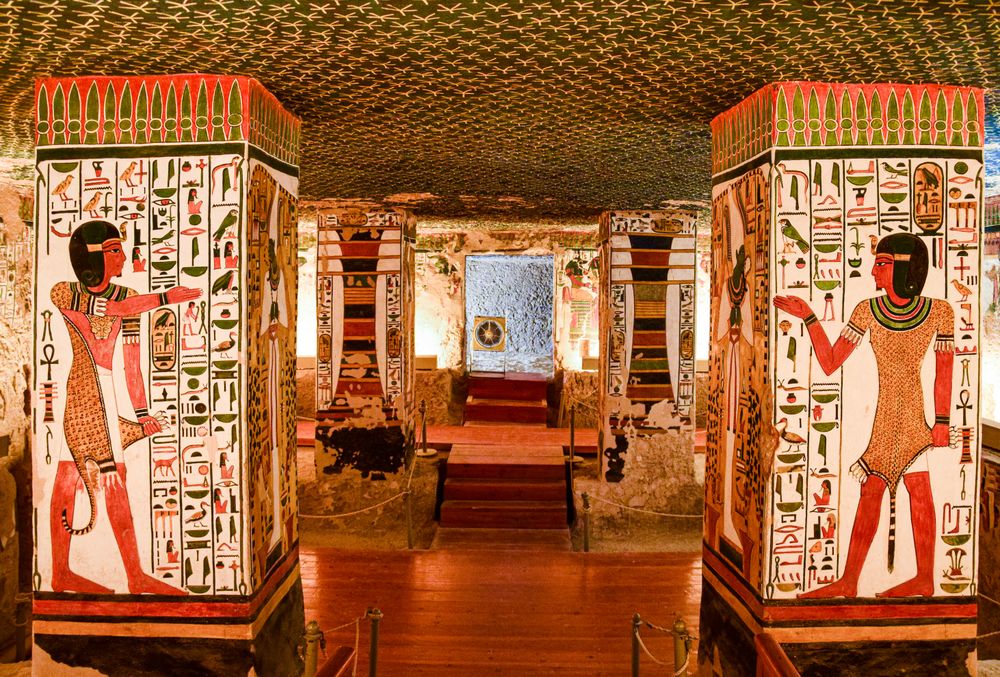
For five centuries the pharaohs of the New Kingdom were buried in tunnels cut into this dry valley, more than sixty tombs in all. The…


Save Karnak to your Egypt trip in the Meridian Dispatch app and build the day around it, with the best of Luxor pinned on one map.
Download on the App StoreLast updated