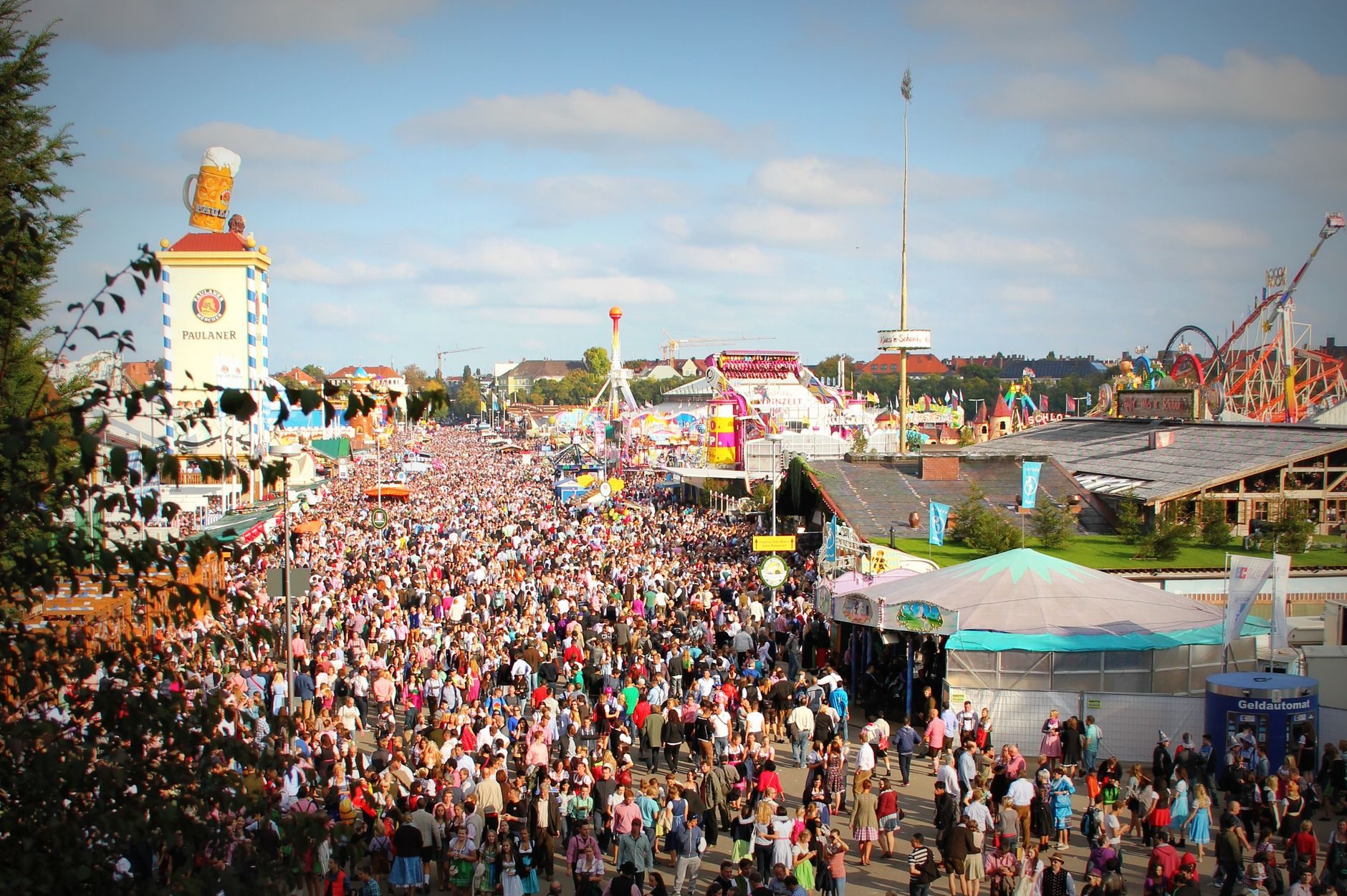
19 Sep to 4 Oct 2026
Go on a weekday and be at a big tent's door by ten: the benches are free, the band starts at noon, and you never need a reservation. Evenings and weekends are when the doors shut.
19 Sep to 4 Oct 2026. Times are approximate and can change from year to year.
The mayor opens the festival by tapping the first barrel. The tents are at their fullest all weekend.
Thousands of people in traditional dress walk through the city centre to the grounds.
The first of two, the second on 29 September, both Tuesdays and among the calmer days to come.
Held in the Marstall tent.
The festival's musical highlight falls on the second Sunday.
A public holiday and one of the busiest days. No pushchairs on the grounds.
The finale. As on the first weekend, the big tents fill and close their doors from mid-afternoon.
It is the one fortnight when a whole city sits down together. The big tents, each run by a Munich brewery or a family, fill with long benches and a brass band on a stage in the middle, and a stranger at your table is the normal way to spend an afternoon.
The grounds are free to walk, and so is most of what happens outside the tents: the rides, the food stalls, the costume parade on the first Sunday. The Oide Wiesn at the southern end is the slower, older version, with historic rides and more room to sit.
Every big tent keeps a share of its benches free of reservations all day, more of them before three. There are no tables for two, so ask to join a long one; a card reading reserviert ab 16 Uhr means the seat is yours until four. Order one litre each to keep the table. Carry cash, since card terminals are not everywhere. The Oide Wiesn at the southern end has old rides, brass music and more free seats, with a separate entry charge that lifts after nine at night.
Book six to twelve months ahead. The streets between the main station and the grounds are the closest; Augsburg and Rosenheim are under an hour by train if Munich is full.
Where to base yourself, and what else is on
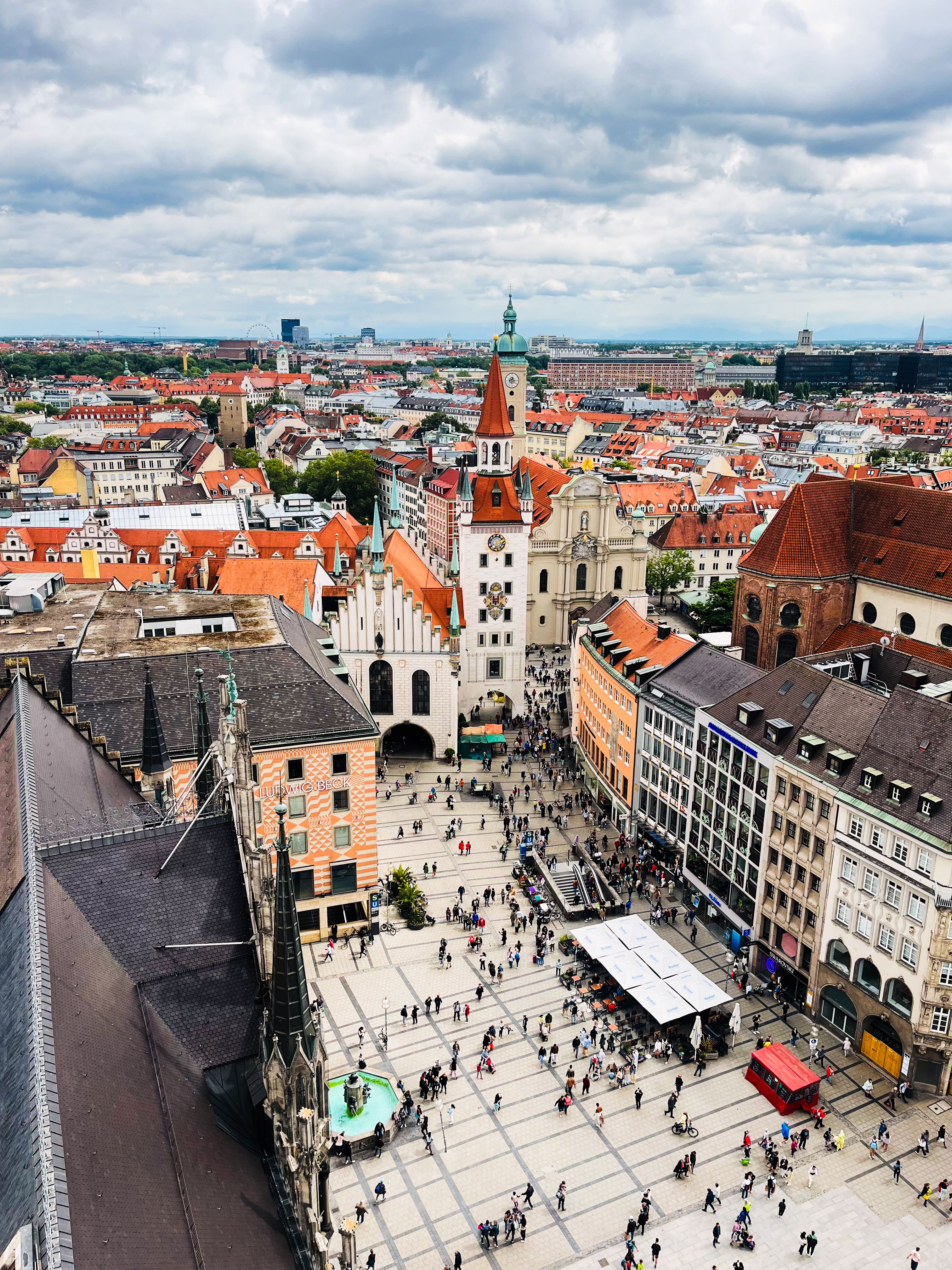
The Munich guide has the rest of the city.
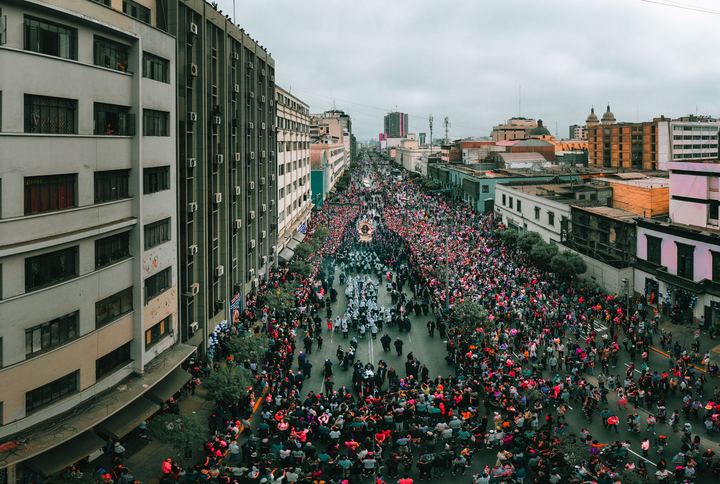
Lima's purple month: a float carried through the old centre from dawn into the night on five days in October.
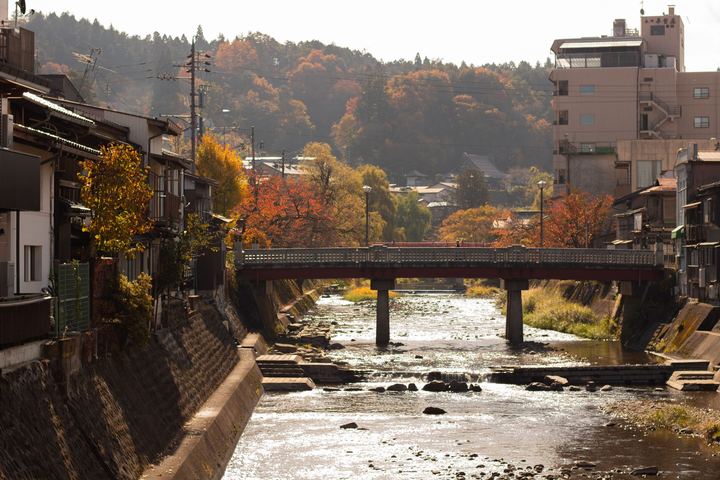
Two October days when Takayama's carved festival floats come out of their storehouses, and one night when they go round lit by lanterns.