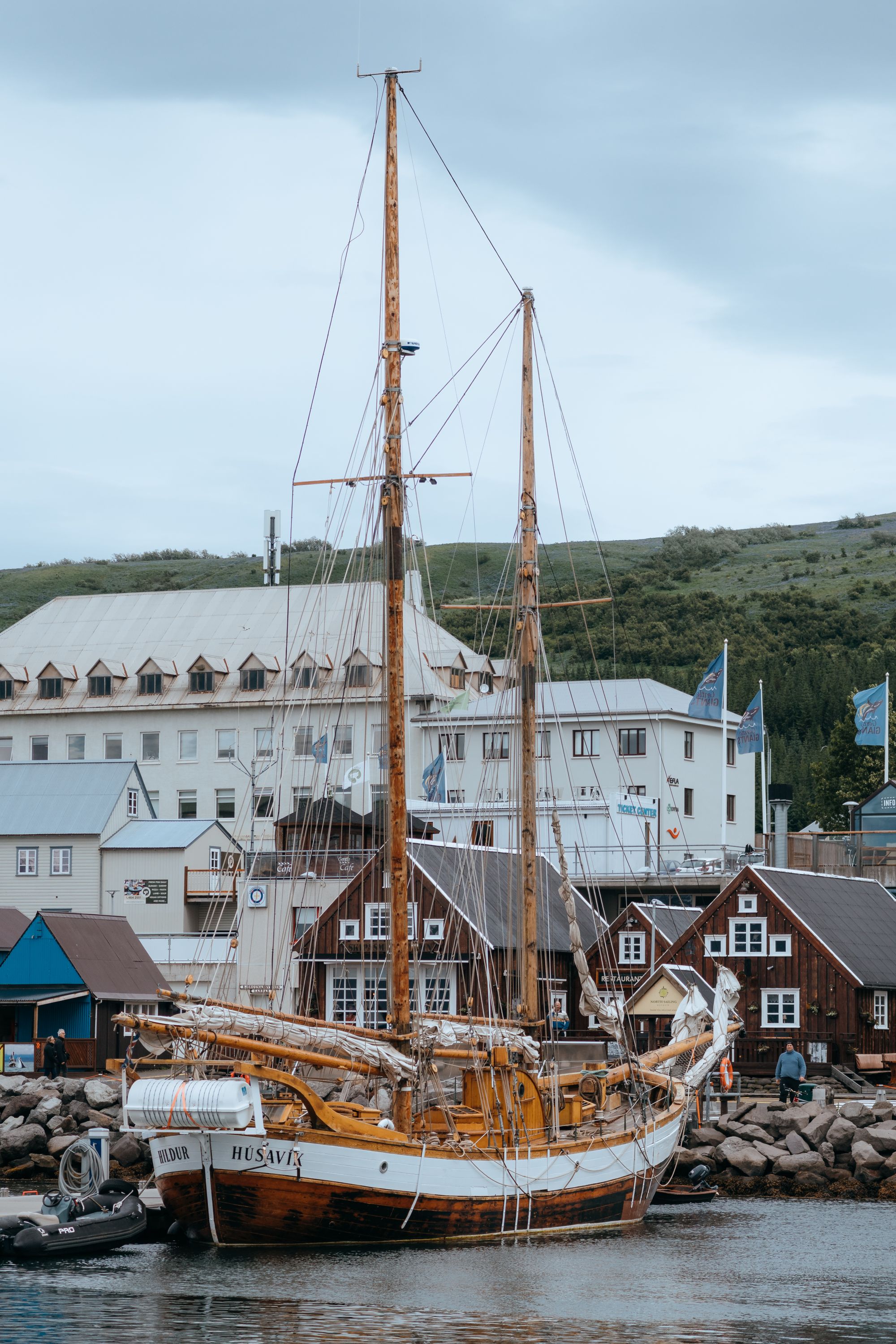
Ninety seconds on Húsavík Harbour
Easy to reach from the centre of Húsavík, this harbour is where you board for Skjálfandi Bay, where up to 23 whale species have been recorded, blue whales among them. Large puffin colonies breed in or around the bay in summer.
Húsavík is often called the Whale Capital of Iceland, and the bay in front of the harbour is the reason.
Some crews find whales by eye and by talking with the other boats on the bay rather than by sonar. When a whale surfaces, the boat moves closer and waits. It moves on once the whale takes a deep breath and dives, which usually means it will stay down for several minutes.
On the harbour front, the Whale Museum fills a 1,600 square metre building with skeletons of several species. The largest is a blue whale 22 metres long. See it before you sail and you know the scale of what you are looking for out on the bay.
Checking in at your operator's desk on the harbour side is straightforward. If you have not booked, the main tour booth by the harbour lists every option.
On board, the crew hand out warm overalls that go over your own clothes, winter jacket included. On the speedboats the overalls are obligatory, with rain jackets when needed.
Out in the bay, a guide explains what you are seeing, and on some boats a spotter calls sightings over the PA. Some boats also have stairs to an upper deck with a better view, though it gets crowded.
Many sailings end with hot chocolate and a pastry or cookies on the way back. Back on land, the Geosea baths in town look out over the bay you have just crossed, and a soak there warms you up after the wind.
Operators here advertise a guide on board, so the real choice is the boat. The wooden boats make the longer trip and sail around the puffin island, giving you time with the birds as well as the whales. The RIB speedboats make a shorter, faster trip with a small group, and some operators set age, height and health limits, so check them before you book.
If you are prone to seasickness, take a tablet at least an hour before you sail, because wrist bands alone may not be enough. The roughest part is sitting still while the boat waits for a whale, so keep your eyes on the horizon and the mountains.
Bring warm, waterproof layers, warm socks and shoes with good tread for a wet deck, a cover for your camera and your own water. Ask for a life-jacket for children, because their overalls have no flotation built in.
Only a few operators sail from Húsavík, so book ahead in summer, and check whether your operator allows free cancellation so you can still watch the forecast.
Explore the rest of Húsavík
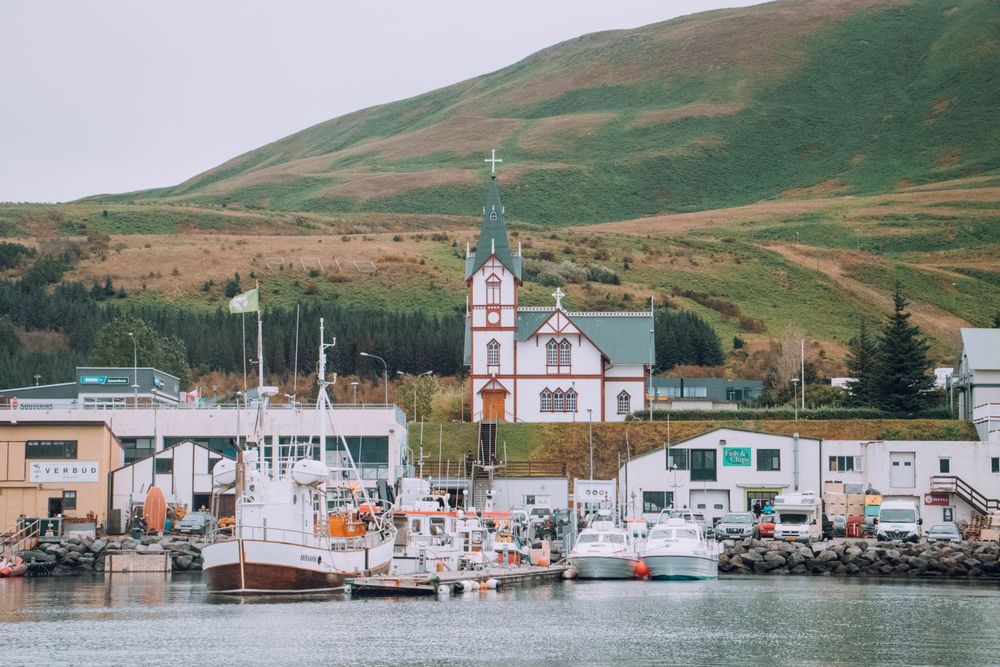
A fishing town of about 2,400 on the east shore of Skjálfandi bay, about 58 km short of the Arctic Circle. Whale-watching boats leave the…
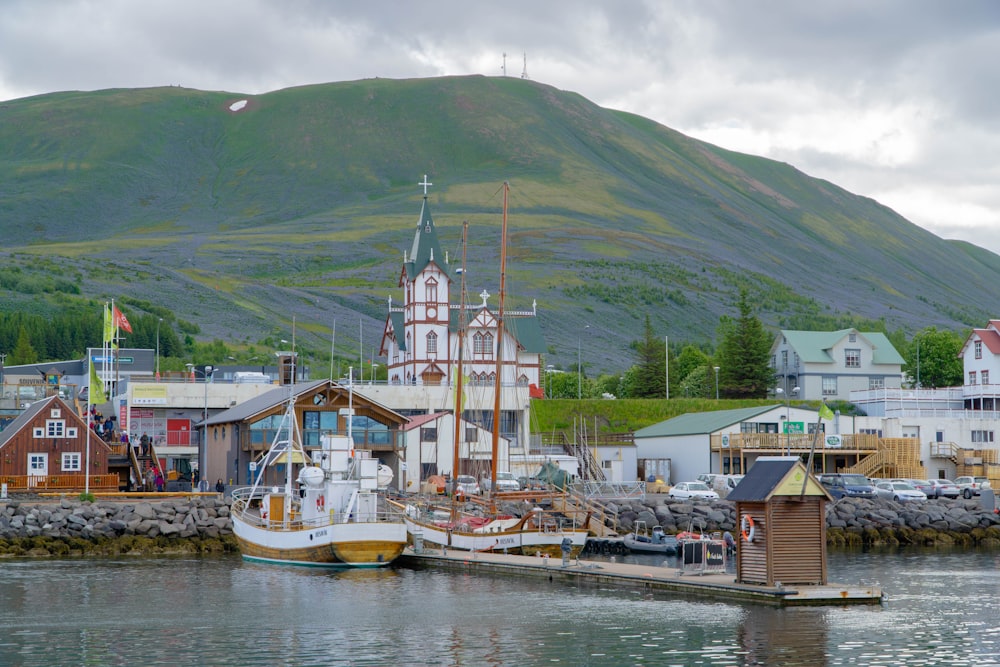
Housed in the town's old slaughterhouse beside the harbour, the museum shows 11 whale skeletons. The centrepiece is a 25 metre female blue…
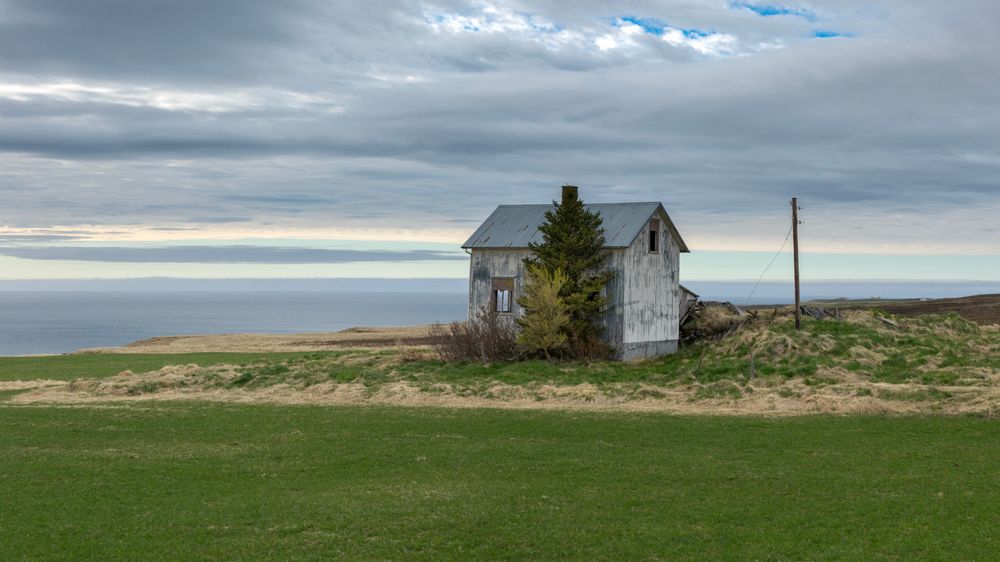
The peninsula north of Húsavík, crossed by road 85 on the way to Ásbyrgi, with sea cliffs full of fossil shells along its western shore. At…