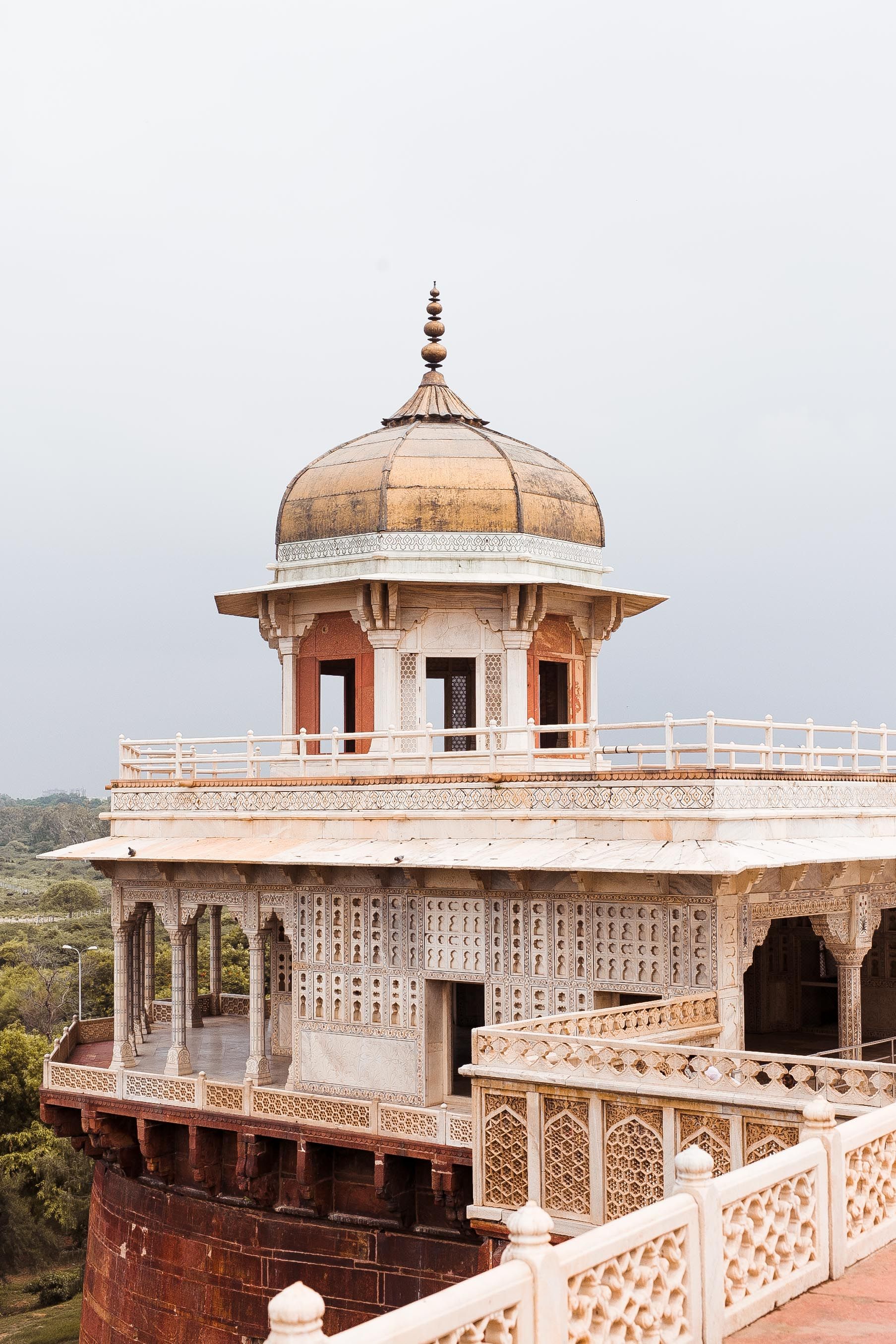
Ninety seconds on Agra Fort
These walls are red sandstone, but what you come for is inside: the white marble palaces of the Mughal emperors, which make Agra Fort feel far more like a palace than Delhi's Red Fort.
Ramparts 2.5 km long, in red sandstone, ring what was the walled imperial city of the Mughals. The sandstone is Akbar's rebuilding, and the white marble palaces inside were raised later by Shah Jahan.
The Diwan-i-Aam was the hall of common audience and the Diwan-i-Khas the hall of private audience. Palaces such as the Khas Mahal stand within the walls too, and the Jahangiri Mahal is among the earlier buildings that survive, along with the Amar Singh Gate that visitors use today.
From the balconies of the pavilions the view runs across the Yamuna to the Taj Mahal, shining in the distance, close enough that each monument can be seen from the other.
Go in by the Amar Singh Gate, the only entrance for visitors, where the ticket booth is. Leave big bags and books at your hotel, because they slow the security check.
The fort is open every day from sunrise to sunset. If you are seeing the Taj Mahal the same day, go there at sunrise and come here before sunset.
Inside, eating, smoking and loud noise are not allowed, and the walls must not be touched or scratched. Switch your phone off too: phone use inside is discouraged.
The fort is easy to explore without a guide, and you can take the halls and palaces at your own pace. Hire one if hearing the history of the fort in detail is the point of your visit.
Explore the rest of Agra
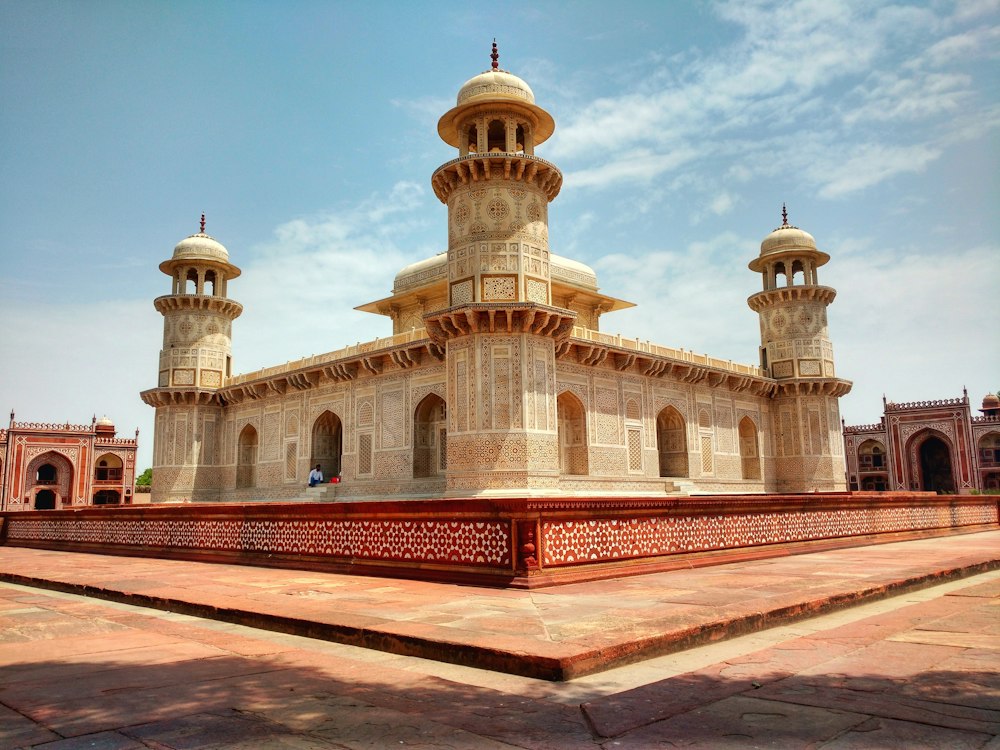
Nur Jahan built this small tomb for her father, Mirza Ghiyas Beg, between 1622 and 1628. It was the first Mughal building made entirely of…

A Mughal garden square on the north bank of the Yamuna, directly opposite the Taj Mahal. Excavation has uncovered a large octagonal pool at…
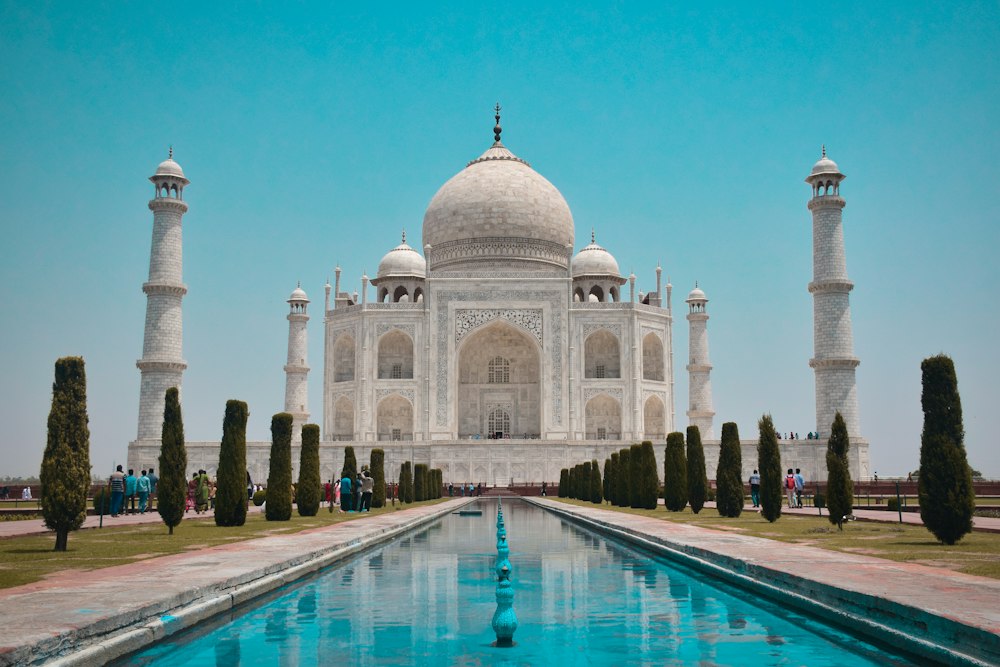
Shah Jahan built this white marble mausoleum after the death of his wife Mumtaz Mahal. Inlaid semi-precious stone covers the walls at close…