 Submit a photo
Ninety seconds on the Taj Mahal
As of 2026 the Taj Mahal opens half an hour before sunrise and closes half an hour before sunset, so the hours move with the seasons. It is closed every Friday and open on every other day of the week. Agra's other monuments stay open on Fridays, from sunrise to sunset, which makes Friday the day for the rest of the city.
Both. Day tickets sell online through the Archaeological Survey of India booking site and at the ticket window at both the East and West gates. Entry to the mausoleum itself is an optional extra ticket, and only that ticket leads inside to the cenotaphs.
Sunrise, between October and March. Sunrise beats both the summer heat and the crowds, which are usually bigger at sunset than at dawn. The marble also shifts with the hour: pink in the first light, milky white in the evening and golden after dark.
Yes, on five nights a month: the full moon night and the two nights either side. As of 2026 viewing runs from 8pm to midnight in eight batches of no more than 50 people. Tickets are booked on the official ASI portal, seven days before the date, and mobile phones are banned along with the usual prohibited items.
Drones are banned in and around the complex, and photography stops at the door of the main mausoleum. Security also turns back food, tripods, headphones and chargers, and big bags and books slow the check, so they are better left at the hotel. A water bottle is allowed through.
By road or rail from Delhi, 204 km away, on trains such as the Gatimaan, Shatabdi and Taj Express. Motor traffic stops 500 metres short, so the last stretch runs from the car parks at Shilpgram, for the East Gate, or Amrood ka Teela, for the West Gate. The East Gate is the one for avoiding crowds; the South Gate is closed for entry.
Light and shadow move through the carved marble screen around the tombs of Shah Jahan and Mumtaz Mahal, and the chamber is best enjoyed when it is quiet.
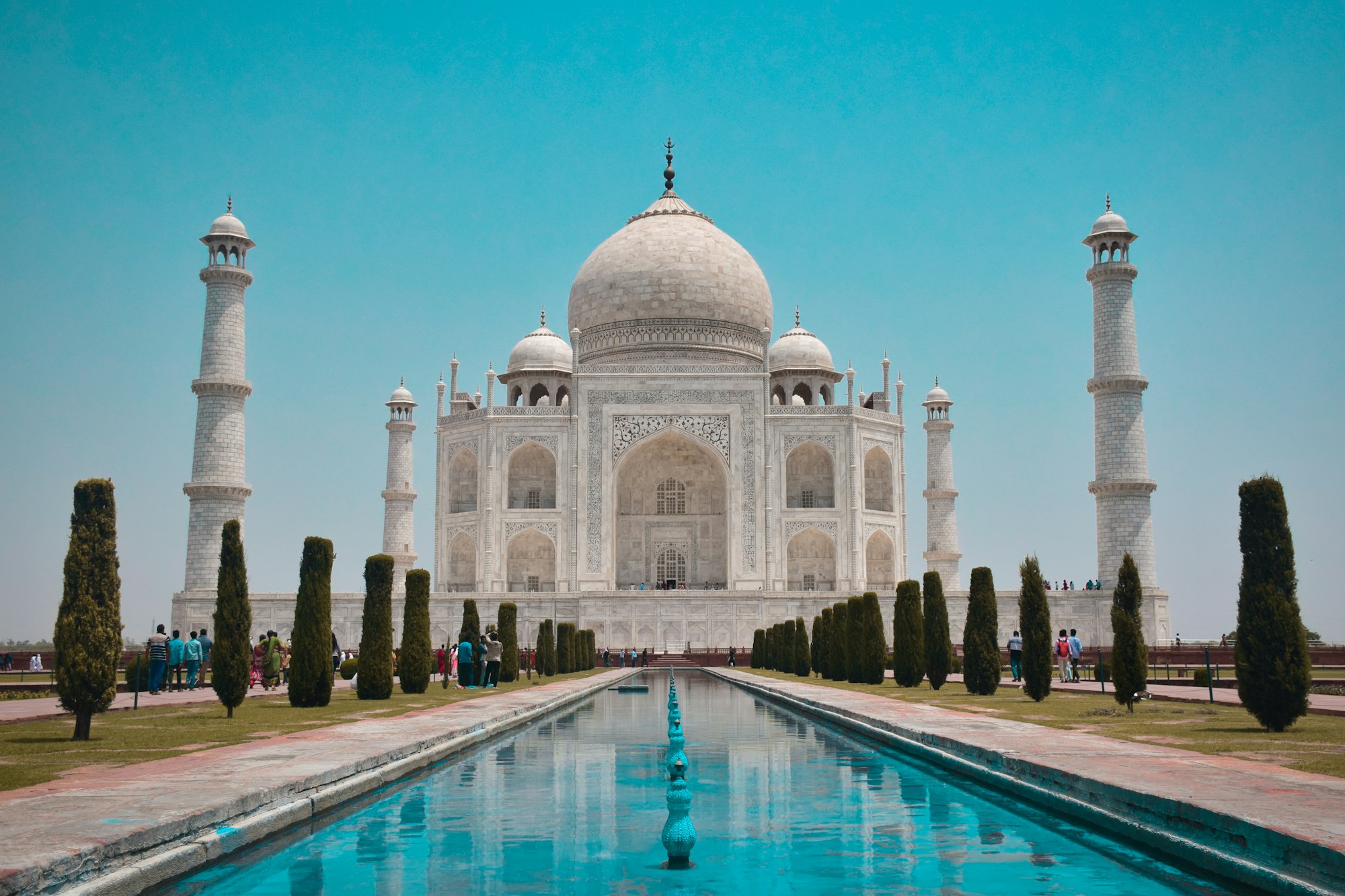
The first full view of the tomb comes through the arch of the red sandstone gateway, about 30 metres high, which frames the white dome exactly in its centre. Calligraphy on the gate is a verse asking the soul to return to the Lord at peace. Beyond it the garden is a charbagh, a square laid out in four equal parts.
The plan is symmetrical about one central axis, so the main buildings come in matched pairs. The mosque on one side of the tomb has a mirror image on the other, the mihman khana, or guest house, and four minarets repeat the balance around the tomb itself.
The tomb is clad in white marble, slightly translucent, and its colour changes with the light: pinkish in the morning, white in the evening, golden at night. Inside, a six-sided carved marble screen surrounds the two cenotaphs, replica tombs inlaid with flowers and plants in semi-precious stone, a decoration kept for the imperial family. The real graves lie in a chamber below.
There are separate security lines for Indian and foreign visitors. Past it, walk through the gateway and along the reflecting pool, with its fountains, to the marble platform.
The optional mausoleum ticket takes you into the chamber of the two tombs. Afterwards, walk round the platform for views over the gardens, the mosques and the Yamuna, and stop at the Taj Museum in the complex, free and open from ten to five.
For a sunset view of the dome from across the river, go to Mehtab Bagh. On full moon nights, and two nights either side, the complex reopens from eight until midnight for small half-hour groups, and phones are banned.
Coming in by the West Gate, leave anything bigger than a small handbag at the cloakroom in the shopping complex there before you join the queue, so security does not send you back to a locker. A foreign visitor's ticket includes a half litre bottle of water, so you need not carry one in.
Once through, take your time at the gateway. With some luck you can frame your photograph of the dome through one of its arches.
Explore the rest of Agra
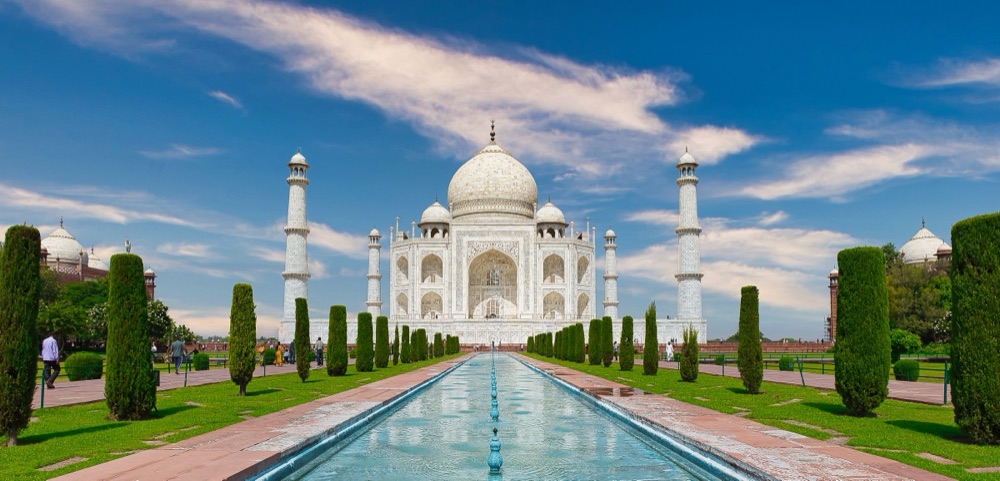
Three Mughal emperors built on this stretch of the Yamuna in Uttar Pradesh, and the results stand within a few kilometres of each other:…

A Mughal garden square on the north bank of the Yamuna, directly opposite the Taj Mahal. Excavation has uncovered a large octagonal pool at…
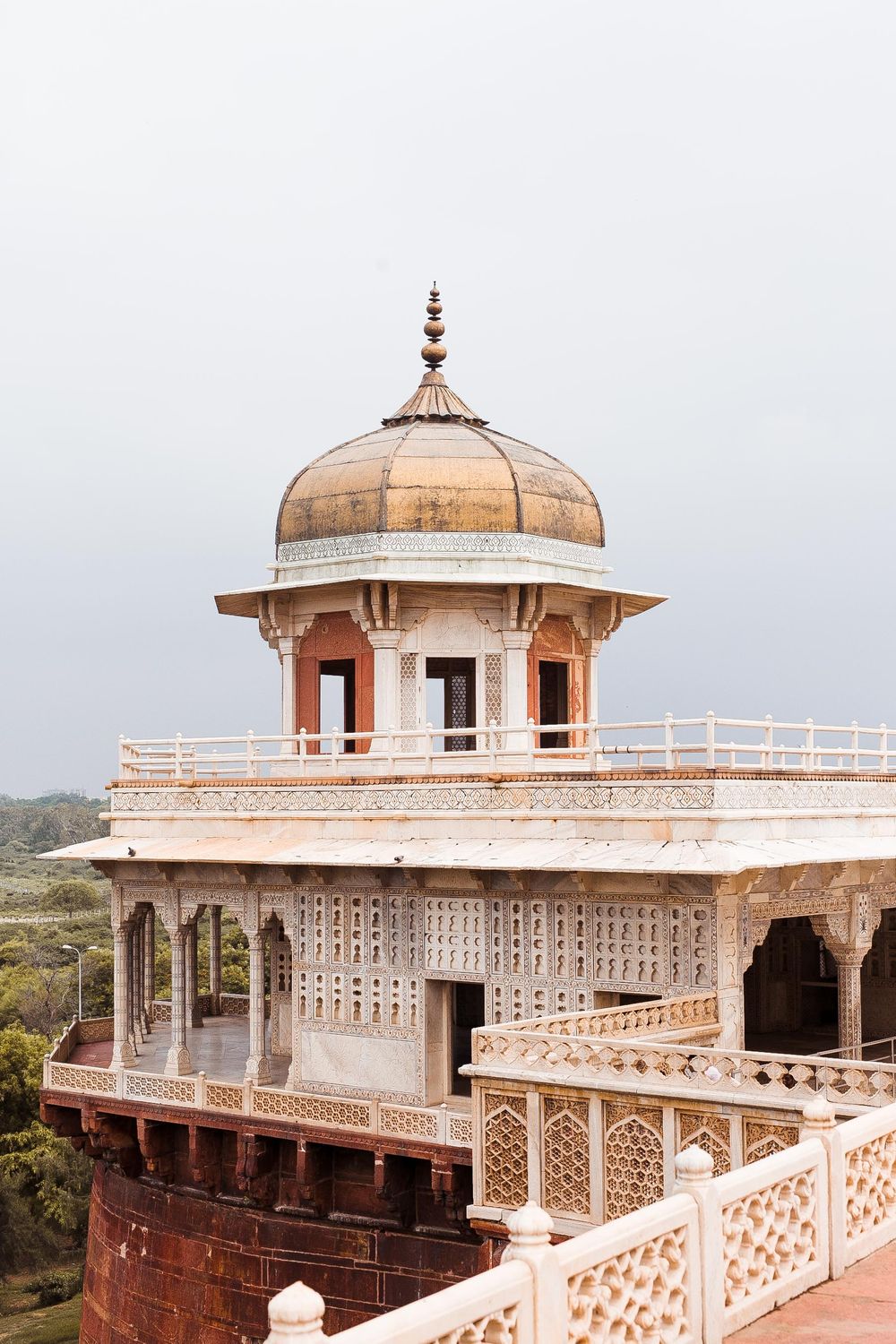
Akbar rebuilt the Mughal stronghold in red sandstone from 1565, and his grandson Shah Jahan later set white marble palaces inside the…
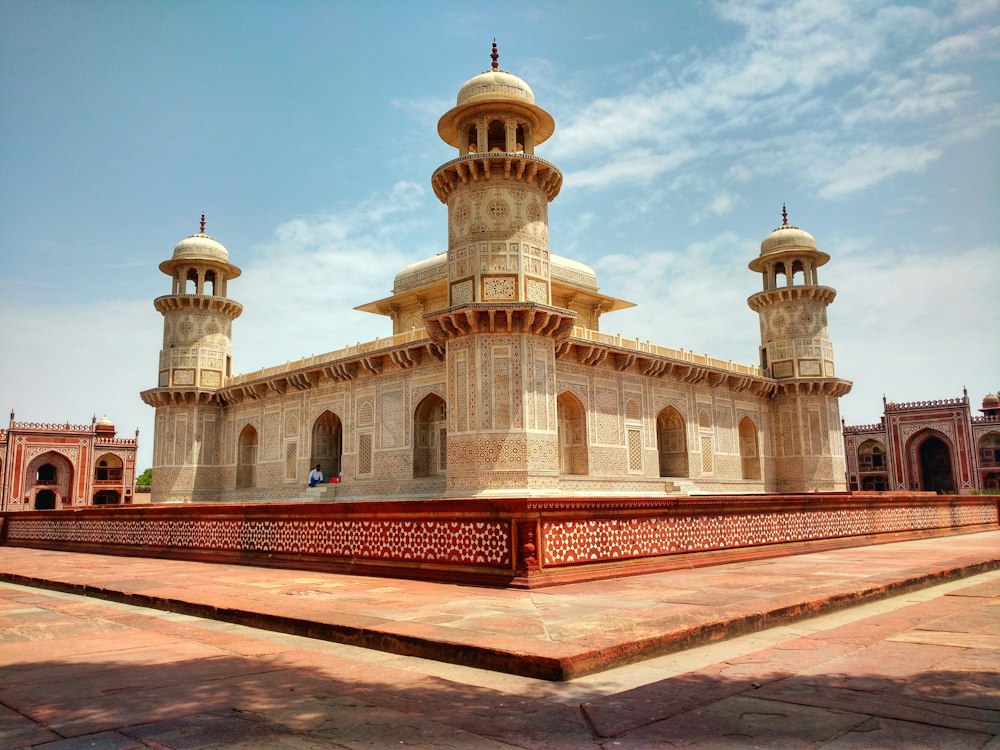
Nur Jahan built this small tomb for her father, Mirza Ghiyas Beg, between 1622 and 1628. It was the first Mughal building made entirely of…
Handicraft and leather shops line this walking street in the Agra Cantonment, a short ride south of the fort, and local food is sold from…
A red sandstone capital abandoned within a generation of its founding, Fatehpur Sikri served Akbar from 1571 until its water supply failed.…
Last updated