Ninety seconds on Fatehpur Sikri
Akbar's planned capital is worth the drive from Agra for two things you rarely find together: an emptied royal city in red sandstone, and a mosque that is still a working place of worship.
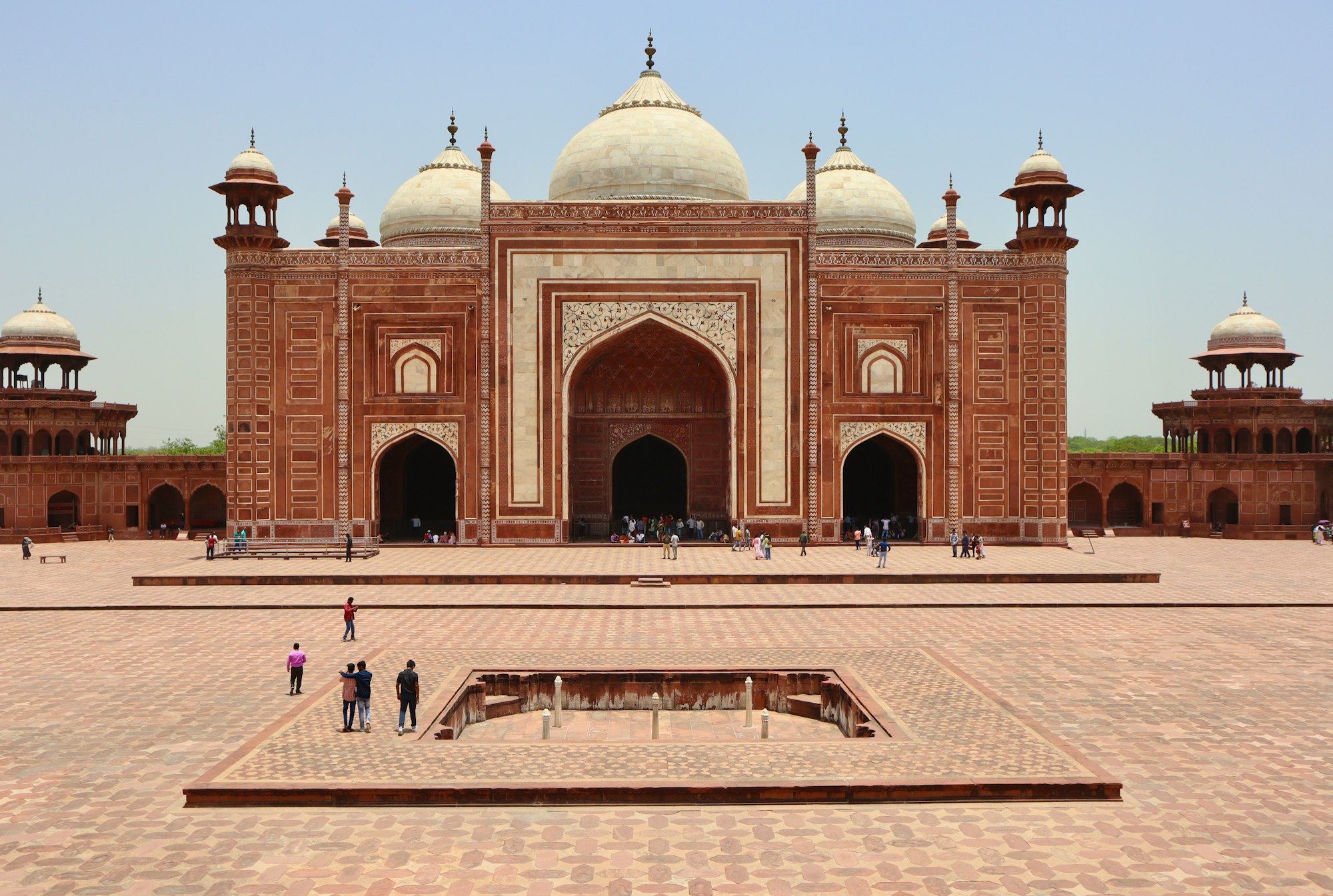
The Buland Darwaza, 54 metres high, is the gateway on the religious side of the city. Behind it stands one of the largest mosques in India, the first building raised here, and inside the mosque the white marble tomb of the Sufi saint Salim Chishti, the only marble among all the red stone. Akbar built the whole city in his honour.
The other half is the royal city, also in red sandstone and the first city the Mughals planned. Its Diwan-i-Aam was the hall of common audience and its Diwan-i-Khas the hall of private audience.
The Panch Mahal was a pleasure palace for taking in the views and the cool of the evening, and the Jodha Bai palace is named after Akbar's Rajput wife.
Arriving by car or taxi, you park at the base and ride an authorised battery bus up to the monument gate. Buy tickets for the palace complex at the counter near the Diwan-i-Aam entrance; the site museum is beside it.
The mosque and the saint's tomb form the other half of the site. Shoes come off at the entrances, and shoe minders sitting there will look after them for a small payment.
On the mosque side, the 42 steps of the Buland Darwaza lead up to its main arch, but the stairs to the top of the gate are now closed.
Licensed guides wait near the ticket counters, so hire one there if you want a guide. On arrival you will be approached by would-be guides, some carrying fake identity cards, so walk past them and go straight to the counter.
Buy your palace ticket before anything else. Touts are not allowed into the royal enclosures, so once you are through the gate they cannot follow you.
Leave shopping until you are done, and then use the shops by the car park rather than anyone who approaches you on the way in. If your dates are flexible, come on a Friday, when no toll is levied at the monuments.
Explore the rest of Agra
Three Mughal emperors built on this stretch of the Yamuna in Uttar Pradesh, and the results stand within a few kilometres of each other:…
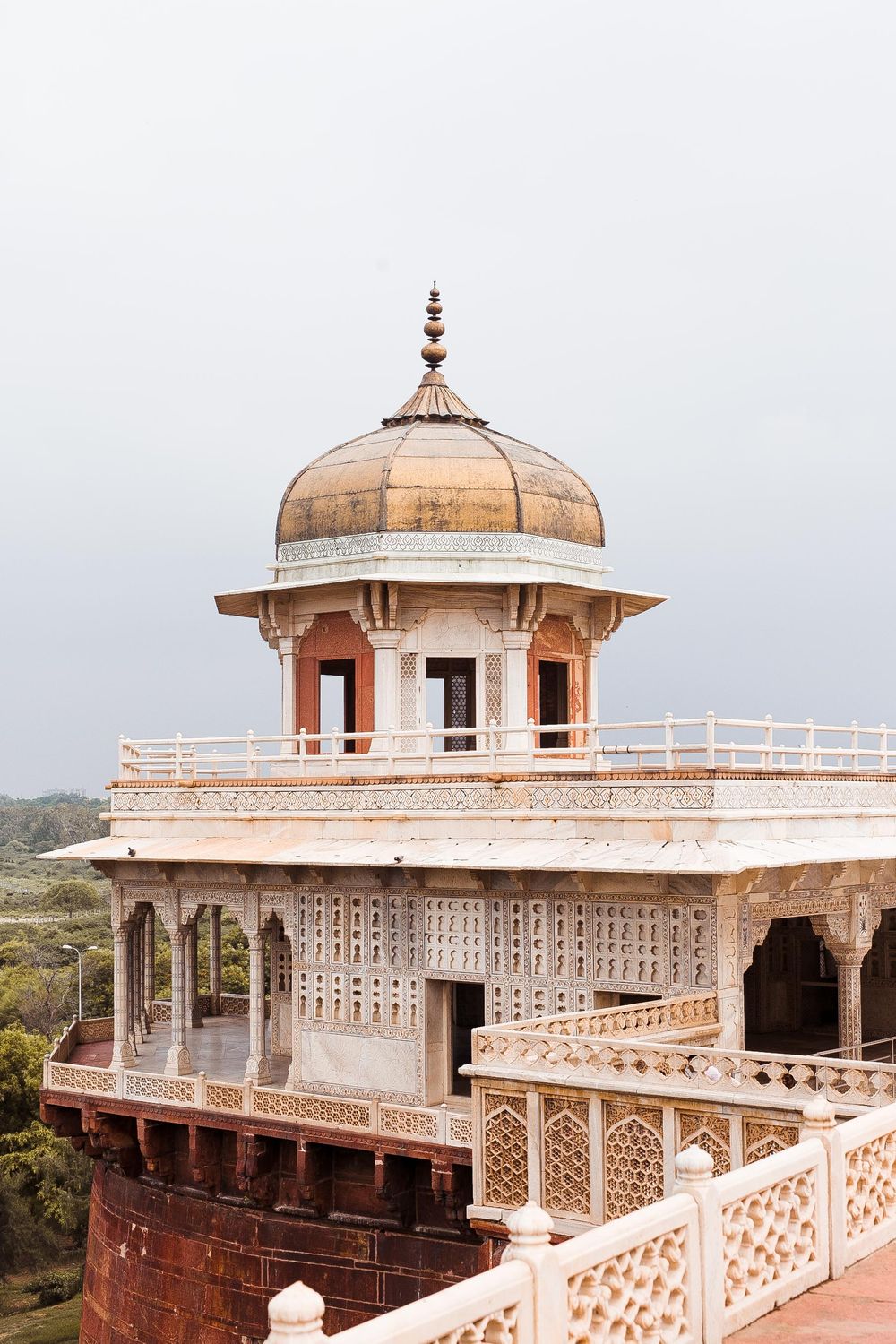
Akbar rebuilt the Mughal stronghold in red sandstone from 1565, and his grandson Shah Jahan later set white marble palaces inside the…
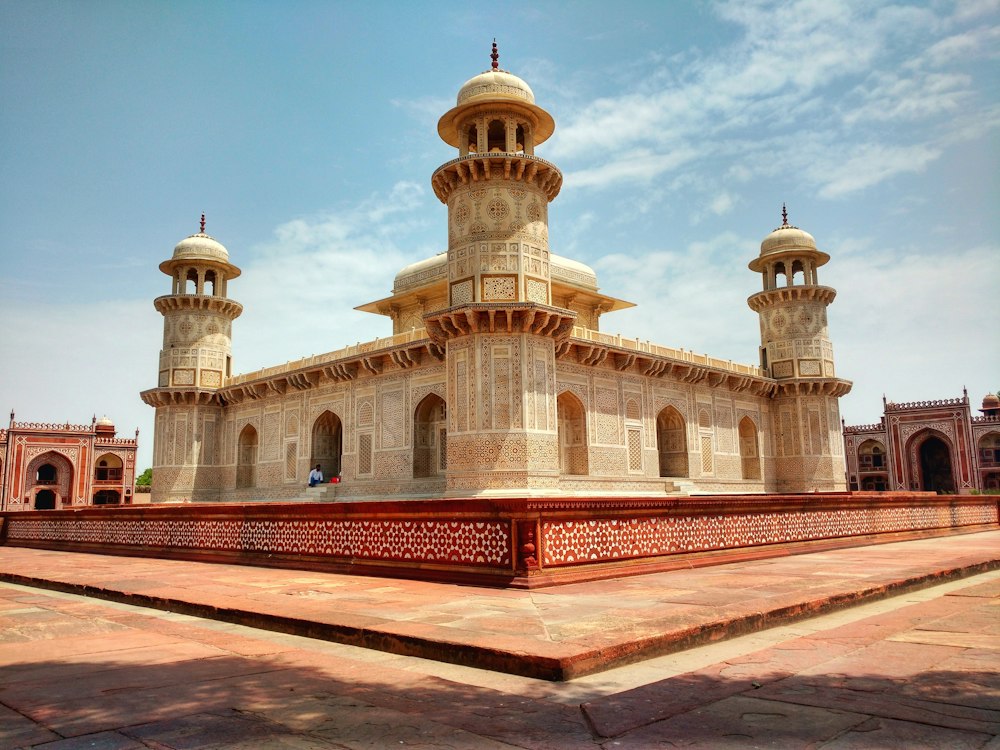
Nur Jahan built this small tomb for her father, Mirza Ghiyas Beg, between 1622 and 1628. It was the first Mughal building made entirely of…