
One of Japan's three great gardens, Kenroku-en was laid out by the lords of Kaga to be walked through, not seen from one spot. You pass two ponds, a waterfall and wooded hills, and the planting runs from plum in March to maples in autumn.
Garden, Kanazawa. Meridian Dispatch.
The Kanazawa Loop Bus leaves from the station's east exit and reaches the Kenrokuen-shita stop in about 20 minutes. Hokutetsu buses also run there, and the Kenroku-en Shuttle adds a service on Saturdays, Sundays and holidays. A taxi takes about 10 minutes, and the walk along Hyakumangoku Road takes 25 to 30.
Kenroku-en is open every day of the year. The hours are 7:00 to 18:00 from 1 March to 15 October, and 8:00 to 17:00 from 16 October to the end of February. Night openings with lights run in several seasons, cherry and autumn leaf included; dates go up on the garden's news page.
Yes. Entry is free before the paid hours, through the Renchi-mon and Zuishinzaka entrances only. It starts at 4:00 from April to August, 5:00 in March, September and October, and 6:00 from November to February, and visitors must leave 15 minutes before paid opening.
Yes. Visitors over 65 enter free on showing a passport. The garden opens free to all on set days: about seven days in the cherry season, three days of the Hyakumangoku Matsuri in early June, 14 to 16 August, 3 November and 31 December to 3 January.
Yukitsuri are ropes strung from a pole above a pine down to its lower branches, holding them up so heavy snow does not break them. Gardeners begin setting them up on 1 November, and they stay until around 15 March. On the Karasaki pine they spread like an umbrella.
Cherry trees along the streams in the north-east of the garden usually bloom around mid-April. The Kenroku-en Kiku-zakura flowers later, for about two weeks from late April into early May. Each of its blossoms holds over 300 petals, which turn from red to pink and then white.
Yes. Shigure-tei, a teahouse near Hisago-ike pond, serves powdered green tea for a fee, and touring the house and garden is free. It is open from 9:00 to 16:30, last entry 16:00, and closes from 29 December to 3 January.
About 90 minutes covers the garden at a relaxed pace, and tea, queues or careful photography can stretch it to two hours. A slow circuit of both main ponds with a stop for tea takes about two and a half hours.
The official site of Kenroku-en is shiro-niwa.pref.ishikawa.lg.jp.
shiro-niwa.pref.ishikawa.lg.jp →The name Kenroku-en means a garden that combines six qualities, which an old Chinese gardening text sets out in pairs: spaciousness and seclusion, artifice and antiquity, water-courses and panoramas. Here wide open areas give long, bright views, with small hidden corners scattered between them.
Kasumiga-ike, the largest pond, lies near the centre with Horai island in it. On its north shore stands the Kotoji lantern, 2.67 metres of stone on two legs of unequal length, said to look like the bridge under a koto's strings. It is the emblem of the garden.
The Karasaki pine, a black pine grown from a seed brought from Lake Biwa, stands by the same pond with long, sprawling branches. Water leaves the big pond over Midori-taki, a waterfall 6.6 metres high, into the smaller Hisago-ike, where a stone pagoda stands on an island.
A fountain fed from Kasumiga-ike works by natural pressure: the difference in water level pushes a jet about 3.5 metres high. The garden is still watered by the Tatsumi canal, from a river 10 kilometres from the castle.
Start at the Katsurazaka gate, three minutes' walk from the Kenrokuen-shita bus stop; the same stop serves the Ishikawa-mon gate of Kanazawa Castle Park. Buy a ticket at the gate booth. One easy order from there takes in the Panoramic Lookout first, for the view over central Kanazawa to the Sea of Japan, then the Kotoji lantern.
Follow the shore round to Uchihashi-tei, a teahouse on stone legs at the south-west corner that seems to float. Behind it, a path spirals up Sazae-yama, a 9-metre mound with a small rest house on top.
From there, follow the water down to Midori-taki and Hisago-ike, where Yugao-tei, a small tea room, faces the waterfall across the pond. Leave by Renchi-mon, the main gate.
No food stalls operate inside the garden, only places serving tea, so eat before you go in. The pedestrian road outside the Katsurazaka gate has small cafes serving lunch, tea and ice cream covered in gold leaf.
If you use a wheelchair, borrow one at the Kodatsuno gate, where the ground around the entrance is flat. The other three entrances lend them too.
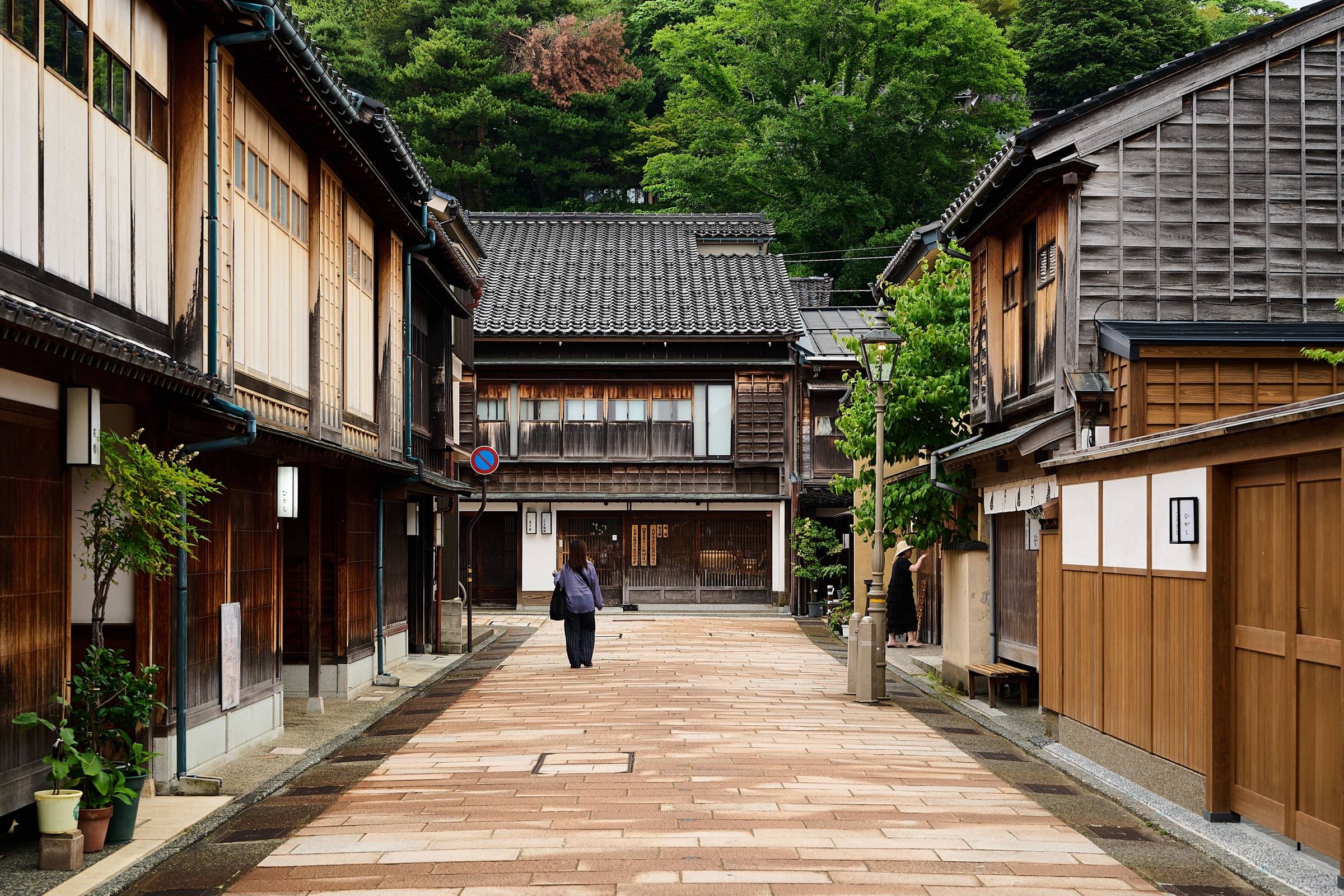
Kanazawa, Japan: Samurai lanes, a temple quarter and three wooden teahouse streets still stand around the castle park. Higashi Chaya District.
Read the Kanazawa guideExplore the rest of Kanazawa
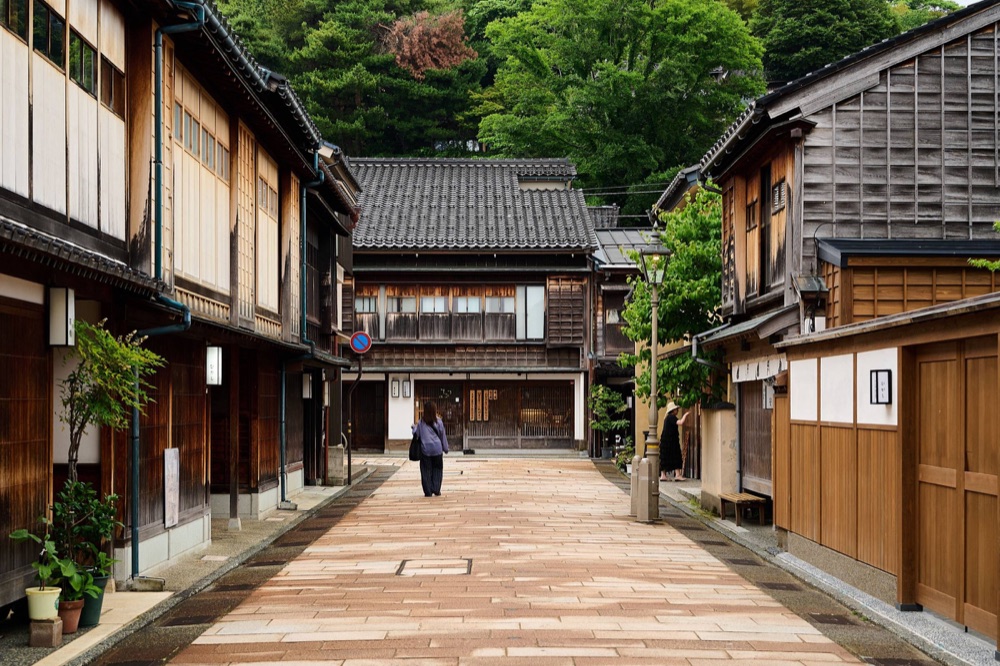
Samurai lanes, a temple quarter and three wooden teahouse streets still stand around the castle park. Kenroku-en, beside the castle park,…
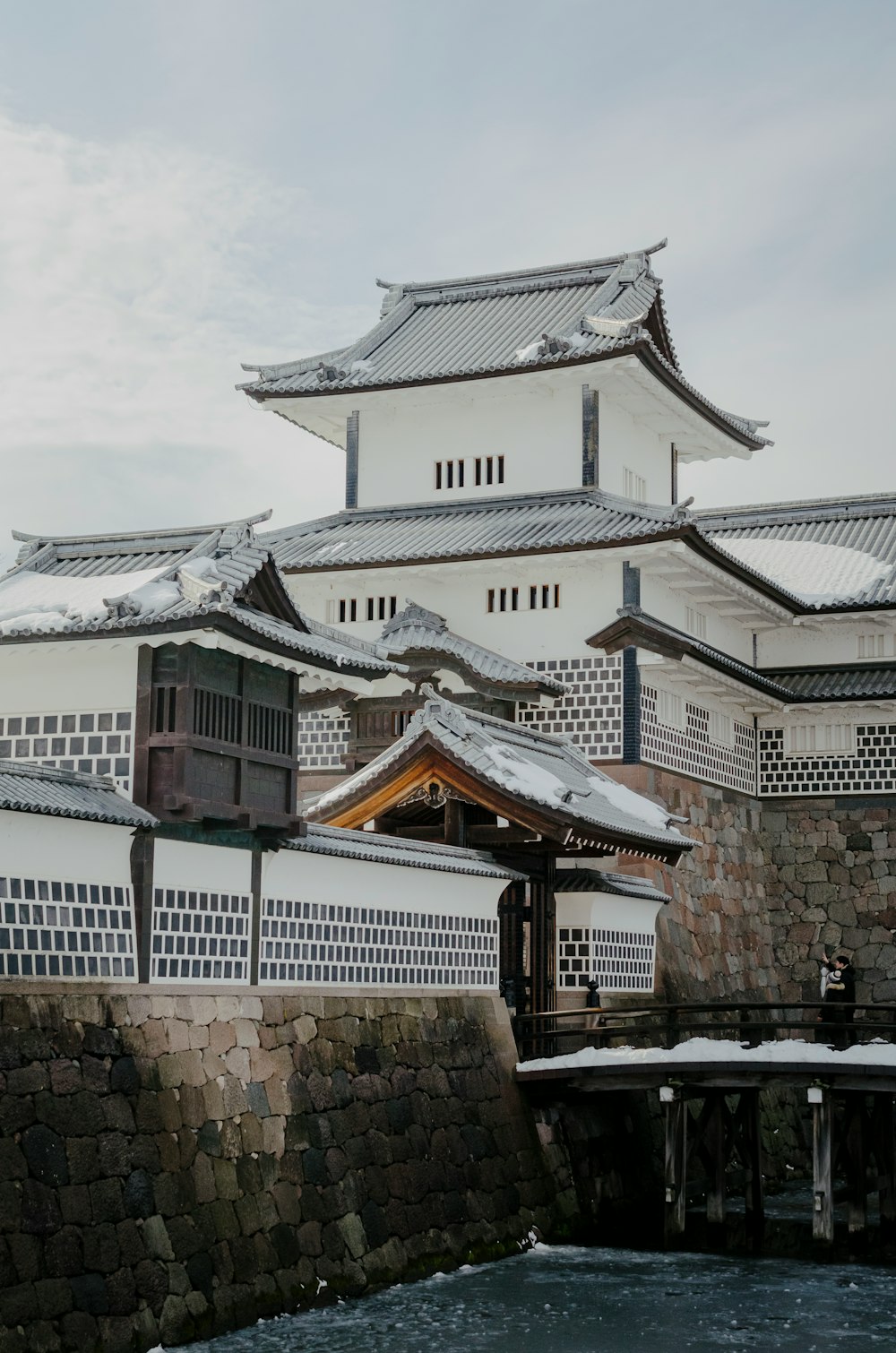
The castle park is free to walk, and only the rebuilt turrets and long storehouse at its centre take a ticket. Look closely at the walls:…
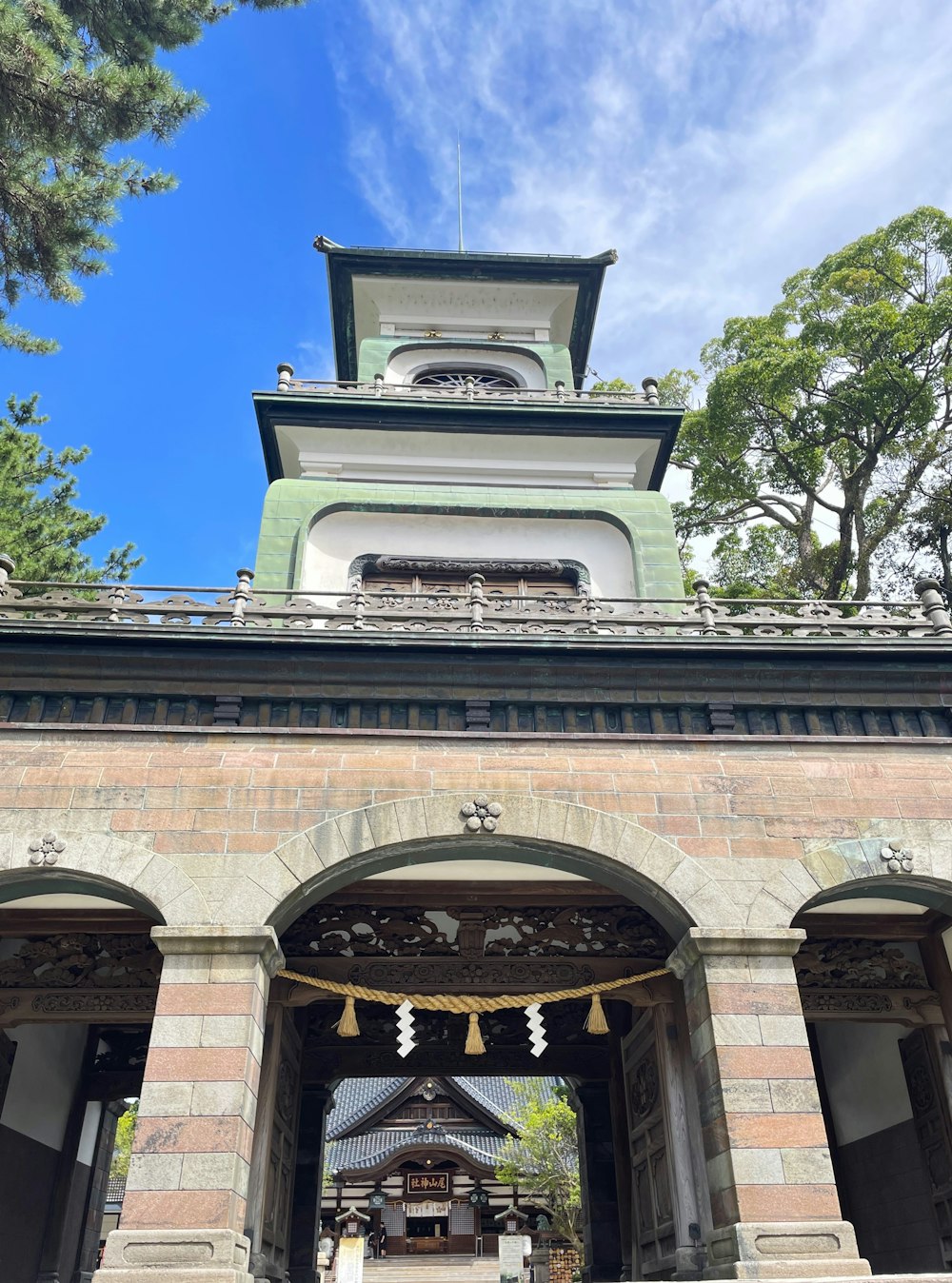
After dark the tall gate at the top of the steps is lit and the stained glass in its upper storey glows. The gate mixes Japanese, Chinese…
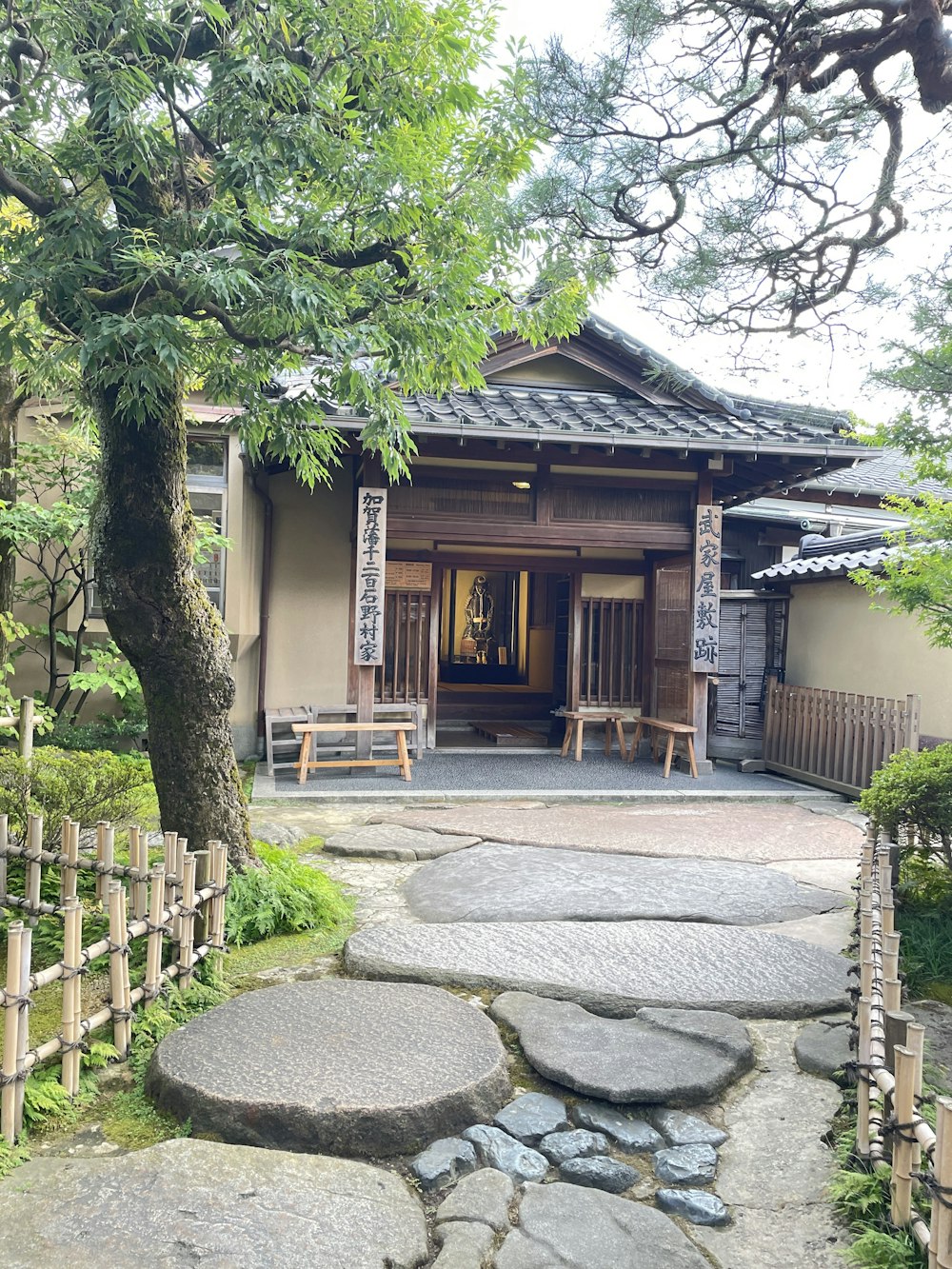
Nomura house is the best known of the Nagamachi samurai homes open inside, and a separate ticket covers it. Its rooms have coffered…
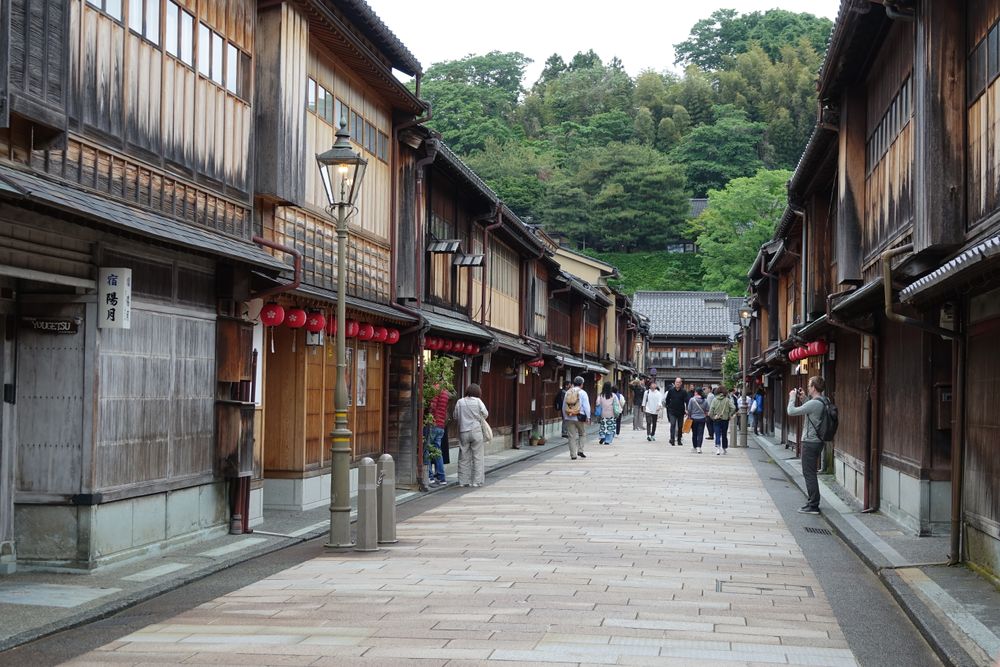
Walk the main street before nine in the morning or after the shops shut at about five, when the wooden lattice fronts are almost empty. In…
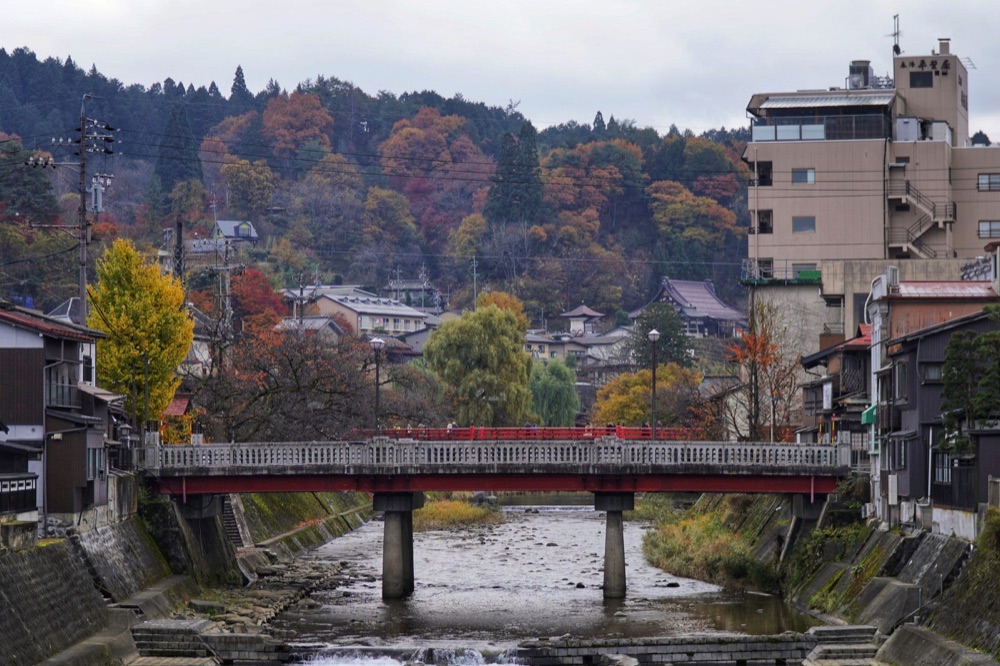
Come for the mornings: two markets set up by seven in summer, and the dark timber lanes of Sanmachi stay empty until the tour coaches…


Save Kenroku-en to your Japan trip in the Meridian Dispatch app and build the day around it, with the best of Kanazawa pinned on one map.
Download on the App StoreThe official pages this guide was checked against.
Last updated