
One river crossing leads you into a whole hillside village built of mud brick, and lanes climb from there to the hilltop. It is the most famous ksar in the Ounila valley, on the southern slopes of the High Atlas.
Old Town, Ouarzazate. Meridian Dispatch.
The ksar is about 30 km northwest of Ouarzazate, around 30 to 40 minutes on a paved road along the river valley. From Marrakesh, the road crosses the High Atlas by the Tizi n'Tichka pass, about four hours each way. The choices are a guided day trip, a hire car, or a bus to Ouarzazate and a grand taxi from the stand beside its bus station.
No ticket office stands at the gate, and the lanes can be walked without a ticket. Some households charge a small fee to pass through their homes or climb their terraces. Someone at the gate sometimes asks for money anyway, and the request can be declined.
Aït Benhaddou has appeared in more than 20 major films and television productions. They include Lawrence of Arabia (1962), Gladiator (2000) and the series Game of Thrones.
Yes, though only a few families still live inside the walls year round. They keep the mud-brick buildings standing through a cycle of seasonal repairs, re-plastering eroded surfaces and tending the irrigation channels. Most residents now live in the modern village across the valley.
Yes. UNESCO listed the Ksar of Ait-Ben-Haddou in 1987 as an eminent example of the earthen villages of southern Morocco's valleys, a way of building that still holds a few families today.
The ksar is a lived-in village rather than a gated site, so the lanes have no posted hours, and daylight is the practical time. The small museum keeps daytime hours; check on arrival.
Behind the defensive walls, reinforced by angle towers, the houses crowd together up the slope. Some are modest. Others look like small urban castles, with high towers of their own and upper sections decorated with motifs in clay brick.
Every building is mud brick: sand, clay, water and straw shaped into blocks and dried in the sun. Up close, look for the weathered doorways and windows, the geometric patterns in the brickwork and the covered passages, lit only from their ends.
Shared spaces sit among the houses: a mosque, a public square, a caravanserai, a Muslim and a Jewish cemetery, and a saint's shrine. The threshing floors lie just outside the ramparts.
The village was a trading post on the caravan route from West Africa to Marrakesh, by the Draa valley and the Tizi n'Telouet pass. The houses you walk past date from the 17th century or later.
Start in the modern village, where cars park and taxis drop off, and cross the river by the small footbridge to the ksar entrance. From there the visit is a self-guided walk up narrow lanes between the houses to the top of the hill, and back down. A local guide is optional.
On the way up, stop at the small local museum for context. The restored kasbahs along the lanes are private homes.
At the top stands the ruined granary. The viewpoint beside it looks down over the roofs and along the valley, with the Atlas behind.
Avoid the middle of the day, when the heat peaks and the light turns harsh. There are no facilities inside the ksar, so take water and anything else you need before you cross the river.
The alleys are steep and the ground is uneven, so wear shoes with a good grip. Winter days are mild but turn cool after sunset, so carry a warm layer if you stay until dark.
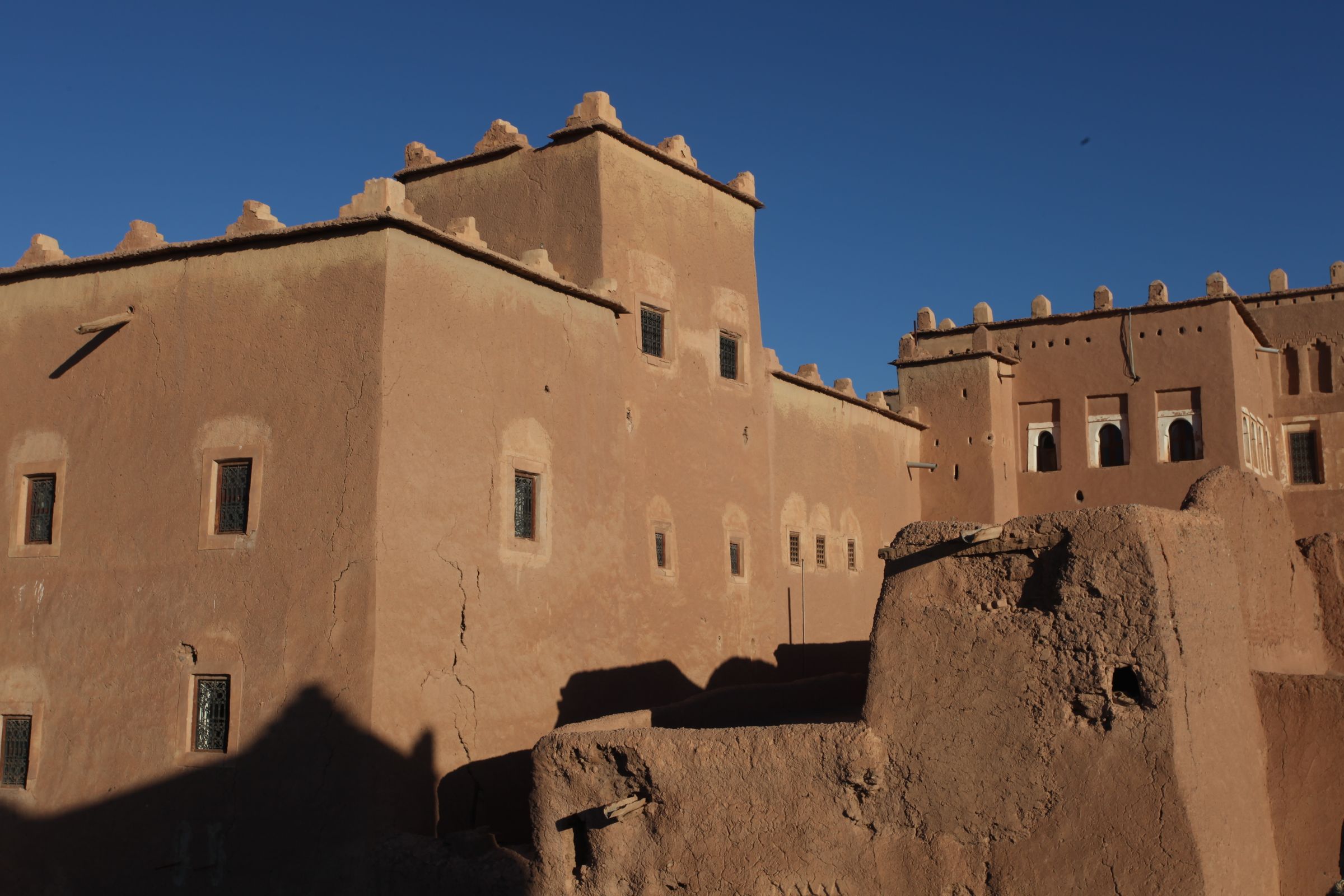
Ouarzazate, Morocco: Film sets, earth kasbahs and a wide reservoir surround this administrative town on the stony plateau south of the High Atlas.
Read the Ouarzazate guideExplore the rest of Ouarzazate
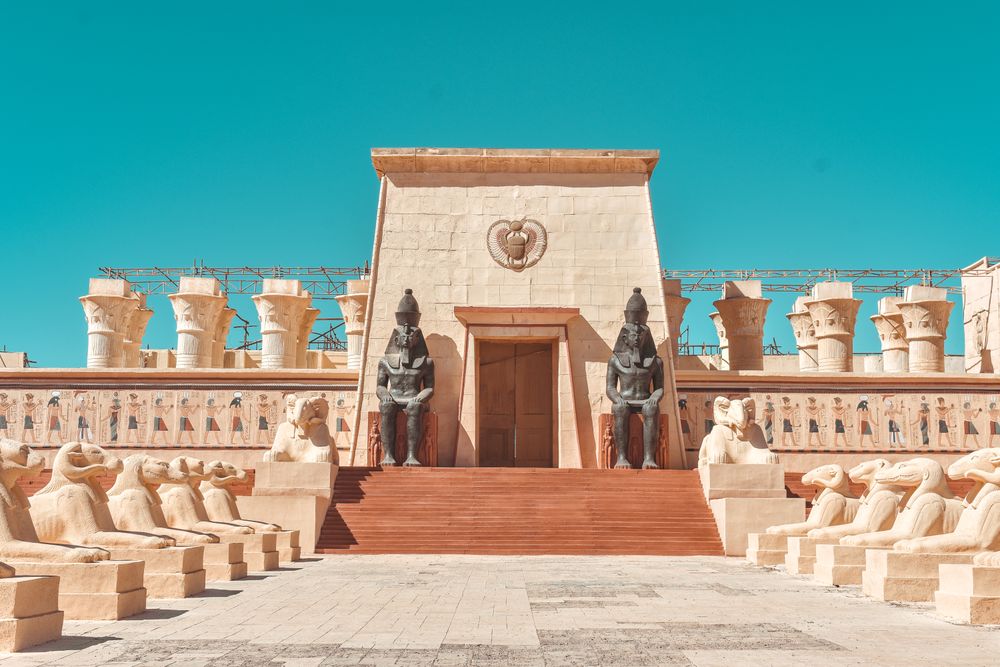
Plaster temples, an Egyptian palace and a Tibetan monastery stand in the desert lot west of town, built for productions shot here since the…
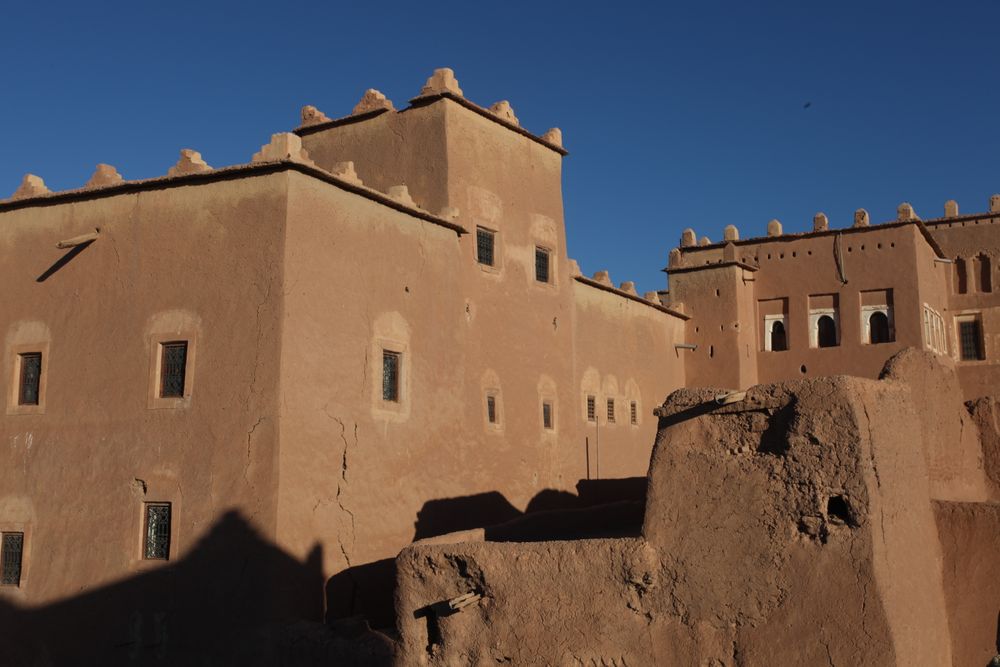
Film sets, earth kasbahs and a wide reservoir surround this administrative town on the stony plateau south of the High Atlas. The roads…


Save Ksar of Aït Benhaddou to your Morocco trip in the Meridian Dispatch app and build the day around it, with the best of Ouarzazate pinned on one map.
Download on the App StoreLast updated