Ninety seconds on Praga
You cross to Praga for the Warsaw that was never rebuilt: tenement gateways open onto courtyards with wartime shrines, and a museum on Targowa Street holds a painted Jewish prayer room.
Praga is the right bank of the Vistula, and it came through the Second World War standing while most of the left-bank city was destroyed. The tenements along its streets are pre-war originals, not reconstructions. Walk into their courtyards, not just along the street fronts.
Step through a gateway into the shared backyard of a tenement and you may find a small religious shrine. Most were built around 1943, during the German occupation, so that residents had somewhere to pray when they could not reach a church.
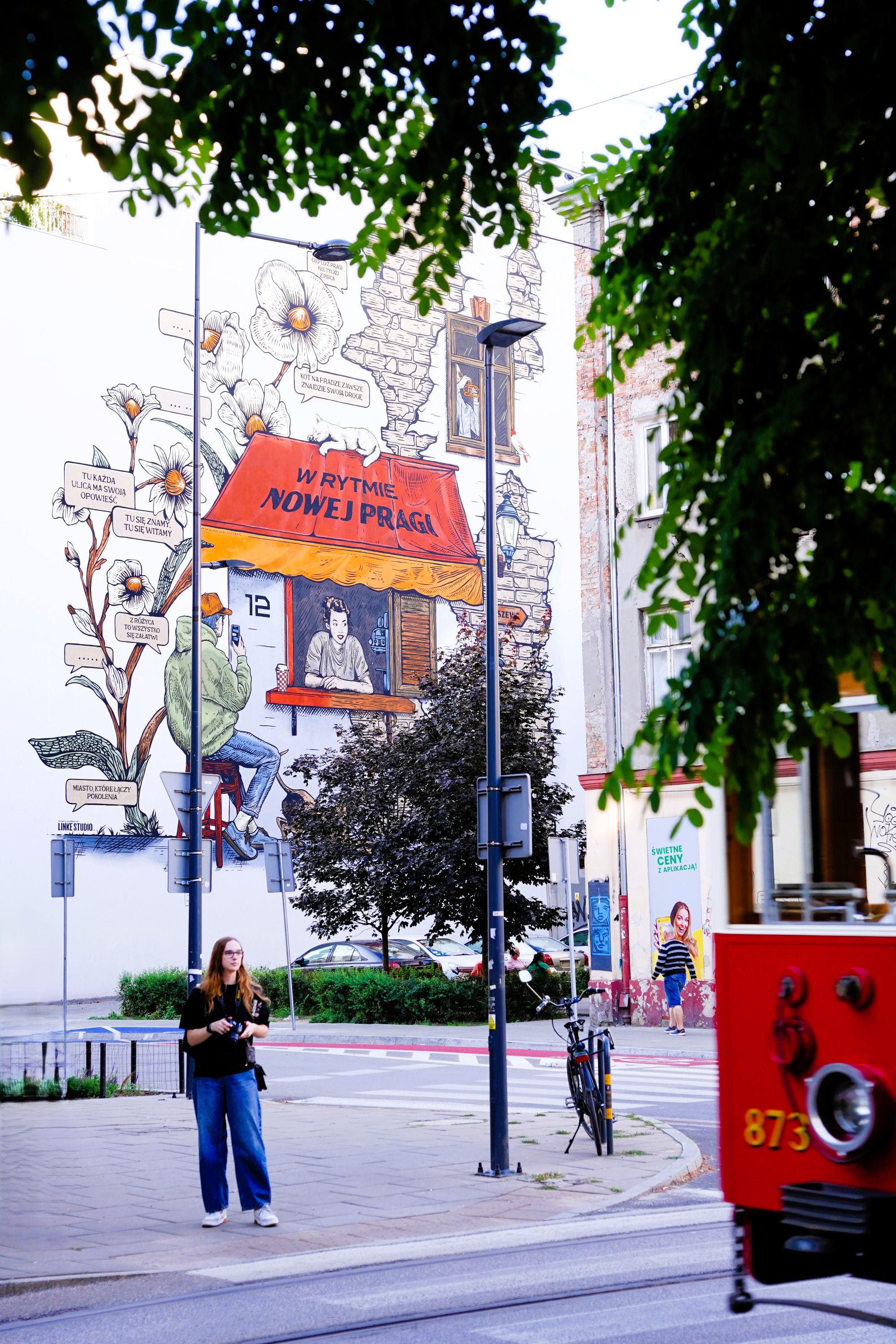
Street art covers walls across the district. Look for the mural called Playground on Stalowa Street.
In building B of the Museum of Warsaw Praga, the walls show the signs of the zodiac, with symbols standing in for human figures as Jewish tradition requires, beside scenes of the Wailing Wall and Rachel's Tomb in Bethlehem. They are the only murals of their kind known to survive in the Mazovia region.
In the museum basement, an oral history archive plays recordings of older Praga residents talking about daily life, customs and the local dialect. At the Museum of Printing, the centrepiece is a reconstructed 18th-century press that still works. The Koneser complex is a former vodka distillery, and its old factory buildings now hold a vodka museum.
The museum on Targowa Street comes first. Start in building B, then go down to the basement to hear the recorded voices. Last entry is 30 minutes before closing.
Back outside, walk the streets around Ząbkowska and step through any open tenement gateway to look for the courtyard shrines. Look in at Bazar Różycki on the way, if it is trading when you pass.
Add the Museum of Printing, where you can stamp out a print on an antique machine and take it home; its rooms take under an hour. End at the Koneser complex and its large open square.
You can walk Praga on your own, but the courtyards and murals are rarely signposted, so a guide mainly adds the stories behind what you pass. The Museum of Warsaw Praga runs guided tours in English with its own guide. Book by phone on 511 731 198.
Older guides still send you to the Neon Museum in Praga, but it moved in 2025 to the Palace of Culture and Science across the river. Leave it off this walk.
Carry cash for Bazar Różycki, and expect to point and gesture if you have no Polish. Its gate is sometimes padlocked, so plan the market as a stop on the way past.
Not every courtyard is public: go in where the gateway stands open and leave locked ones alone. Inside the museum, building B keeps its stairs and thresholds for conservation reasons, so that building is hard to reach in a wheelchair.
Explore the rest of Warsaw
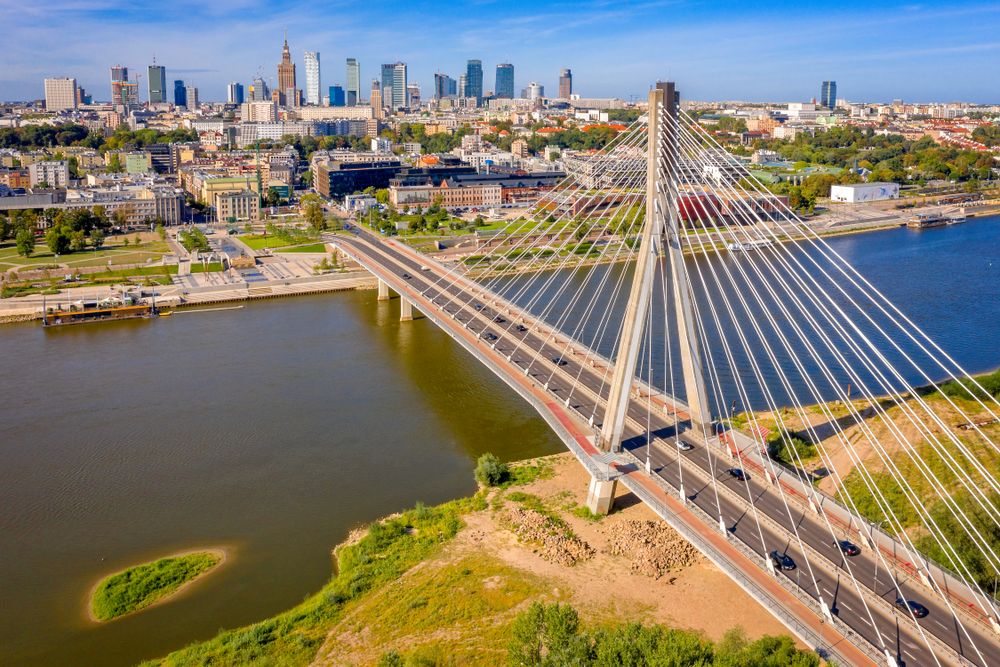
Paths run along the river edge below the Old Town, with Praga on the far bank, and walking them is free. Boat trips also run on this part…
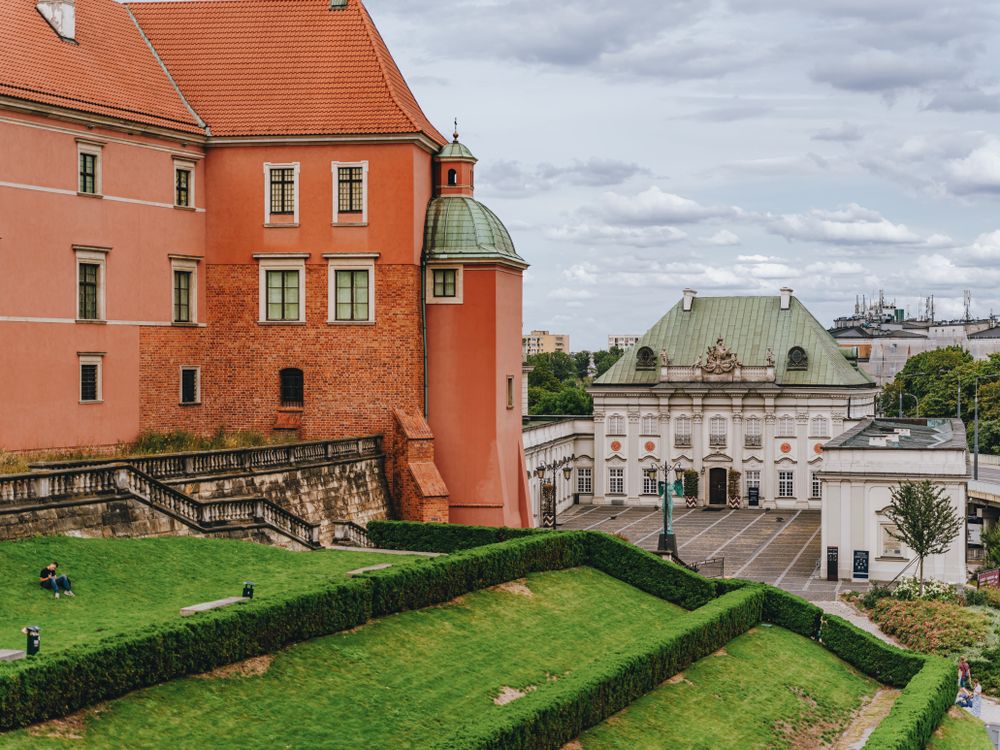
German troops blew the castle up in September 1944. The rebuild began in 1971, paid for until 1980 by public donation alone, and the…
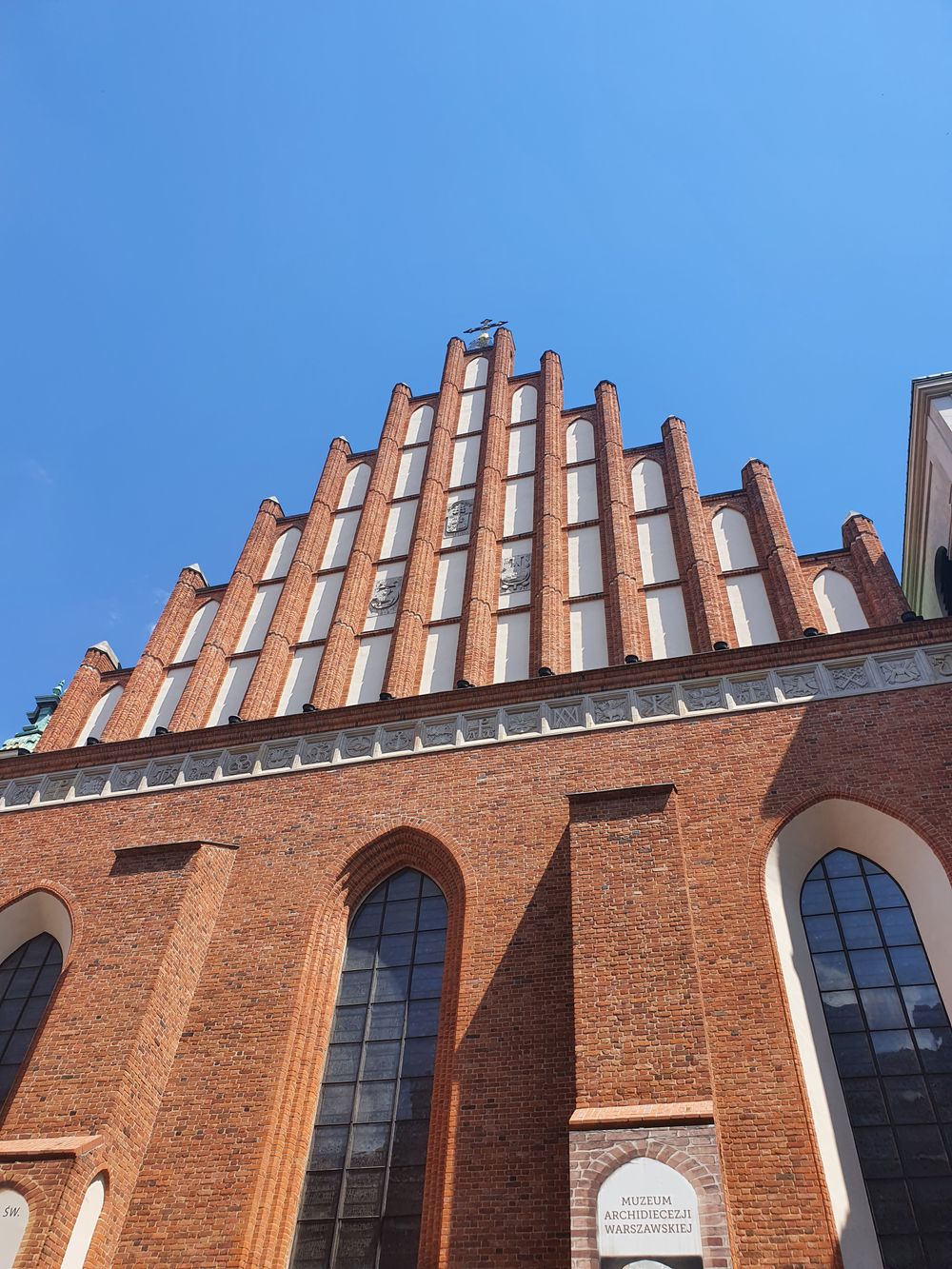
A working cathedral on Świętojańska Street, beside the Jesuit Church and a short walk from Castle Square. The church is free to enter. Its…