Ninety seconds on St John's Archcathedral
Two things wait for you here: a bare brick Gothic nave rebuilt after the war, and beneath it a crypt you can walk through, past tombs that make this one of Poland's national pantheons.
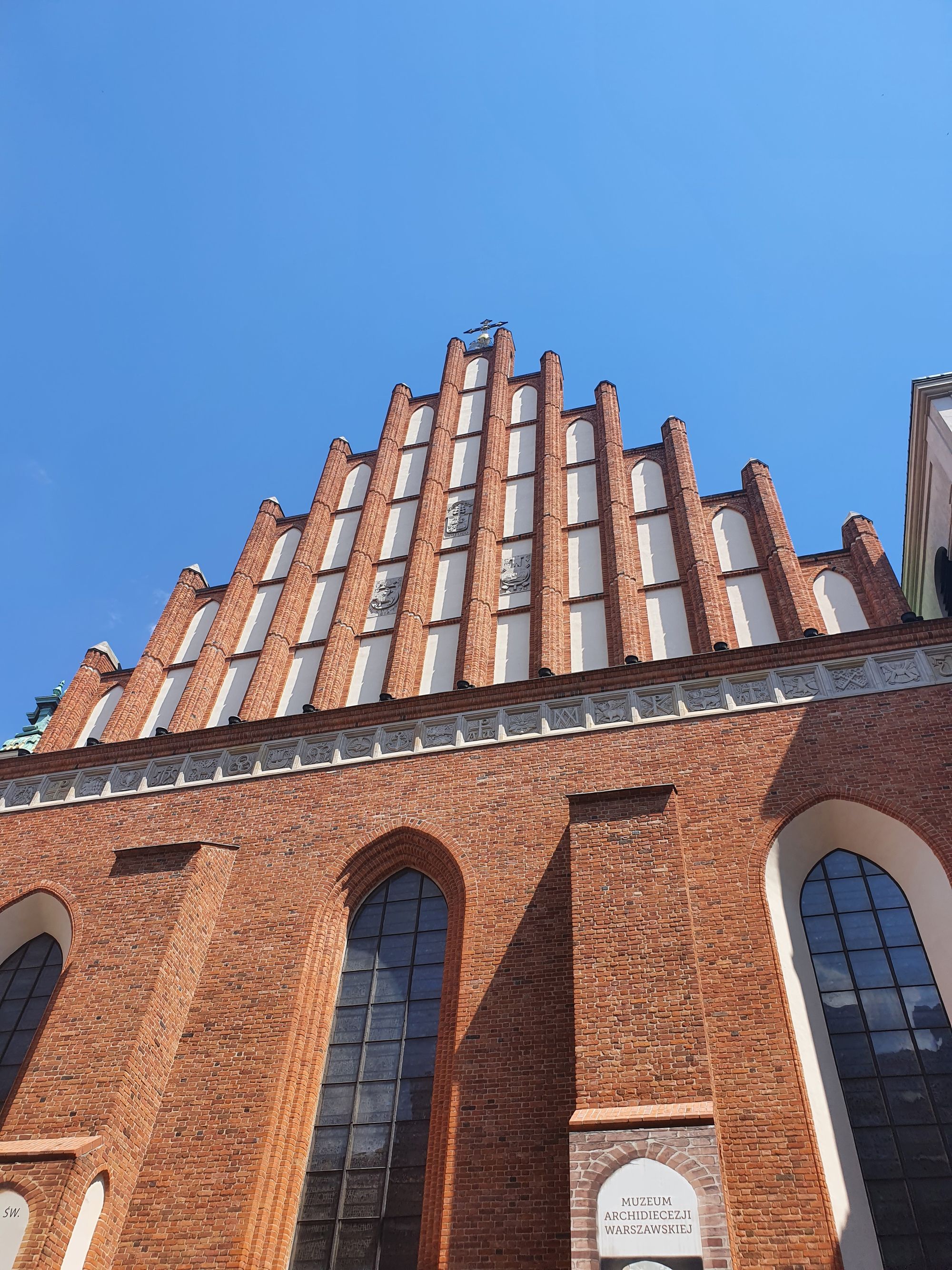
The brick front on Świętojańska Street follows the church's presumed fourteenth-century look, not the way it looked before the war. Inside, so little of the old furnishings survived that the nave was taken back to bare Gothic brick, which is why it looks spare for the mother church of Warsaw.
Before you go in, look at the wall by the main entrance. The fragments on it come from a remote-controlled German tank, left from the 1944 Uprising, after which German troops blew up most of the cathedral's walls.
The crypt is why the church counts as one of Poland's national pantheons. Beneath the main aisle lie Dukes of Masovia, Stanisław August Poniatowski, the last Polish king, the novelist Henryk Sienkiewicz and Gabriel Narutowicz, the first president of the Second Polish Republic.
Climb the steps from Świętojańska Street to the main door and the nave. It is a working cathedral, so walk the aisles quietly and keep clear of any Mass in progress. Take in the nave first, end to end, before you go below.
Go down to the crypt next, which runs beneath the main aisle. Inside, an educational trail leads you past the tombs in order. The vaults are quiet and solemn, so keep your voice low and your phone silent.
Back outside, look for the covered walkway that links the cathedral to the Royal Castle, the last thing to see before you leave.
Explore the rest of Warsaw
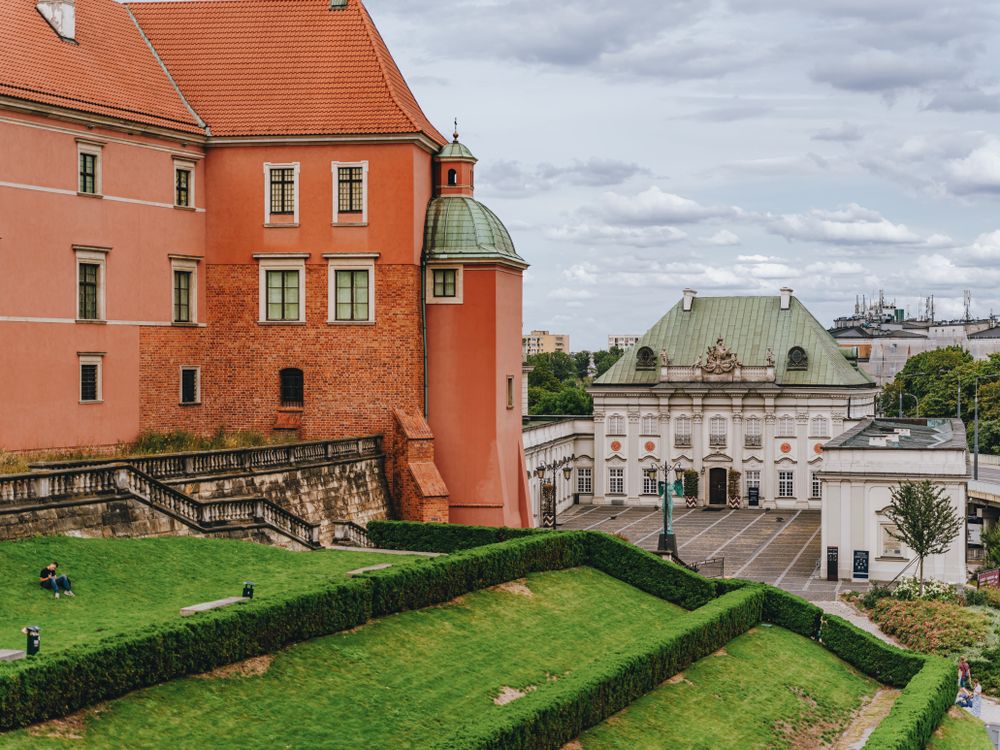
German troops blew the castle up in September 1944. The rebuild began in 1971, paid for until 1980 by public donation alone, and the…
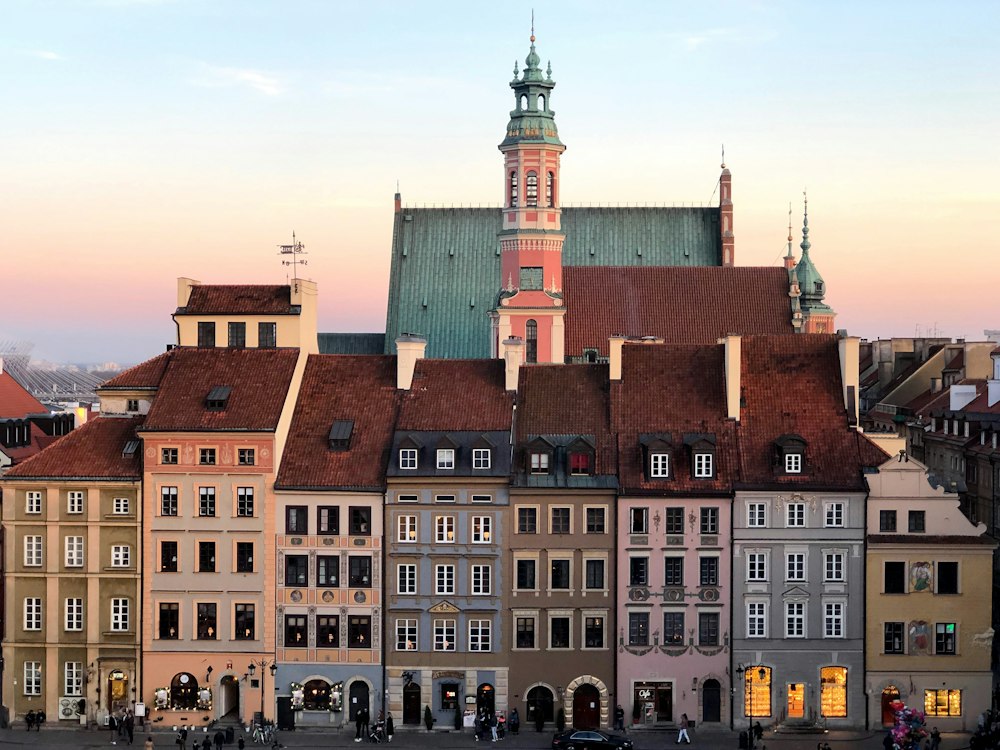
Warsaw's medieval Old Town was reduced to rubble in 1944 and rebuilt from Canaletto's 18th-century paintings, archival photographs and…
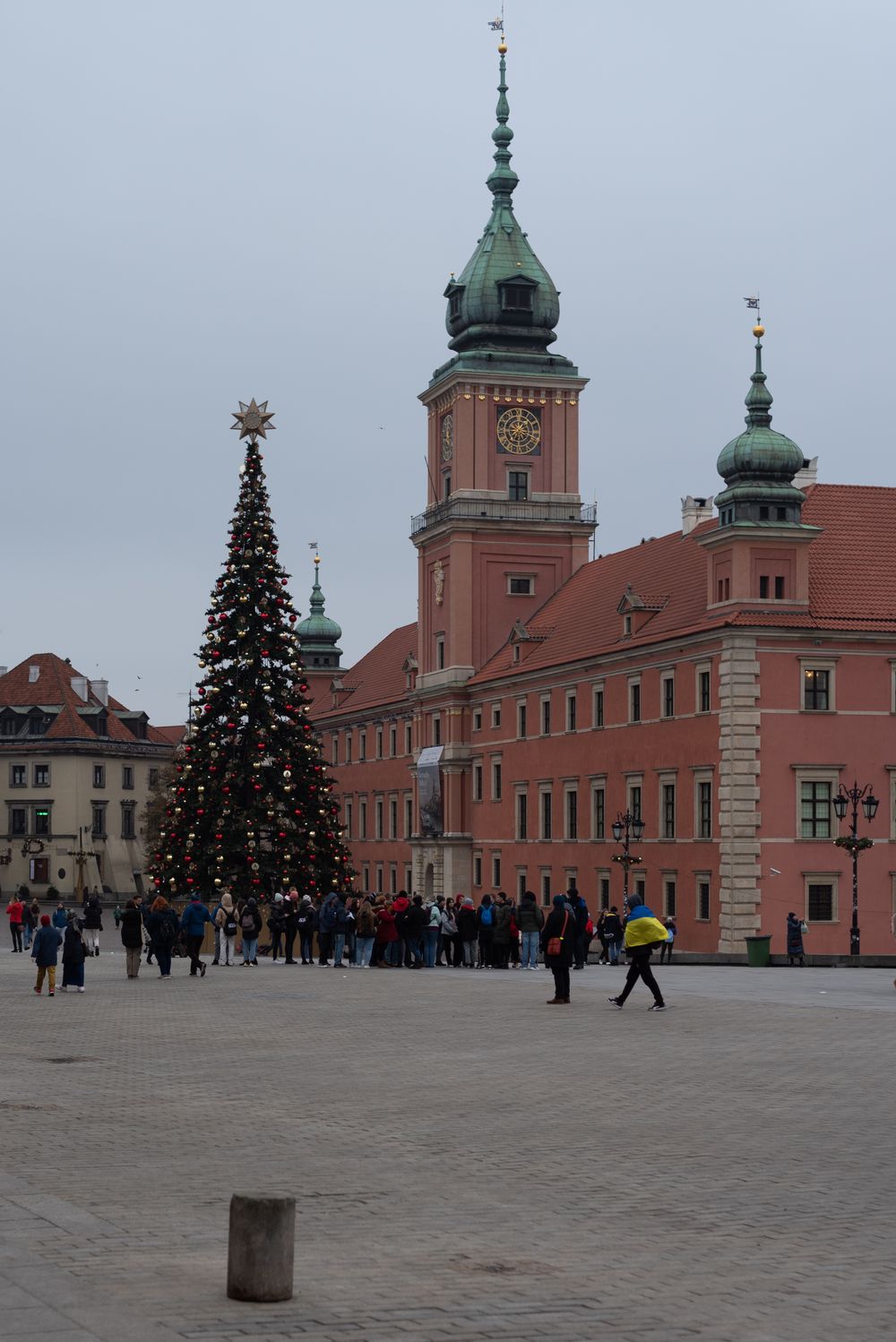
An open square in front of the Royal Castle, where Krakowskie Przedmieście ends and the Old Town's cobbled streets begin. Sigismund's…