 Submit a photo
Ninety seconds on Elie Wiesel Memorial House
A Talmud lies open on a desk in the house where Elie Wiesel was born and grew up. Come to see the childhood home of the Holocaust survivor and 1986 Nobel Peace laureate, and the everyday life of Sighet's Jews.
The first room is furnished with period pieces and hung with portraits of Sighet's Jewish families. Panels around the house carry Wiesel's biography and photographs of his return visit to Sighet.
The collection also holds ritual objects and religious books that passed through many hands and many rabbinic debates.
In May 1944 the Jews of Sighet were deported, and Wiesel was taken to Auschwitz with his family. He survived Auschwitz and Buchenwald, where he lost his family, and later wrote Night. Personal objects in the house speak of the community's deportation.
In the courtyard stands a bronze bust of Wiesel by Ioan Ladea. Its marble pedestal carries the line "A single man of integrity can make a difference" in four languages.
Start in the first room, then go through to the living room, where a radio sits on a table. The rooms after it cover the deportation of the town's Jewish community, then Wiesel's life after the war.
Next comes the room of his books, with a reconstructed corner bench.
Finish in the courtyard, where the bust stands. A carved stone there marks the courtyard as a memorial to the Jewish victims. It is kept as a quiet space for reflection and sometimes holds open-air exhibitions.
The Maramureș Museum offers guided tours on request, mainly in English, lasting an hour to an hour and a half. A tour needs a group of at least ten and should be booked at least two days ahead, by phone on +40 262 311 727 or by email to rezervari@muzeulmaramuresan.ro.
Around Sighetu Marmației
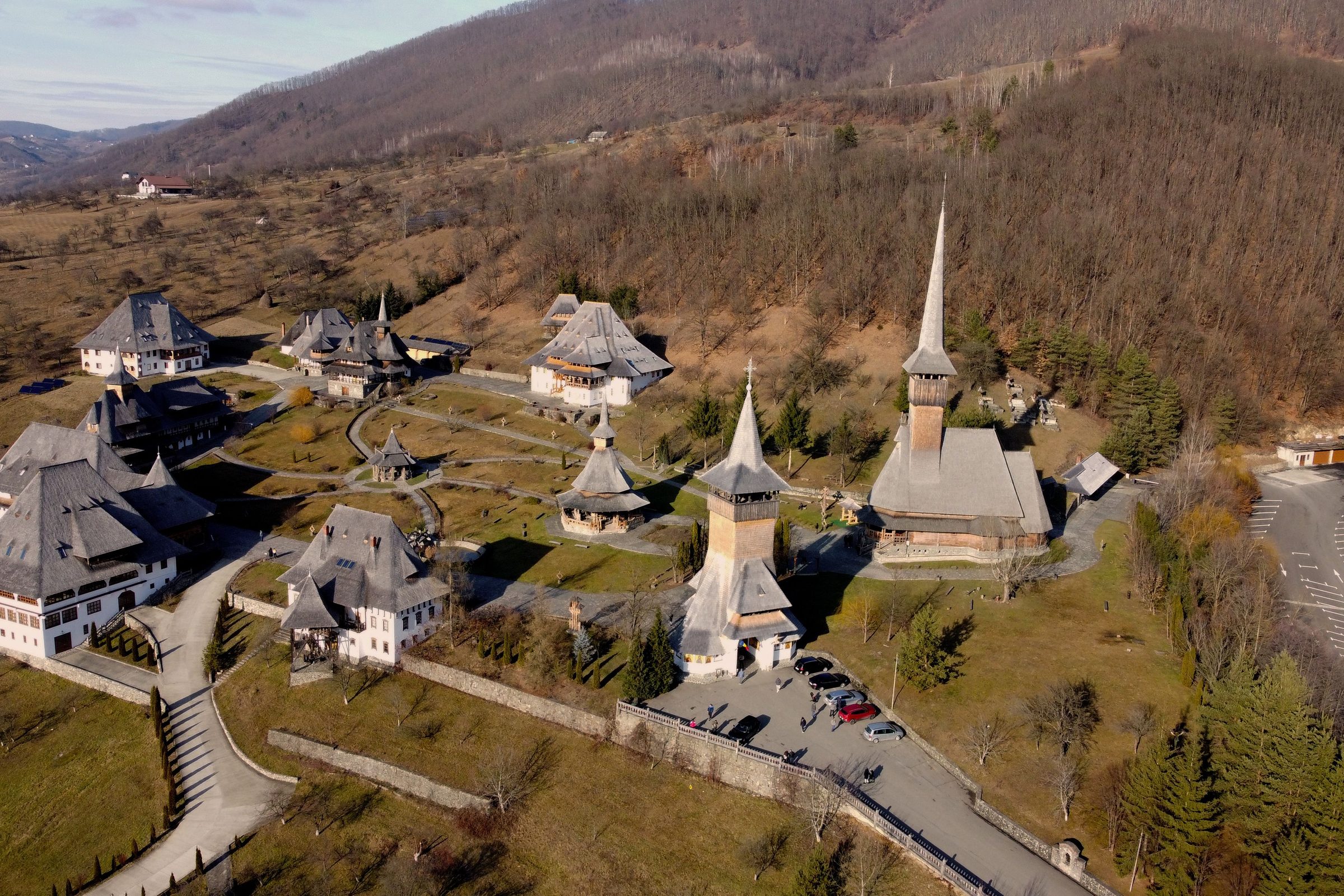
On the Tisa river, with Ukraine on the far bank, this border town holds the prison where the communist regime locked up ministers and…
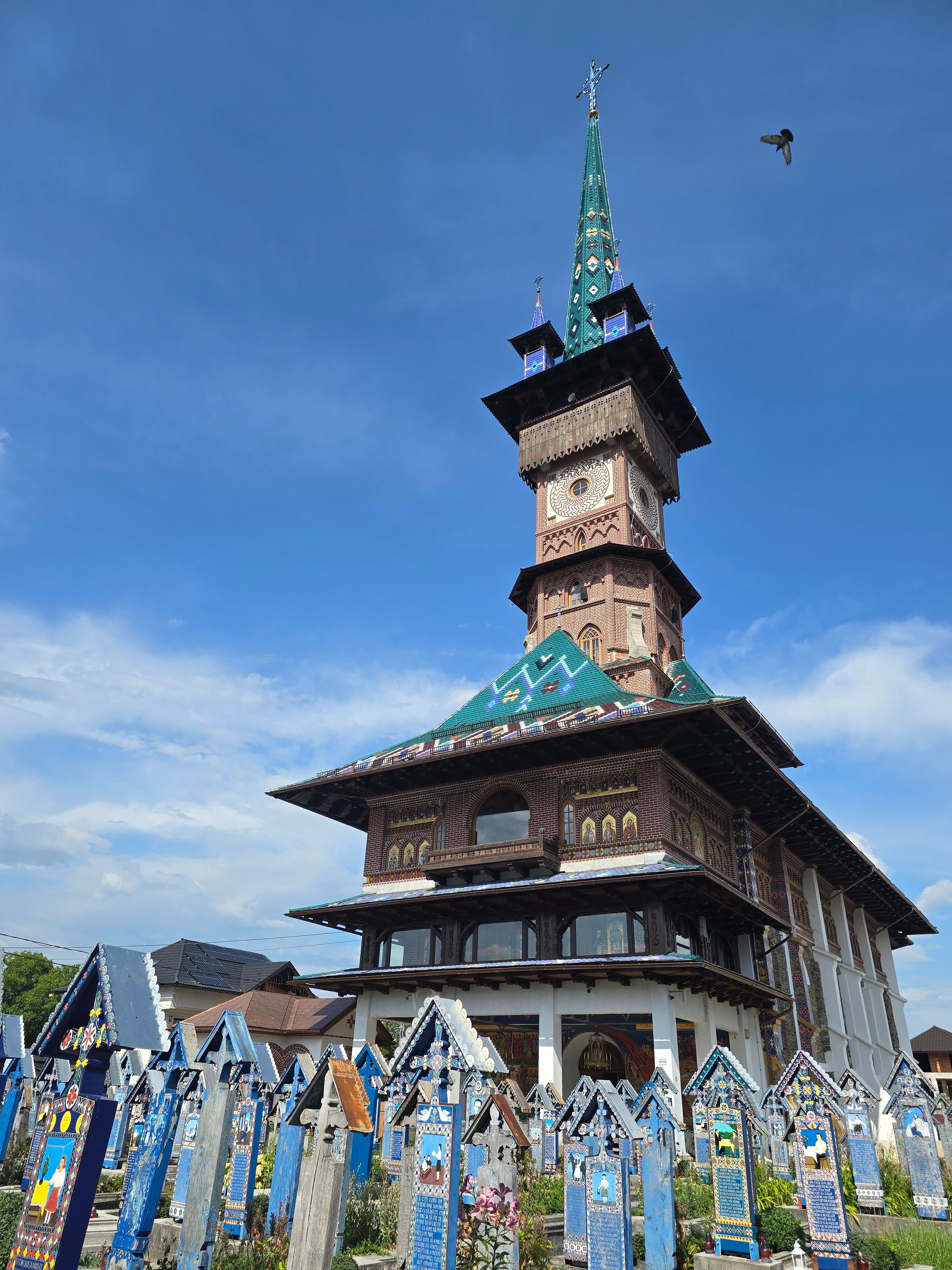
A village near the Ukrainian border with a cemetery that refuses to be solemn. Since 1935 its graves have carried carved oak crosses…
A village under the Gutâi mountains where the hay is still cut by scythe and stacked around a pole, and the wells have long counterweighted…
The official pages this guide was checked against.
Last updated