Things to do
8-
Cheonjiyeon Waterfall
Seogwipo's other cascade sits at the end of a lit garden walk, dropping 22 metres into a deep pool where marbled eels breed. The path is flat and short, so the visit runs to less than an hour. Evening opening is the draw: floodlights come on after dark and the walk stays open into the night.
-
Dongmun Market
Trading began here in the weeks after liberation in 1945, and the covered lanes still run on seafood: hairtail, abalone and mackerel laid out on ice. Tangerines, black pork and omegi rice cakes fill the rest. From early evening a night market of food stalls opens at the back, which is when the crowd thickens and the grills start.
-
Hallasan
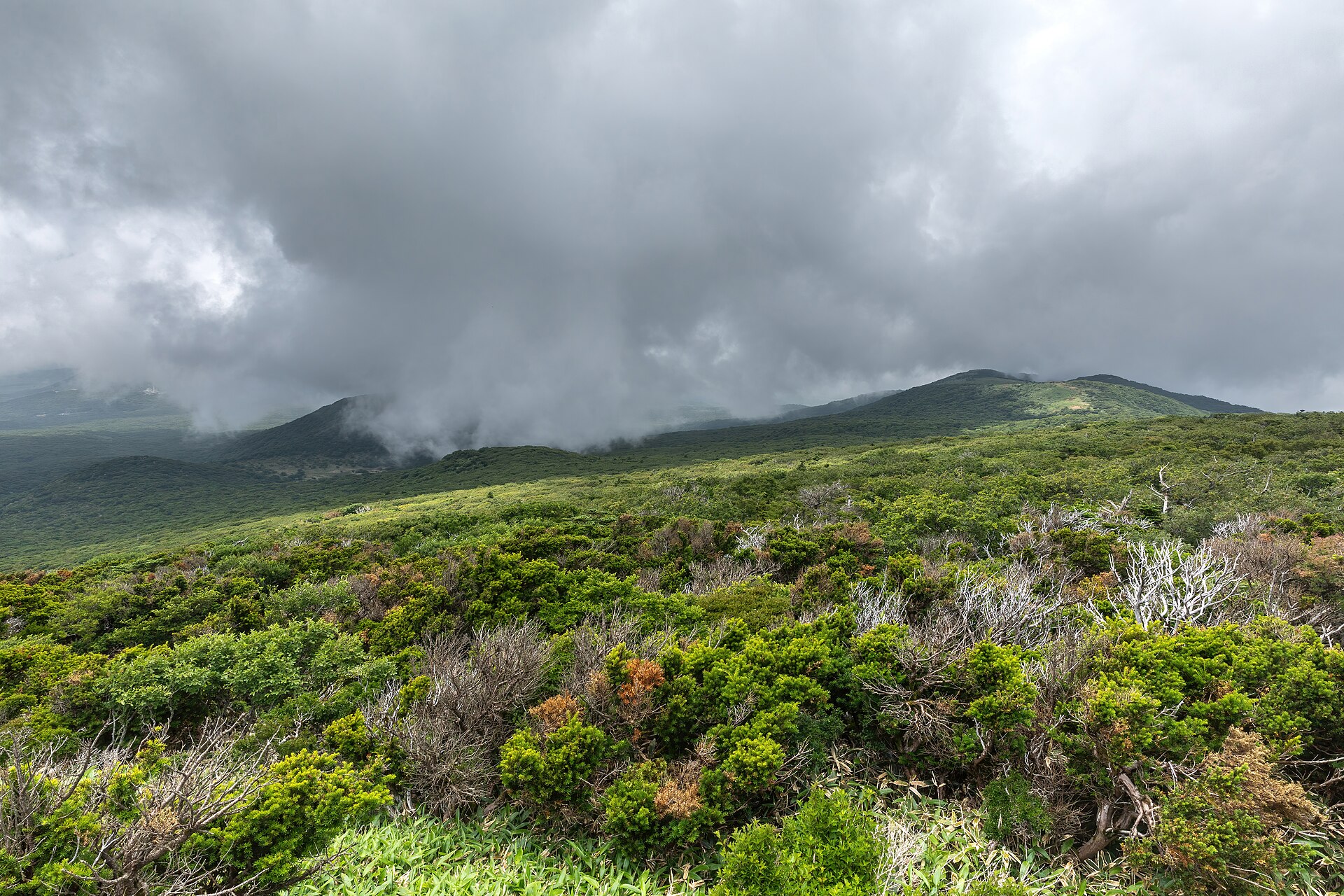
South Korea's highest peak rises at the centre of Jeju, a shield volcano capped by the Baengnokdam crater lake. Two trails reach the top, Seongpanak and Gwaneumsa, and both take most of a day on stairs and boardwalk. A free reservation, checked by QR code at the last checkpoint, is required for the summit section, and autumn weekends fill weeks ahead.
-
Jeongbang Waterfall
Water falls 23 metres straight onto a boulder beach at Seogwipo, close enough to the sea that spray carries on the wind. A stepped path leads down from the entrance and back up again, which is the steepest part of the visit. An old inscription on the cliff ties the site to a legend of Qin emissaries sent to find herbs of long life.
-
Jusangjeolli Cliff
Hexagonal basalt columns stand in ranks along the Jungmun coast, formed when lava from Hallasan met the sea and cooled. Some rise close to 20 metres out of the water, and swell breaking against them is part of the attraction. A short boardwalk runs the length of the site, ticketed and busy in the middle of the day.
-
Manjanggul
Lava drained through this tube at Geomunoreum and left a passage nearly 9 kilometres long, of which about 1 kilometre is open to visitors. The floor is wet and uneven, the air stays cold, and a jacket helps even in August. At the end stands a lava column measuring 7.6 metres, the tallest recorded anywhere.
-
Seongsan Ilchulbong
A hydrovolcanic eruption roughly 6,700 years ago threw up this tuff cone on Jeju's eastern tip, leaving a grassy crater ringed by cliffs. The climb to the rim takes about half an hour on wooden stairs, and the summit stands 182 metres above the sea. Sunrise is the reason for the name and for the queue at the gate.
-
Udo
Ferries run from Seongsan every half hour and cross to this small island in about fifteen minutes. Bicycles, electric bikes and a circular bus cover the ring road, since visitor car hire is restricted. The draw is the coastline: a beach of white coral sand, black volcanic shingle at Geommeolle, and haenyeo divers working the shallows. Half a day is enough.