Ninety seconds on Sant Pere de Galligants
Sant Pere de Galligants holds some of Catalonia's finest Romanesque carving on its capitals, the carved tops of the columns. You step into the church first, then walk a small, quiet cloister of carved capitals.
The facade comes first. The rose window over the portal is almost three and a half metres across, and a Latin line at its top tells you that Peter made the window. On the ground in front of it, a gravestone covers the common tomb of the monastery's abbots.
Inside, 23 capitals crown the pillars and columns of the church, carved with monsters and apostles, myths and saints. Two of them are often credited to the Master of Cabestany, though other historians see the influence of the School of Toulouse. The chancel is lopsided, with two small apses on one side of the main apse and one on the other.
The cloister holds 60 capitals, and they are the main draw. Groups of five columns stand where most cloisters have solid piers. The carving runs from foliage and monsters spewing leaves to scenes from the life of Christ, a bishop and musicians.
Look for the two-tailed siren, one of the monastery's signature images, on one of the five-column groups. The present church was begun around 1131 outside the walls of Roman Gerunda, and the city walls were later built around it, which is why a monastery stands inside the town.
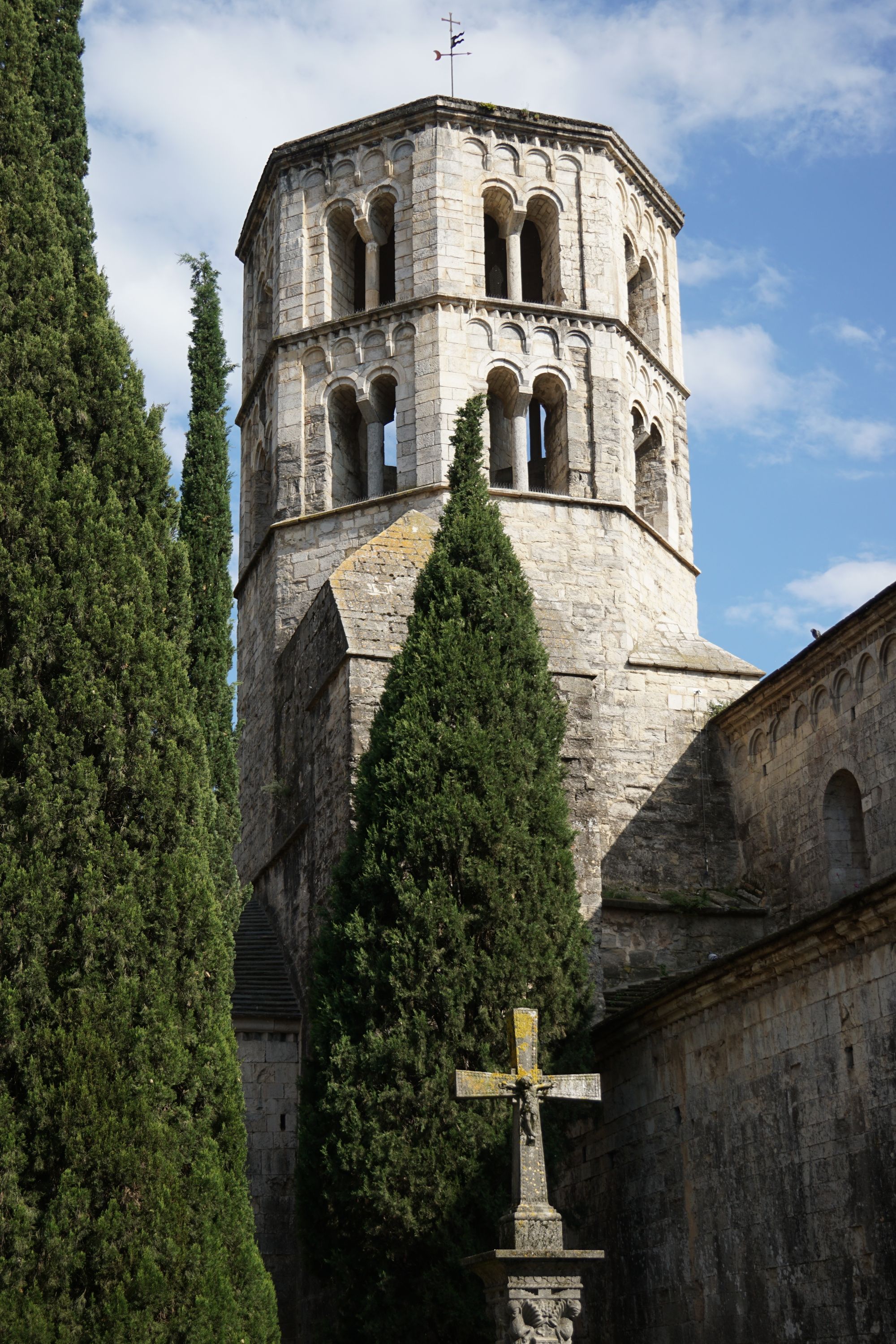
Before you go in, stand back on Carrer de Santa Llúcia to take in the facade, the rose window and the eight-sided bell tower. Your ticket covers the monastery, every exhibition in the museum and a tablet for the visit.
Just inside, in the left aisle, stands the 16th-century baptismal font. Stand between the first two pillars for the full view of the church, then walk up the nave to the chancel capitals.
The cloister comes next, so walk its galleries slowly and look up at each capital. Above it, the upper cloister holds the permanent exhibition, El temps de la memòria, which runs from prehistory to the Visigoths, with Greek and Roman finds from Empúries. The whole route, the exhibition included, is step-free.
The church and cloister take about an hour; with the exhibition upstairs, plan on closer to two.
For a guide in person, the museum runs a guided visit of the monastery and its exhibitions, and a dramatised visit on its history; ask at the desk for the next one.
Groups of more than ten must book ahead. Visually impaired visitors can ask at reception for a guide to the monastery adapted for them, or download it before the visit.
Buy your ticket online if you come in summer, to save time at the desk; tickets are also sold on the door. The museum offers a downloadable guide to the monastery in Catalan, Spanish, English and French, worth reading before you go.
If you know Game of Thrones, the scenes set in the Citadel library were filmed here.
Explore the rest of Girona
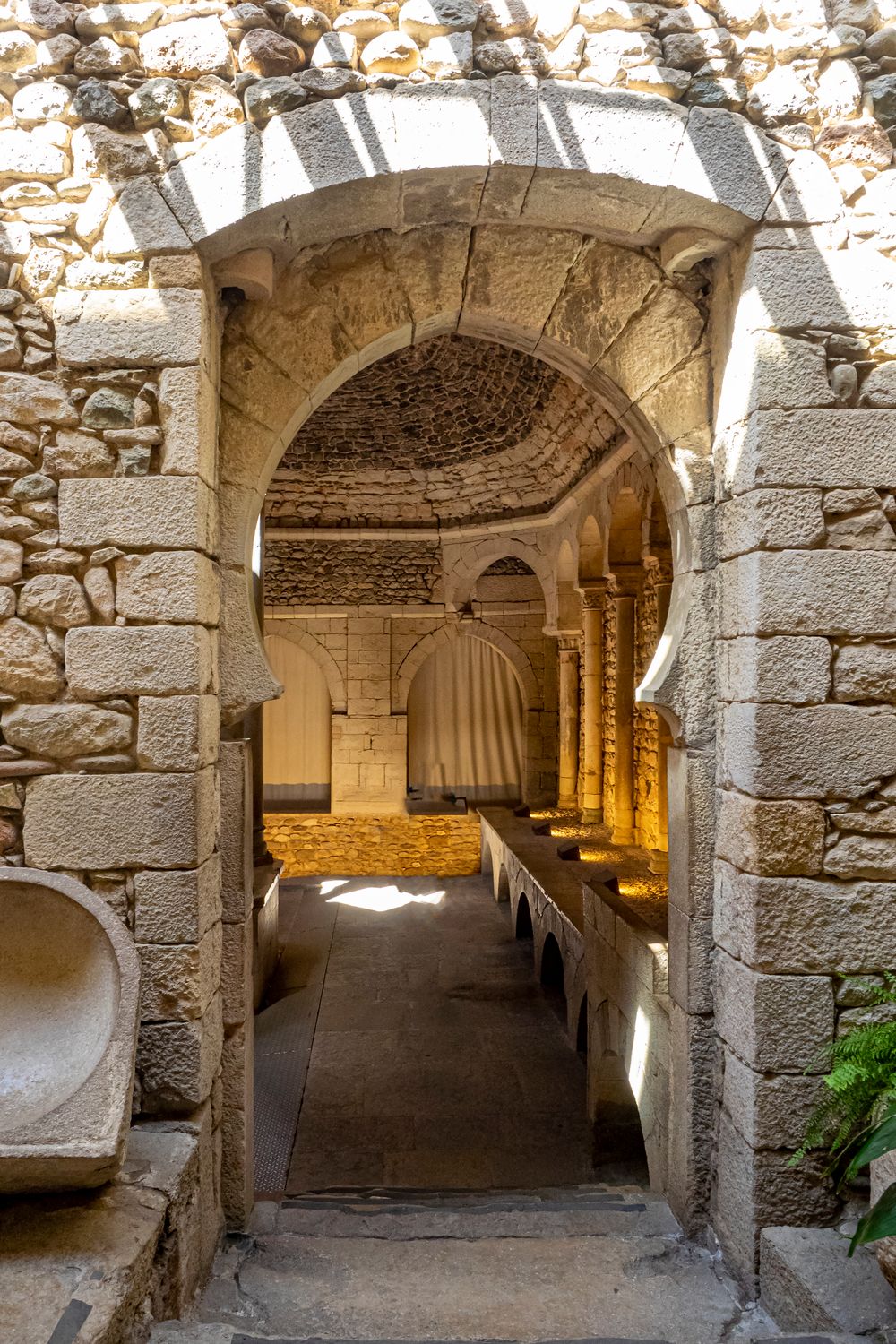
Despite the name, this is a Romanesque bathhouse built on the Roman model, with changing, cold, warm and hot rooms. In the changing room,…
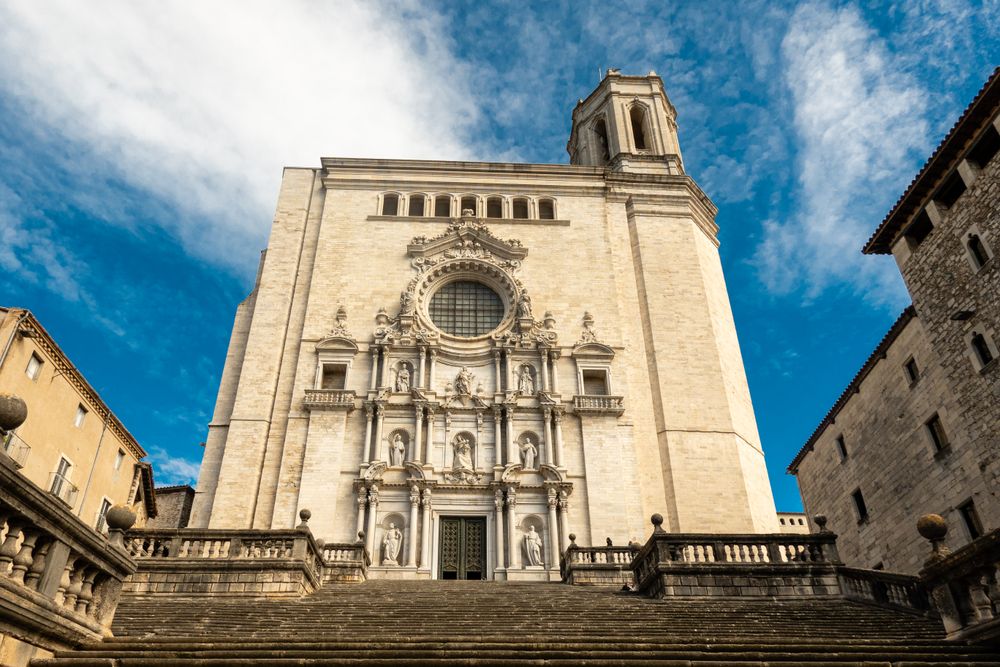
Climb the long Baroque staircase from Plaça de la Catedral to reach the Gothic nave and the cloister.
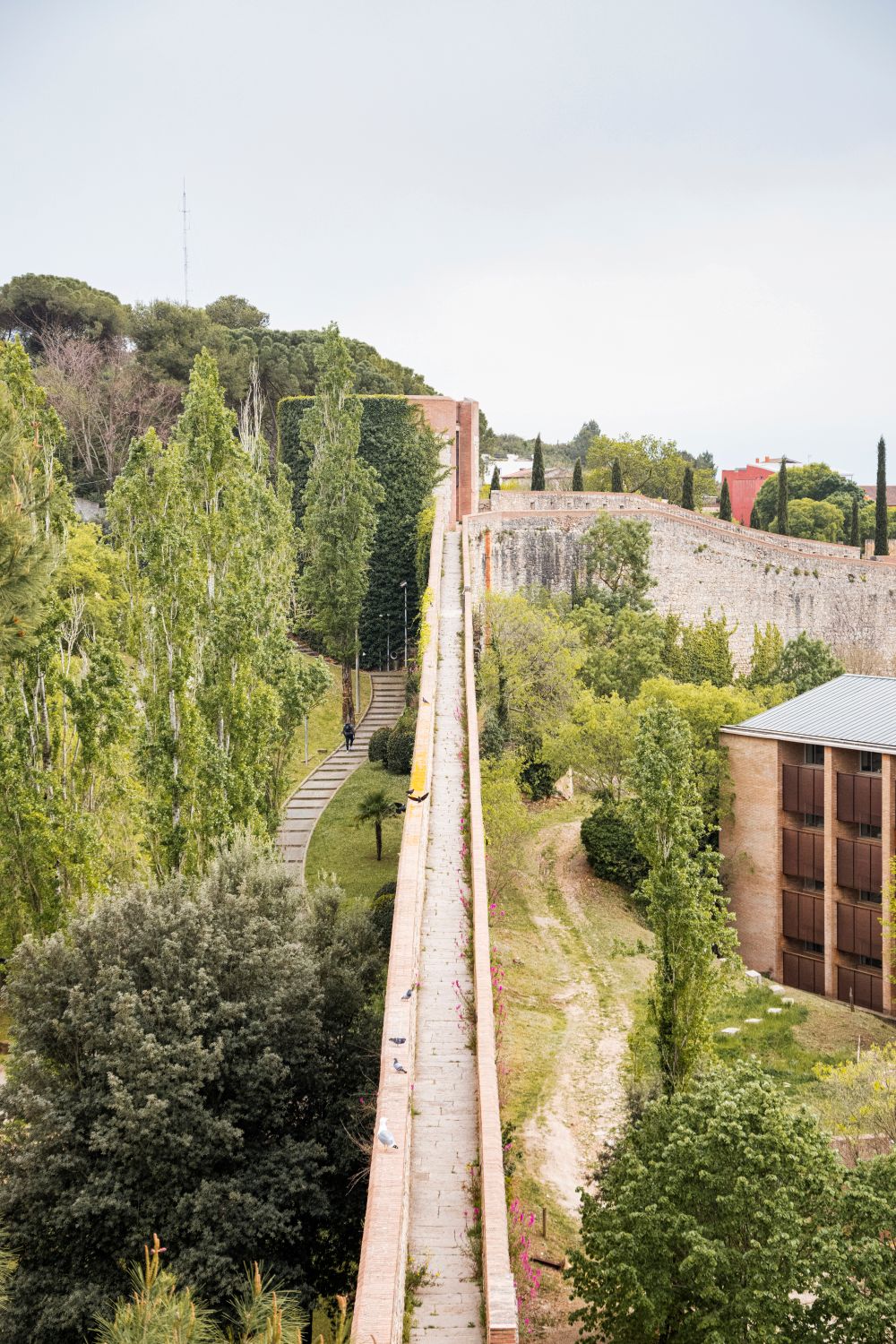
The Passeig de la Muralla follows the top of the old town's ramparts, with lookout towers and views over the rooftops to the cathedral.…