Ninety seconds on Ani
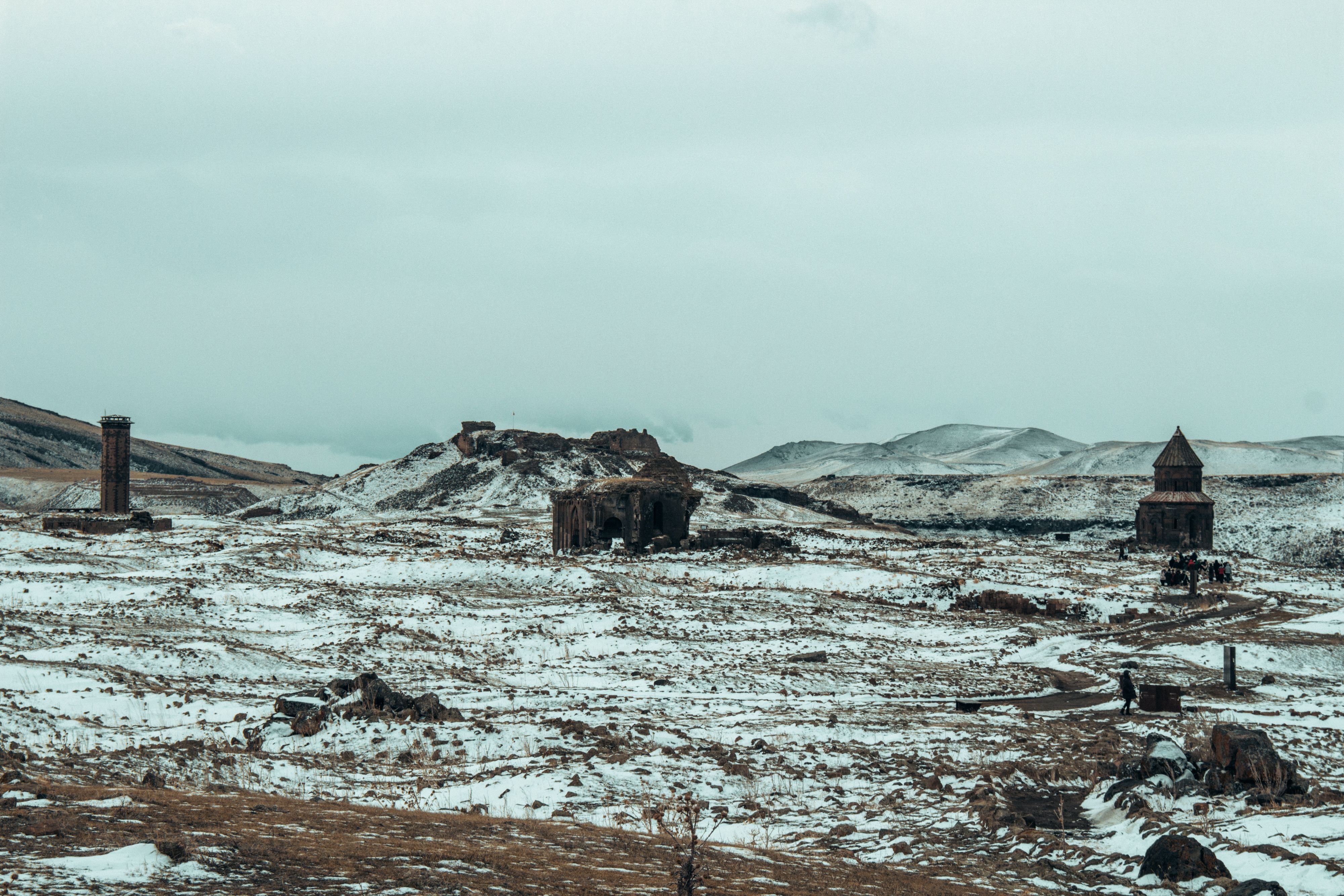
One long walk across an open plateau takes you past the red stone cathedral and churches of a medieval city to the edge of a gorge. The far bank of the river below is Armenia.
Ani stands on a triangle of high ground between the Akhurian ravine to the east and the Bostanlar valley to the west. The river below is the closed border with Armenia, about 400 metres from the site, and the village of Kharkov sits across the border on the far bank.
The cathedral is the building to find first, raised in red tuff on a stepped base, with a cross-shaped plan and heavy columns carrying the arches inside. It was built in 1001 to a design by the architect Trdat, and became a mosque in 1064.
Walk round the outside before you go in. The semicircular apse rises above the rest of the building and is lined with carved niches, and the façades carry reliefs of crosses, khachkars (carved cross-stones), plant and geometric patterns, and eagles.
Count the doorways as you circle it. There are three: the west door was for the congregation, the north for the patriarch and the south for the king.
Ani's ticket office is at the site entrance, so you buy your ticket on arrival and need no permit. Once through, there is no set route: you walk freely across the plateau between the churches, mosques and stretches of city wall.
Start with the cathedral, then follow the paths out to the other churches and the city wall. The buildings stand far apart on open ground, and each walk between them takes longer than the map suggests.
Arrive in the morning, so the afternoon close does not cut your last stretch short.
Tours and commentary at the site are in Turkish. If you want a guide in English, arrange a private one before you travel. You can also see the whole site on your own, since the ruins are open to wander.
Wear sturdy shoes, because the walking is long and there is little shelter between the buildings. Carry a picnic lunch and a full water bottle in with you. Bring warm layers in winter, when the plateau is cold and exposed.
Explore the rest of Kars
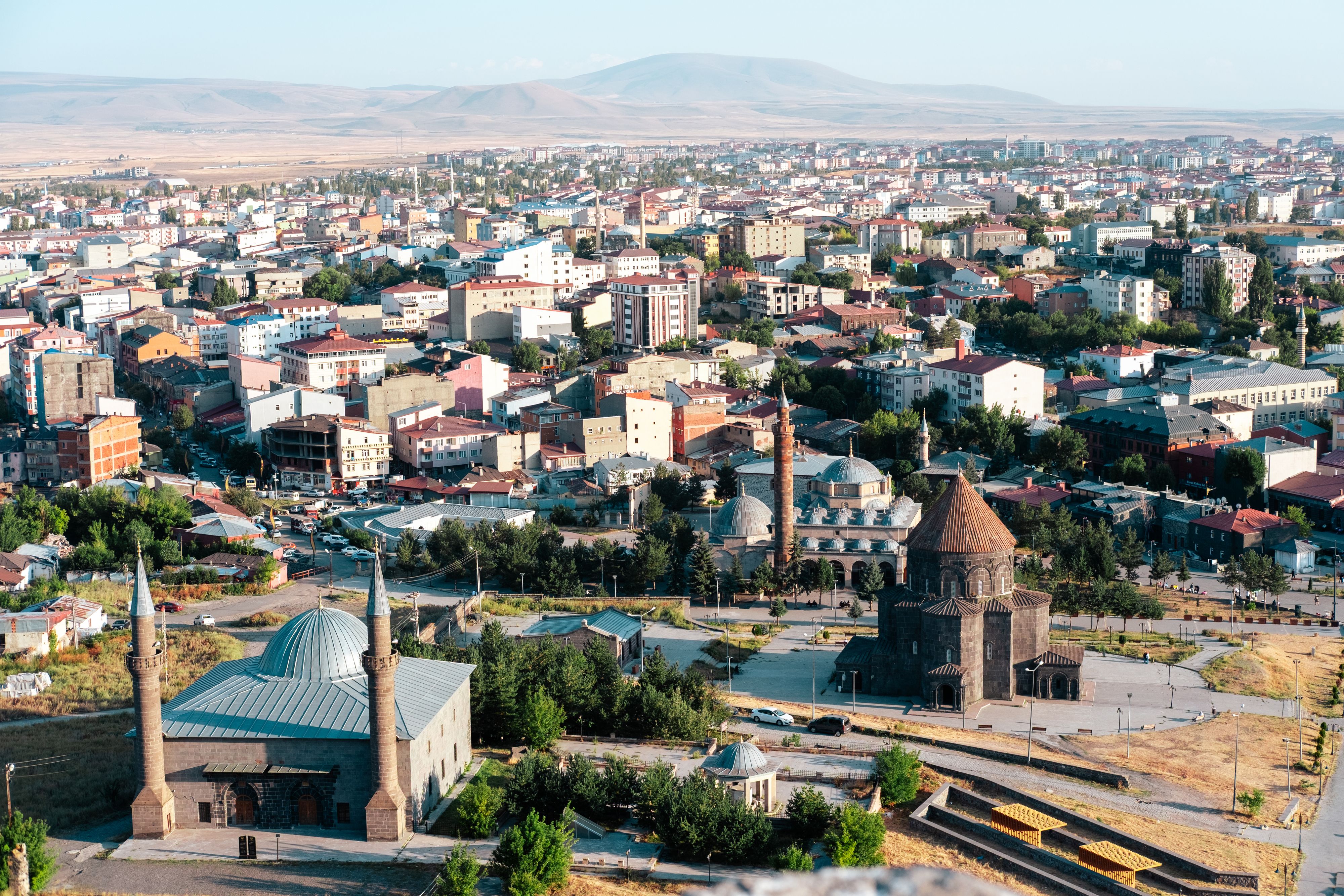
Stone houses built in a Baltic style during forty years of Russian rule after 1878 still line the centre, a look found nowhere else in…
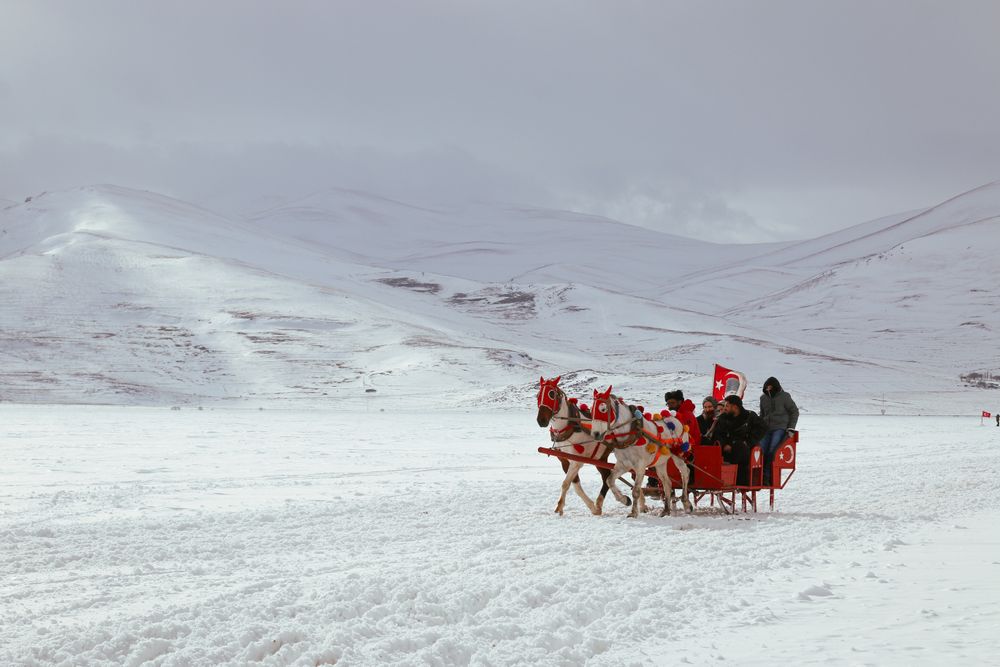
A freshwater lake at almost two thousand metres, north of Kars on the Ardahan side and close to the Georgian and Armenian borders. It…