 Submit a photo
Ninety seconds on Katholische Pfarrkirche Hallstatt
They are the parish's own dead, moved from the churchyard. Graves were opened again 10 to 15 years after a burial and the skulls taken to the charnel house in St Michael's Chapel. Of the 1,200 there, 610 are painted, marked with the date of death and shelved by family. Painting began in 1720, and the youngest skull arrived in 1995.
Yes, on its own entrance ticket, payable by card or in cash. As of 2026 it opens daily from 10am to 6pm between May and September, and daily until 5pm in October. From November to March the hours shrink to 11.30am to 3.30pm, Wednesday to Sunday only.
Sunday Mass is at 10.30am in the parish church, as listed by the parish in October 2026. Service times are published week by week on the Pfarre Hallstatt page of the Diocese of Linz and can shift, so a visit planned around Mass should be checked there first. The parish office is at Kirchenweg 40.
The church is just over five hundred years old, and its tower is older still. The massive tower dates from the 12th century and survives from the earlier church on the site. The late Gothic church that stands today was built out over steeply sloping rock and finished in 1505.
A carved winged altar of the Virgin, made between about 1515 and 1520 and ranked among the most important late Gothic winged altars in the Alpine region. It changes with the church calendar. From the first Sunday of Advent to 2 February its wings show scenes from the life of Mary and the infancy of Christ, and the central shrine also holds St Barbara and St Catherine.
The short climb from the lane gives you two rooms worth the effort: a chapel of painted skulls, and a church with a carved late Gothic altar.
The charnel house is one room in St Michael's Chapel, and the skulls on its shelves carry their own labels. Most are painted with a full name or initials and the year of death, many with a cross, a garland, ivy, oak leaves or flowers. Look closely at the wreaths: the darker the colour, the older the skull.
About twelve hundred skulls are in the room, and six hundred and ten of them are painted, arranged by family. Long bones are stacked beneath them.
Graves were reopened after ten to fifteen years, and the skull and long bones were lifted and moved here in a second funeral. The paint kept each person's name with the family.
In the church, the thing to find is the Marian altar, a winged carving dating from about 1515 to 1520. Its carver, Leonhard Astl, put his name in the reliefs on the inner wings, the only work known to carry his signature. The central shrine shows Mary with the Child, and on the right St Barbara, patron saint of miners.
Come in Advent or at Christmas and the altar looks different. From Advent until early February, the wings carry scenes of the Virgin's life and the infancy of Christ.
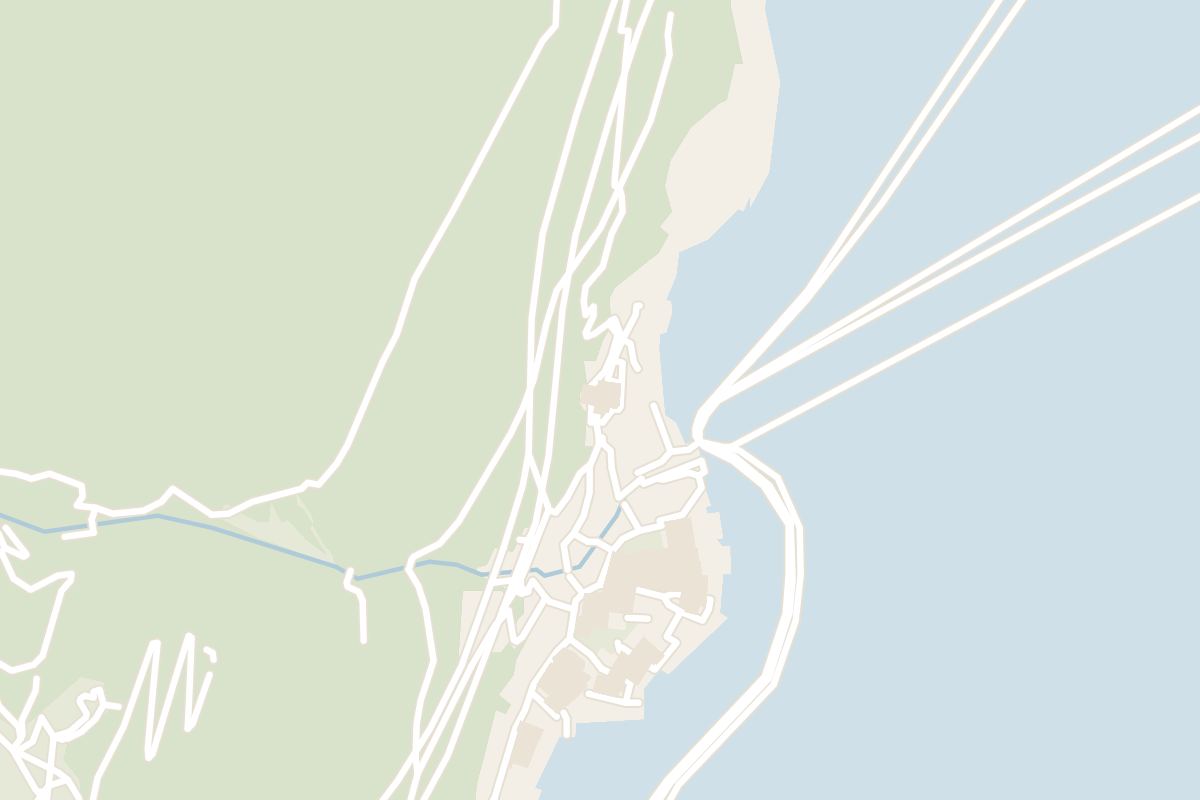
Both the parish church and the low chapel of the charnel house stand on one terrace at the top of the steps. Graves fill the flat ground between them, and the wall at the edge looks straight down on the roofs and the lake. The steps are the only way up, so the terrace is not step-free.
Start with the charnel house, which has its own ticket and takes cards as well as cash. It is a single small room, so ten minutes is enough unless you stop to read the names.
Then go into the church for the altar; the church itself is free. It has two naves and stands on rock that falls away beneath it, which explains its uneven plan. Services on Sundays begin at half past ten, so come outside that hour if you want the nave quiet.
Photography is allowed in the charnel house but flash is not, so turn yours off before you go in, and keep your voice down: the chapel is still a sacred place.
Carry coins for the toilets by the church, which are paid. Sunday Mass is said in German only. Just before Christmas the church shows its crib, about two hundred years old, for one day: 22 December in 2026.
Pair the church with Salzwelten Hallstatt, the salt mine above the village, and with the Hallstatt Prehistoric Cemetery.
Explore the rest of Hallstatt
Salt has been cut out of the mountain above this shore for some seven thousand years, in a mine billed as the oldest in the world, and the…
The prehistoric cemetery in the high valley above the village, where some thirteen hundred graves have been excavated since 1846, enough to…
The mine above the village, entered by funicular and then a tunnel, with wooden miners' slides between levels and a subterranean lake.…
Six kilometres of dark green water held between limestone walls and a hundred and twenty five metres deep, with the shore road carried in a…
A limestone plateau at just over two thousand metres above Obertraun, reached by the second and third stages of the same cable car. A steel…
Three stages from the valley floor at Obertraun to the plateau, the first opened in 1951 and the other two within the following decade,…
Ice caves high inside the Dachstein, where meltwater refreezes into sheets and towers that grow and shrink from year to year. A cable car…
Two lakes in a side valley west of the village, the lower one ringed by a level path of about an hour with the Dachstein glacier standing…
The official pages this guide was checked against.
Last updated