Ninety seconds on Copacabana Beach
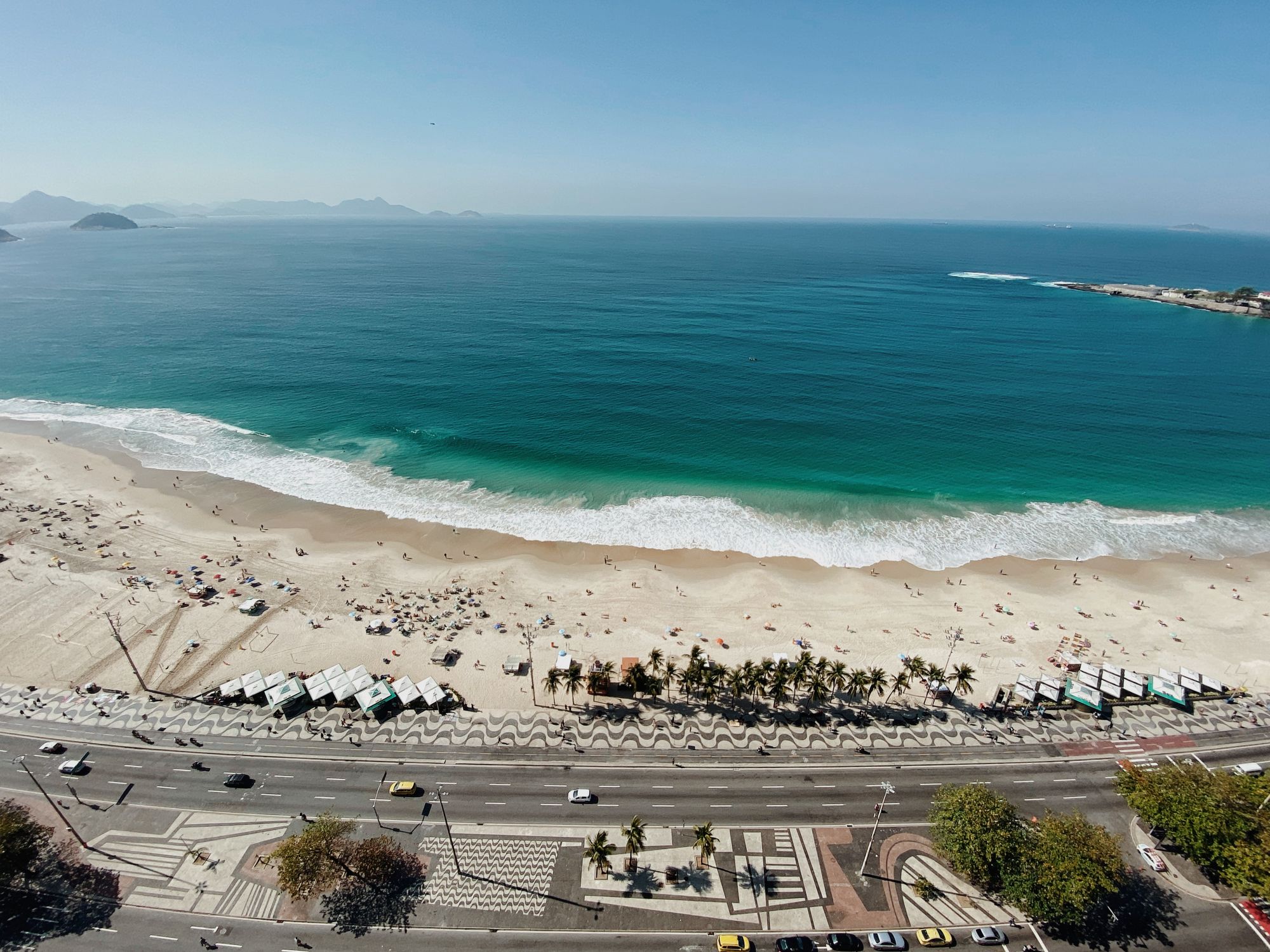
Copacabana's whole curve of sand runs between two old forts, and you can walk it end to end on a promenade paved in black and white waves, with kiosks and lifeguard posts all the way.
Look down as well as out to sea. The black and white Portuguese stone of the promenade is laid as a long wave, a pattern taken from the Lisbon waterfront, and Roberto Burle Marx used it in his design for the seafront.
The beach is cut into numbered lifeguard posts, which is how you give directions and meet friends here. Leme, at the eastern end, is usually the calmest stretch, with more local families and fewer vendors working the sand.
Forte de Copacabana was built to guard the mouth of Guanabara Bay. Its seaward walls are 12 metres thick, and from the ramparts you see Copacabana, Ipanema, Arpoador and Sugarloaf.
Inside, you can look into the barrel of one of the big artillery guns and see the shells it fired. Café 18 do Forte serves breakfast, lunch and snacks with a view back over Copacabana and Leme.
Before 9am on a weekday, start at the Leme end and walk the promenade towards the fort while runners and fishers outnumber the tour groups. Count the lifeguard posts as you go: Posto 1 is at Leme and Posto 6 at the fort.
If you are staying on the sand instead, claim a spot by about half past eight, before it fills around 10am, close to a kiosk with umbrellas. Posts 2 and 3, around the Copacabana Palace, are the hotel-heavy core, so expect crowds there. Kiosks along the promenade serve food and drinks until midnight or later.
Finish at Posto 6, where fishing boats and stand-up paddlers gather by the fort gate. The fort opens at 10am and is closed on Mondays, so time the walk to end there or come back later for the guns and a coffee.
On Sundays and public holidays one side of Avenida Atlântica closes to cars and opens to walkers and cyclists.
Bring the least you can, and keep your phone out of sight on the sand: phone snatching is common, and the busiest stretches draw the most pickpockets. After dark, leave the beach and walk on the Avenida Atlântica pavement instead.
The shore break is stronger than it looks, and rip currents run here, so swim only in front of a lifeguard post. Read its flag first: green means good conditions, yellow means waves or currents to watch, and red means stay out. A lilac flag warns of harmful marine animals in the water.
Explore the rest of Rio de Janeiro
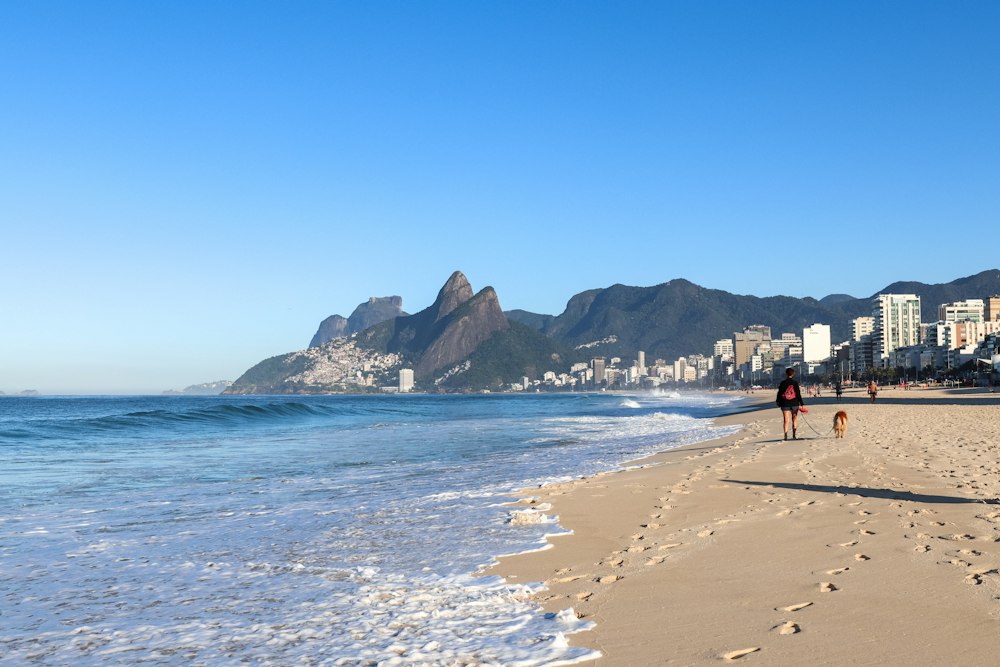
A long beach in Rio de Janeiro's south zone, running west from the Arpoador rock to the Leblon end, with a beachfront walk of about four…
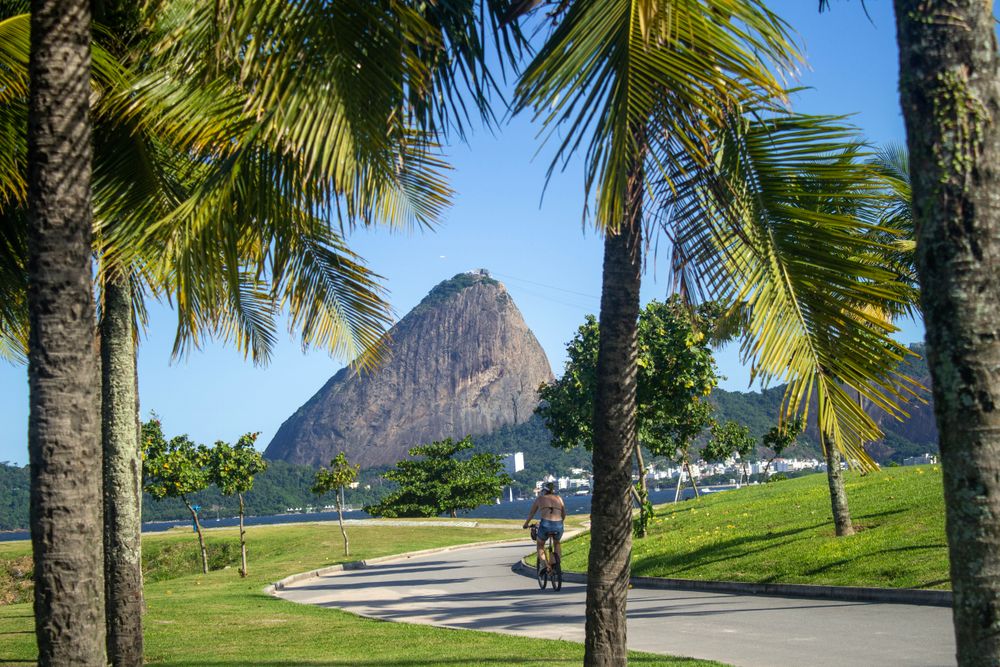
Sugarloaf Mountain rises 396 metres above the harbour at the entrance to Guanabara Bay, in Rio's Urca district, and a cable car climbs to…

A 38-metre statue of Christ with arms outstretched stands on the 704-metre rock summit of Corcovado, in Tijuca National Park. A train from…