Things to do
7-
Central Market
Under a cream-coloured art deco dome of 1937, four arms run out from a central rotunda lined with gold, silver and watch stalls, with fabric, electronics and a food aisle toward the edges. The dome vents heat, so it stays cooler inside than the streets around it. Trading starts early and the fresh produce end is done by mid-morning.
-
Choeung Ek
Fifteen kilometres south of the city, an orchard and Chinese cemetery served as an execution ground, and the mass graves are now marked by fenced depressions in the grass. A memorial stupa holds the exhumed skulls, arranged by age and by the injury that killed. Bone and cloth still surface in the paths after heavy rain. The audio guide sets the pace and makes a quiet visit possible.
-
National Museum of Cambodia
Khmer sculpture from the sixth century onward fills a terracotta pavilion of 1920 beside the palace, including statues lifted from Angkor for safekeeping and a reclining bronze Vishnu from the Western Mebon. Four galleries open onto a courtyard garden with lotus ponds. Coming here before travelling north gives the Angkor temples back their missing statuary.
-
Royal Palace
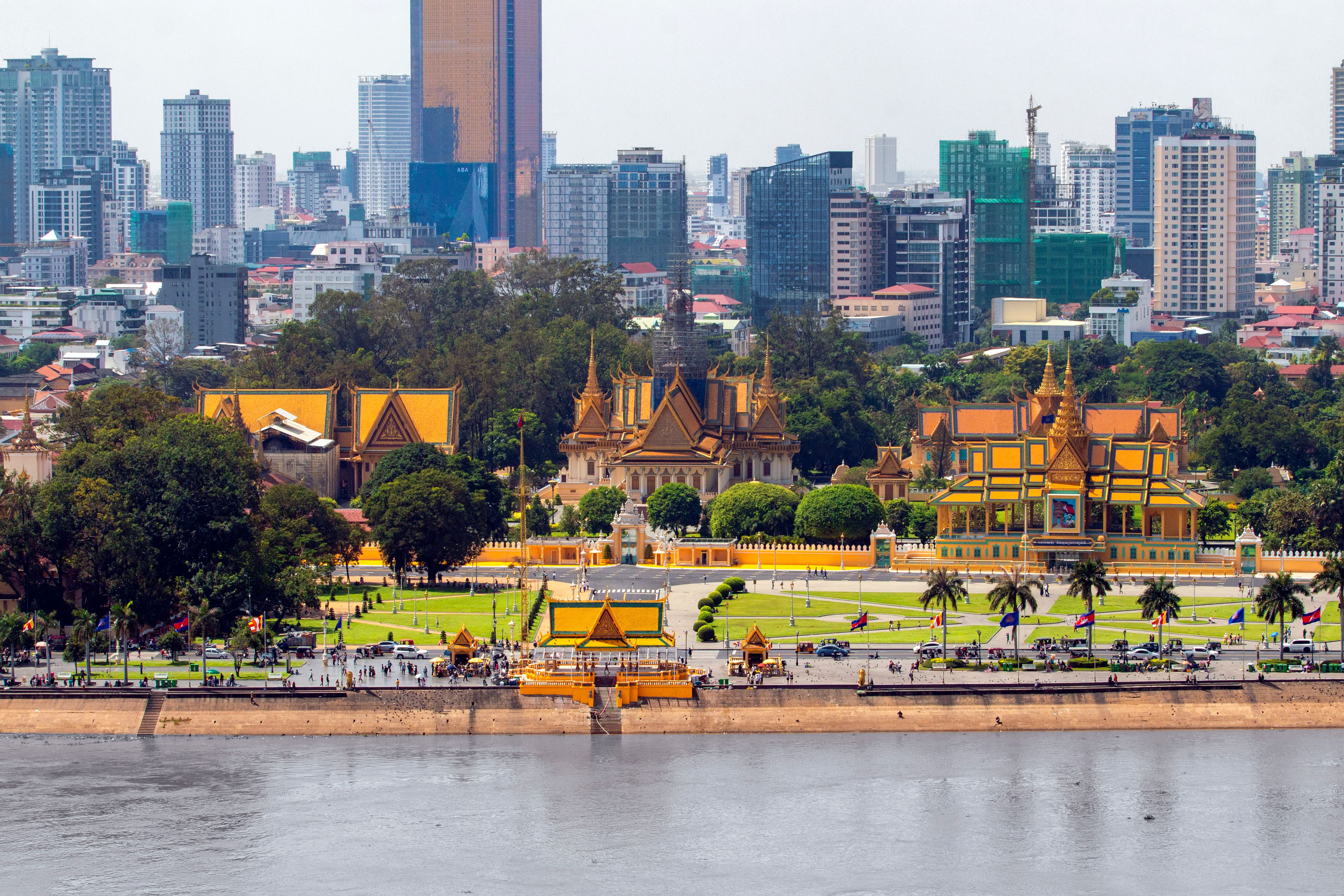
Norodom's court moved here in the 1860s, and the compound has been the working royal residence since, which is why parts of it stay closed. Visitors see the Throne Hall from outside, the Napoleon III pavilion and the Silver Pagoda, floored with silver tiles and holding an emerald Buddha. Shoulders and knees must be covered, and the gates shut over the middle of the day.
-
Sisowath Quay
Along the western bank of the Tonle Sap, a riverside promenade runs from the palace north past the ferry landings, filling at dusk with joggers, badminton games and food carts. Restaurants and bars face the water from a colonnade of shophouses behind. The confluence with the Mekong sits opposite, and the boats that cross it double as local transport to the far bank.
-
Tuol Sleng Genocide Museum
A school became S-21, the Khmer Rouge security prison where thousands of prisoners were processed and almost none survived. The classrooms are left as they were found in 1979: iron beds, cell partitions of brick, and walls of mugshots. An audio guide narrated by survivors carries the visit. Two hours is enough, and the order matters, since Choeung Ek follows from here.
-
Wat Phnom
Legend credits a woman named Penh with founding the city's hilltop shrine after she found Buddha statues in a floating tree, and the capital carries her name. The stupa and vihara sit in the only real park in the centre, busy with offerings, caged birds sold for release and fortune sticks. Half an hour covers it, best folded into a walk north along the river.