 Submit a photo
Ninety seconds on Dahshur
Look at the Bent Pyramid from any side and its slope breaks sharply partway up, the angle eased in the middle of the build. Beside it the Red Pyramid stands finished, and you can climb down inside.
The change of slope on the Bent Pyramid comes about halfway up, where all four faces drop from roughly 55 degrees to 43. At the steeper angle, the weight of the blocks was making the structure unstable.
The lower faces still carry much of their original casing of smooth white limestone, which is rare on a pyramid this old. Walk up to the base and you see what a finished pyramid face looked like: flat, pale and polished, with no steps.
The Bent has two entrances, each leading to a chamber with a corbelled roof. The northern chamber lies below ground level, and the western one is built high in the body of the pyramid.
The Red Pyramid, a short drive away, is a complete pyramid and the third largest in Egypt, after Khufu's and Khafre's at Giza. Its name comes from the rusty red of its blocks. It was once cased in pure white Tura limestone, and what you see now is the stone beneath.
Its chambers are bare of carving, so look up. Each corbelled ceiling steps inward course by course as it rises, like a stairway turned upside down.
Dahshur also holds the Black Pyramid of Amenemhat III, badly decayed. Its pyramidion, the capstone from its tip, is on display at the Egyptian Museum in Cairo.
The Bent Pyramid is the first stop after the entrance gate, where one ticket covers the site. Walk round its base to see the casing close up. Its north entrance, nearer the ground, has a staircase for visitors.
If the Bent's interior is open that day, and the gate can tell you, its passage is longer and narrower than the Red's.
The Red Pyramid is a drive away, too far for a comfortable walk in the sun. Its entrance is on the north side, and the passage slopes down to two chambers, with a short passage on to a third, the burial chamber.
There are no signs or panels on the site explaining what you are looking at, so bring a licensed guide if you want the story told on the spot. Inside the pyramids, no guide is required.
On your own, read up on both pyramids before you arrive and go at your own pace.
A guard at a tunnel entrance may offer to take your photo and expect a small tip for it. If you do not want one, a polite no is enough. Agree the day's stops with your driver before you set off, and turn down a carpet school if one gets added.
Bring your own torch, because the lights inside are dim, and wear clothes you do not mind getting dusty. The chambers smell sharply of ammonia from bat droppings.
There are no toilets or other facilities on site, so use them before you set out and bring what you need for a few hours outdoors.
Explore the rest of Giza
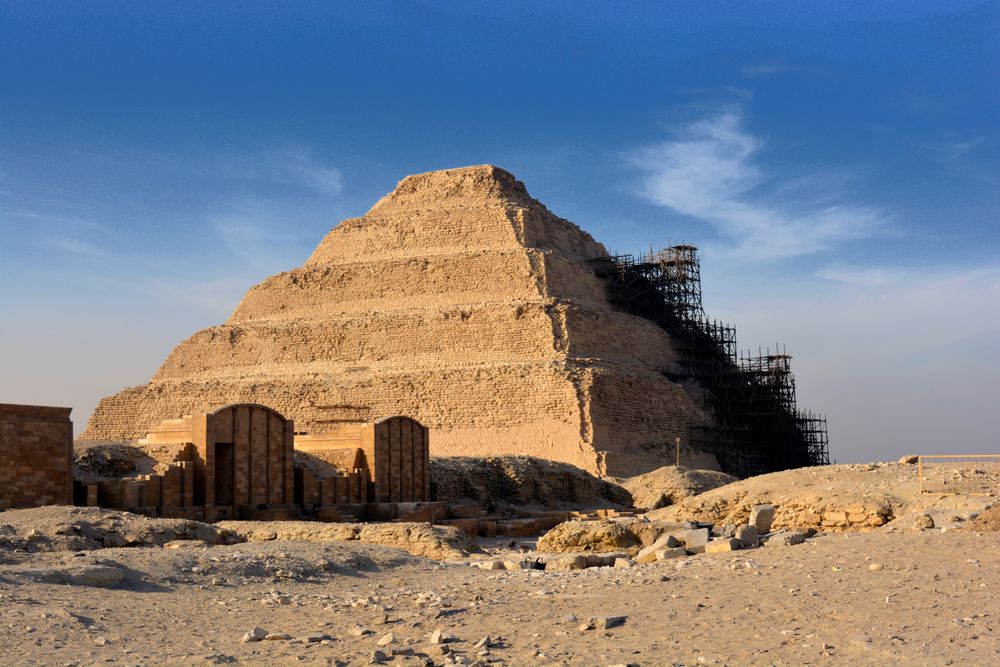
Hire a car and driver for the day from Giza, often arranged by your hotel, because no public transport reaches Saqqara and a ride-hail car…
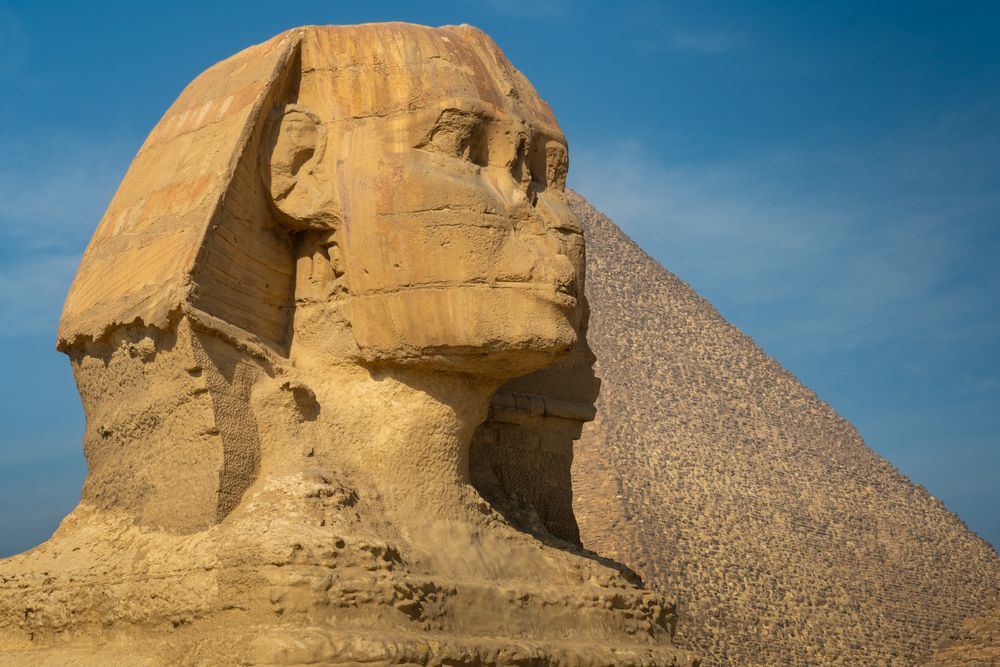
The Great Sphinx is a lion with a king's head, carved in the reign of Khafre. A path through his Valley Temple leads to a viewing platform…
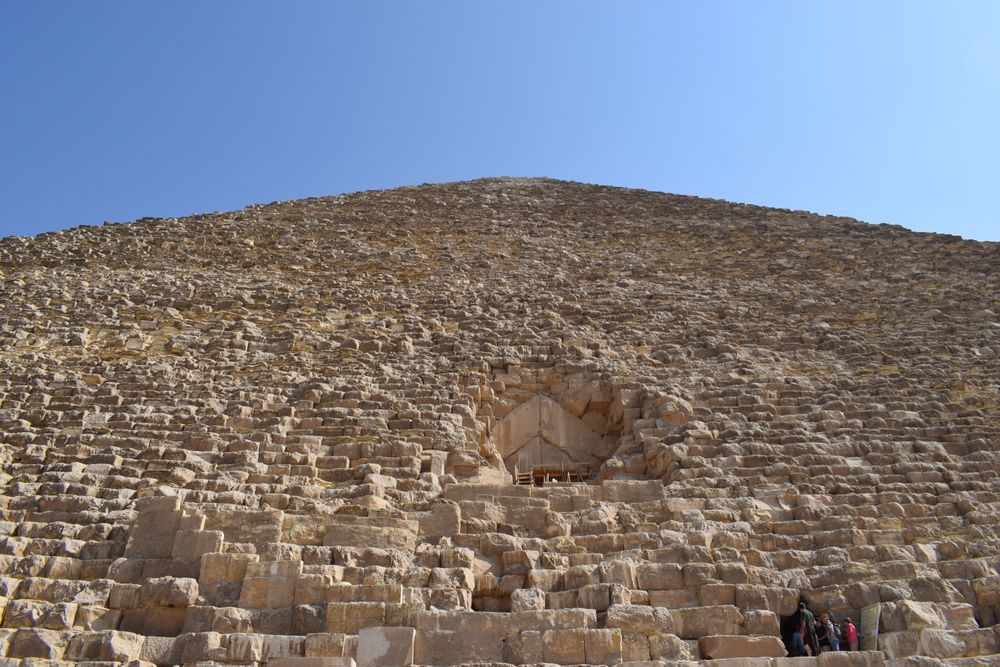
Inside the largest pyramid, a steep climb through low, narrow passages ends in the King's Chamber, bare except for an empty sarcophagus.…
Last updated