Things to do
6-
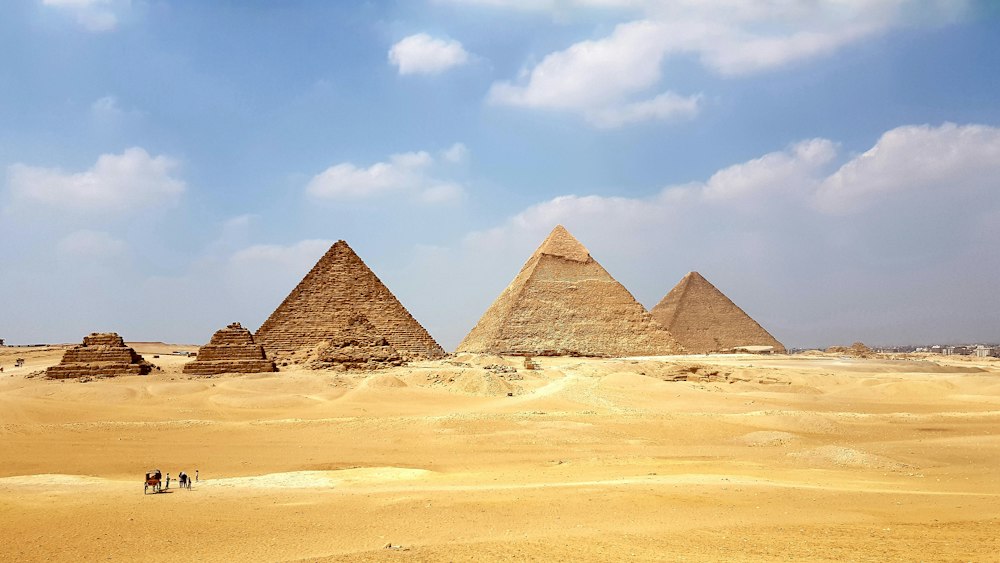
Great Pyramid
Khufu's tomb, raised around 2560 BC from some 2.3 million blocks, stood as the tallest structure on earth for close to four thousand years. It has lost its casing and about seven metres of height. A separate, limited ticket admits visitors to the interior: a stooped climb up the Grand Gallery to a bare granite chamber. It is hot, steep and airless, and not for the claustrophobic.
-
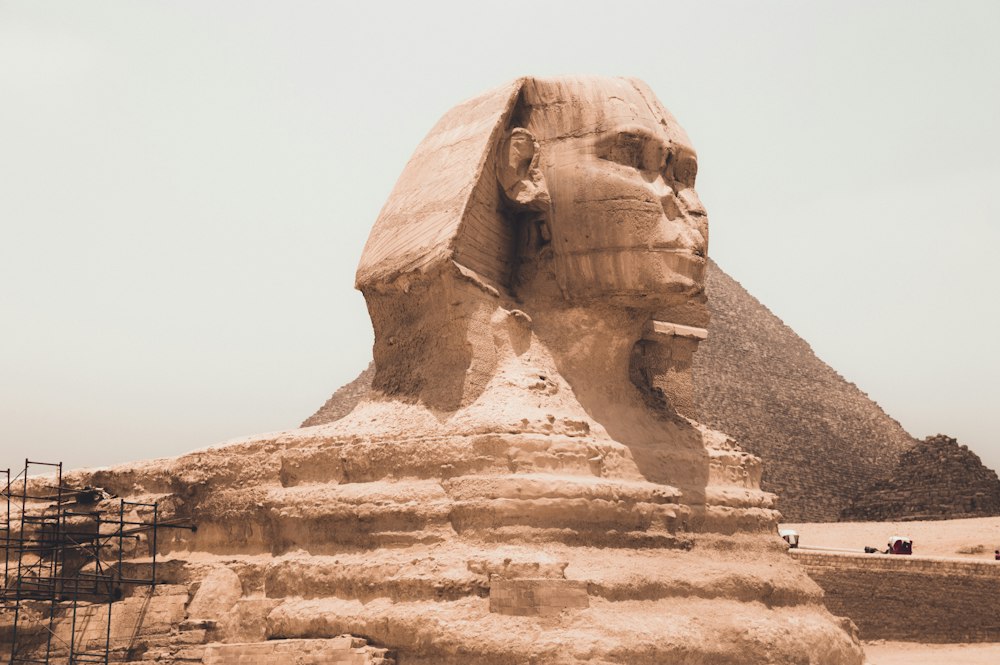
Great Sphinx
A lion with a king's head, carved from a single outcrop of bedrock, seventy-three metres long and twenty high. The face is generally taken to be Khafre's. Sand buried it to the neck for most of its history, which is what preserved the body. Visitors reach a viewing terrace through the valley temple alongside. The nose was gone long before Napoleon's army arrived.
-
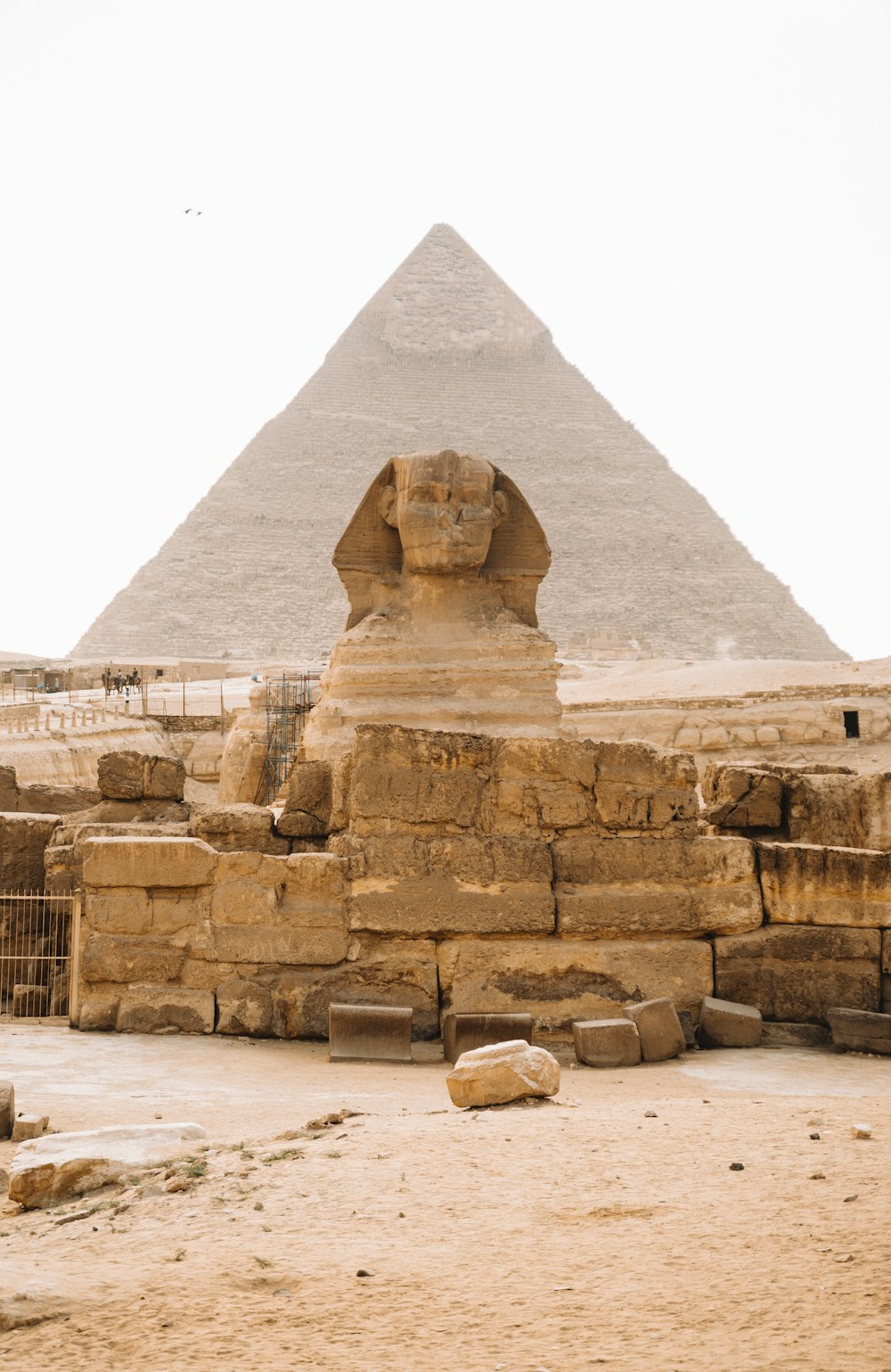
Pyramid of Khafre
Khufu's son built on higher ground, so his pyramid looks the taller of the two though it is slightly smaller. It alone keeps a cap of the smooth white limestone that once covered all three. A causeway ran from it down to a valley temple of red granite beside the Sphinx, where the statue of the king now in the museum was found upside down in a pit.
-
Dahshur
Two pyramids of Sneferu, Khufu's father, stand alone in open desert a short drive south of Saqqara. The Bent Pyramid changes angle halfway up, a correction made when the structure began to crack, and still wears most of its casing. The Red Pyramid beside it was the first true smooth-sided one. Both can be entered on the site ticket, usually with no queue at all.
-
Grand Egyptian Museum
Two decades in the building and fully opened in November 2025, this is the largest museum anywhere devoted to a single civilisation. An eleven-metre colossus of Ramesses II stands in the atrium, and a grand staircase lined with statues climbs to a window framing the pyramids. Tutankhamun's entire burial, more than five thousand objects, is shown together for the first time. Book timed tickets online.
-
Saqqara
The necropolis of ancient Memphis, used for three thousand years. Its centrepiece is the Step Pyramid built for Djoser around 2670 BC by the architect Imhotep: the first large building in cut stone anywhere. Nearby nobles' tombs, Ti and Mereruka among them, are carved with scenes of farming, fishing and feasting in fine low relief. New discoveries are announced here almost every season.