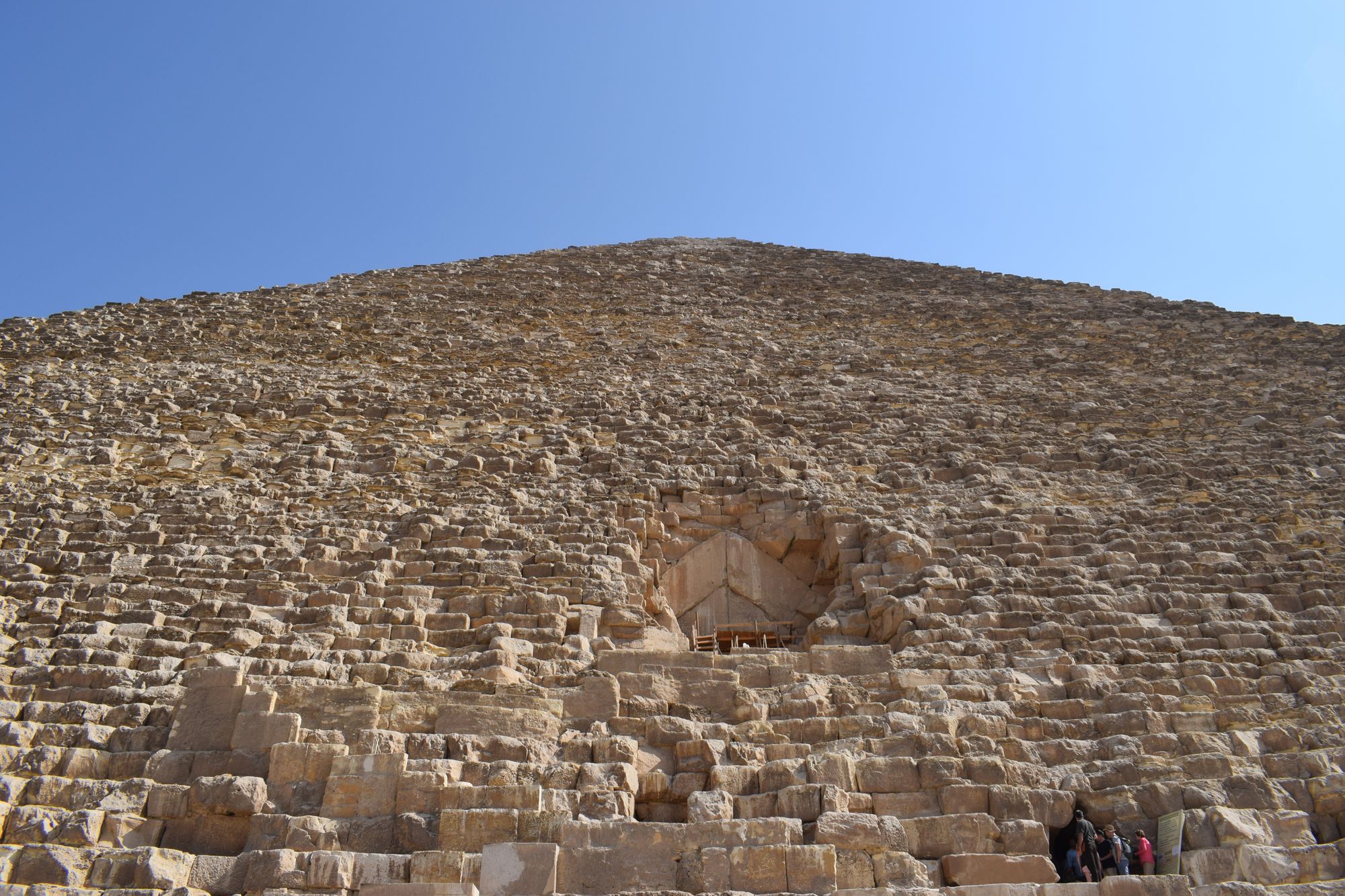
Three pyramids stand on the Giza plateau, and Khufu's, the biggest and oldest, is the one to touch at the base and climb inside. A steep passage takes you up through the stone to the king's burial chamber.
Archaeological Site, Giza. Meridian Dispatch.
Yes, as far as the King's Chamber, where the sarcophagus Khufu was laid in can still be seen. The way up runs through the Grand Gallery, a tall corbelled passage and a masterpiece of ancient engineering. Entry to the interior is capped and needs a ticket on top of the site ticket, so in high season it often sells out. Egymonuments is the official booking platform, and tickets are also sold on site.
The Great Gate is the plateau's main entrance, on the Cairo to Fayoum road along the south side, where a new visitor centre replaced the old Mena House gate. Tickets are sold there from self-service machines that take bank cards. Private cars stop at the gate, and an electric shuttle included in the ticket loops to the pyramids. The Sphinx Gate on the east side still admits visitors.
As of 2026 the plateau opens at 07:00 in both summer and winter, with last entry at 16:00. During Ramadan it opens at 08:00 and last entry moves to 15:30. The site asks for arrival at least an hour before closing, and the monument itself closes at 17:00.
No. Egypt's parliament amended the antiquities protection law to make climbing the country's monuments a crime, alongside tougher jail sentences and fines; before that no law explicitly banned it. The only way up is inside, by the passage to the King's Chamber on its own limited ticket.
In the reign of King Khufu, around 2589 to 2566 BC, over an estimated 10 to 20 years. Exactly how it was done is still not entirely certain. The fine casing stones came by ship from Turah, south of Maadi.
About 138.5 metres today. When finished it stood 146.5 metres, and it remained the tallest structure in the world for 3,800 years. Almost all of the smooth outer casing is gone, which leaves the stepped inner core on show.
Yes, the tomb of King Khufu. Its body is local limestone, and the outside was once entirely covered in high-quality limestone. Inside are three chambers, one cut into the bedrock beneath and two high up in the masonry, a layout no other pyramid has.
On the Giza plateau in Giza, Egypt, at 29.9792 N, 31.1342 E. It is the oldest and largest of the plateau's three pyramids. The Pyramid of Khafre stands about 470 metres away and the Great Sphinx about 545 metres.
The official site of Great Pyramid of Giza is egymonuments.com.
egymonuments.com →What you see from the base is the stone core of a royal tomb, built for King Khufu, who reigned around 2589 to 2566 BC. Its rough, stepped face is not how it was meant to look.
The whole pyramid was once sheathed in polished white limestone, smooth, bright and reflective, and it stood 146.5 metres high. Almost all of that casing is gone, so what you see today is the inner masonry.
You go in through a tunnel forced by a caliph's men in the ninth century. From there a low passage climbs into the Grand Gallery, a corridor 50 metres long, where the joints between the blocks are so tight that a blade will not slide between them.
At the top is the King's Chamber, a small, dark, bare stone room holding an empty stone tomb and nothing else.
Each pyramid here, Khufu's among them, is a king's tomb. Below them the Great Sphinx was carved straight out of the bedrock, a lion's body with a king's head.
Allow at least three hours to walk the plateau as a whole, and use the shuttle to save yourself most of the uphill.
A good order is the Great Pyramid first, while the air is coolest. Then go up to Panorama Point, about 1.5 km away by road or walking path, where the plateau's pyramids line up in one frame. Finish down at the Sphinx, and expect a crowd there, because guided tours end at it.
Inside, you climb on wooden cleats, holding the wall rails. The air is hot and humid, often 5 to 10 degrees warmer than outside, and coming down is harder on the knees than going up, so go slowly and let faster climbers pass. In the chamber a guard asks you to leave after a few minutes, and videos are not allowed.
Buy the interior ticket if standing inside the pyramid matters to you. Without it you miss the climb itself, since the chamber at the top holds little to see. Skip it too if tight spaces, heat or bad knees trouble you, because once you are in the passage there is no easy way back.
Bring water, a hat and sunscreen: the plateau is open ground, and the sun is strong even in winter. Wear closed shoes you have already broken in, because the ground is dusty and sandy. Loose clothes that cover your shoulders and knees, plus a light layer, deal with both the sun outside and the heat inside, and a small torch helps in the passages.
Come on a weekday if you can, since weekends are busier, and expect tour groups to crowd the plateau at sunset. When a seller or handler approaches, a firm, polite "No, shukran" is usually enough.
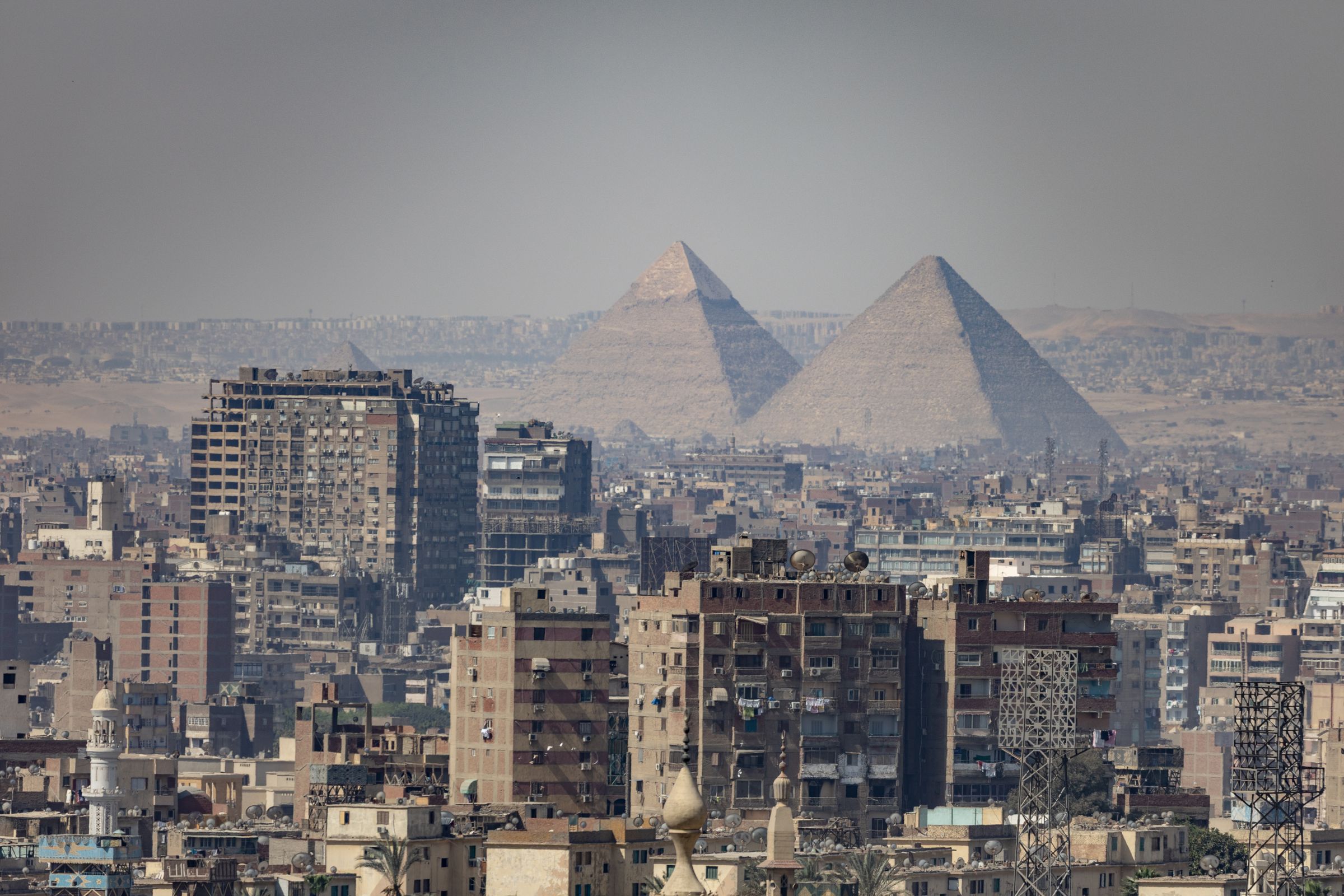
You enter at 07:00 by the Fayoum road gate and ride the free electric shuttle to the Great Pyramid. Buy plateau and museum tickets online before the day.
Read the Giza guideExplore the rest of Giza
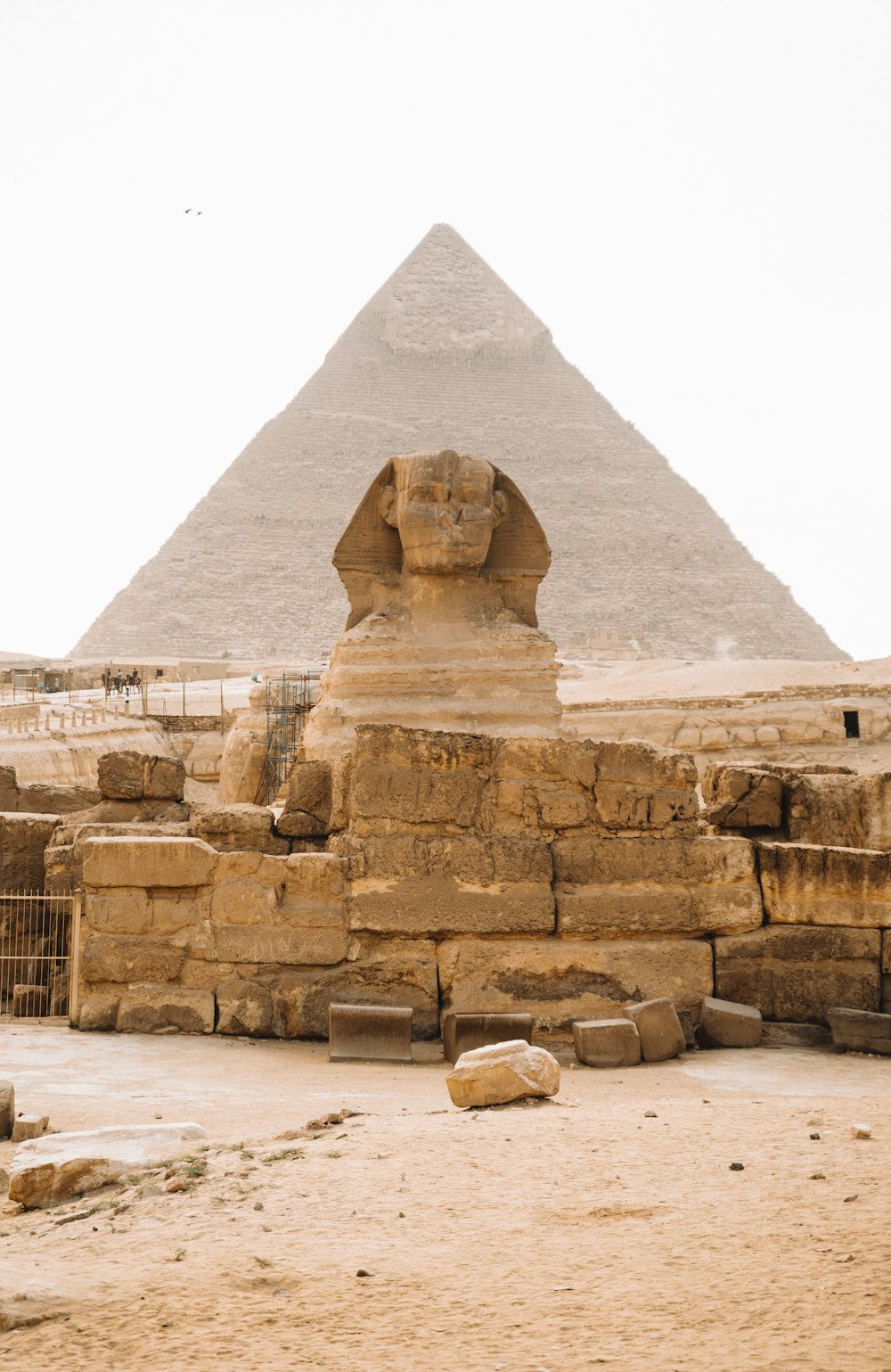
The middle pyramid of the three is a cheaper way inside a Giza pyramid than Khufu's. The plateau area ticket does not cover it, so the…
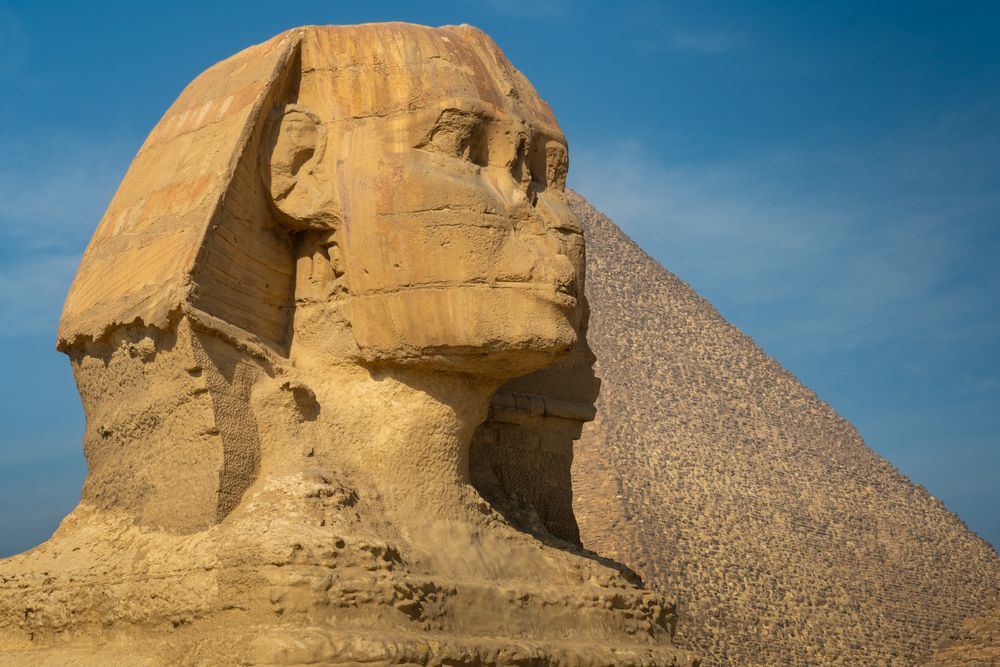
The Great Sphinx is a lion with a king's head, carved in the reign of Khafre. A path through his Valley Temple leads to a viewing platform…
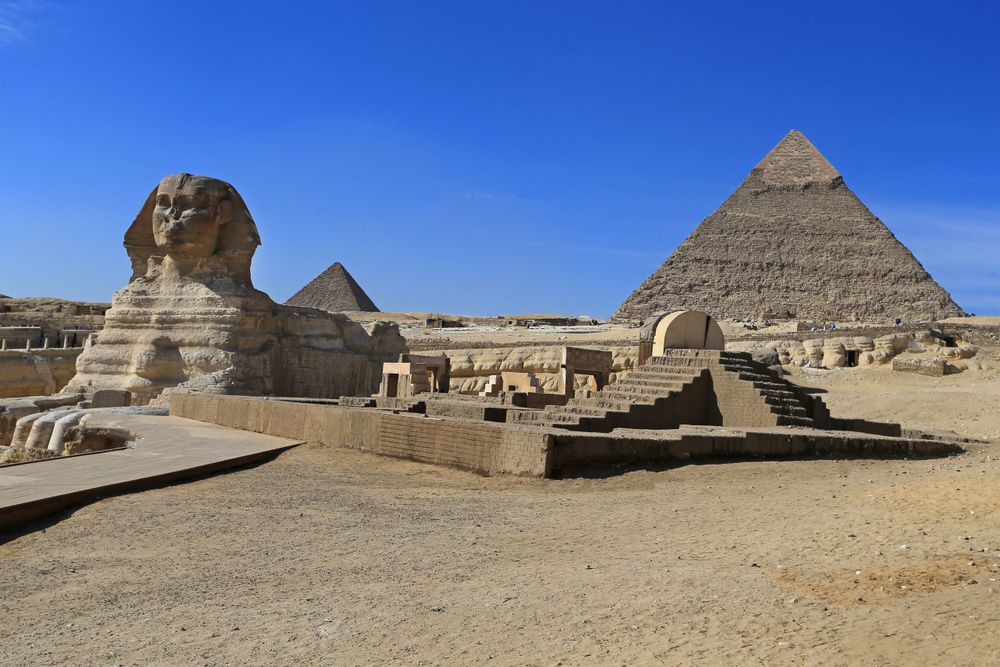
Next to the Sphinx stands the temple that served as the way into Khafre's pyramid complex. Look inside when you visit the Sphinx; the two…
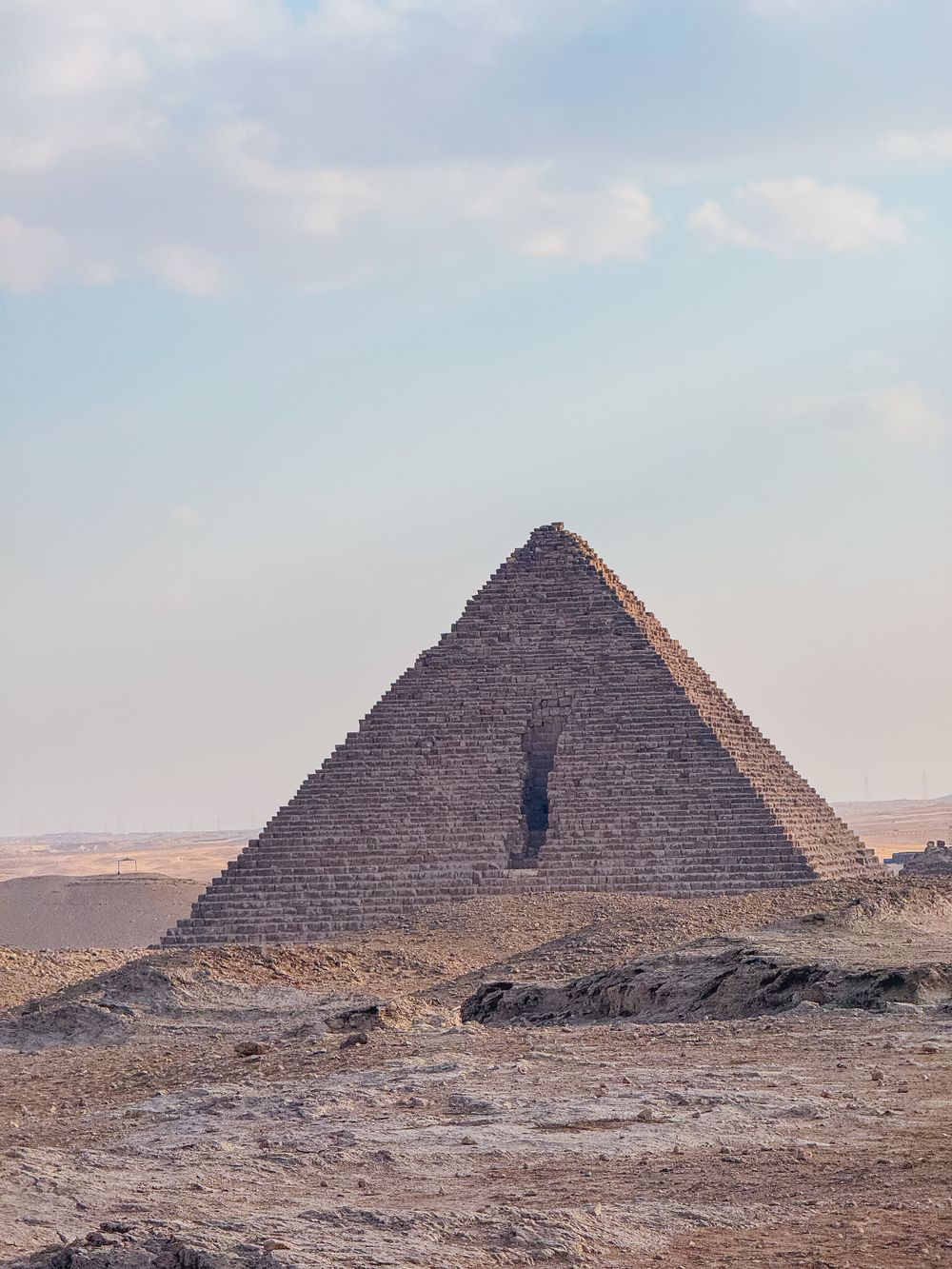
The Pyramid of Menkaure is the third and smallest of the three large pyramids at Giza, built for Menkaure, most likely the son of Khafre…
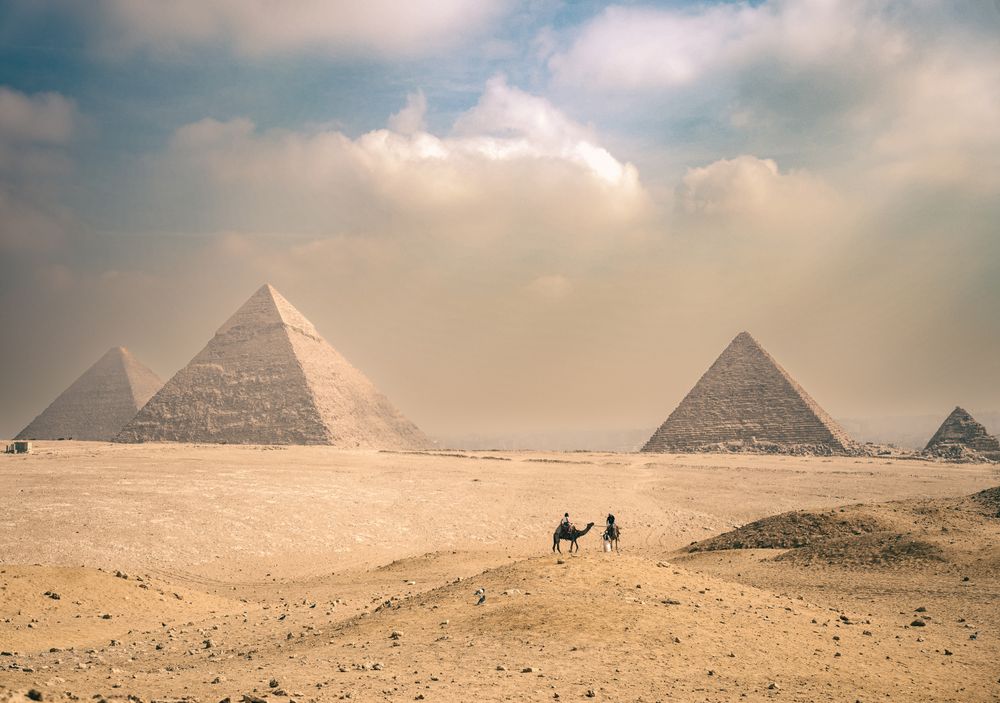
A rise of open desert south-west of the Giza plateau, where the three main pyramids stand in a row. The electric shuttle stops here on its…
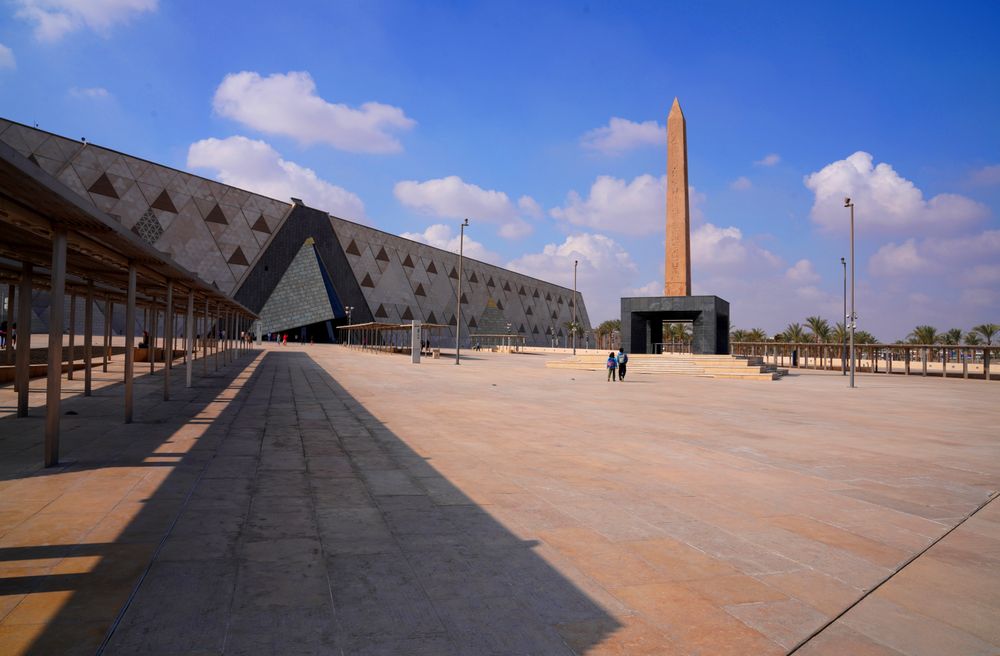
The visit takes in the Tutankhamun galleries, the main galleries, the Grand Hall and Grand Staircase, and a separate hall for Khufu's two…
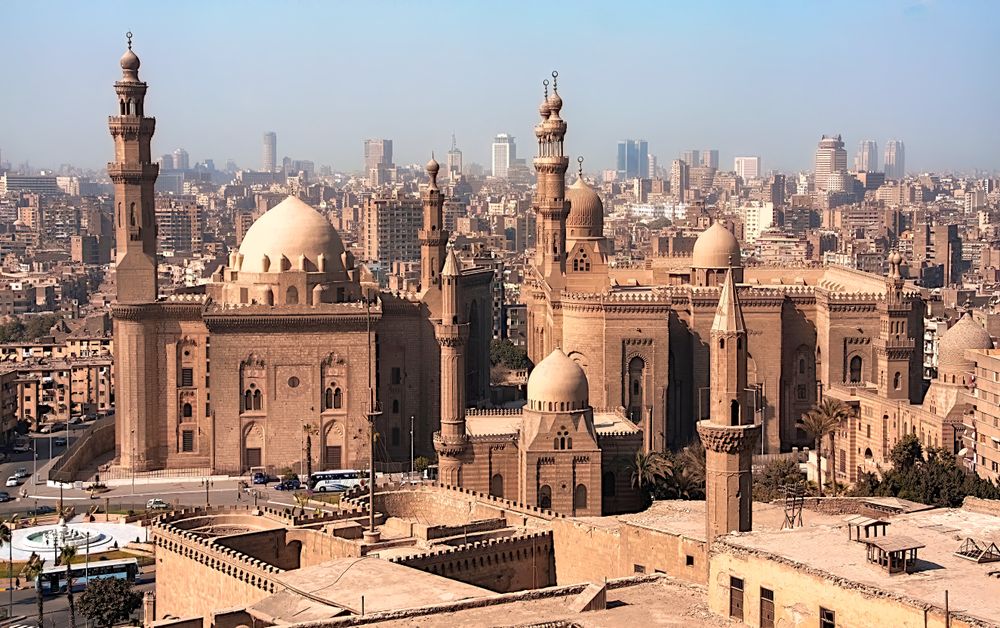
More than twenty million live in greater Cairo, and the medieval city the Fatimids founded in 969 is still in daily use at its centre:…
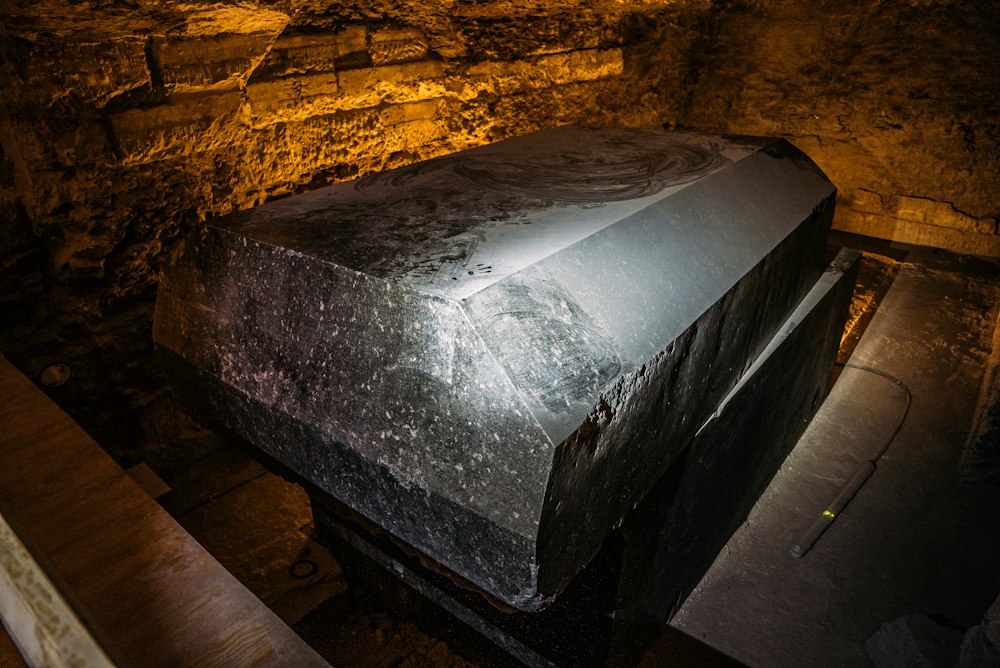
Underground, a set of narrow galleries holds huge stone sarcophagi made for the Apis bulls. The tunnels are cut barely wider than the…
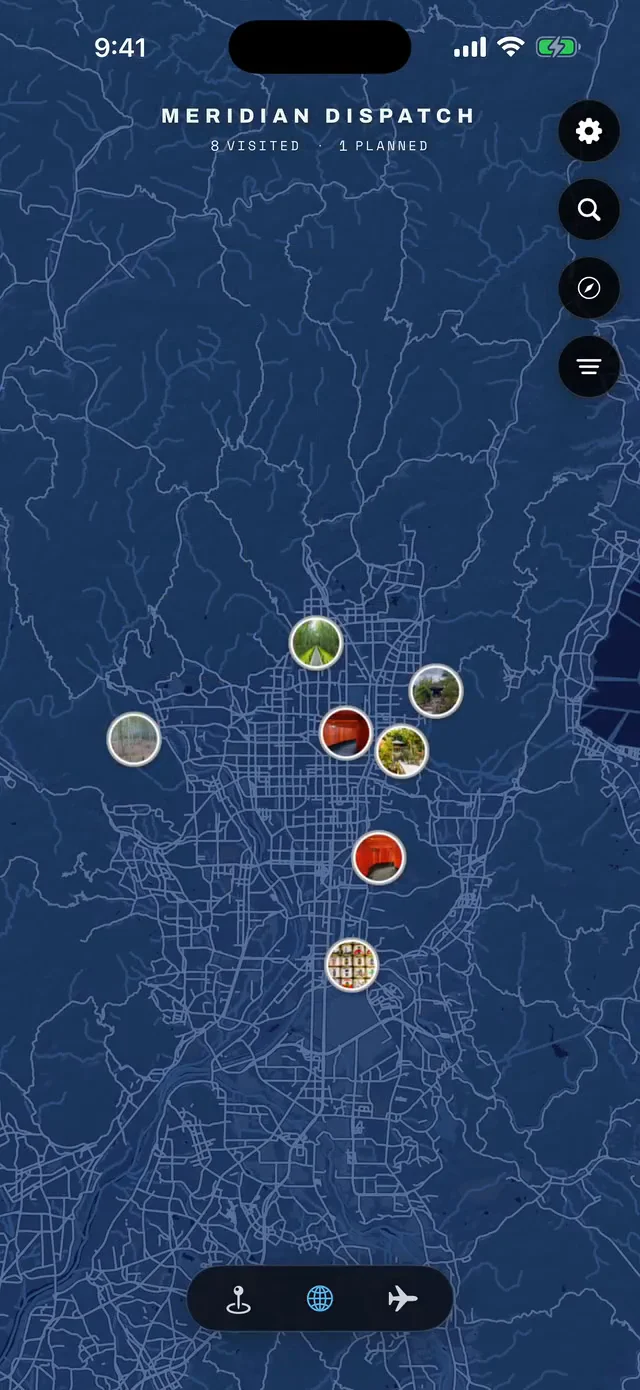
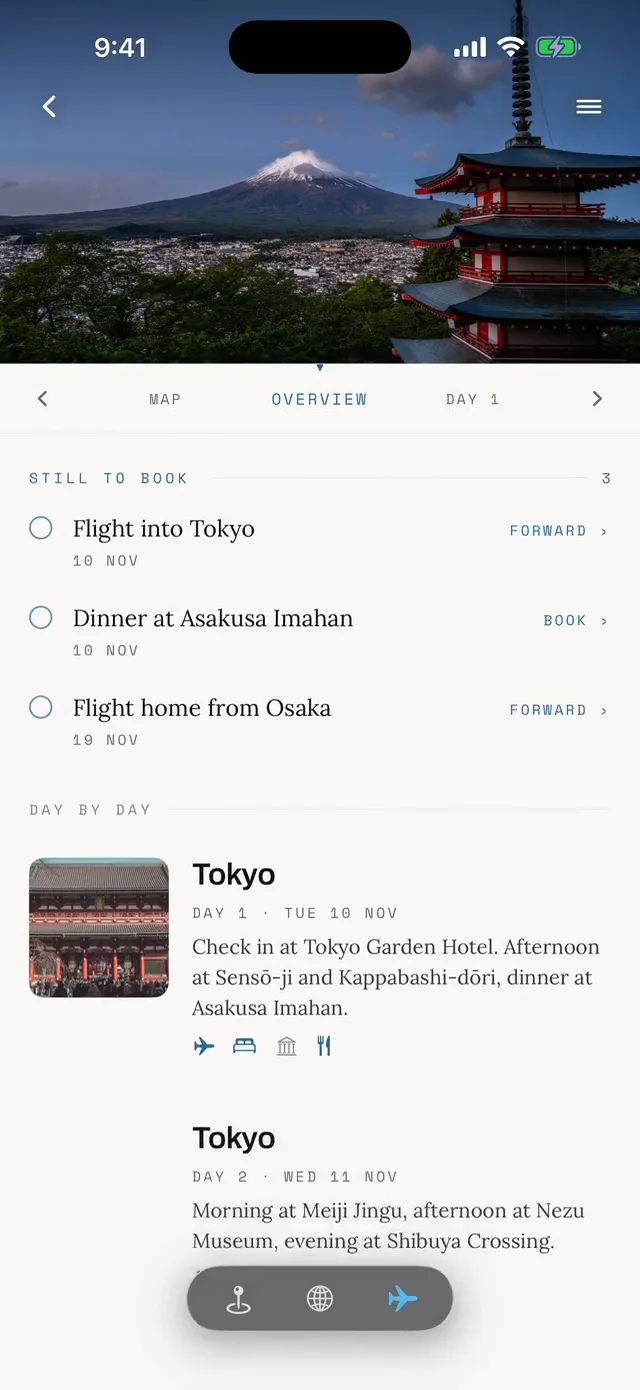

Save Great Pyramid of Giza to your Egypt trip in the Meridian Dispatch app and build the day around it, with the best of Giza pinned on one map.
Download on the App StoreLast updated