 Submit a photo
Ninety seconds on Pyramid of Menkaure
At the foot of the smallest Giza pyramid, the lowest courses are granite brought from Aswan, and much of it was never smoothed because Menkaure died before his complex was finished. You see a king's tomb stopped partway through its building.
On the north face, a deep vertical gash cuts into the stone. It dates from 1196, when the sultan al-Aziz Uthman tried to demolish the pyramids, starting with this one; his workers laboured for about eight months before the attempt was abandoned.
Loose granite blocks lie around the base, never set in place, and a 2024 plan to put them back was dropped after experts objected.
Three small pyramids stand beside it, built for the burials of Menkaure's queens.
Inside, a passage leads down to a room whose walls are carved as panelling, copying the front of a palace. Beyond it, another chamber is cut with six large niches.
The burial chamber is lined with red granite. Its roof is made of granite beams leaned together in pairs and cut underneath into a curve, so the ceiling looks like a slightly pointed vault.
Its carved basalt sarcophagus sank with the ship carrying it to London in 1838, off Cartagena in Spain.
On the official EgyMonuments portal you can buy the plateau ticket online, or you can pay by card at the booths at the main gate, which take no cash. Going inside the pyramid takes a second ticket on top of that.
Start outside. Walk to the north face to see the gash, then go round to the three queens' pyramids standing beside the main one.
When the interior is open, the passage drops steeply from the entrance and you go down it crouched. It reaches the panelled room first, then the niche chamber, then the burial chamber.
Hiring a guide is a choice here, not a need, because the outside of the pyramid and its interior route are easy to follow alone. For the story behind the gash and the unfinished casing, arrange a professional guide before you arrive, and turn down the touts who approach you near the entry gate.
Bring water, and keep a bottle with you when you go inside. The passage has no moving air and turns hot and humid, so wear light, loose clothes and drink before you start down. Take the climb back up slowly, in the same crouch.
Explore the rest of Giza
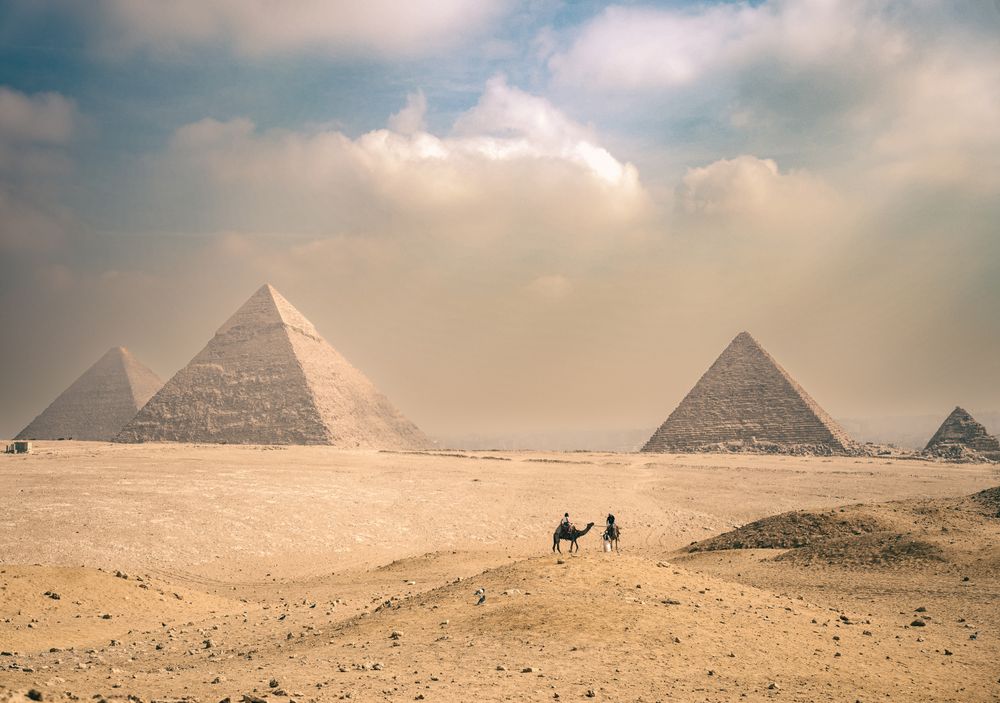
A rise of open desert south-west of the Giza plateau, where the three main pyramids stand in a row. The electric shuttle stops here on its…
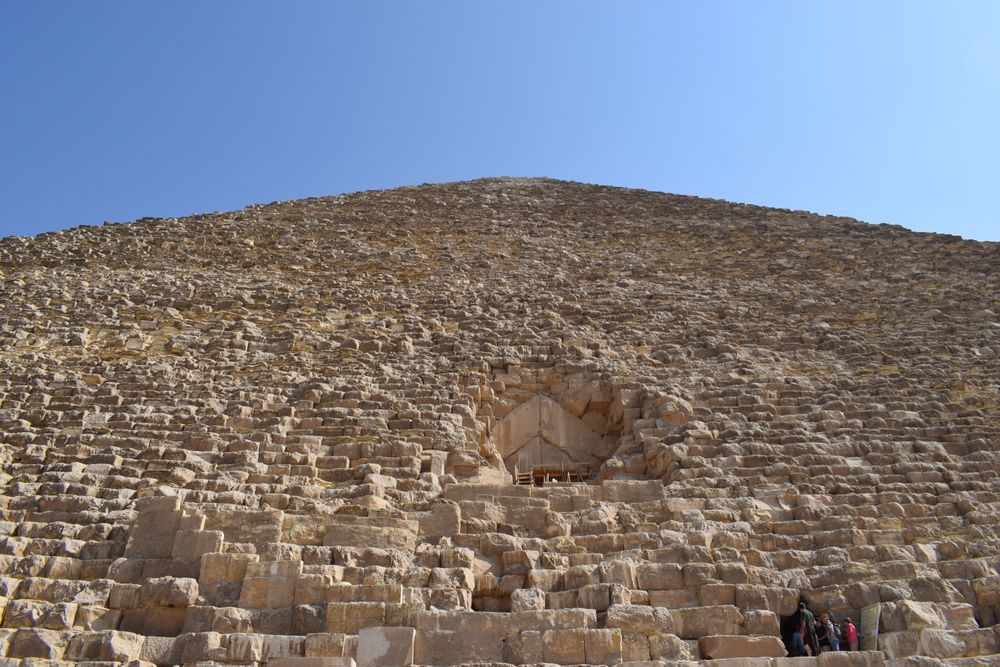
Inside the largest pyramid, a steep climb through low, narrow passages ends in the King's Chamber, bare except for an empty sarcophagus.…
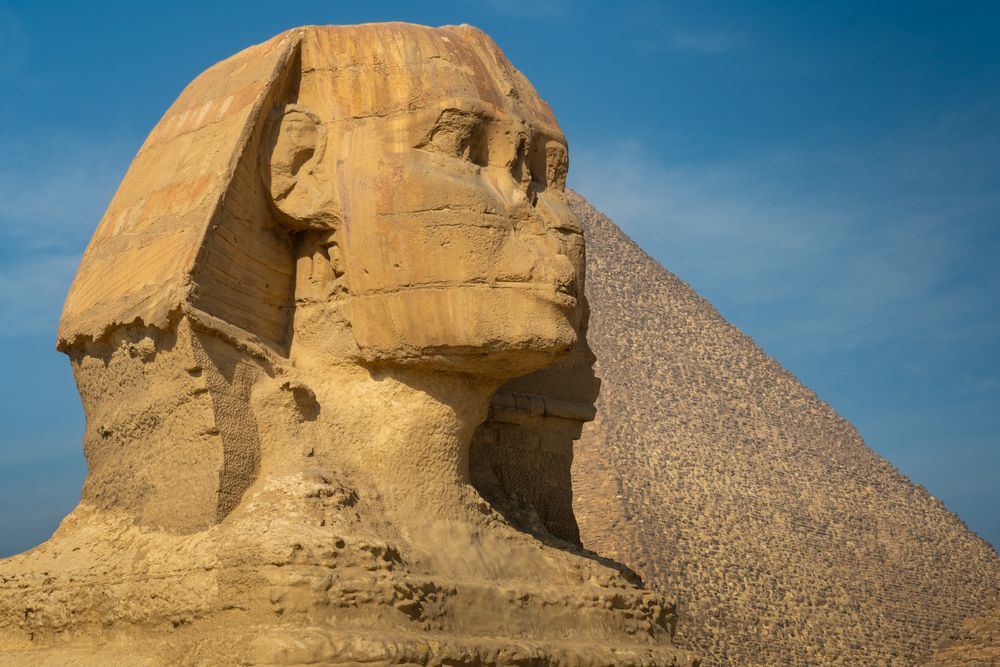
The Great Sphinx is a lion with a king's head, carved in the reign of Khafre. A path through his Valley Temple leads to a viewing platform…
Last updated