
Walk down into the burial tombs of Egypt's New Kingdom pharaohs, cut into a dry valley on Luxor's West Bank. The painted walls still look freshly finished, and the longest tombs run more than a hundred metres into the hillside.
Archaeological Site, Luxor. Meridian Dispatch.
Tutankhamun (KV62), Seti the First (KV17) and Ramesses V and VI (KV9) each carry a fee on top of the standard ticket, so the add-ons stack rather than replace it.
About a dozen tombs are open at any one time, and the list changes from season to season. Of the 18 that can be opened, all are rarely open together.
Yes, with a phone: the Ministry of Tourism and Antiquities ticket site lists mobile phone photography as free of charge, so phone pictures in the open tombs add nothing to the ticket.
The valley opens at 06:00 every day of the week. The ministry's ticket site gives last entry at 17:00 on the summer timetable and 16:00 in winter and during Ramadan, and asks visitors to arrive at least an hour before closing. Hours change with the season.
The valley lies about 6 km from the East Bank hotels as the crow flies, but a taxi takes 30 to 45 minutes because it loops south over the Luxor Bridge. The other route is the local ferry, which crosses every 10 to 15 minutes, then a taxi for the last 3 km. Most West Bank tours also stop at Hatshepsut's temple and the Colossi of Memnon.
The official site of Valley of the Kings is egymonuments.gov.eg.
egymonuments.gov.eg →The tombs lie in a secluded desert valley behind the cliffs of Deir el-Bahari, the site of Hatshepsut's temple, under a peak shaped like a pyramid. The New Kingdom kings chose it for that peak and for its isolation, cutting hidden tombs after seeing the pyramids of earlier rulers robbed.
Over sixty tombs are known here, plus about twenty unfinished pits. A typical one is a long sloping passage cut into the rock, dropping through one or more halls to the burial chamber. From the reign of Seti the First onwards, the burial chamber ceilings show the sun's journey through the twelve hours of night.
Each tomb carries a KV number. Near the entrance, Ramesses IX's tomb (KV6) opens on a broad corridor lined with scenes of the king before the gods and small figures from the Litany of Ra.
Seti's own tomb (KV17) is decorated along its whole length, through two vast pillared halls. In one unfinished room the sketches for its reliefs still show in red and black ink. Ramesses V and VI's tomb (KV9) has an astronomical ceiling with two figures of the sky goddess Nut swallowing and giving birth to the sun.
Tutankhamun's tomb (KV62) is small: sixteen steps and a short corridor lead to a burial chamber painted with his funeral, where his quartzite sarcophagus still stands. His mummy lies in a climate-controlled glass case in the antechamber, and it is the only tomb open to visitors that still holds its mummy.
Every visit begins at the visitor centre, where a large 3D model shows each tomb and the tunnels beneath it.
A tram ride of about three minutes carries you up to the gate, where a guard checks your ticket. Paths then lead to the tomb entrances, the farthest about ten minutes' walk away.
The standard ticket covers any three tombs from that day's open list, and an attendant at each door punches a hole in it. Inside, wooden walkways, handrails and stairs lead down to a larger chamber, so the way back out is uphill.
The air gets warmer the deeper you go, and glass panels protect many of the walls. Attendants walk the passages to keep noise down, and you move through in single file.
Pick your three before you set off, because a punched hole cannot be swapped. Photograph one of the valley maps posted along the paths so you can find each entrance. KV14, the large double tomb of Tausert and Setnakhte, sits at the top of the valley, and its distance from the entrance keeps it quieter.
There is very little shade, and the tombs are stuffy. Bring a hat, sun cream and at least 1.5 litres of water each.
Carry some small notes for toilets and tips.
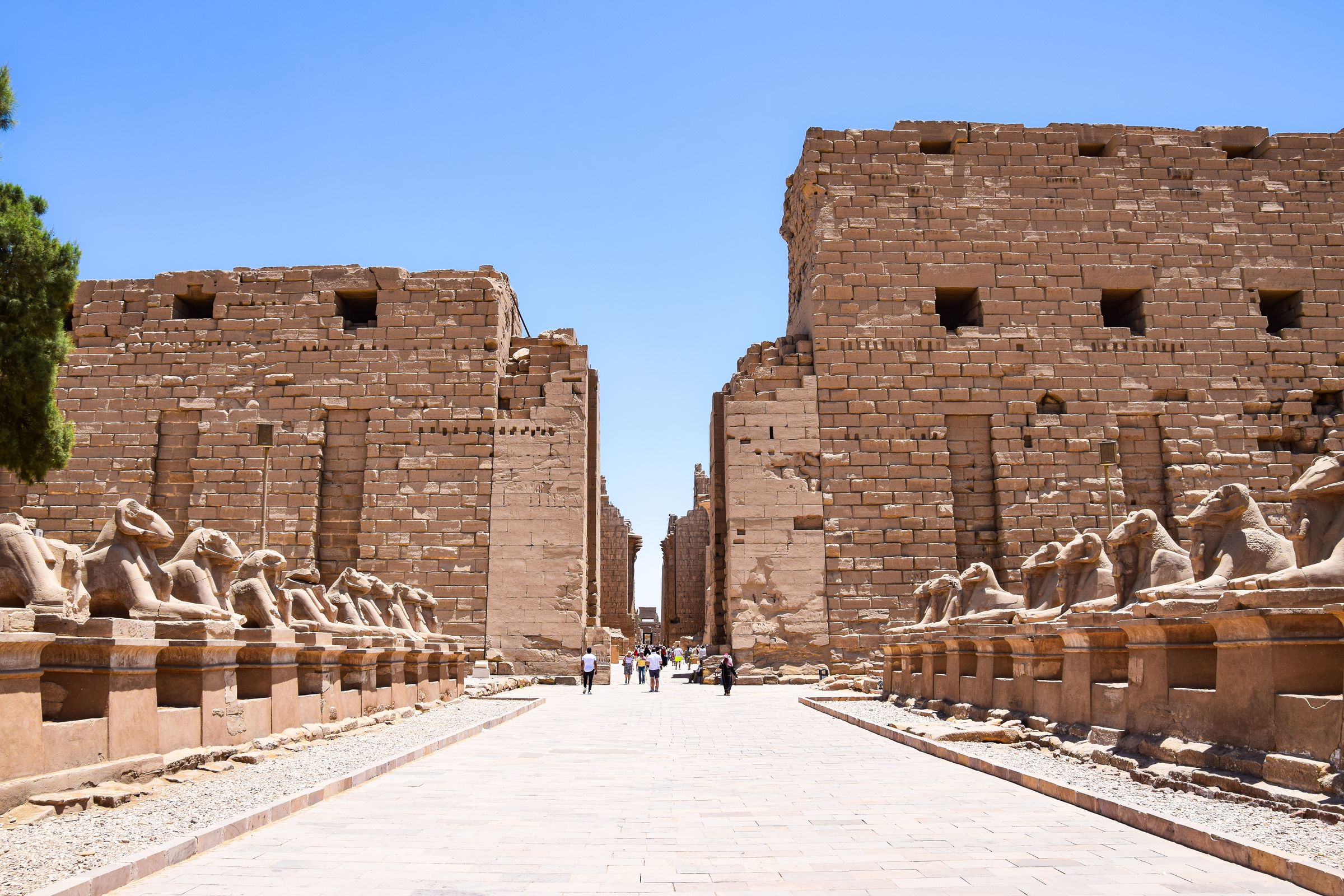
Luxor, Egypt: Ancient Thebes, the capital of Egypt at the height of its power, lies under and around this provincial town of half a million. Luxor Temple.
Read the Luxor guideExplore the rest of Luxor
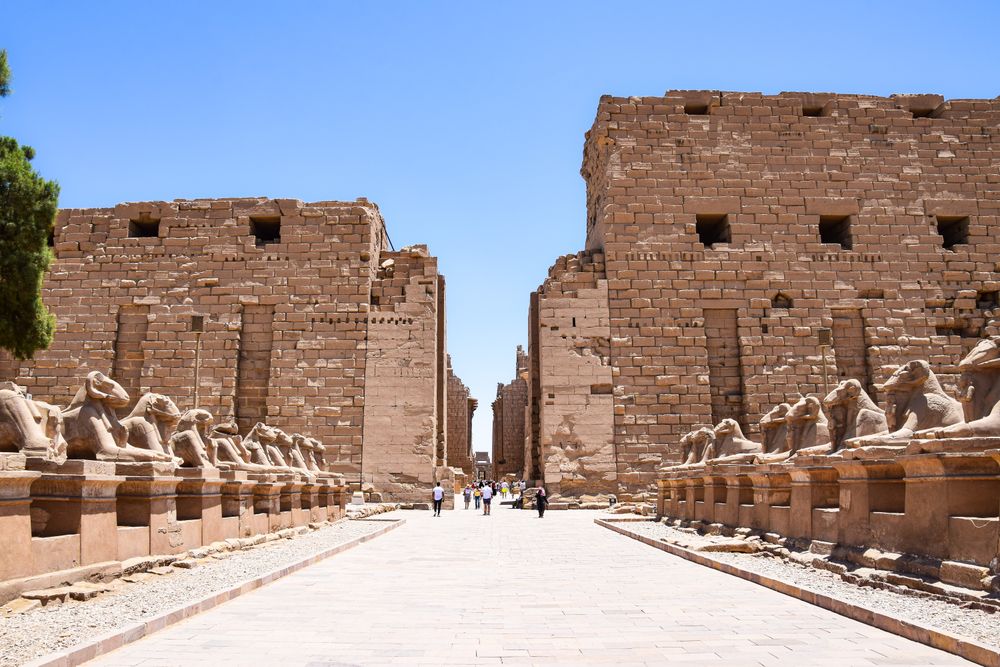
Ancient Thebes, the capital of Egypt at the height of its power, lies under and around this provincial town of half a million, split by the…
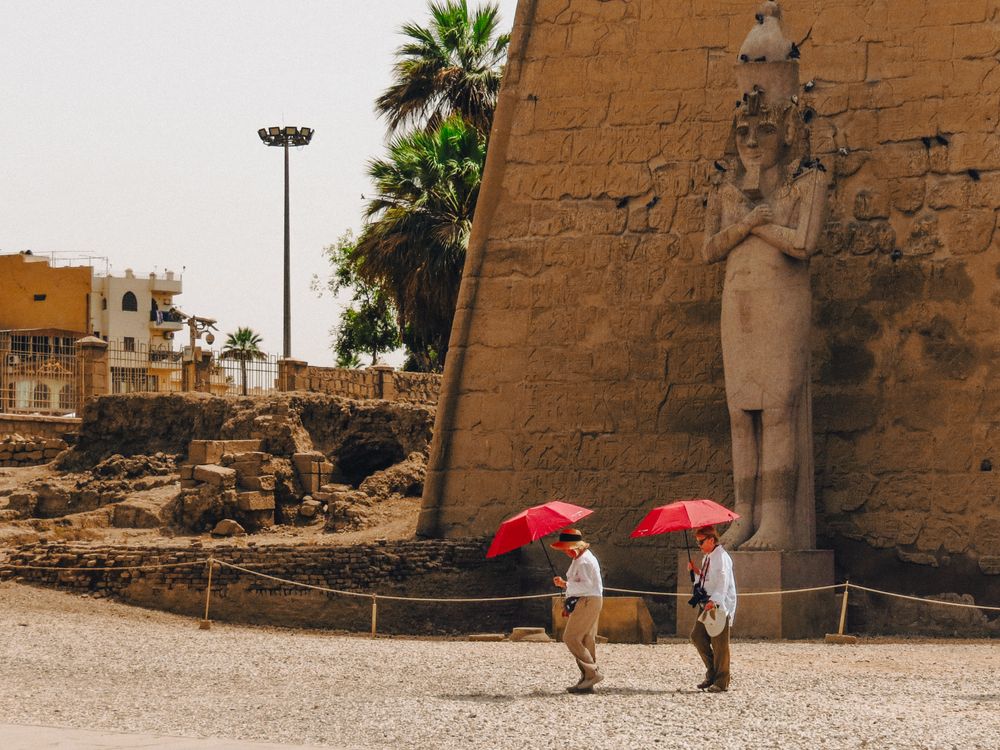
Set in the middle of town on the corniche, open into the evening and at its best floodlit after dark. One obelisk stands before the…
Thirty pharaohs added to this complex over two thousand years, and the result covers more ground than any other religious site of the…

Save Valley of the Kings to your Egypt trip in the Meridian Dispatch app and build the day around it, with the best of Luxor pinned on one map.
Download on the App StoreLast updated