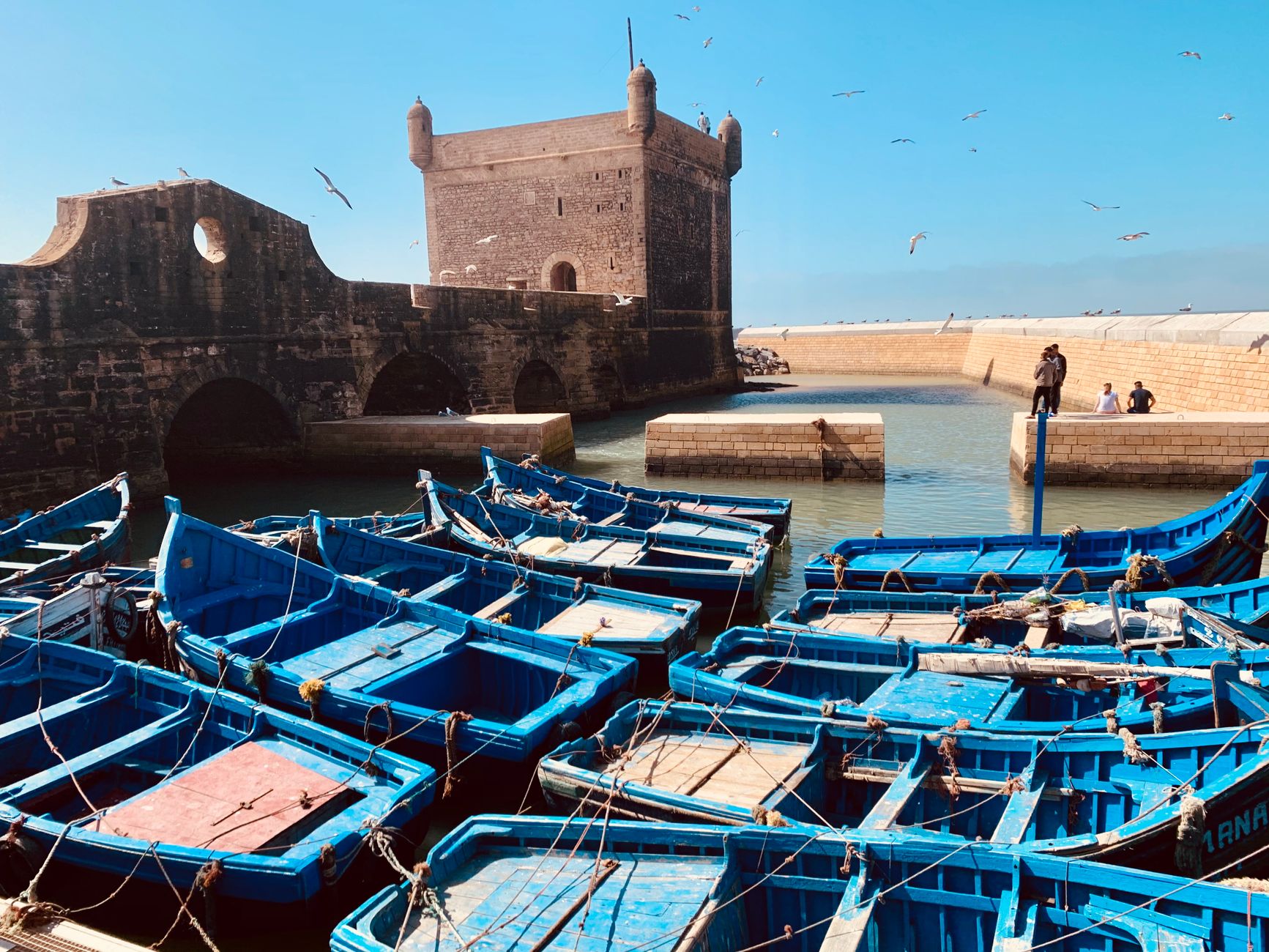
Spend July in Essaouira rather than Marrakesh. Three hours west by coach, the afternoons run about 16 degrees cooler, and a trade wind blows in off the Atlantic nearly every day.
Average July highs are 21.9°C on the coast and 37.7°C in Marrakesh, and August is much the same. A day trip from Marrakesh spends more time on the road than in town, so give it two nights. Essaouira also has its own airport, about 16 km out, with direct flights from several European cities.
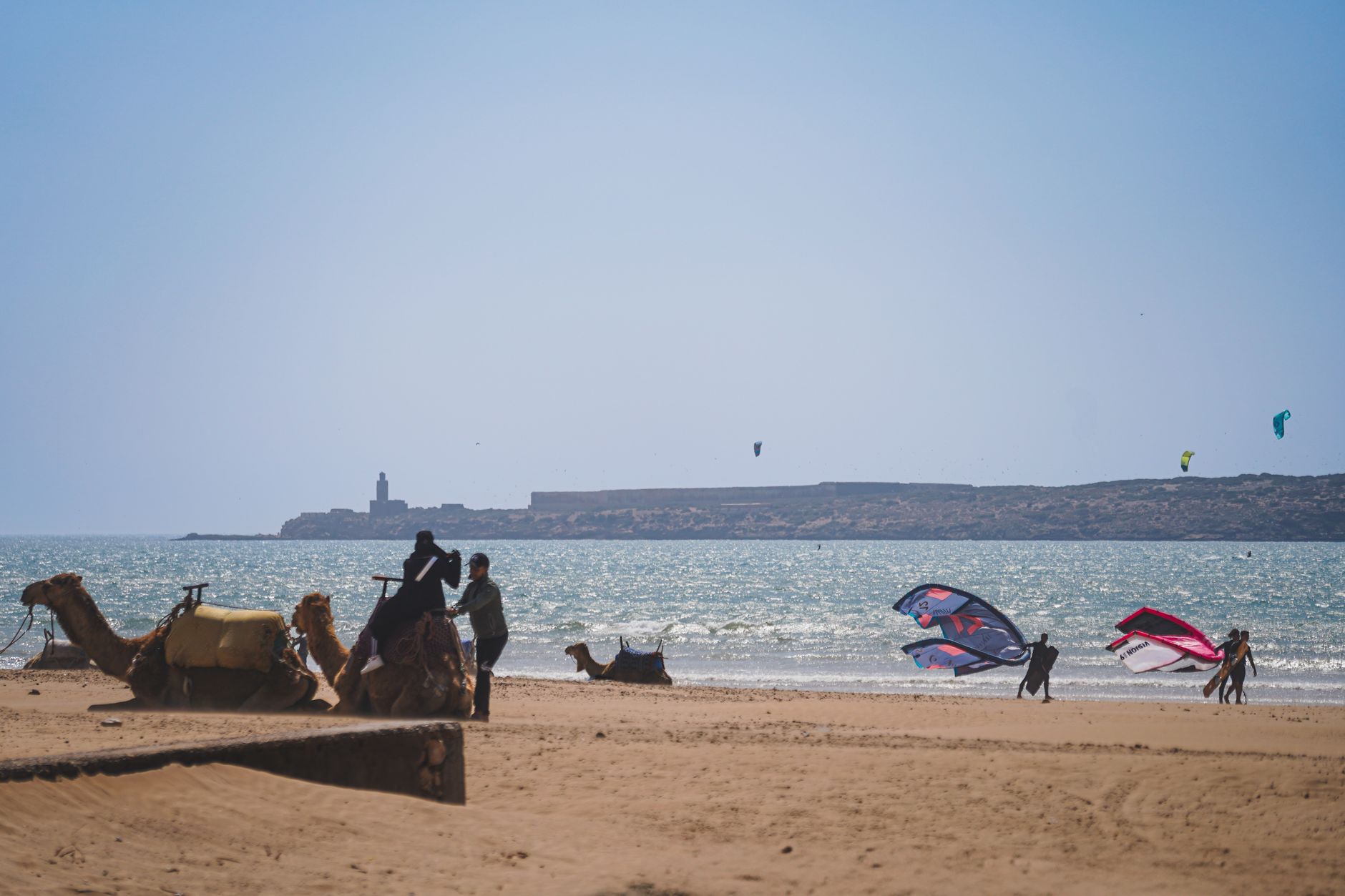
Come for the wind. It blows hardest from June to August, typically 20 to 35 knots in the afternoon, and kitesurfing and windsurfing schools line the long beach south of the port. If you are learning, come in April, May or September, when it is gentler.
For waves rather than flat water, go south to Sidi Kaouki, a small surf village about 25 km down the coast whose beach break works at every tide. Taxis and shared taxis make the run. North of town, windsurfers sail the waves at Moulay Bouzerktoun from spring to autumn.
Mornings are calmer, and that is when to be at the port. The boats land the night's catch, nets are mended on the quay, and the gulls come down onto the slipway. Wear closed shoes, because scales and shells cover the ground.
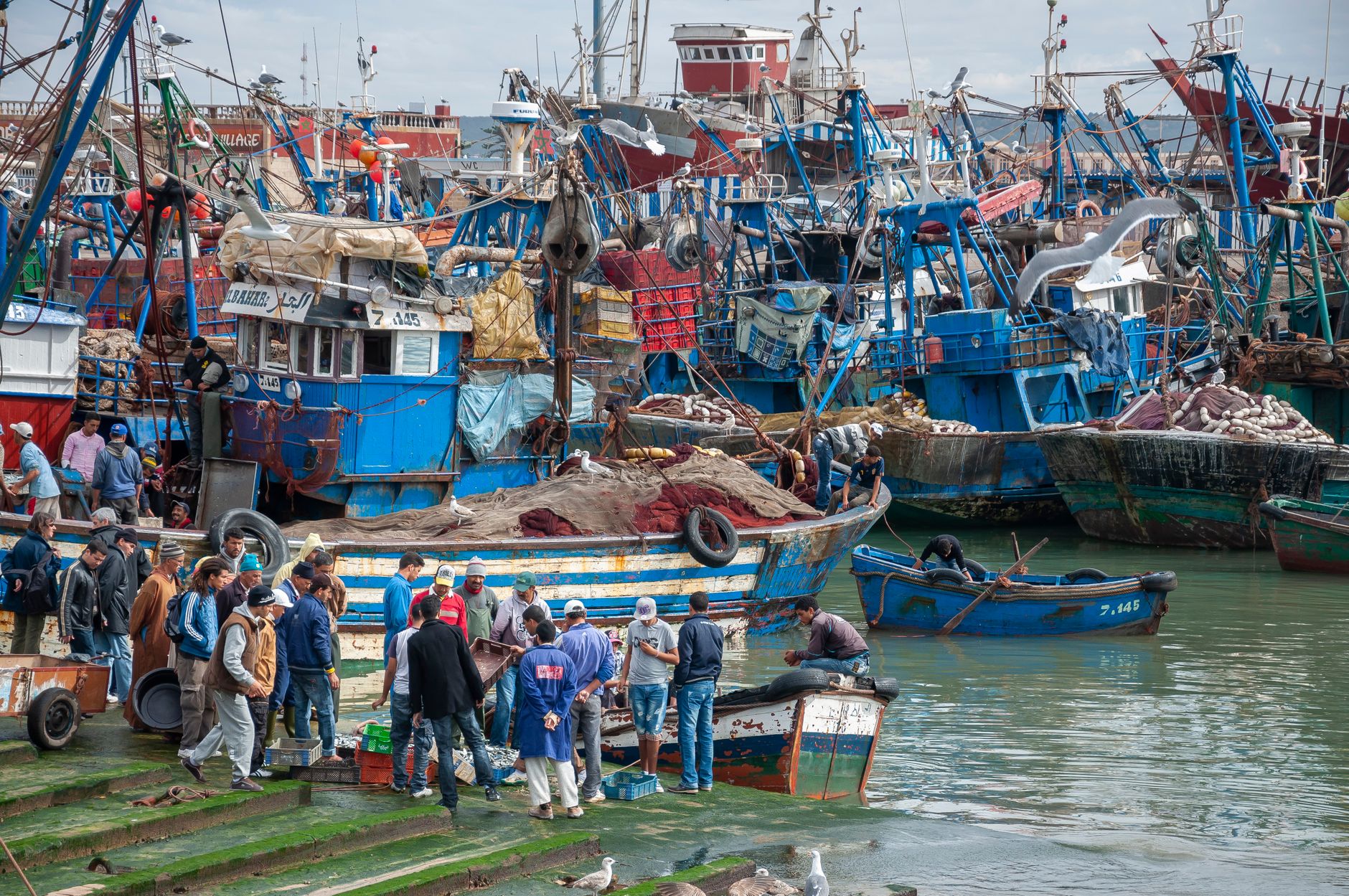
Eat at the grill stalls between the port and Place Moulay Hassan. You choose fish and shellfish off the ice and it is grilled while you wait. Agree the price before anything goes on the fire, because overcharging at these stalls is commonly reported.
Mornings are for the port. Afternoons belong to the kites.
Do not plan on beach days. Sand runs for kilometres toward Diabat, but on a summer afternoon the wind drives it into your eyes and hair, and the Atlantic stays cold enough to keep a swim short. A beach day in August rarely lasts an hour.
If you do swim, stay where lifeguards are posted, because rip currents are common.
Pack a windproof layer and a scarf, even in summer. The sun burns harder than the cool air suggests, and evenings on the sea wall turn chilly. Hats go flying in the lanes beside the ramparts.
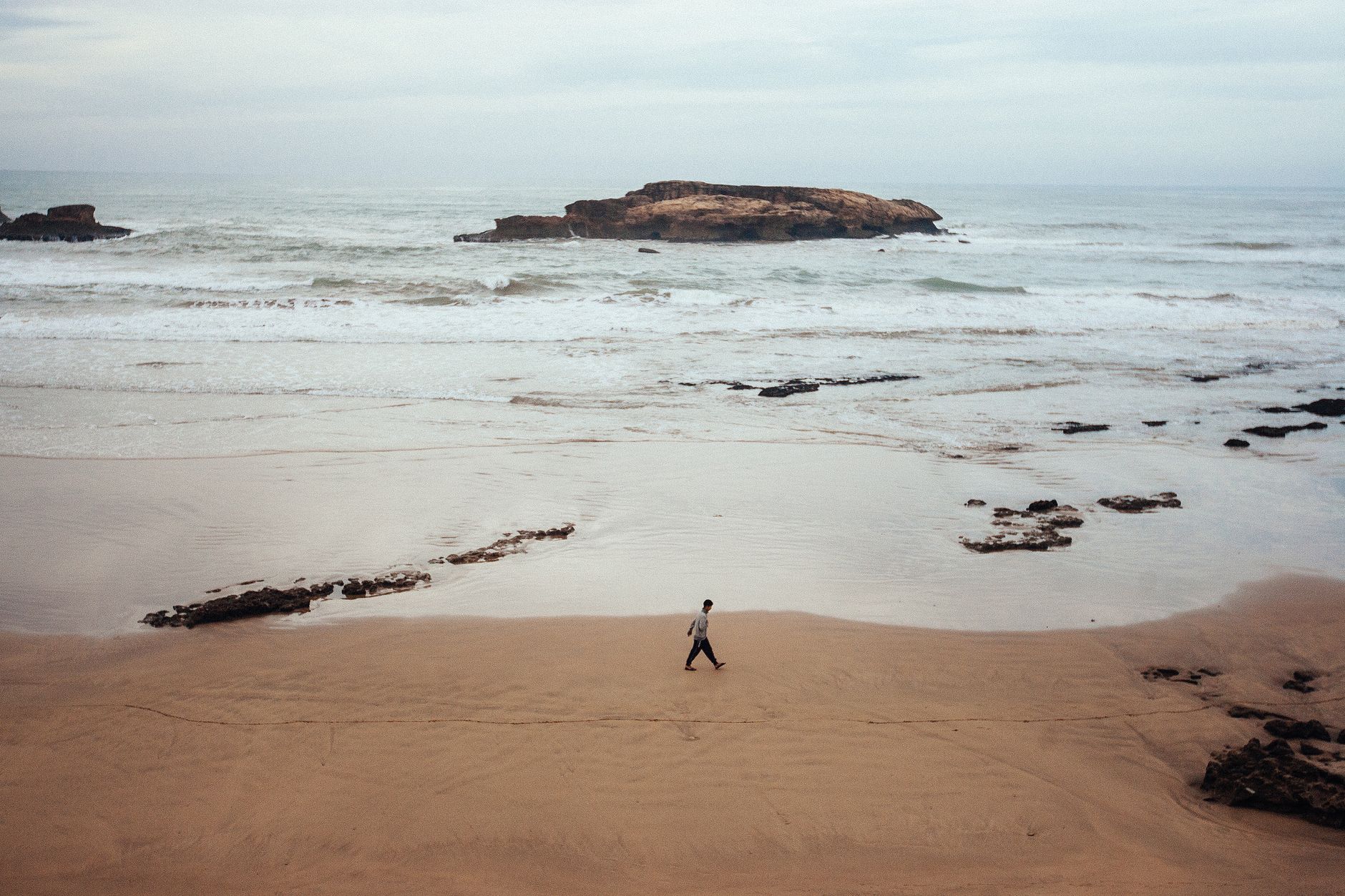
For a long beach walk, head south. Three or four kilometres from the medina, past the mouth of the Oued Ksob, a ruined watchtower called Borj al Baroud stands on the sand. The river can be forded reliably only at low tide, so check the tide before you set out.
Jimi Hendrix visited Diabat, the village just beyond, in 1969, though he did not write Castles Made of Sand there: the song came out two years earlier.
Inside the walls the wind eases. Unlike the maze of Fez, two main streets cross at right angles and run out toward the gates, so by the second afternoon you can walk it without a map. Sellers in the souks call out far less than in Marrakesh, and the lanes stay quiet after dark.
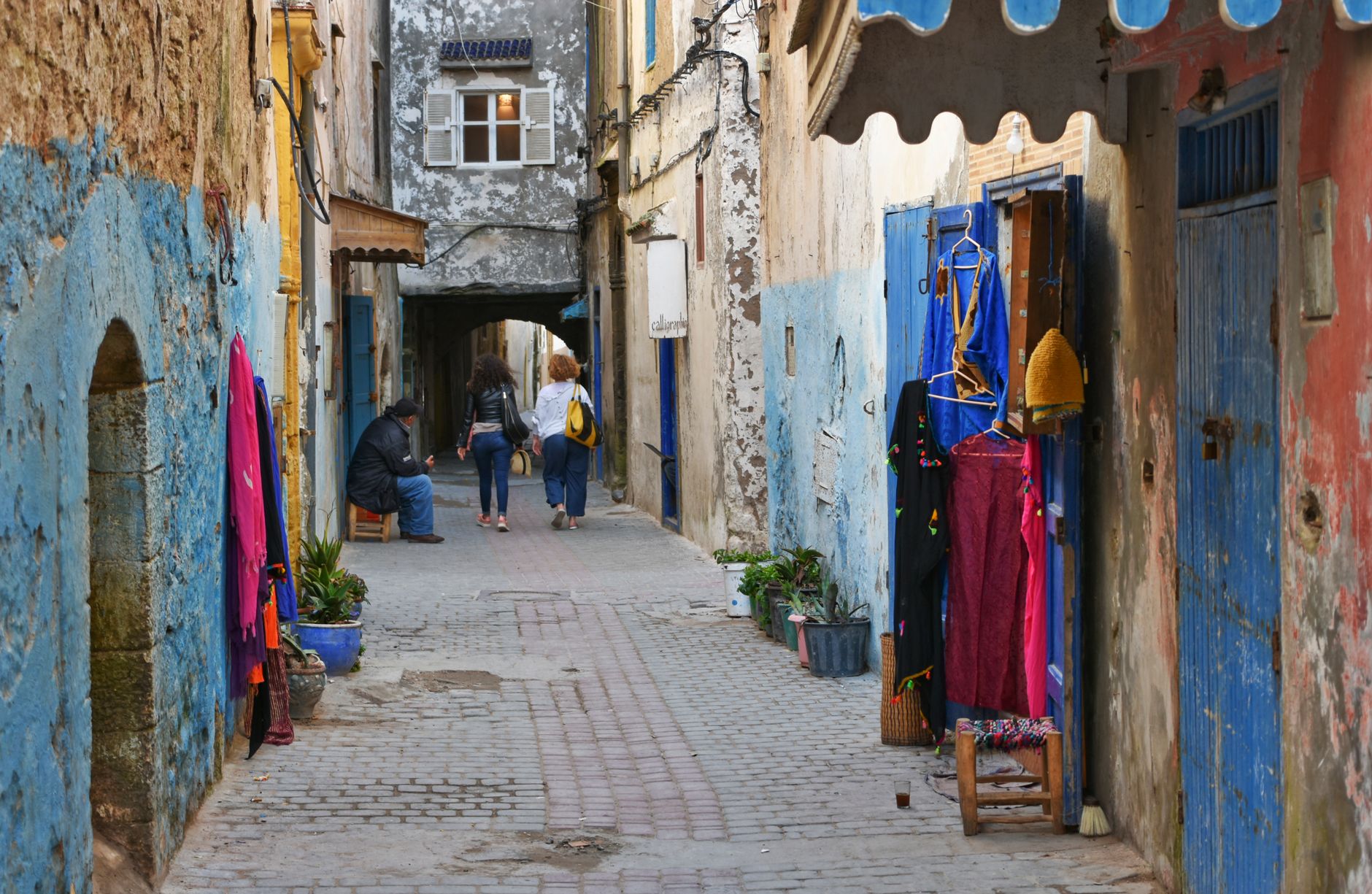
In the north-east corner, the old Jewish quarter, plaques on doorways mark the houses that were synagogues. Bayt Dakira, a heritage museum opened in 2020 with the restored Simon Attias synagogue inside, takes about half an hour.
Sleep in a riad inside the walls, so that the port, the ramparts and the beach are all a few minutes on foot. Cars cannot enter, and riads send a porter to the gate for your bags. The Supratours coach stops two minutes from Bab Marrakech; the CTM station is a flat 20-minute walk.
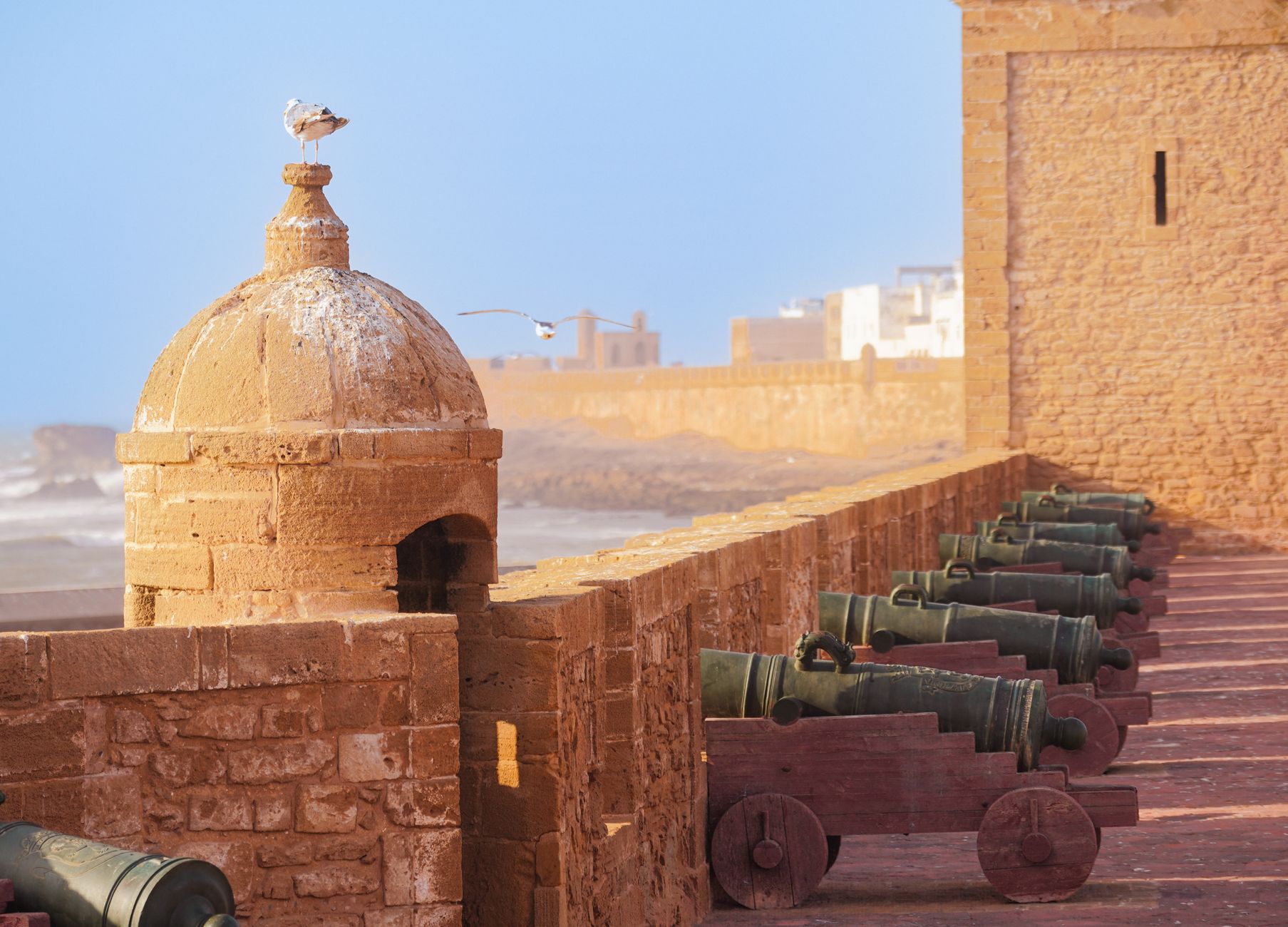
Skala du Port, the ticketed bastion at the harbour, closes at five, so climb it in daylight for the view down onto the boats. For sunset walk the free Skala de la Ville on the west side, and get there early, because the parapet fills.
The town is at its loudest for the Gnaoua and World Music Festival, from 24 to 26 June in 2027, with the main stage on Place Moulay Hassan between the port and the medina. Riads inside the walls fill months ahead for that week.