The Mona Lisa, the Winged Victory and the Venus de Milo hang a few rooms apart in a palace that holds the ancient world through to 1848. Give it two hours and a short list, not a day and every room.
What hangs here, and what doesn't
The Louvre is old art, and almost nothing else: the Egyptian and Near Eastern crypts, Greece and Rome, the Islamic galleries, the sculpture, the furniture and jewels of the French court, and the paintings from the Italian Renaissance to the French 1840s.
For Monet, Renoir and Van Gogh, go elsewhere. What the Louvre has instead is the big names before them: Leonardo, Raphael, Delacroix and David.
Monet's Water Lilies hang a short walk away, in the Musée de l'Orangerie in the Tuileries Garden.
Seven thousand years, and it stops in 1848
- 2600 BCEgypt
- 1750 BCMesopotamia
- 150 BCGreece and Rome
- 700sIslamic art
- 1500sLeonardo and Raphael
- 1830Delacroix
- 1848Where it stops
After that, go to the Musée d'Orsay, across the river.
How the museum is organised
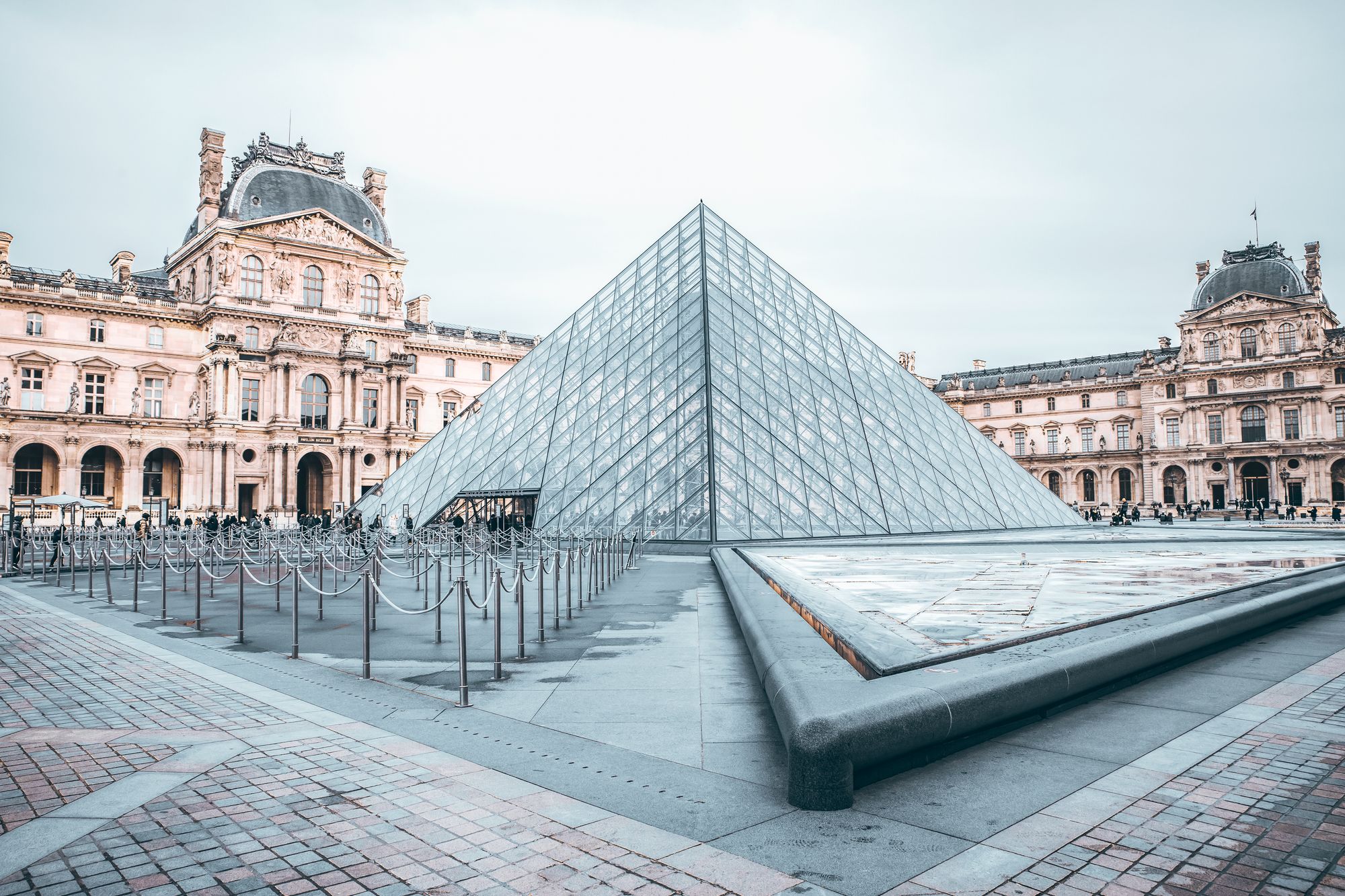
Three wings meet under the glass pyramid. Denon runs along the Seine with the famous paintings and the Italian sculpture, Richelieu along the rue de Rivoli with French sculpture, the Near East and the Dutch painting, and Sully closes the square around the Cour Carrée with Egypt, Greece and the medieval foundations.
The Grande Galerie is the spine of Denon's first floor, a long skylit gallery of Italian painting with Leonardo's Virgin and Child with Saint Anne and the Raphaels a few steps from the Mona Lisa crush. Most visitors walk straight past these, so you can usually get close.
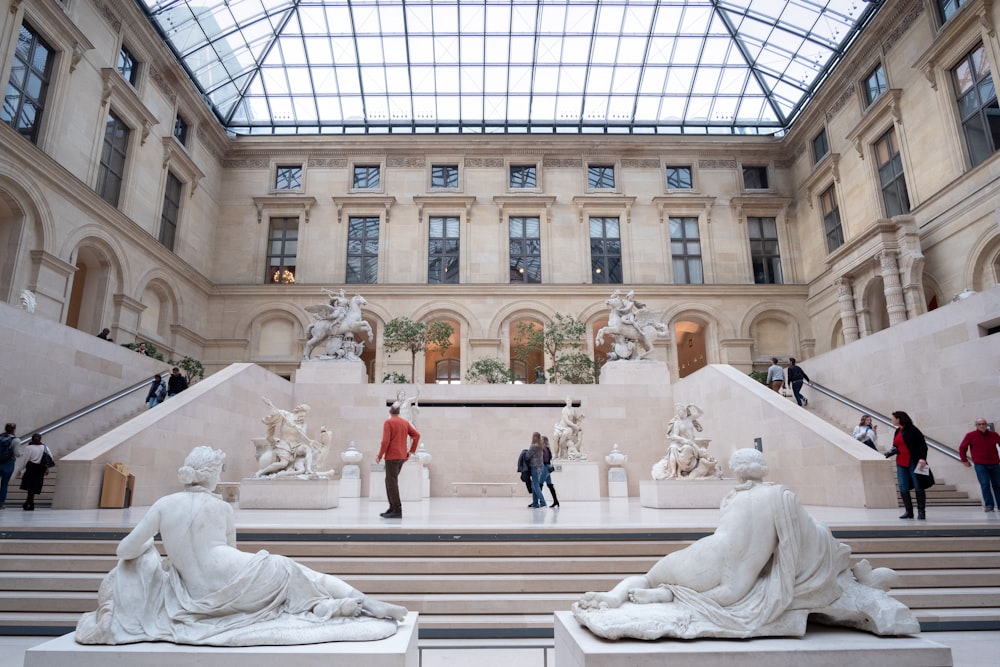
Richelieu's two courtyards are roofed in glass and filled with the statues that once stood in the royal gardens, the rearing Marly Horses among them. On a grey Paris day they are the brightest rooms in the building, and among the emptiest.
The four floors stack by kind. Level -1 is the foundations and the crypts, level 0 is stone, the Venus de Milo, Michelangelo and the antiquities, level 1 is the famous paintings, and level 2 is the quiet floor of Dutch and French painting, Vermeer included.
A room number tells you the wing and floor: the 700s are Denon's first floor, the 300s are Sully's lower floors. Pick up the free paper map at the desk under the Pyramid; it numbers every room.
When to come
The Mona Lisa room is packed by half past ten and stays that way until late afternoon. On Wednesday and Friday the museum stays open until nine, and a slot around half past five gives you three hours as the galleries empty.
Go to the Mona Lisa first, then west through the paintings, then down a floor for the sculpture. Level 2 is quiet at any hour, so save it for the middle of the day, when the floor below is at its worst.
What you came for
The works the Louvre is known for, from a Renaissance portrait to a sphinx four thousand years old. Each one with its room, why it matters, and how to see it well.
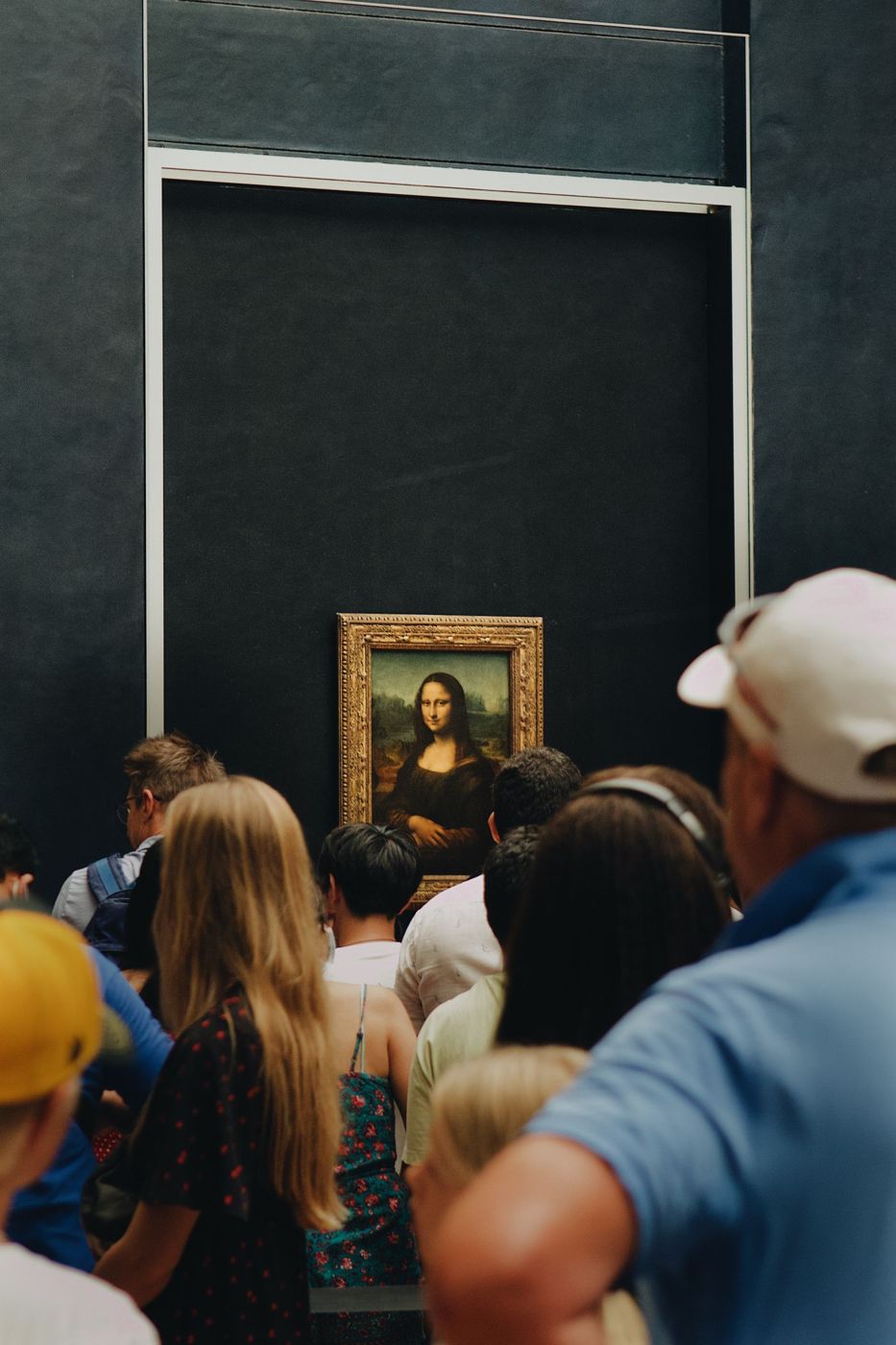
Mona Lisa
Leonardo da Vinci, 1503 to 1519
Room 711Denon wing, Level 1
Leonardo's portrait of a Florentine merchant's wife is the most famous painting in the world for her half-smile, painted with no hard edges, and for being stolen in 1911 and missing for two years. She is smaller than you expect, under 80 cm tall, behind glass and a rope. The room is calmest on a late-opening evening, after six.
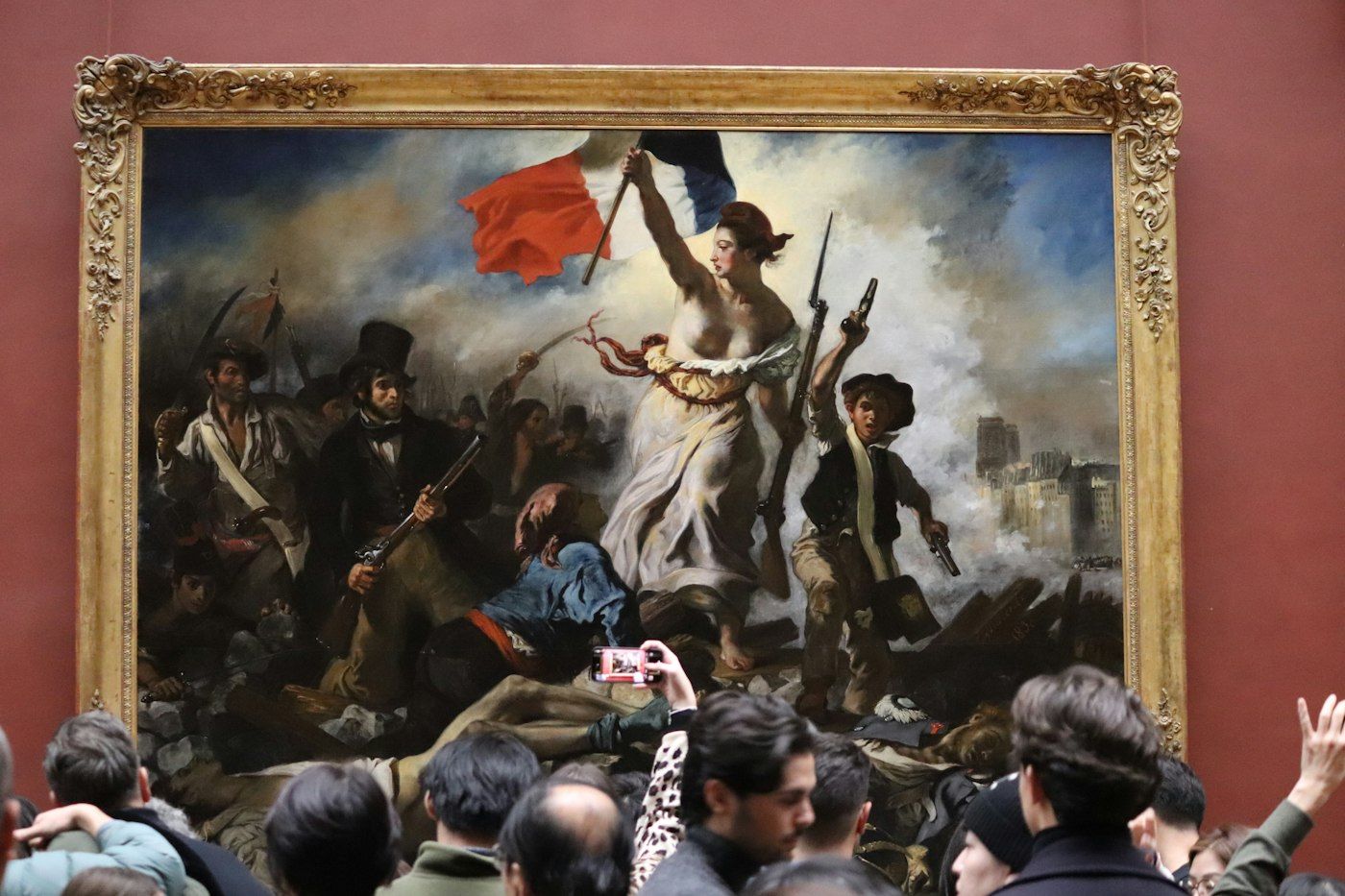
Liberty Leading the People
Eugène Delacroix, 1830
Room 700Denon wing, Level 1
Delacroix's Liberty climbing a Paris barricade with the tricolour, painted the year of the 1830 revolution and reproduced ever since on banknotes, stamps and protest signs. It hangs on the red walls of room 700, a short walk west of the Mona Lisa.
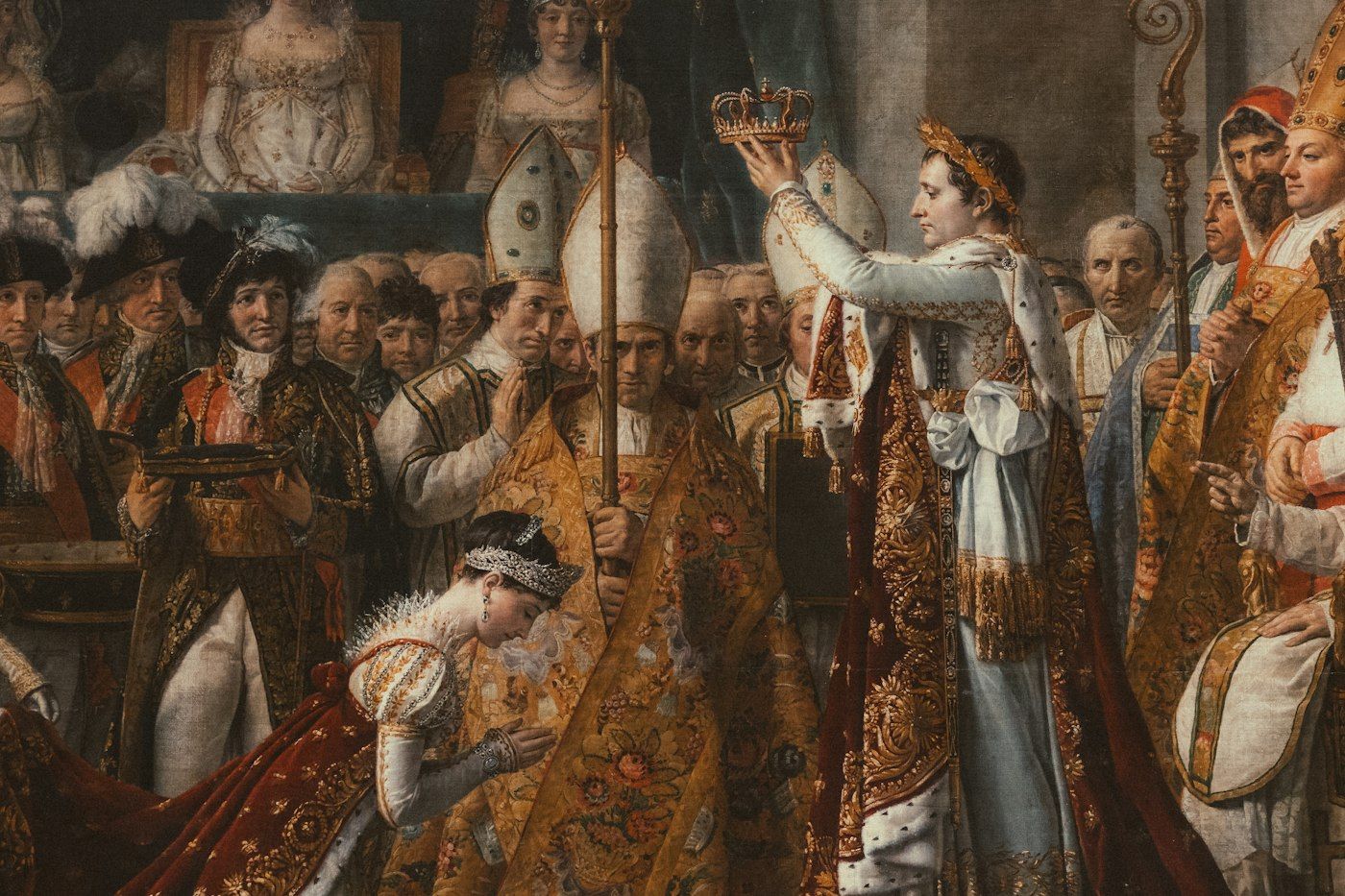
The Coronation of Napoleon
Jacques-Louis David, 1807
Room 702Denon wing, Level 1
David's record of Napoleon crowning Joséphine in Notre-Dame, almost ten metres wide and painted to order as the official version of the day. Look for Napoleon's mother in the central box: she stayed away, and David painted her in anyway.
Winged Victory of Samothrace
Greek, Hellenistic, about 200 to 175 BC
Room 703Denon wing, Level 1
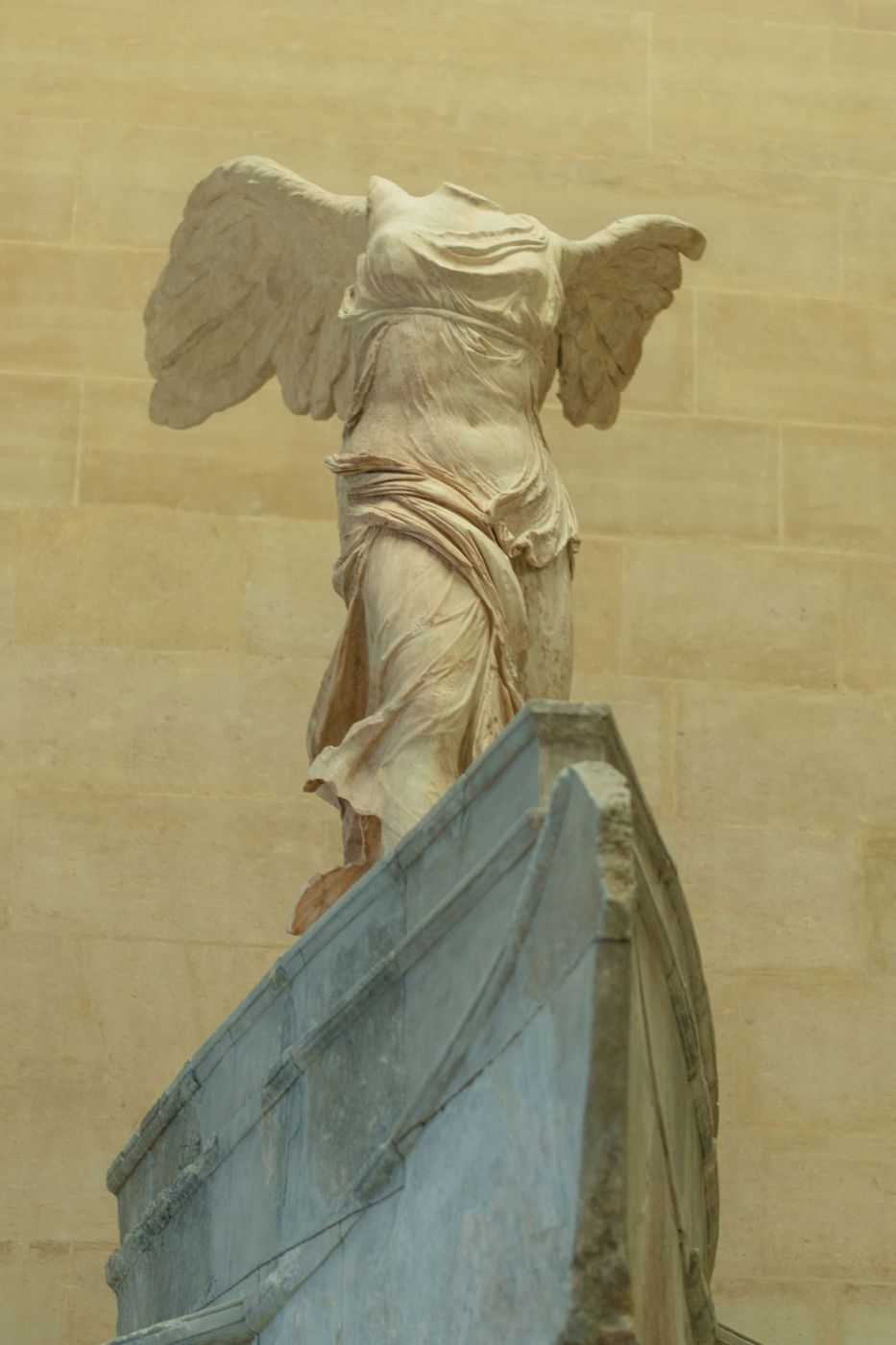
A Greek goddess of victory landing on a ship's prow, carved around 190 BC and found in pieces on the island of Samothrace, with the wind pressed into her robes. She has no head or arms. Walk up the Daru staircase towards her rather than arriving from the side.
Psyche Revived by Cupid's Kiss
Antonio Canova, 1787 to 1793
Room 403Denon wing, Level 0
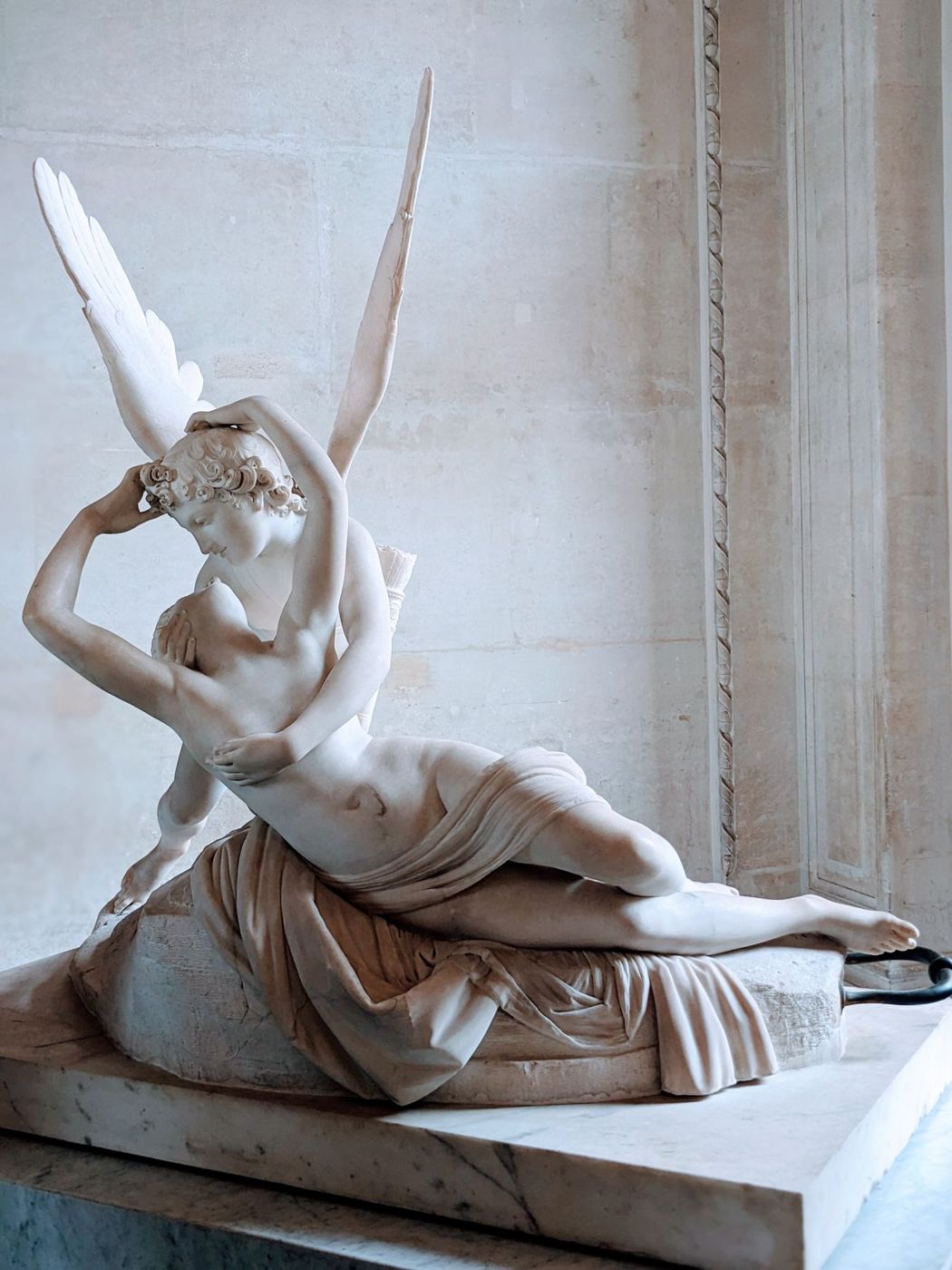
Canova's marble of Cupid waking Psyche with a kiss, carved in the 1790s and the best-loved sculpture of its age for the way the two figures lean into one another. It shares the gallery with Michelangelo's unfinished Slaves. Walk round it: the wings and arms only line up from a few angles.
Venus de Milo
Greek, Hellenistic, about 150 to 125 BC
Room 345Sully wing, Level 0
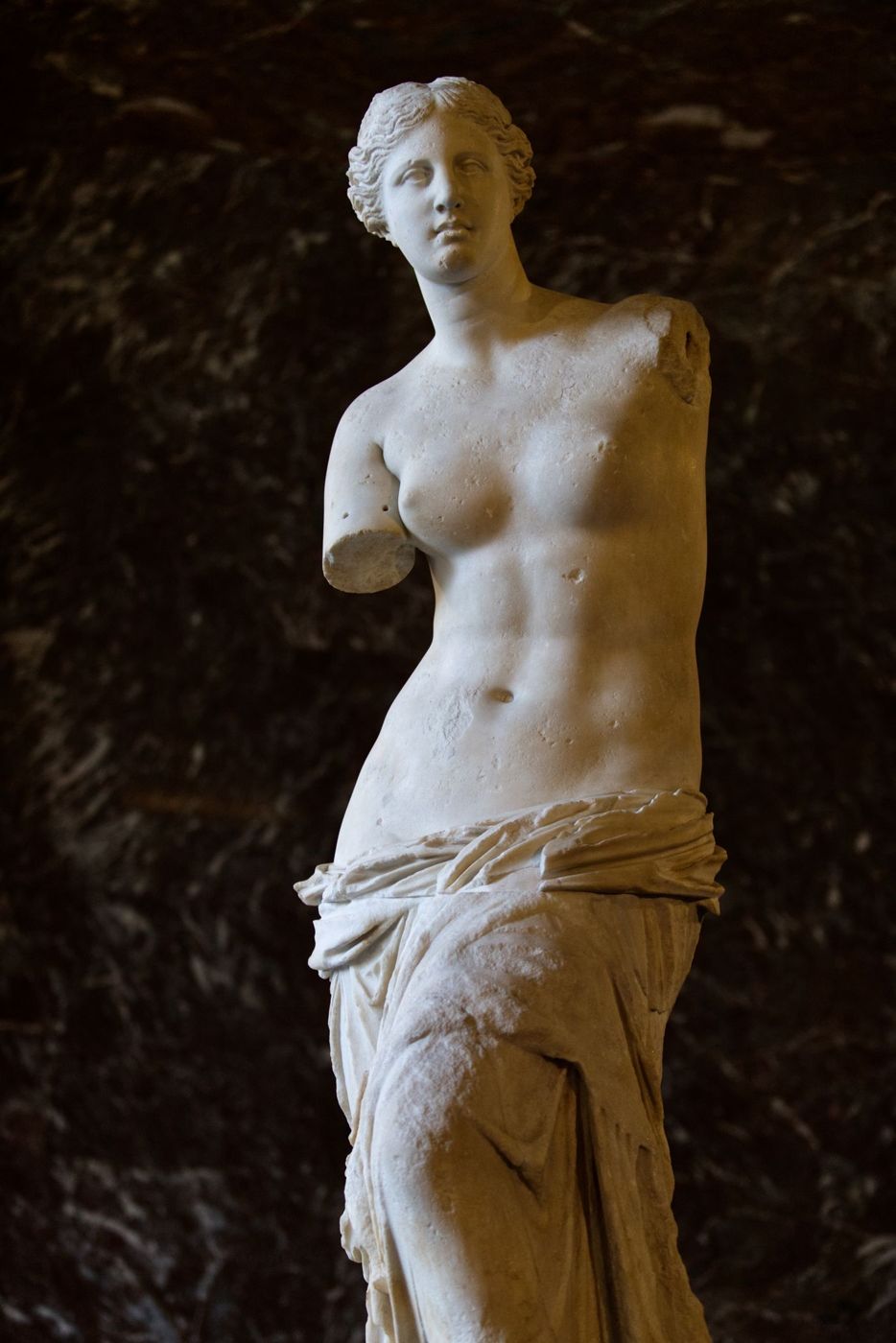
She is the most copied statue of a Greek goddess, famous as much for the missing arms as for the pose. She stands on the ground floor of the Sully wing and draws a fraction of the Mona Lisa's crowd. Walk all the way round her.
Great Sphinx of Tanis
Ancient Egypt, about 1900 BC or earlier
Room 338Sully wing, Level -1
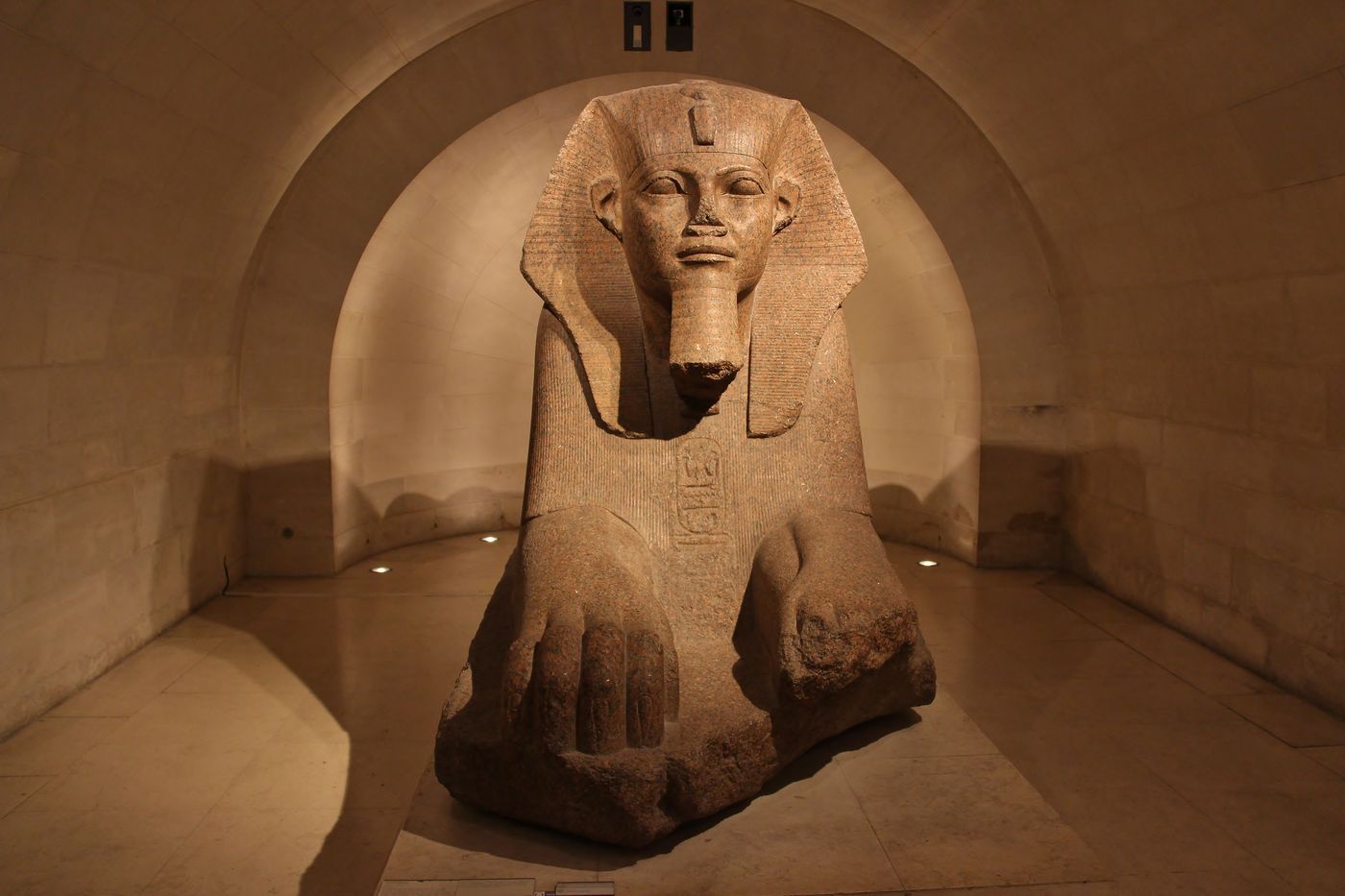
A pink granite sphinx almost five metres long, among the largest outside Egypt, with a pharaoh's face recut at least once over its four thousand years. It is lit alone in a vaulted crypt under the Sully wing. On a quiet day, start here: the Egyptian rooms lead upstairs from the crypt.
Know before you goA timed ticket from louvre.fr or a licensed tour operator gets you in. Tickets from queue sellers or other websites can be refused at the door. Bags over 55 x 35 x 20 cm are not allowed in.