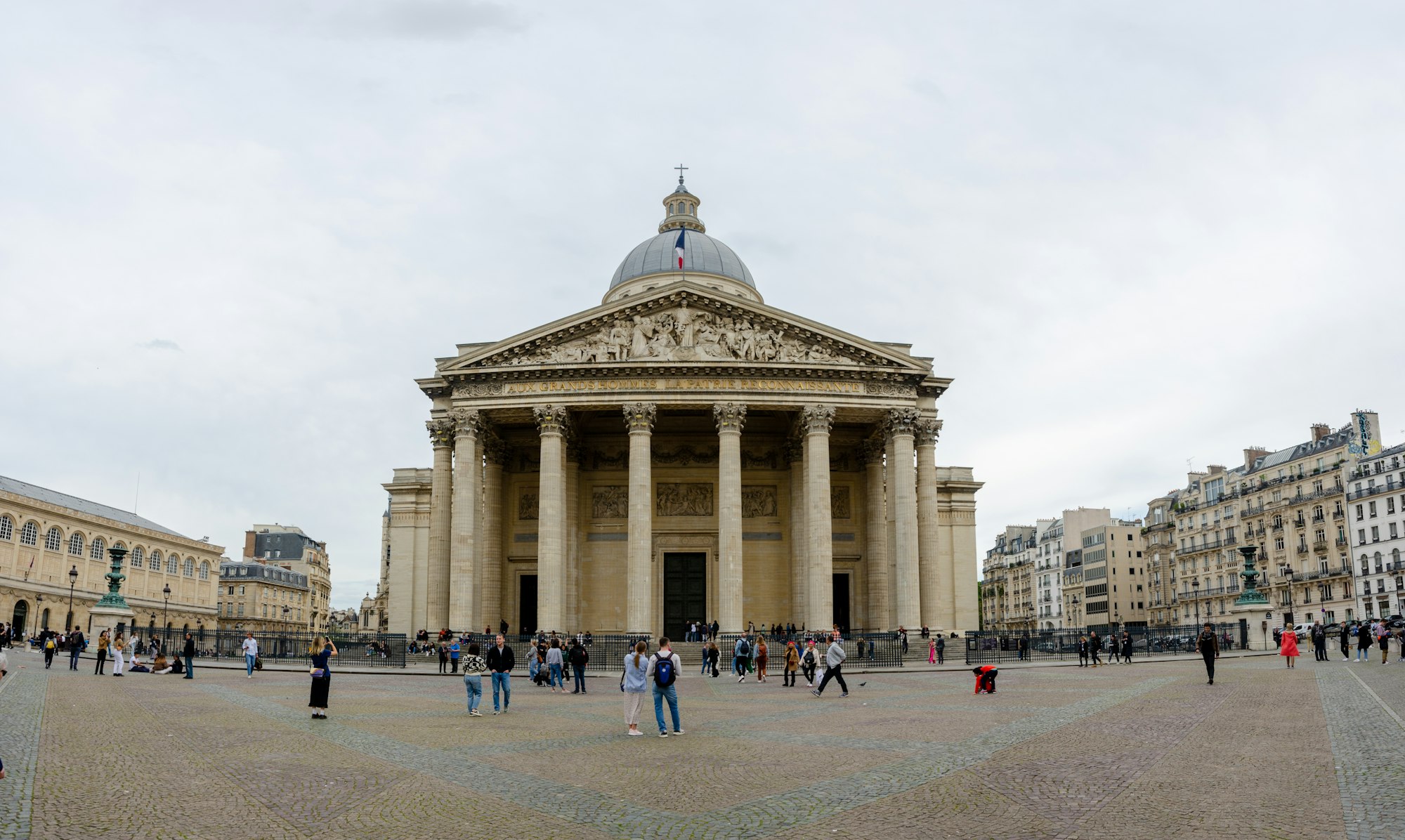
Ninety seconds on Panthéon
Worth it for two things under one roof: you can stand beside Foucault's pendulum under the dome, then go down to the crypt where Voltaire, Victor Hugo and Zola are buried.
Under the central dome hangs Foucault's pendulum, a brass and lead ball on a 67 m wire. When it is swinging, the line it traces turns slowly and comes full circle in just under 32 hours, because the floor turns with the earth beneath it. Léon Foucault first showed the experiment here in 1851, and the one hanging now is an exact copy.
Look up from the pendulum into the dome. The painting at its centre is the Apotheosis of Saint Genevieve, the saint the church was built for.
The building began as a church and is now a mausoleum for France's great citizens, where burial is still strictly limited. The crypt holds Voltaire, Rousseau, Victor Hugo, Émile Zola, Jean Moulin and Louis Braille. Find Braille's tomb: it is the only one with an explanation in Braille.
Two levels make up the visit, the nave under the dome and the crypt beneath it, and you walk both on your own. If the pendulum at the crossing is swinging, note which way it moves, because you can check it again on the way out.
Walk the side bays of the nave, where paintings and sculpture honour France's revolutionary history. A stairway behind the National Convention monument then leads down to the crypt, whose modest, quiet hallways open onto small rooms of a few tombs each. Touchscreens in the hallways tell each person's story, with English text.
Keep your voice down in the crypt, which is meant to be a silent visit, though it gets chatty when crowded. Then climb back to the nave and look at the pendulum again before you leave.
Monument staff lead a visit at 2pm or 3pm, depending on availability; ask at the entrance what language it runs in. Themed tours on women and on science run on reservation, as does a general tour in French and English. A guide suits you if you want the stories behind the crypt's names; go on your own if you mainly want the pendulum and the dome.
Bring only a standard backpack, since there is no cloakroom or locker and nothing larger is accepted.
Leave tripods, drones, helmets, scooters and their batteries at home, along with food and drink. Weekends and high season are the busiest times, and entry is free on the first Sunday of January, February, March, November and December.
Explore the rest of Paris
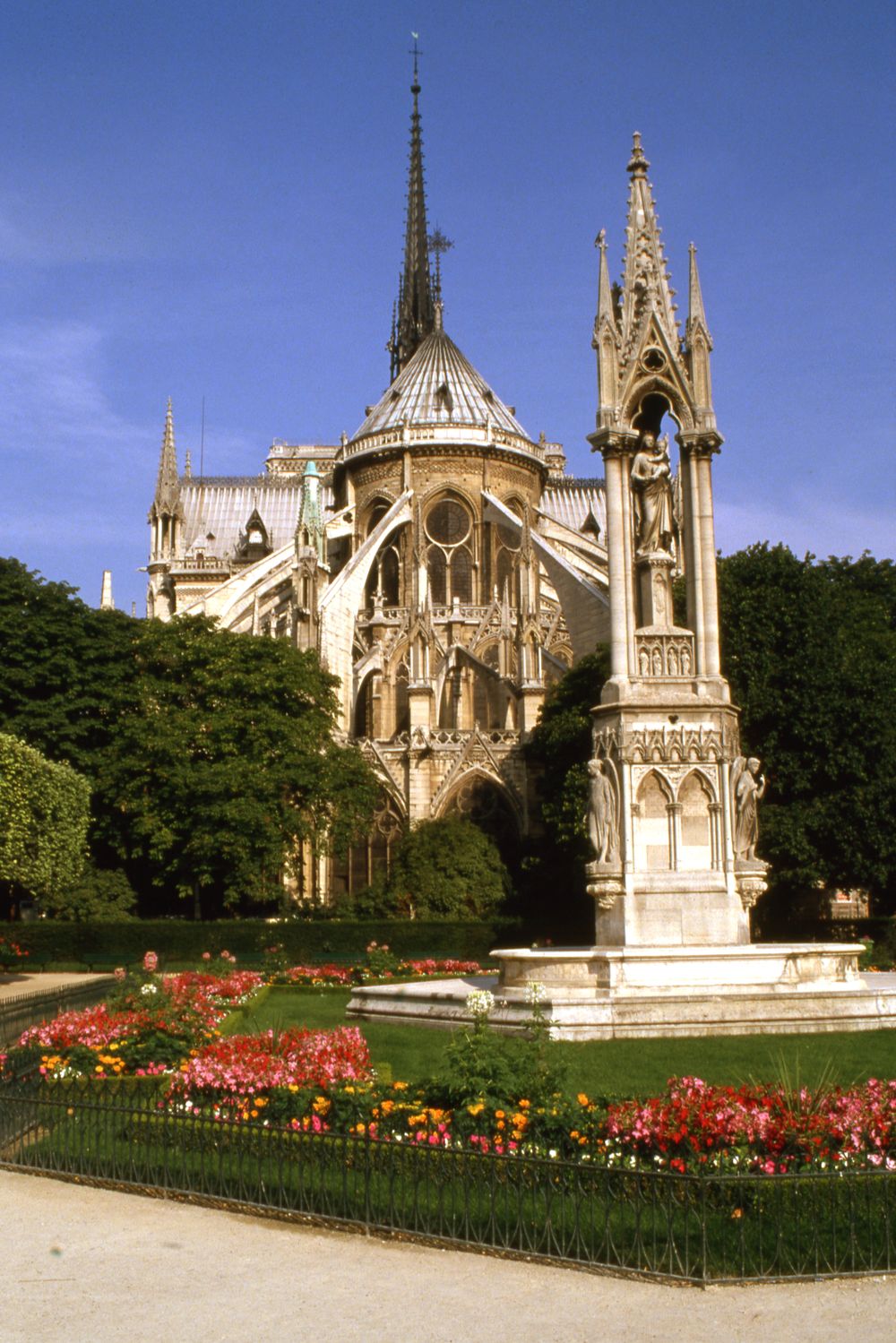
A Gothic cathedral on the Île de la Cité, known for its rose windows and flying buttresses. It reopened in December 2024 after the 2019…
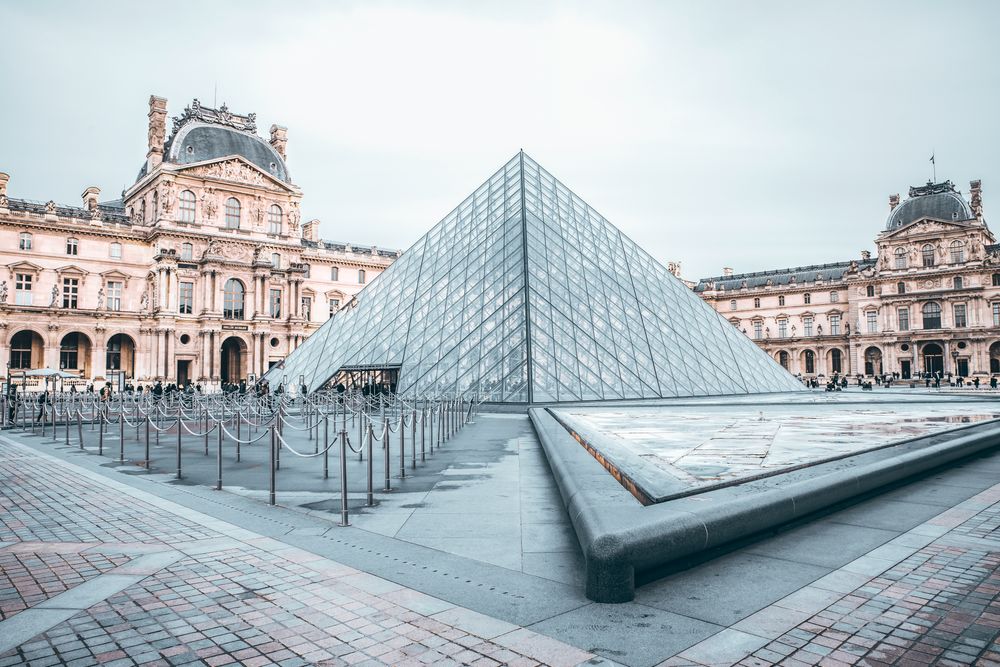
The former royal palace holds roughly 35,000 works on display, including the Mona Lisa, the Venus de Milo and the Winged Victory of…
The city history museum occupies two connected Marais mansions and covers Paris from prehistory to the present, with French Revolution…