Ninety seconds on Pont Alexandre III
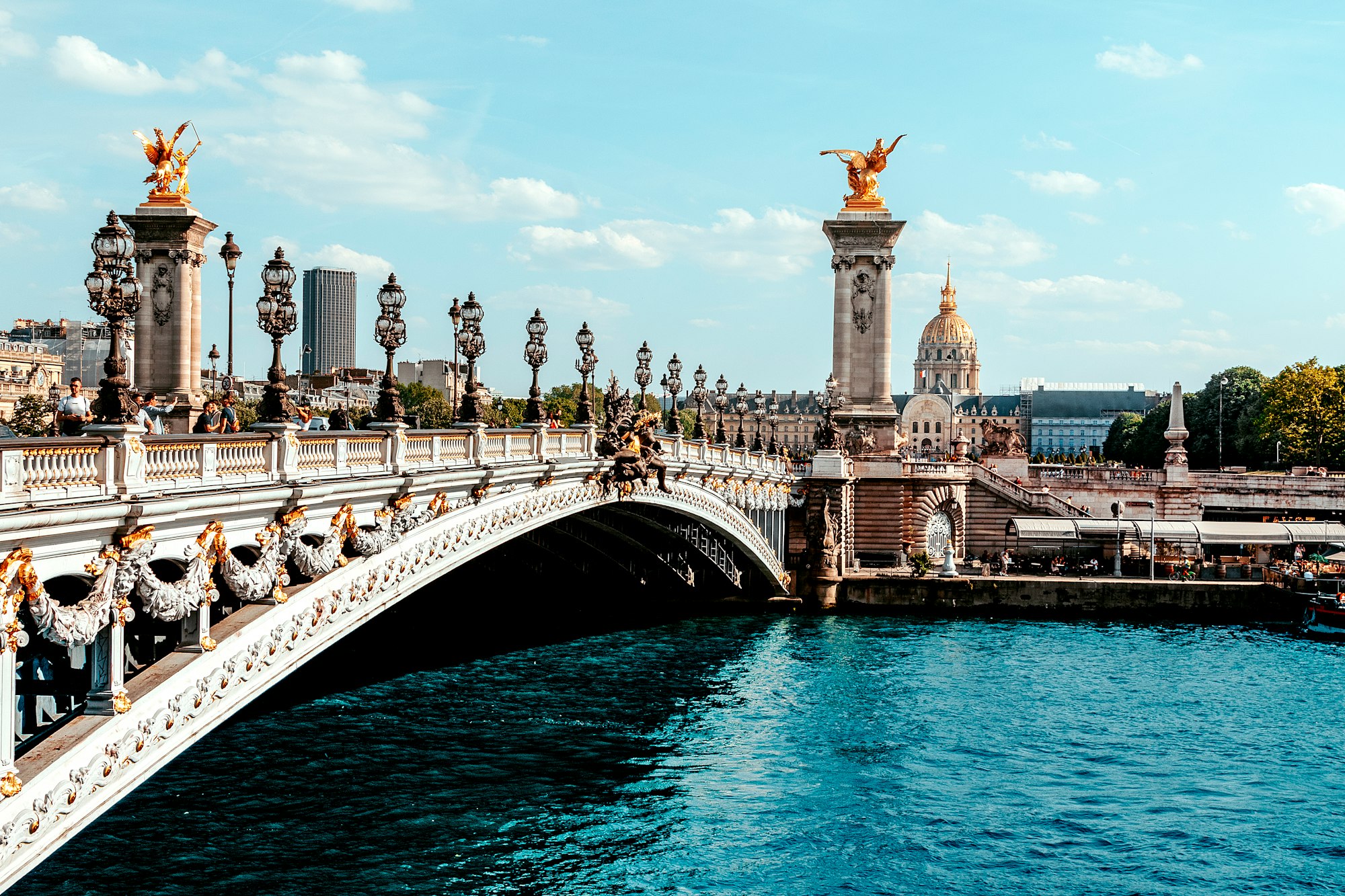
The bridge has gilded figures at both ends, and you walk between them with the Invalides on one bank and the Grand Palais on the other. Cross once by day for the carving and again at night, when the gold is lit.
Start with the tall corner pillars, two on each bank. Each is crowned by a gilded Fame holding back Pegasus. The pillars are heavy on purpose: they anchor the single low arch, kept low so it would not block the view between the Champs-Élysées and the Invalides.
On the Right Bank the Fames stand for the Sciences and the Arts, and on the Left Bank for Commerce and Industry. Below them, each base carries an allegory of France in a different era, from Charlemagne through the Renaissance and Louis XIV to modern times. Georges Gardet made the lion groups at the pylons.
The keystones at the centre of the arch carry hammered copper reliefs: the nymphs of the Seine, with the arms of Paris, facing the nymphs of the Neva, with the arms of Imperial Russia. The bridge is named after Tsar Alexander III, and those nymphs are its memorial to his alliance with France.
Along the parapets run copper water spirits and seashells, rows of small lampposts and four candelabras wound with cupids and sea monsters. The bridge was inaugurated for the 1900 Exposition Universelle, as were the Grand Palais and Petit Palais beside it. Its stone has since been restored to the original pearl grey.
The whole visit is a slow crossing, out along one sidewalk and back along the other. Traffic runs down the middle, so keep to the sidewalks. Start under the gilded pillars on whichever bank you reach first.
Look down along the parapets as you cross: the small carving is easy to miss, with lions, cherubs, nymphs, water spirits, fish, seashells and sea monsters. From the middle of the bridge, look down the river for the Eiffel Tower.
On both banks, stairs lead down to the river quays. Around sunset, tour groups and wedding shoots crowd the sidewalks.
If you are taking a Seine boat anyway, Bateaux Mouches and Batobus both pass under the arch, and from the water you look up at the gilded sculptures. For an empty bridge and soft light, cross early in the morning; before dawn there can be mist on the river.
After rain the stone gets slick, so watch your step on the quay stairs. If you shoot at night with a tripod, keep it tight to the railing so people can pass.
Explore the rest of Paris
Built as a Tuileries greenhouse, it was adapted to display Monet's eight Water Lilies murals in two oval rooms lit from above, with the…
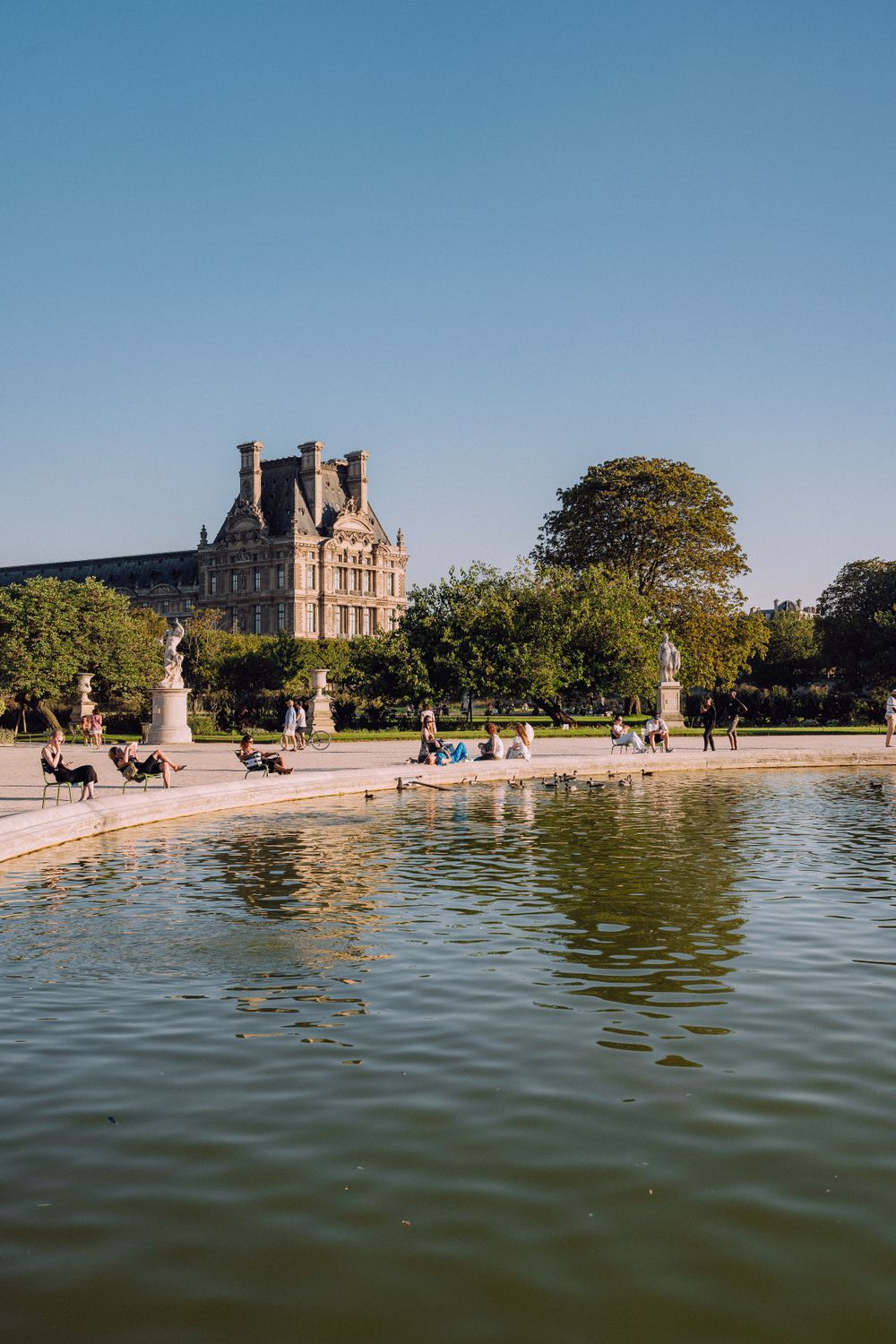
Le Nôtre's garden of 1664 between the Louvre and the Concorde, the axis the whole city is laid out on. The green chairs around the ponds…
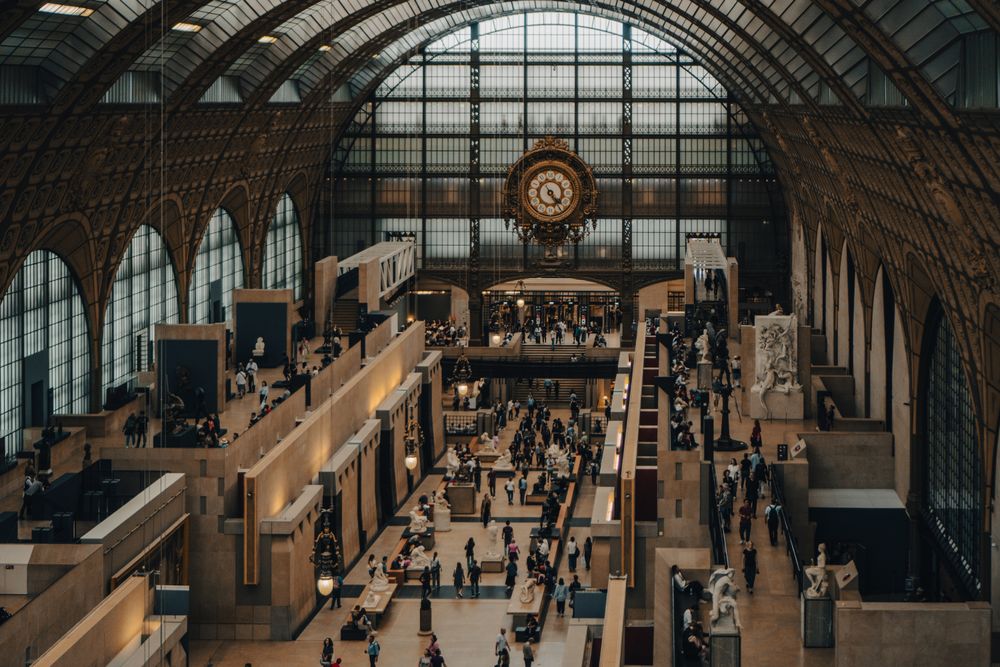
Housed in the 1900 Gare d'Orsay railway station, it holds the world's largest collection of Impressionist and Post-Impressionist painting,…