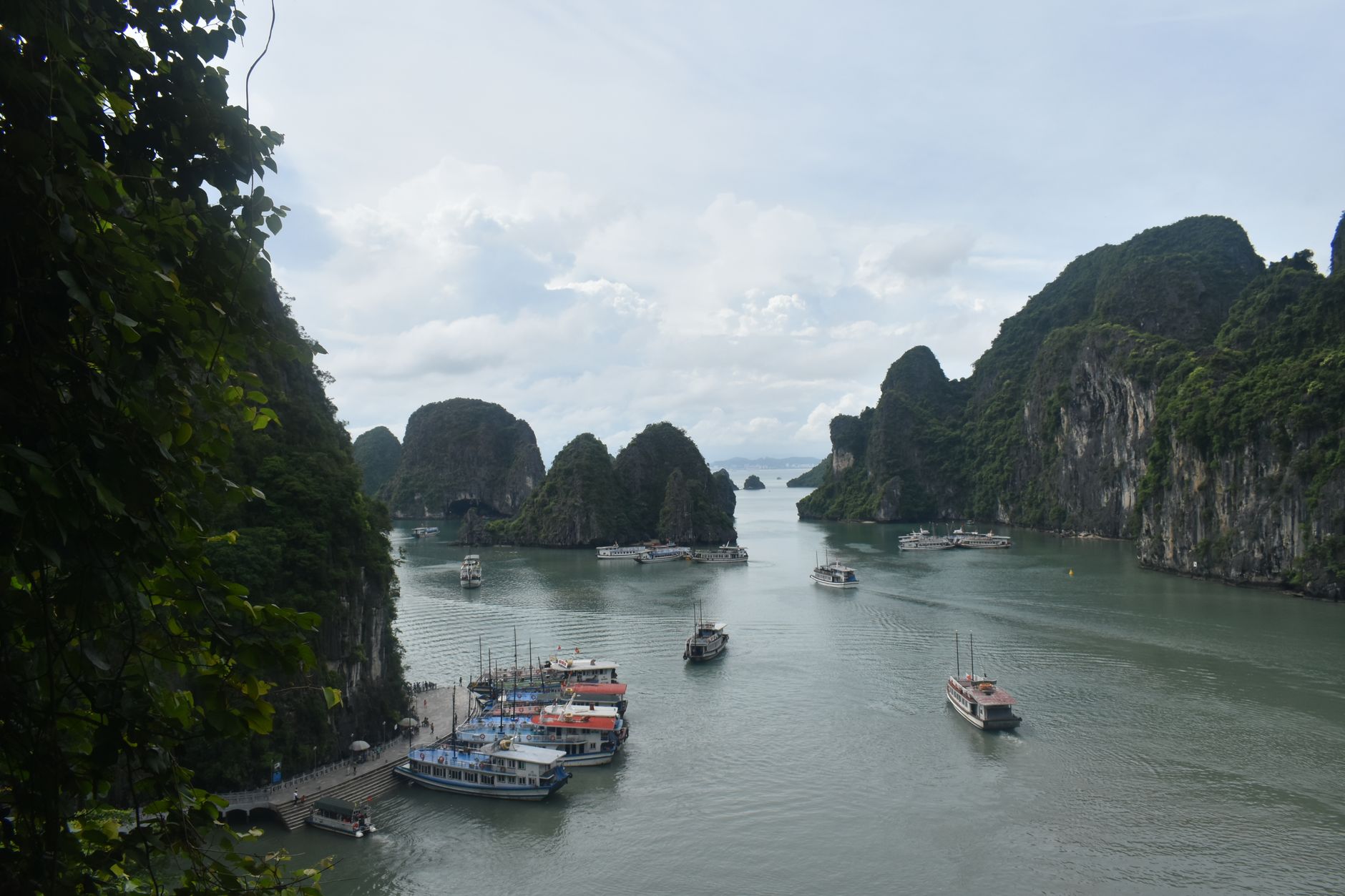
In 1288 a Vietnamese general named Tran Hung Dao had timber cut and sharpened on the islands of this bay, tipped with iron, and hidden in the bed of the Bach Dang River. Vietnamese boats picked a fight with a pursuing Yuan fleet at high tide, then ran. As the tide dropped the stakes came up through the Mongol hulls and the invasion ended in the mud. Dau Go Cave, on Dau Go island, takes its name from that operation: the Cave of Wooden Stakes. The detail is worth carrying out of Hanoi, because the bay has been used in earnest as a defensive wall, and the same maze of towers and shallows that hides a cruise boat today once hid an army.
The rock is older than the story by an almost comic margin. The grey limestone was laid down as marine sediment over roughly 500 million years, when this corner of the Gulf of Tonkin sat under a warm shallow sea. The landscape carved out of it is young: about 20 million years of hot, wet, relentless dissolution, cutting the plateau into clusters of conical peaks and isolated towers, then partly drowned as the sea came up around them.
Geologists rate it the most extensive and best studied example of marine invaded tower karst on earth. The working numbers are 1,969 islets across about 1,553 square kilometres, with a strictly protected core of 334 square kilometres and 775 islands. UNESCO listed the bay in 1994 for its appearance and came back in 2000 to list it again for the geology, then extended the property in 2023 to take in the Cat Ba archipelago to the south.
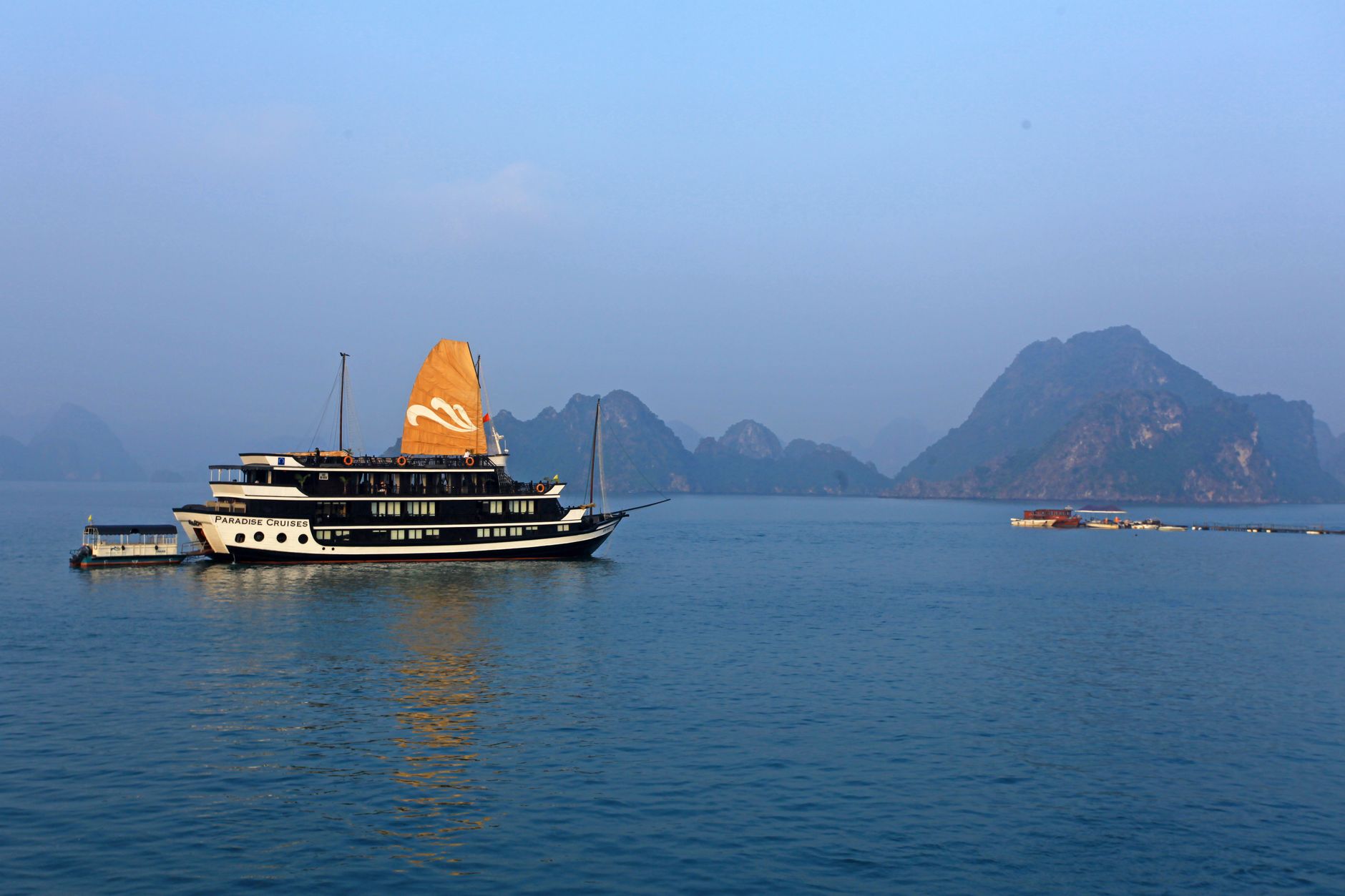
That double listing is also the problem. Ha Long draws on the order of 4.8 million visitors a year, and on an ordinary day more than 500 tourist vessels are working the water. They are not evenly spread. Almost all of them run the same short central circuit out of Tuan Chau, which means the congestion is concentrated into perhaps three or four anchorages and two famous stops. Sail ninety minutes off that line and the traffic thins out by an order of magnitude. Stay on it at eleven in the morning and the jade water is a car park.
This is the case against the day trip, and it is a strong one. Hanoi's Old Quarter is about 130 kilometres away, roughly two and a half hours each way on the Hanoi to Hai Phong expressway. A day tour therefore spends five hours in a van to buy about five hours afloat, and it spends them at the hour when every other day tour is doing the same thing, at the same two sights. The return leg is the part nobody costs in. Traffic on the Hanoi approach regularly adds an hour to the evening run, which turns a five-hour outing on the water into a thirteen-hour day.
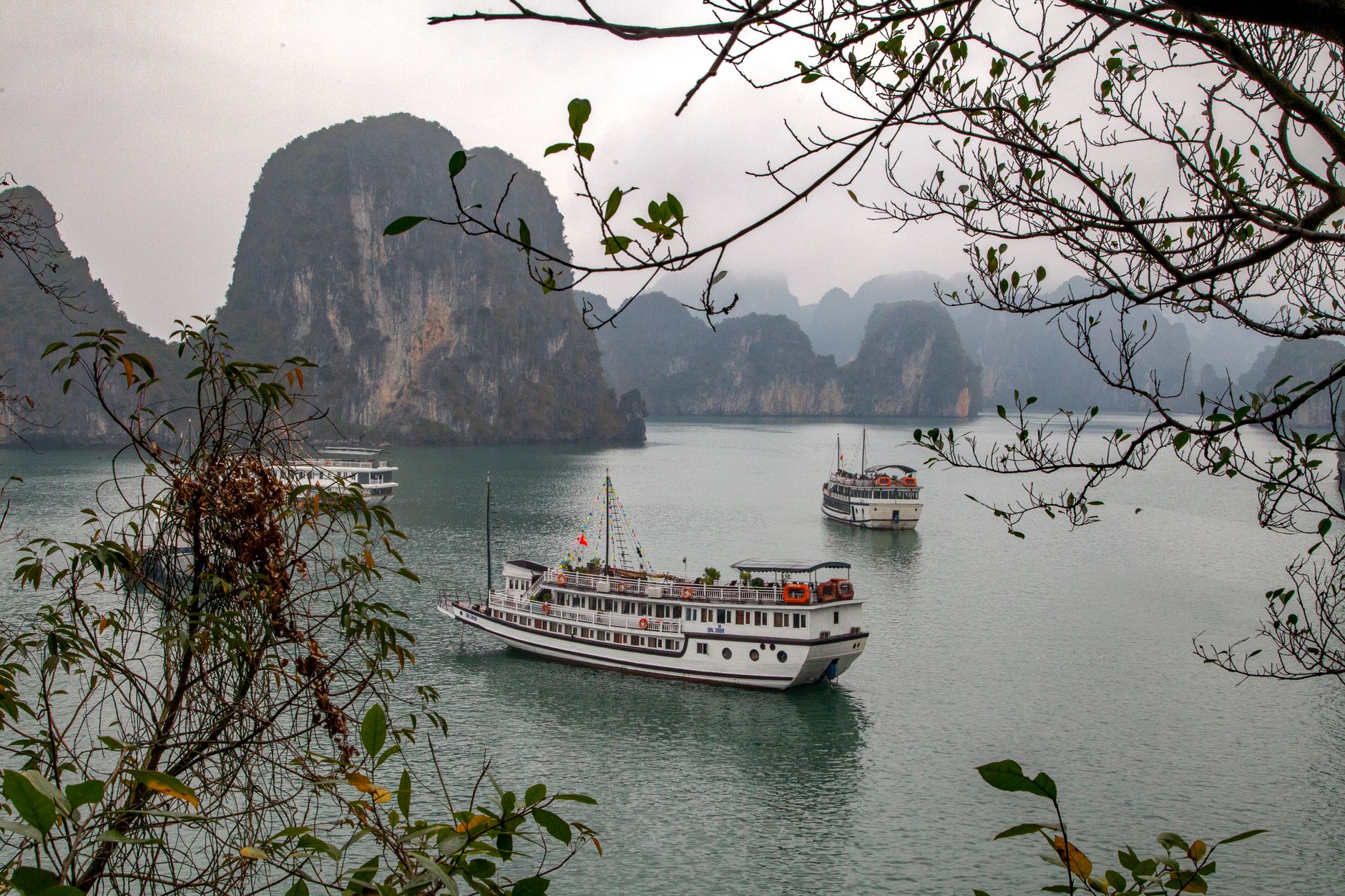
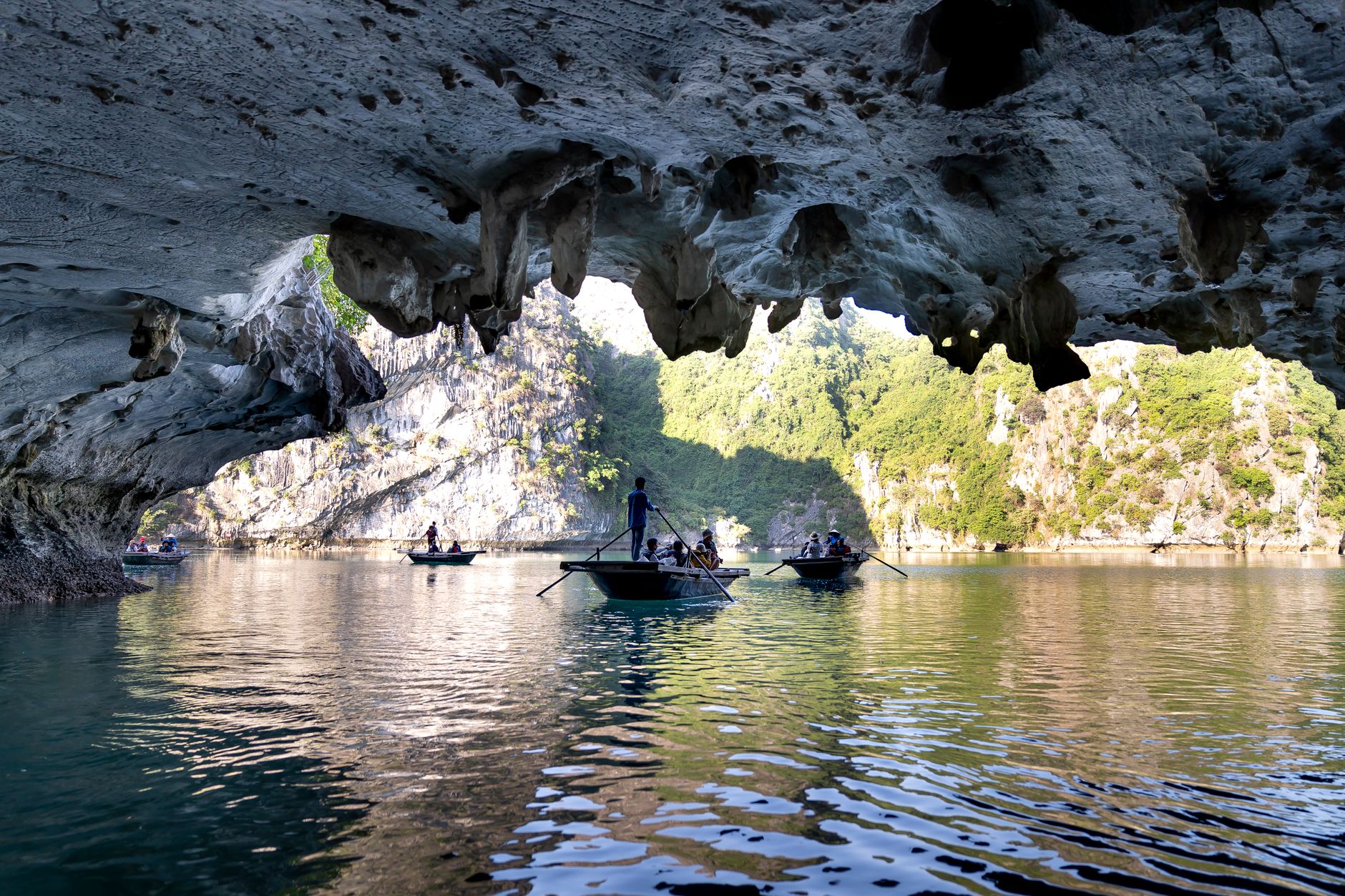
The two sights deserve their reputations and reward better scheduling. Sung Sot, the Surprise Cave on Bo Hon island, is a genuine cathedral, some 10,000 square metres of chambers with a rising floor and a final room that opens like an auditorium. It is also a one-way conveyor: guides move groups single file, nobody stops, and at peak the shuffle takes the drama out of it.
Ti Top island is the postcard, more than 400 stone steps to a platform above a crescent beach, ten to fifteen minutes at an unhurried pace. The staircase is narrow, and between roughly half past ten and half past two it becomes a queue in full sun. Both reward an early morning or a late afternoon slot. Boats that schedule them for the middle of the day are usually building around the transfer times rather than around the light, and it is a fair question to ask an operator before booking.
Bai Tu Long is quieter for an administrative reason. Fewer overnight permits are issued there.
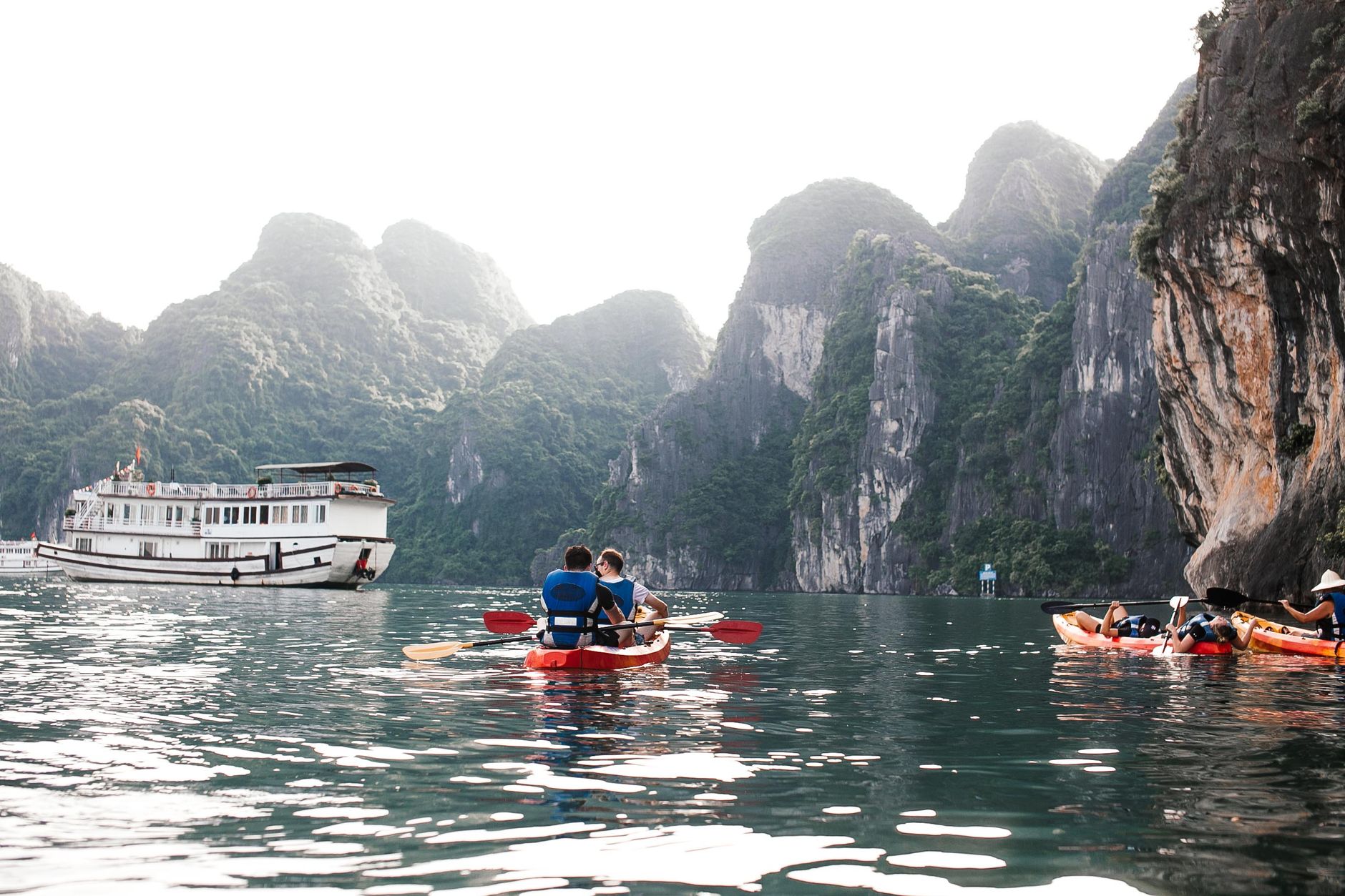
Two neighbouring stretches of water share the identical geology and carry a fraction of the fleet. Bai Tu Long lies to the northeast and is the emptier of the two, largely because the permitting for overnight boats there is tighter. Travellers on the multi-day boats report counting fewer than ten other vessels across a whole afternoon, against the hundreds running side by side on the central route. Lan Ha, to the south off Cat Ba island, suits swimmers better: sheltered beaches, calmer water for kayaking, and small floating fishing hamlets that have not been turned into a scheduled stop. Quieter is the honest word for both. Cat Ba's boats leave the pier in a single morning wave, and five or six of them may end up sharing an anchorage by evening.
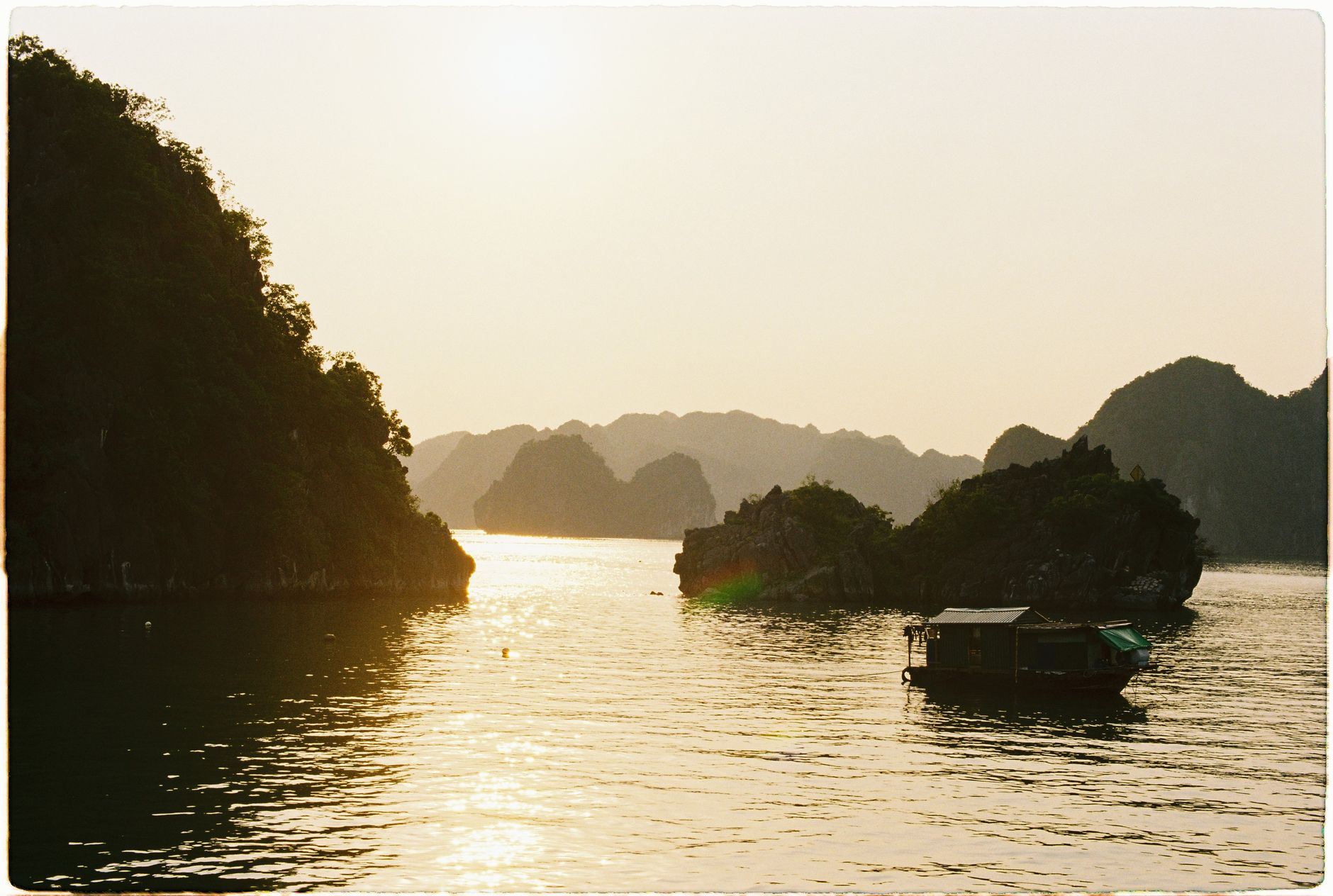
Length matters as much as location. A one-night cruise is mostly transfer, lunch, one cave, one paddle and a sunset, and the common complaint about it is that it ends just as it starts to work. Two nights changes the arithmetic. The boat can push properly clear of the crowded zone on the first afternoon, and the whole of day two belongs to lagoons, sea caves and swimming rather than to logistics. The second morning is the one that pays: still water, thin light, almost nothing moving. It costs an alarm before six on a boat with thin cabin walls, and breakfast is not served until afterwards. Three nights is where most travellers find the returns flatten. Book the middle option, on a small boat, and spend the saved night in Hanoi instead.
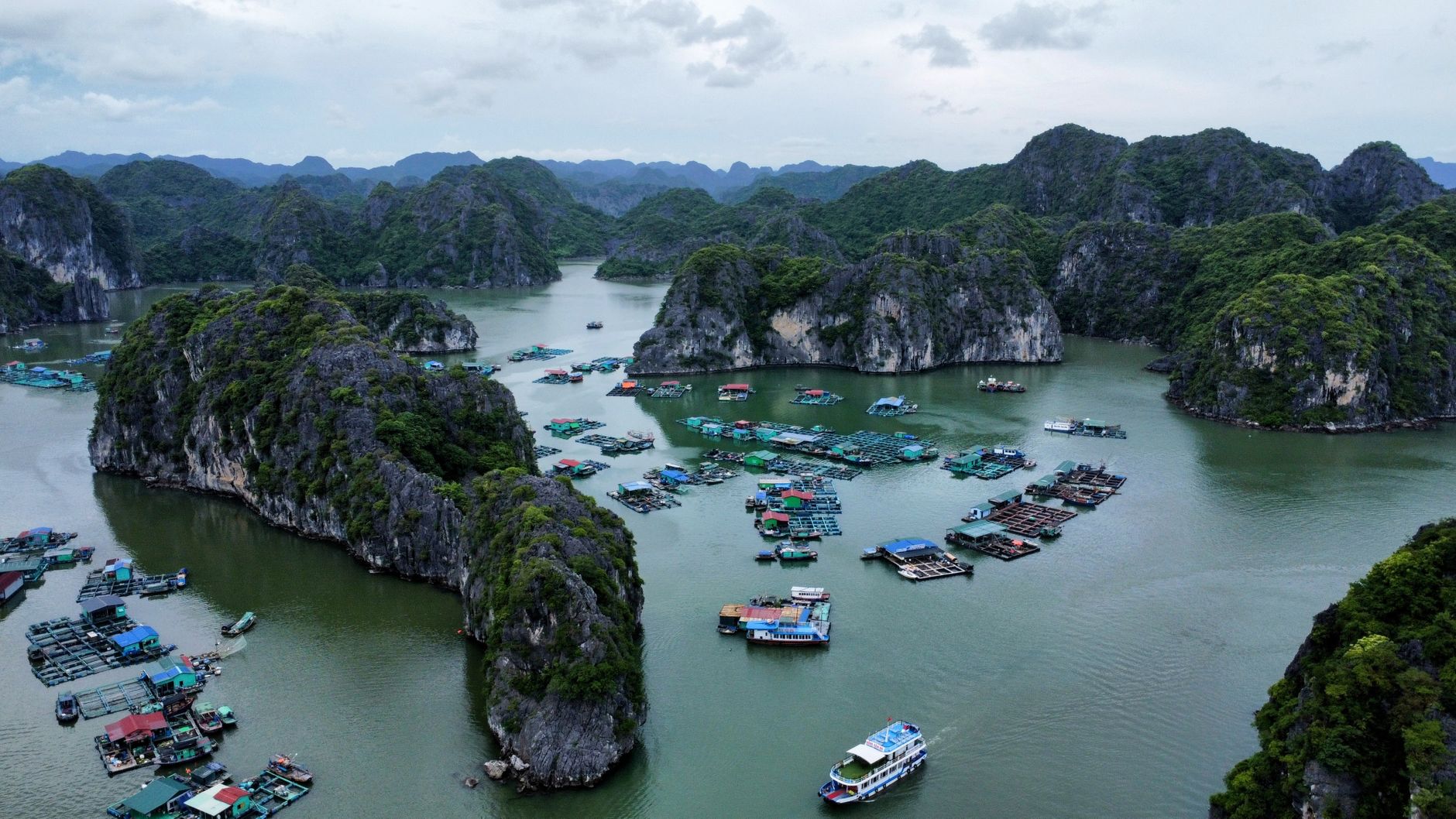
Those villages are the bay's least understood attraction. Roughly 1,600 people live afloat across four settlements, Cua Van, Ba Hang, Cong Tau and Vung Vieng, working a seascape that holds some 200 fish species and 450 kinds of mollusc. Cua Van is the big, visited one and can feel like a scheduled stop. Vung Vieng, reached by bamboo rowing boat from a Bai Tu Long anchorage, is smaller and still functionally a working hamlet with a pearl operation attached. These are houses, and the rowers who take visitors between them mostly live in them. Ask before photographing people at close range in either village.
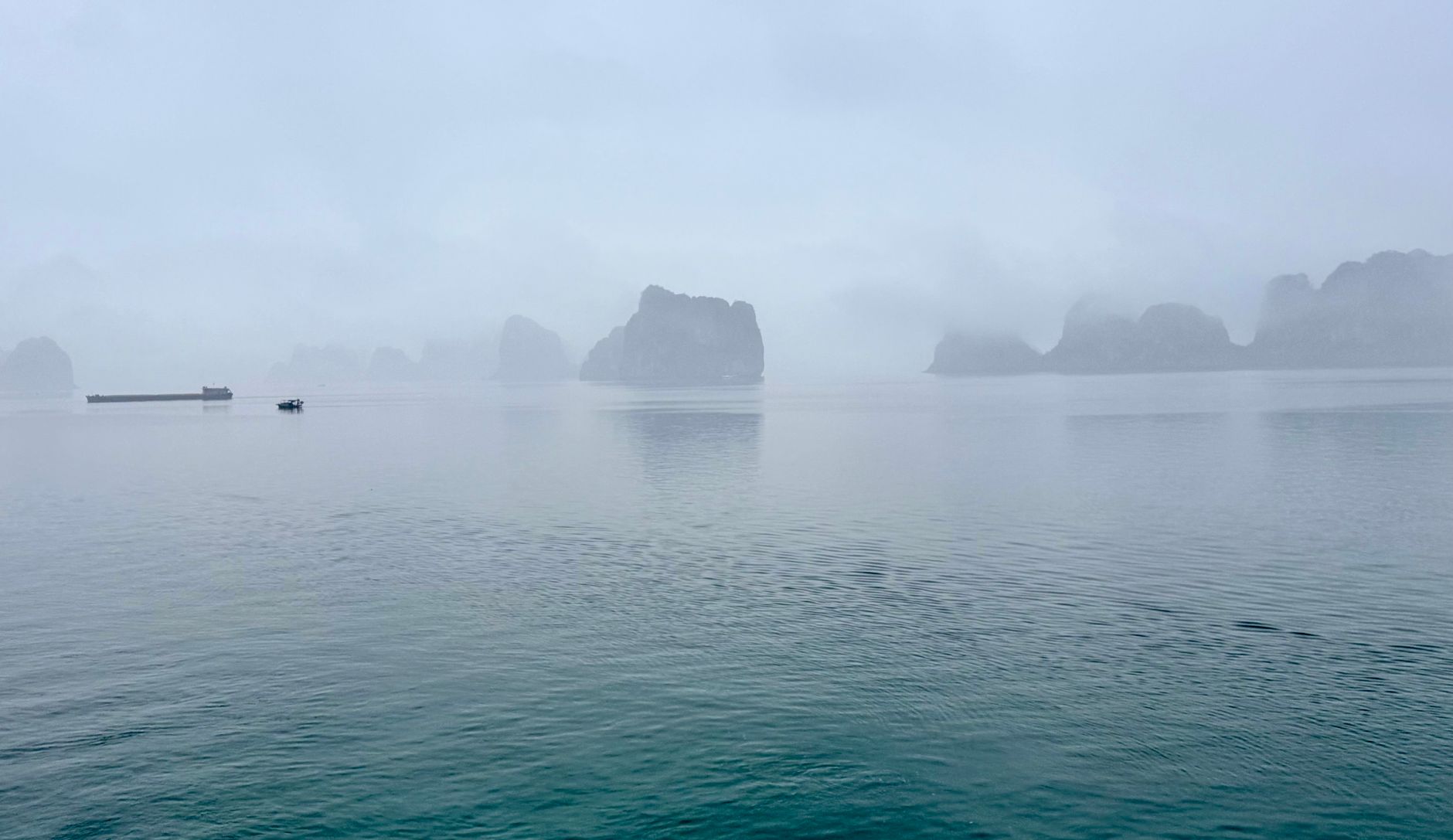
Season decides which bay you actually get. October and November are the clear favourite: dry air, long visibility, sea warm enough to swim and the domestic holiday rush finished. March and April make a decent shoulder. June to August is hot and good for swimming but coincides with both the Vietnamese holiday peak and typhoon season, when sailings are cancelled outright and storms wash a great deal of floating plastic into the bay for days afterwards. December and January bring cool grey mist, which photographs beautifully and hides everything.
The rubbish is the standing cost of the place. Runoff from the coal ports along this coast and the sheer weight of 500 boats a day are documented pressures on the water, and collection crews work the central bay without ever getting fully ahead of it. None of that is hidden from a deck. The bay is a working seascape with coal terminals at one end and a strictly protected core zone of 334 square kilometres at the other, and a trip planned around that description will be closer to what turns up than one planned around the brochures.