 Submit a photo
Ninety seconds on Geysir
Strokkur, the active geyser in the field, usually erupts every 5 to 10 minutes, and on rare occasions the wait reaches 15. Geysir itself erupts far less often. A double eruption is followed by a longer gap than a single one, and wind lengthens the interval too.
No. Geysir and Strokkur are two separate geysers in the same Haukadalur field. Because Strokkur erupts so often, online photos and videos of it are regularly labelled as Geysir.
Most visitors spend 30 to 60 minutes at Strokkur. The main trail through the whole Haukadalur field covers about 1.7 km and takes 45 to 90 minutes, depending on the length of each stop.
No. The Geysir geothermal area charges no admission fee and is open 24 hours a day. Visitors walk the marked paths at their own pace, with no guide needed.
Geysir is about 107 km from Reykjavík by Route 36, or 115 km by Route 1 and Route 35, and both drives take roughly 90 minutes. Both roads are paved, and a standard 2WD car is enough in summer. In winter Route 35 can be icy; road.is posts current road conditions.
No. Swimming is not allowed in the Geysir hot springs, for safety reasons. Designated bathing spots elsewhere in Iceland include the Blue Lagoon and Laugaras Lagoon.
Only in part. The hot spring area has not been designed for visitors with reduced mobility. Electric scooters and electric wheelchairs are allowed on the marked paths, which are paved and gravel.
Few geyser fields on Earth let you walk round active geysers this easily. Strokkur throws boiling water up to 30 metres high, beside Geysir, the spring that gave English the word geyser.
The eruptions you come to watch are Strokkur's, which go off much more often than Geysir's. Locals cleared its blocked conduit in 1963 on the advice of the Geysir Committee, and it has erupted regularly ever since.
Just before each eruption, a dome of pale blue water swells at the surface of Strokkur's basin. Bigger, rounder waves on the pool tend to mean a bigger burst, and some eruptions barely reach two metres.
Over the centuries, earthquakes have tended to revive Geysir, and its activity has died down again in the years that followed.
Around the two geysers, the field holds belching mud pots in unusual colours, hissing steam vents, hot and cold springs and warm streams. Konungshver, the King's Spring, stands out for its vivid blue.
The warm ground supports geothermal habitats that are rare both in Iceland and worldwide, and primitive plants grow on it. The whole field, 1.2 square kilometres, is protected as a natural monument.
Strokkur is a few minutes along the marked path from the main entrance on Biskupstungnabraut, opposite Hotel Geysir. A second entrance opens off the car park on Haukadalsvegur.
Watch Strokkur go a few times, and the crowd round its basin will show you where to stand. Then follow the marked trail on round the rest of the field, past the hot pools and mud pots.
For the view from above, climb Laugarfell, the hill behind the field. Viewing platforms on top look out over the hot springs, the Biskupstungur district and into the mountains.
Stand on the upwind side of Strokkur so the spray and steam blow away from you. For photographs, the best position is south or southeast of Strokkur.
Keep your camera ready and watch several eruptions, because the height changes from one burst to the next. At the closest viewing distance, about 10 metres away, you can sometimes feel the ground shake underfoot.
Gullfoss lies a 10 km drive east, and most Golden Circle tours from Reykjavík pair this stop with it and with Þingvellir National Park.
The field itself has no cafe or toilets. Use the Geysir Center across the road before or after your walk.
Explore the rest of Laugarvatn
A lakeshore village in Bláskógabyggð that grew up around its schools. Hot springs rise under the lake, so there are steam baths on the…
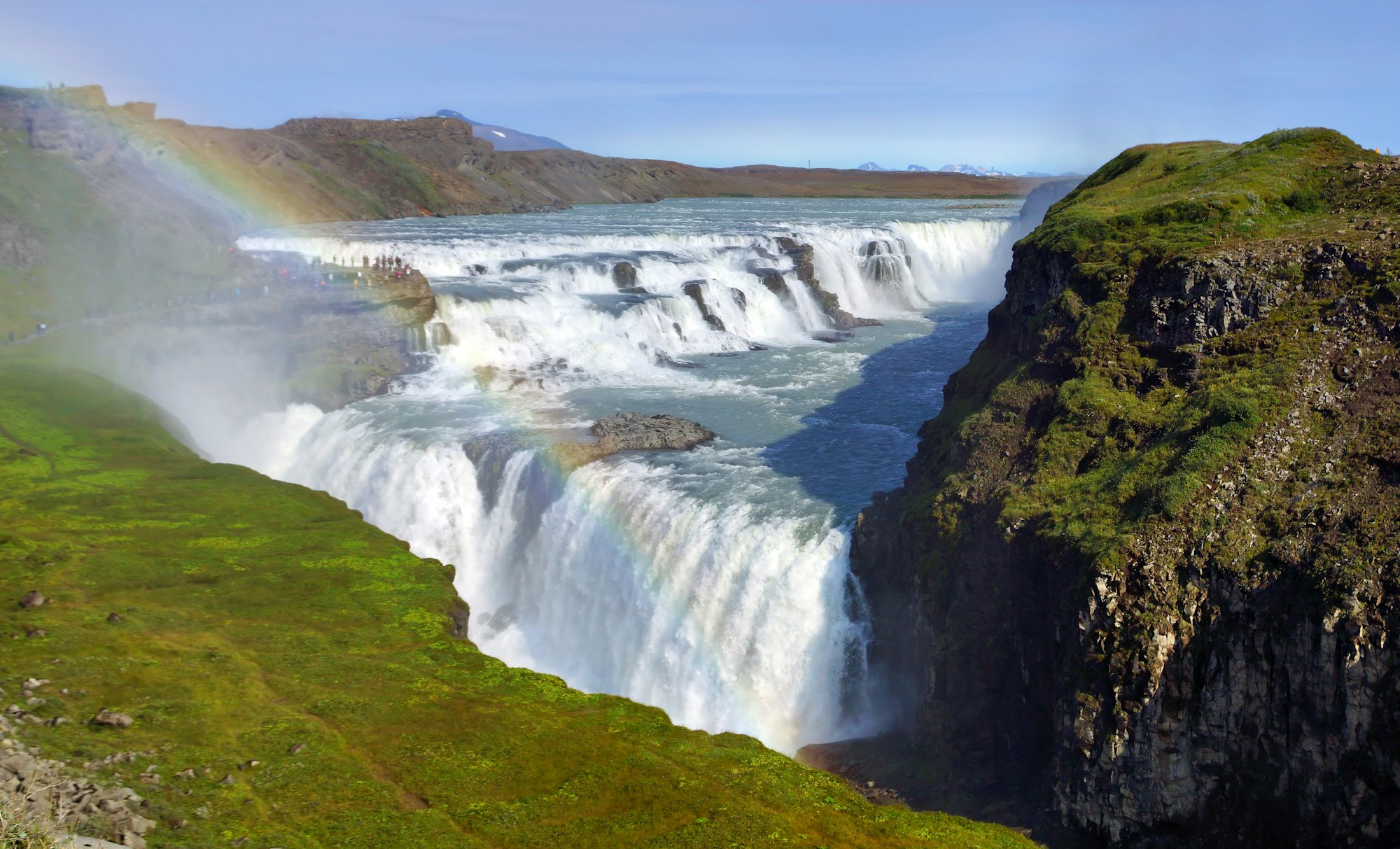
The Hvítá falls in two stages into a rugged canyon. It is among the most visited places in Iceland and a main stop on the Golden Circle.…
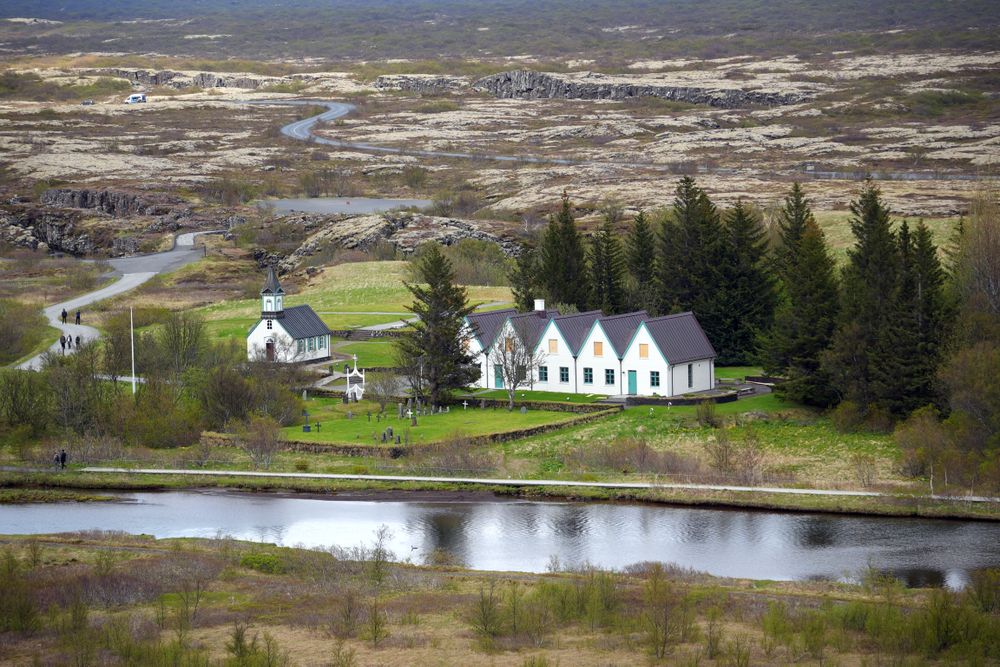
The site of the Alþingi, Iceland's assembly, from 930 until the last session held here in 1798, and a national park since 1930. It lies in…
Last updated