Things to do
9-
Geysir
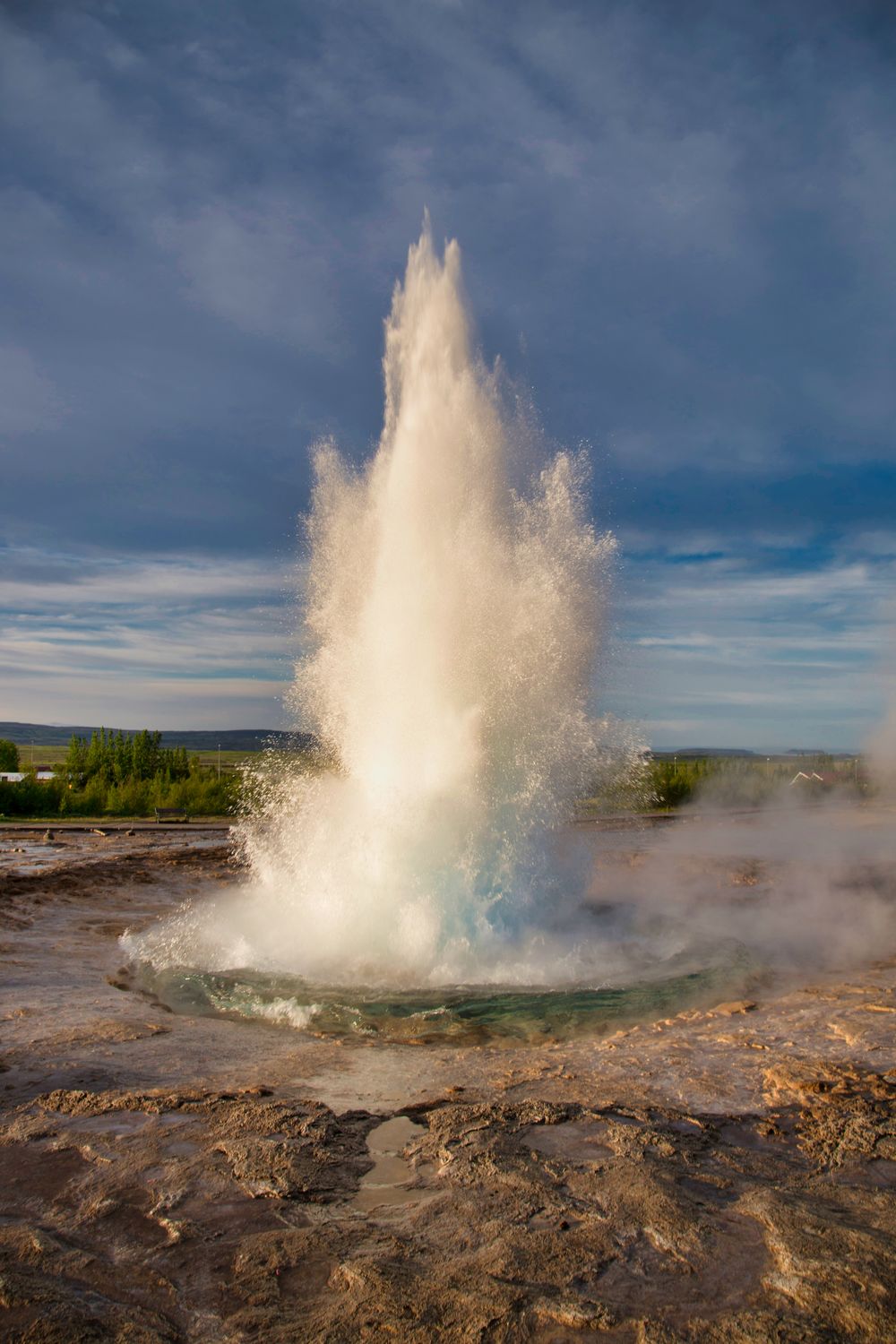
The geyser that gave the word to English, in the Haukadalur geothermal field, which geological study suggests began forming around 1150. It now erupts rarely and has fallen silent for years at a time, so the crowd on the boardwalk is really watching Strokkur beside it. The field itself, blue pools and steaming ground, is what makes the stop worth an hour.
-
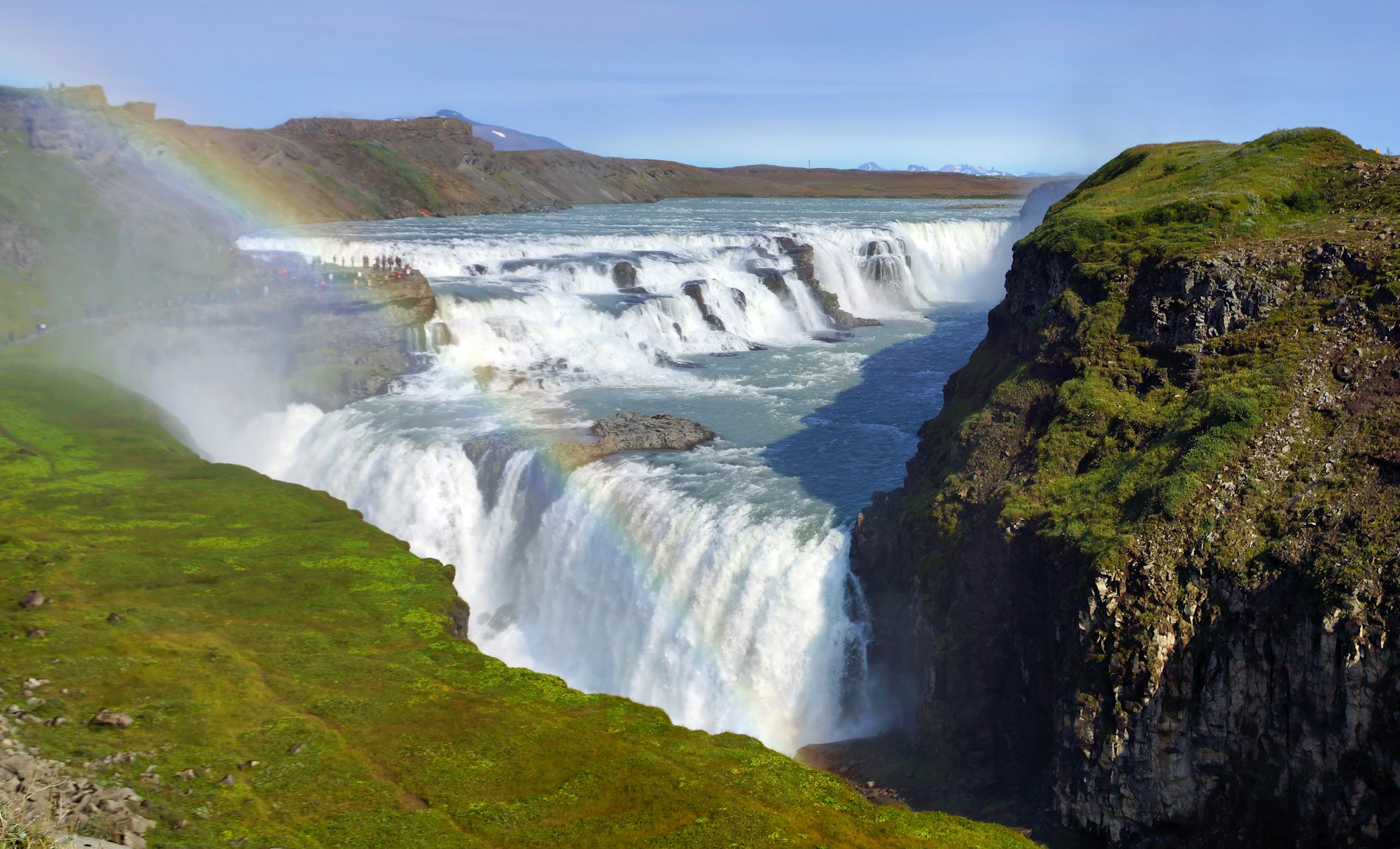
Gullfoss
The Hvítá falls in two stages into a canyon and turns through a right angle as it goes, so the lower drop runs away from the viewer rather than towards them. It is among the most visited places in Iceland and the third anchor of the Golden Circle. The lower rim path is often closed or iced in winter; the upper terrace stays open.
-
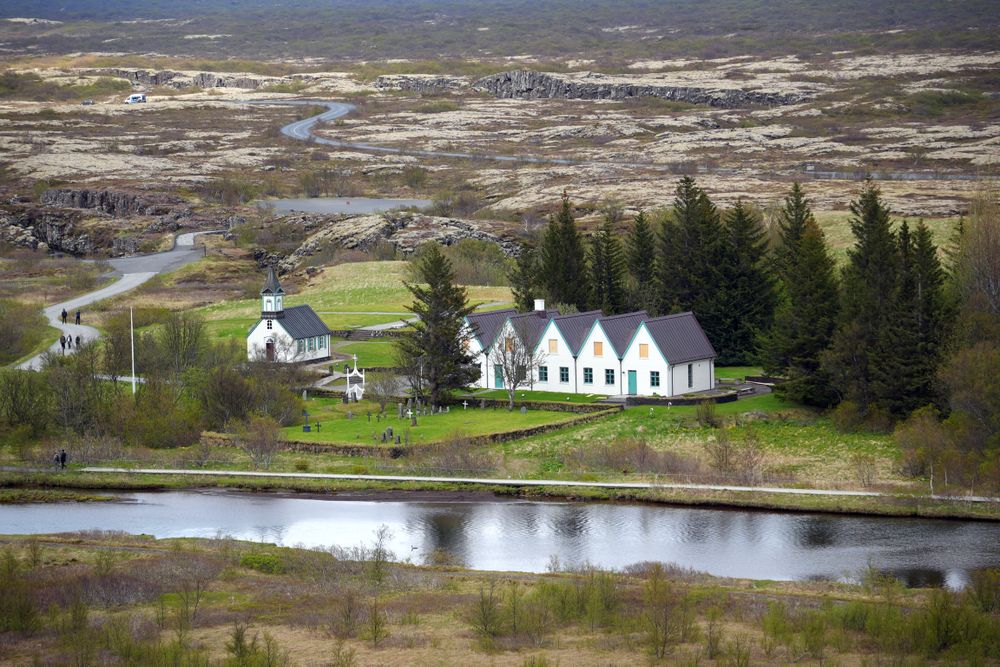
Þingvellir National Park
The site of the Alþingi, Iceland's assembly, from 930 until the last session held here in 1798, and a national park since 1930. It lies in the rift valley marking the boundary of the North American and Eurasian plates, so the walk down Almannagjá runs between the walls of the ridge itself. Þingvallavatn below it is the largest natural lake in the country.
-
Brúarfoss
A wide, low fall on the spring-fed Brúará, where water arriving through the rock is cold and clear enough to run a strong blue. Birch scrub covers the banks and three summer house settlements stand within walking distance. It lies a little over two kilometres north of the Laugarvatn road and is reached on foot from a signed car park.
-
Efstidalur II
A working dairy farm on the road between Laugarvatn and Gullfoss with an ice cream barn attached, where the parlour looks straight through glass into the cowshed that supplies it. There is a restaurant using the farm's own beef and a few rooms. It is the least ceremonial stop on the Golden Circle and the one most likely to be full at lunchtime.
-
Laugarvatn Fontana
Geothermal baths on the lake shore, where the steam rooms are built directly over natural hot springs and take their heat straight from the ground beneath the floor. Bathers move between the pools and the lake itself, which is cold except where the springs surface. Rye bread is baked in the hot black sand outside and served at the daily demonstration.
-
Laugarvatnshellar
Two man-made caves cut into the tuff at Reyðarbarmur, halfway between Þingvellir and Laugarvatn, used as shelters for travellers in earlier centuries and lived in as a home in the early twentieth century. The wall between them has since fallen and the rock is covered in carved names, initials and dates. They were rebuilt to their original form in 2017 and are shown on a guided visit.
-
Silfra
A flooded fissure in the rift at Þingvellir, filled with glacial meltwater that has spent decades filtering through lava, which is why the visibility runs to roughly a hundred metres. It is snorkelled and dived year round in drysuits at about two degrees, on guided trips only, and diving requires a drysuit certificate while snorkelling does not. Slots book out weeks ahead in summer.
-
Strokkur
The working geyser of Haukadalur, going up every six to ten minutes to fifteen or twenty metres and occasionally to forty. The water swells into a blue dome for a second before it fires, which is the moment the whole boardwalk is waiting for. It stands about fifty metres from Geysir and needs no more than half an hour.