The bonfire and the day of colour are fixed by the Hindu calendar. The village days follow the same lunar count and the temples confirm them each winter, so confirm the Gokul and widows' days with your hotel.
The stick fights at Barsana and Nandgaon come five and six days before the Monday of colour, and they are the days you will remember. Arrive by Sunday 14 March and give Braj the whole week.
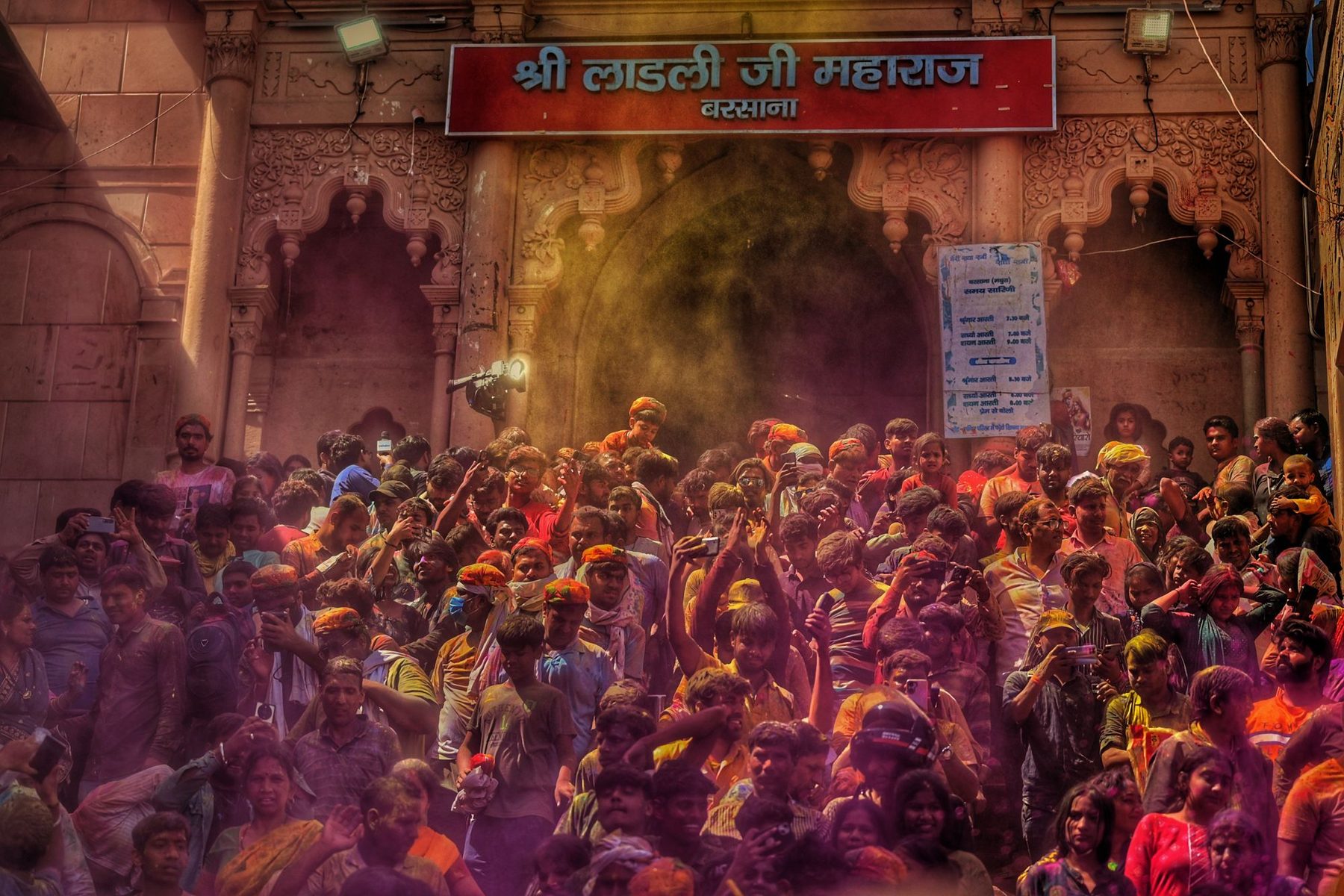
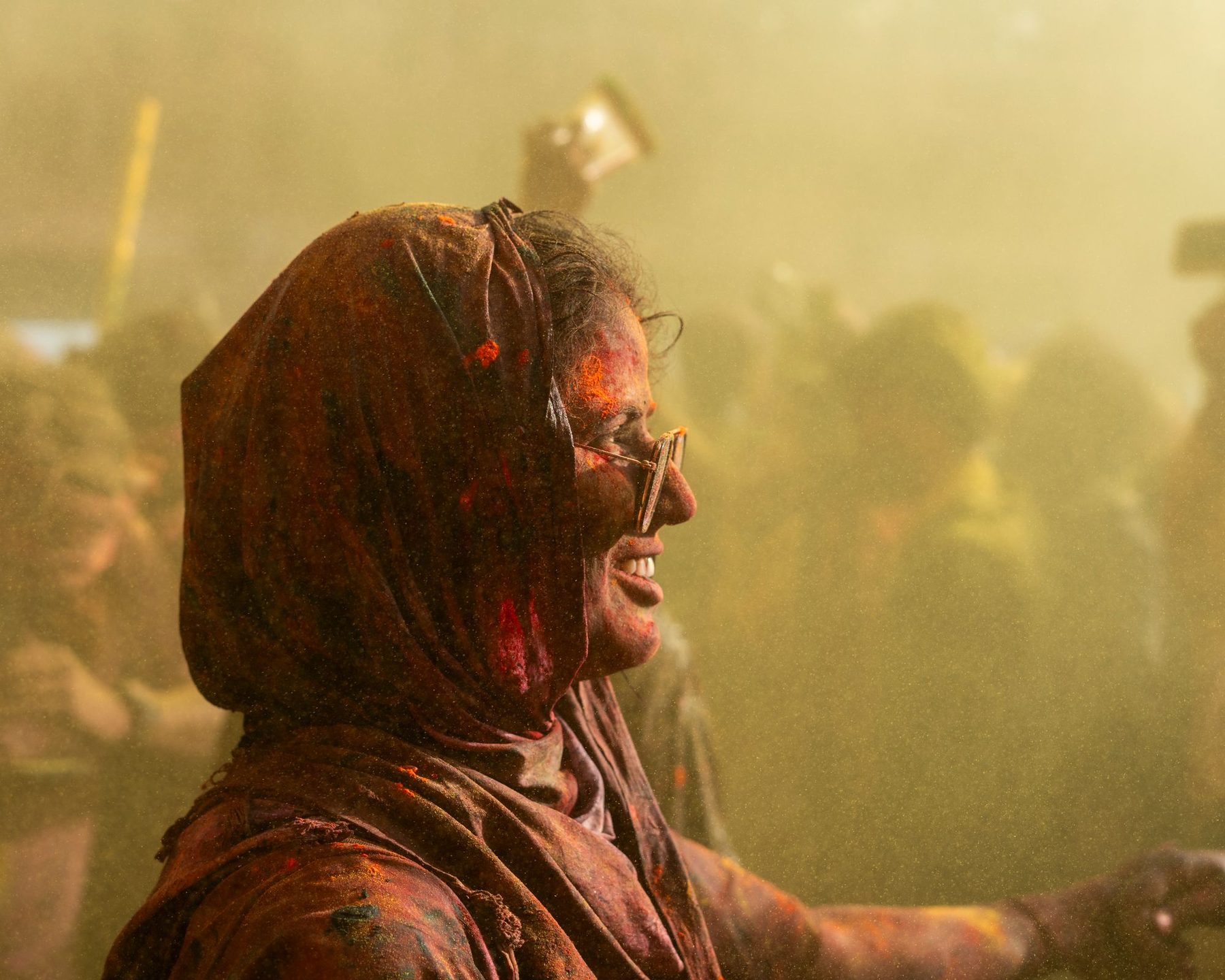
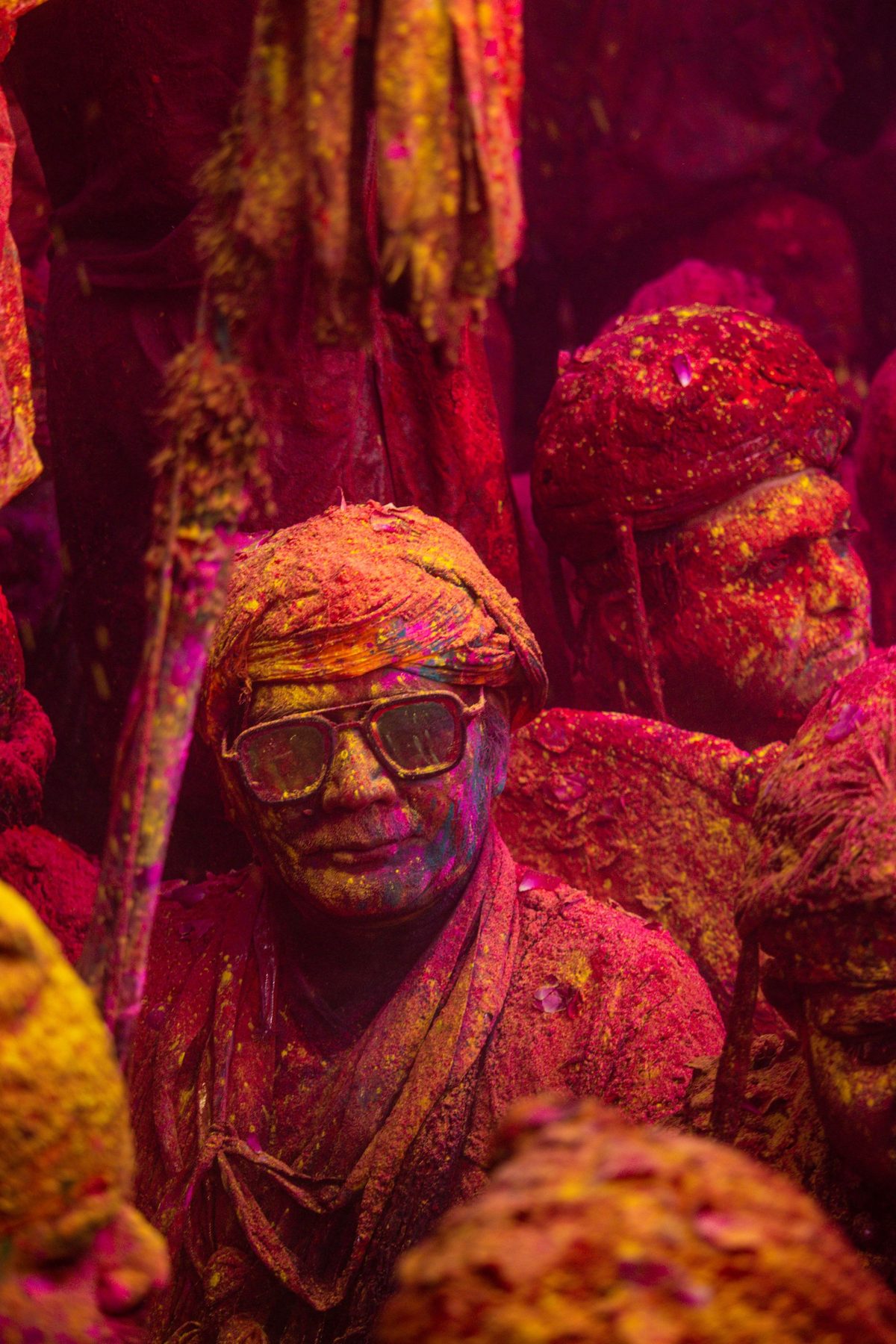
Sweets from the temple on the Monday afternoon, sticks in the lane on the Tuesday. The roads jam from late morning and you walk the last stretch, then climb to the Radha Rani temple.
Barsana's men come to be beaten in return at Nand Bhavan, the temple on the hill. Thinner crowd, the countryside behind the colour.
Flower petals from the priests of Banke Bihari on the Thursday morning, and the widows' ashrams' own Holi on the Friday.
Chhadi Mar Holi in the temples of Krishna's childhood, with light sticks and a devotional mood. A quiet day after Barsana.
The bonfires on the Sunday night near Vishram Ghat and the Dwarkadhish temple, and the morning of colour on the Monday from the same temple outwards.
The Huranga at the Dauji temple closes the week: the women tear the men's shirts and the colour comes in buckets. The week's last day.
Mathura, your base, has the railway station. Hire a car and driver for the week and agree each morning where the car will wait; the villages close their centres to traffic on their day.
The week opens in the courtyard of the Radha Rani temple at Barsana. From mid-afternoon the priests throw laddus, the yellow sweets, over the crowd in the courtyard, and the powder starts flying with them. Be inside the courtyard before three, when it fills.
Barsana's approach roads jam by lunchtime and cars are parked a long way from the temple hill, so you walk the last stretch and then climb the steps. Wear shoes with grip: by evening the stone is slick with colour and water.
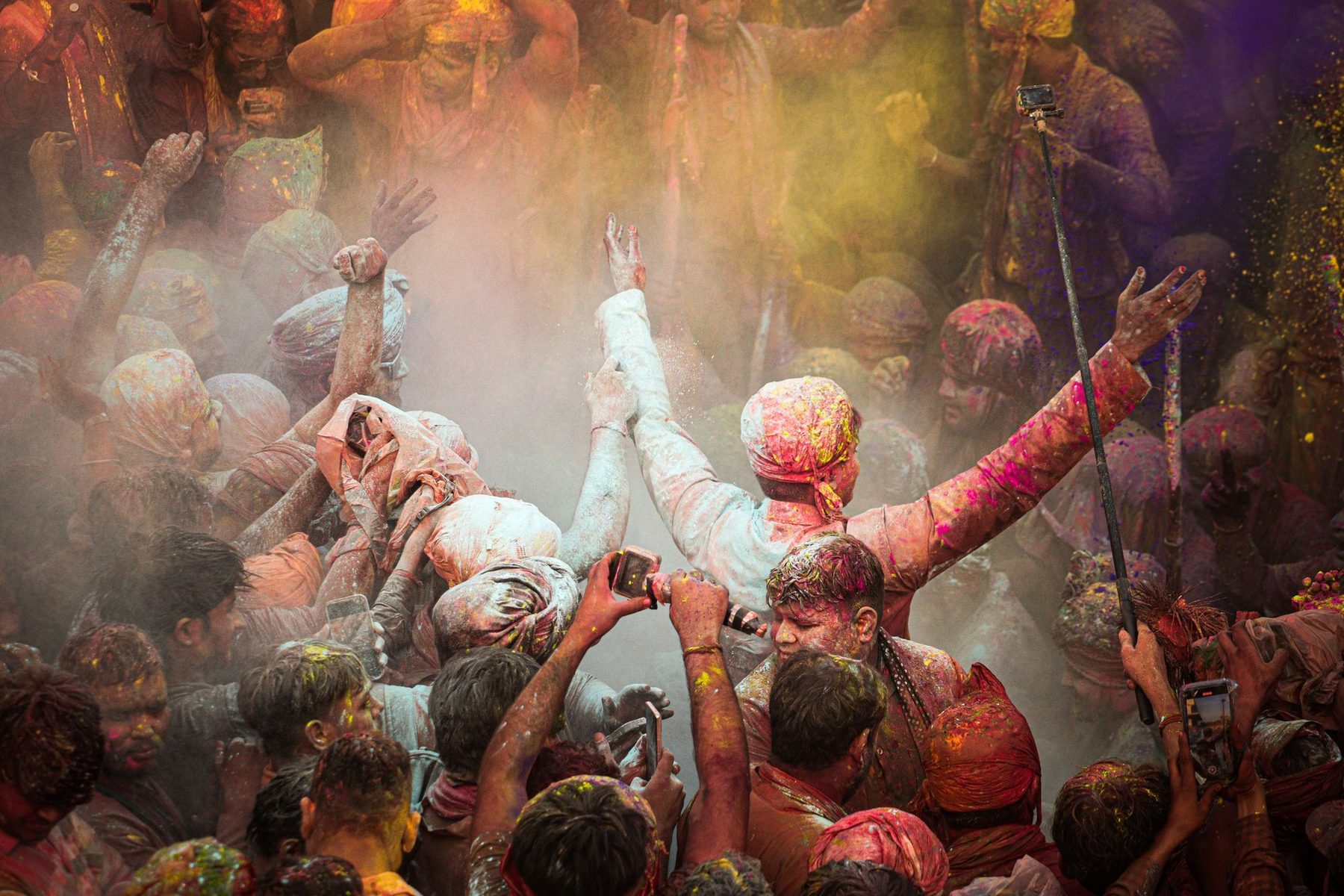
Leave Mathura by eleven with a driver who knows where to wait; the last stretch into Barsana is on foot.
The men of Nandgaon, Krishna's village, arrive in Barsana after midday, singing, and the women of Barsana meet them in Rangili Gali, the lane below the temple, with lathis. The men take the beating on shields held over their heads and the colour never stops. This is Lathmar Holi, the afternoon in all the photographs.
Leave Mathura by eight and be in place before noon. The steps of the Radha Rani temple and the lane below are where it happens, the vantage points are gone early, and once the crowd closes you will not move until it does. Go with a group, keep your phone sealed, and expect to be covered in colour inside the first minute.
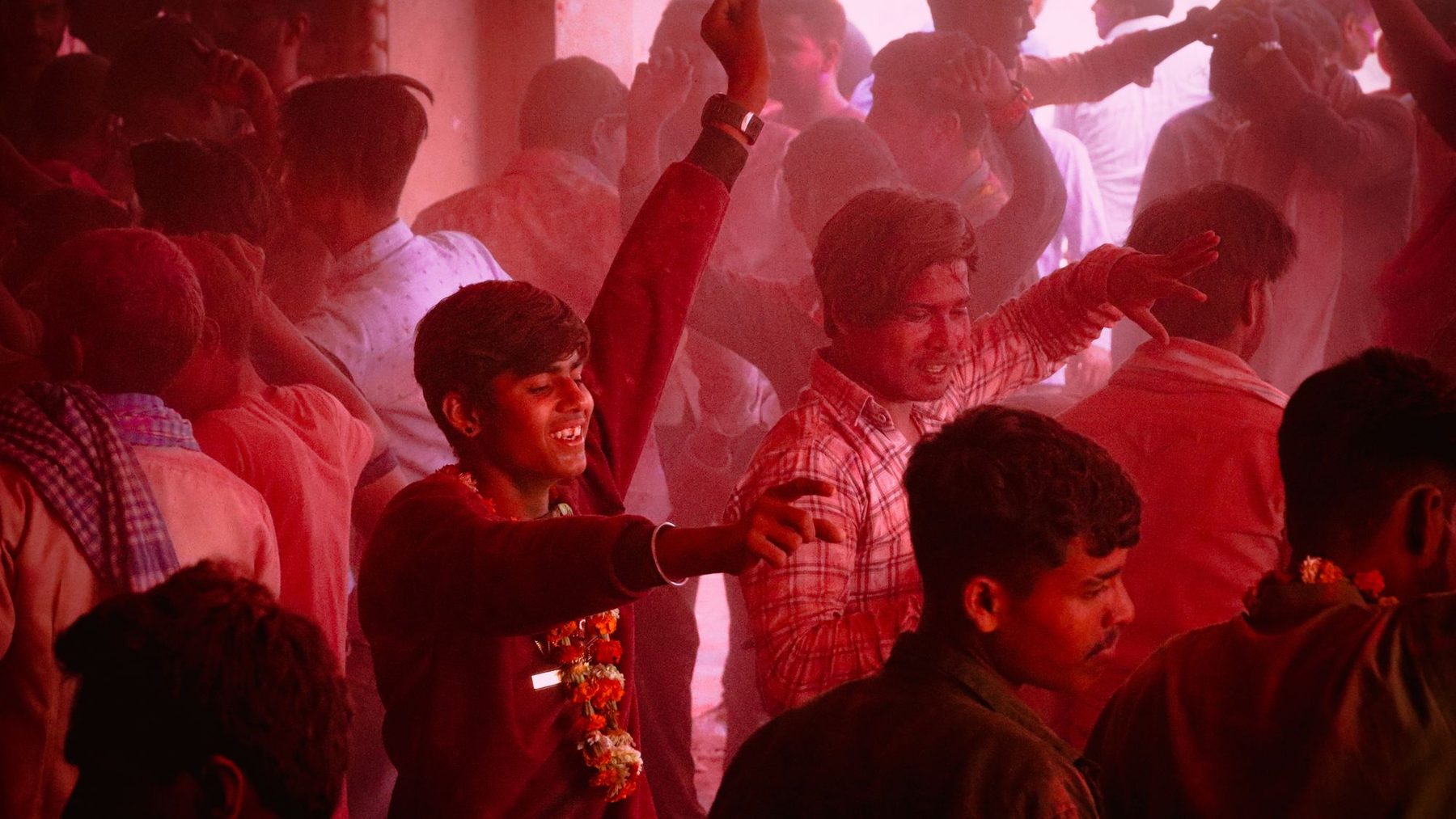
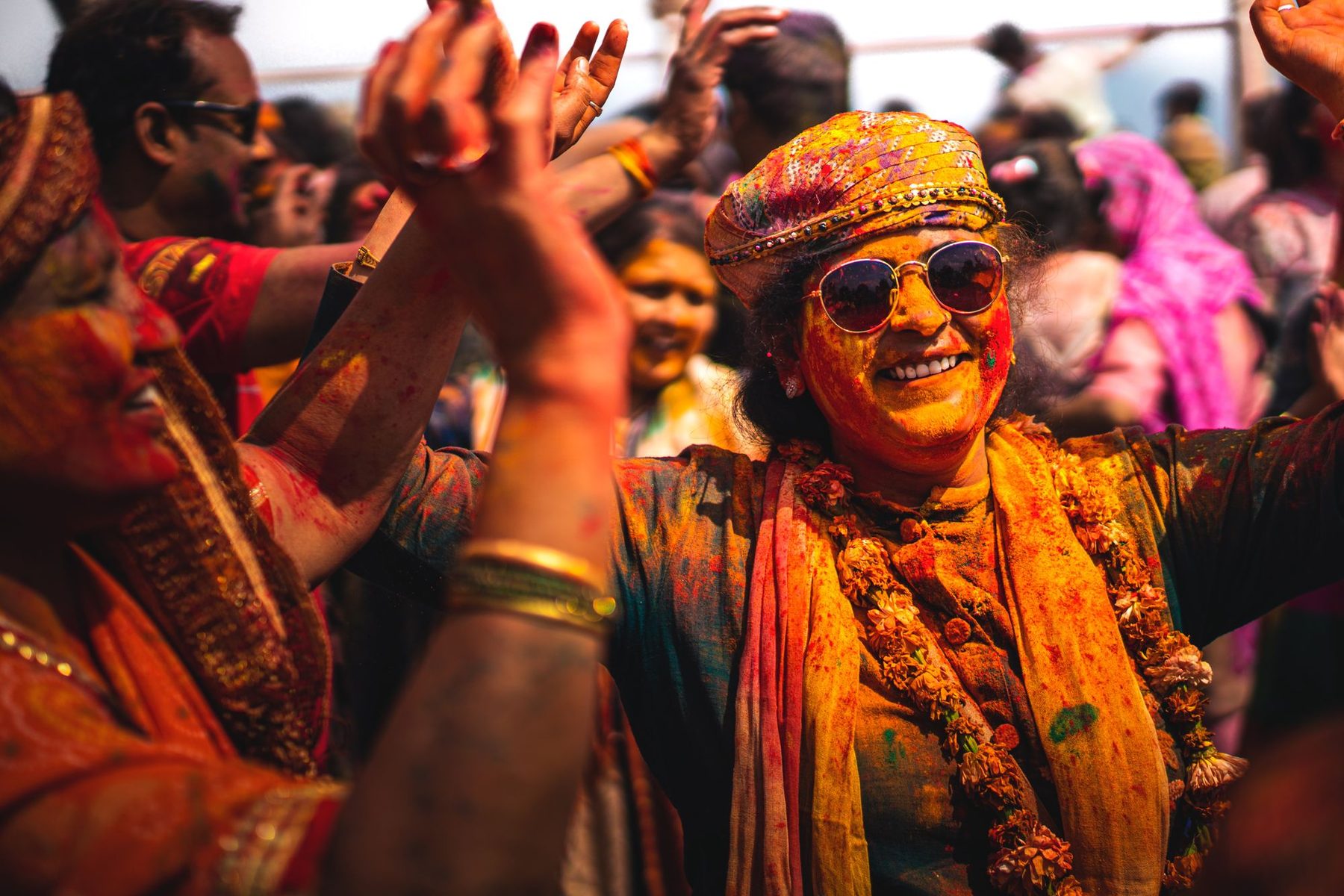
Barsana's men make the return visit to Nandgaon, a short drive north, and the women of Nandgaon meet them with the same sticks at Nand Bhavan, the temple on the hill above the town. The crowd is thinner than Barsana's, and from the hill you look out over the fields.
Arrive in the morning. By early afternoon the lanes up to the temple are too full to move through, and the road out from Barsana crawls all week, so drive out from Mathura early each day and do not try to move between the villages.
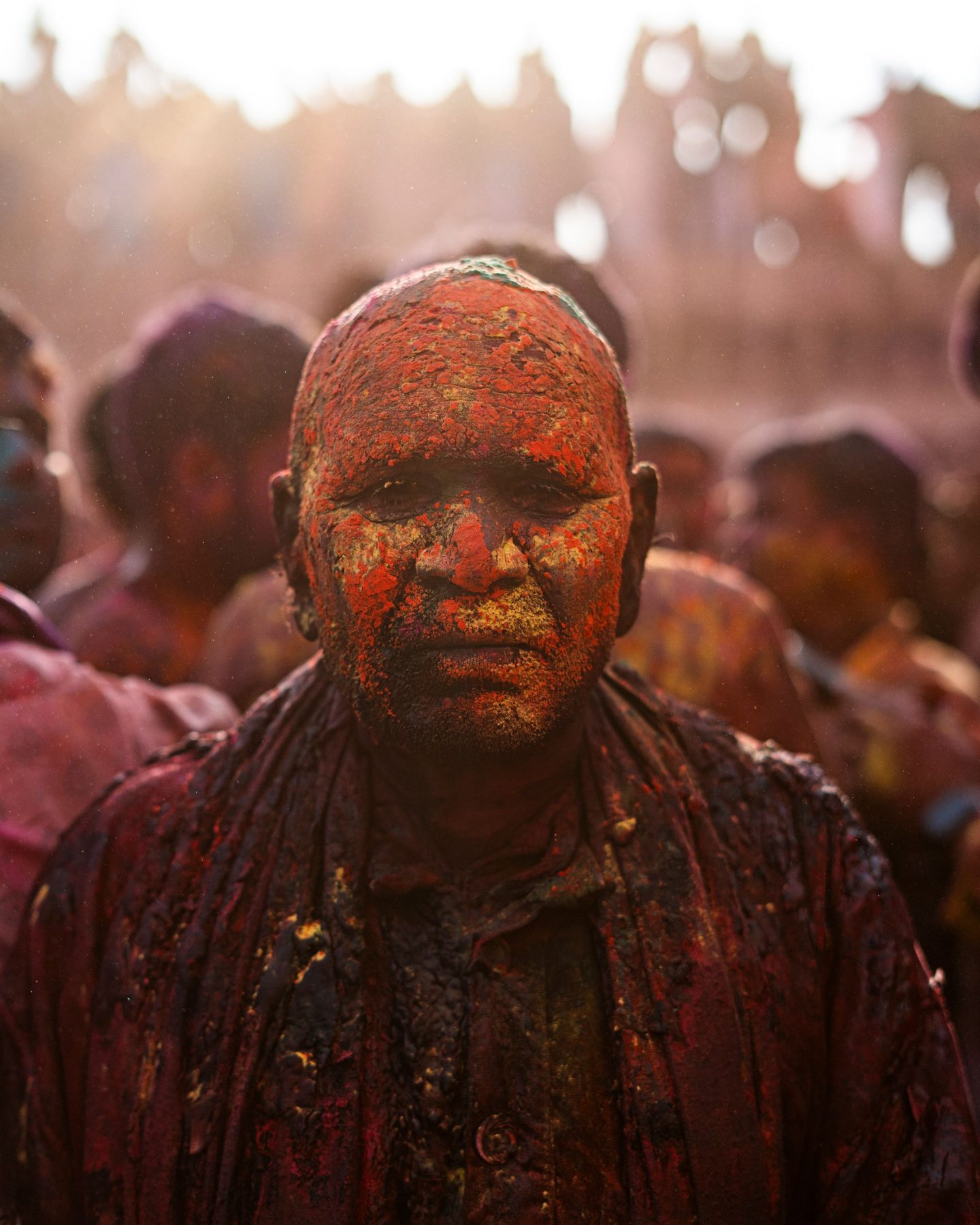
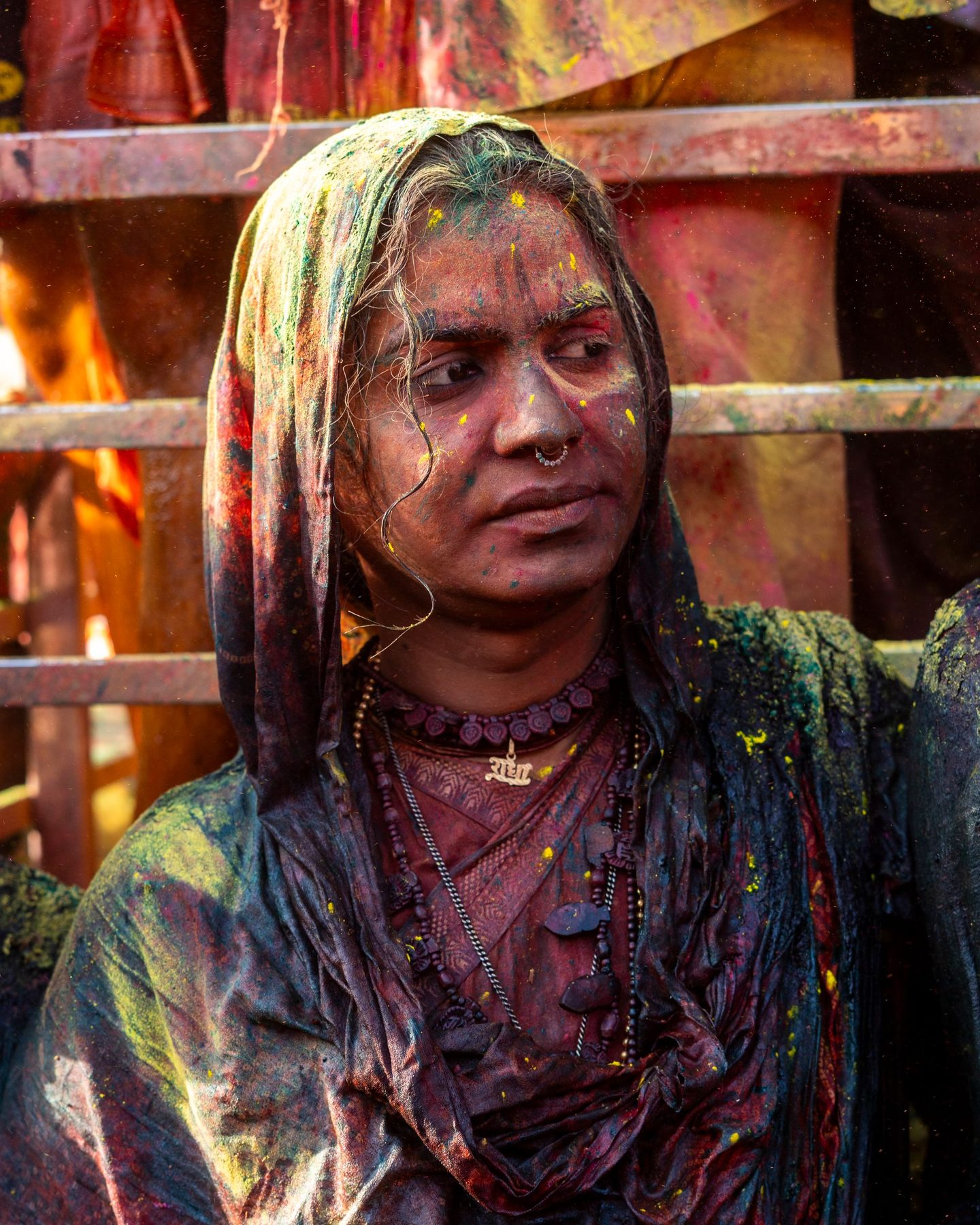
Rangbharni Ekadashi is the day the priests of Banke Bihari, Vrindavan's busiest temple, throw flower petals over the crowd, and the temple's week of colour begins. The temple opens in the morning and again in the late afternoon. The morning session is the calmer one, and the one to be in.
By late morning the crowd swells and the temple pauses entry to manage numbers, so arrive as the doors open. Photography is restricted inside. ISKCON and the Radha Raman temple hold flower Holis the same day and are easier to get into if the gates at Banke Bihari are shut.
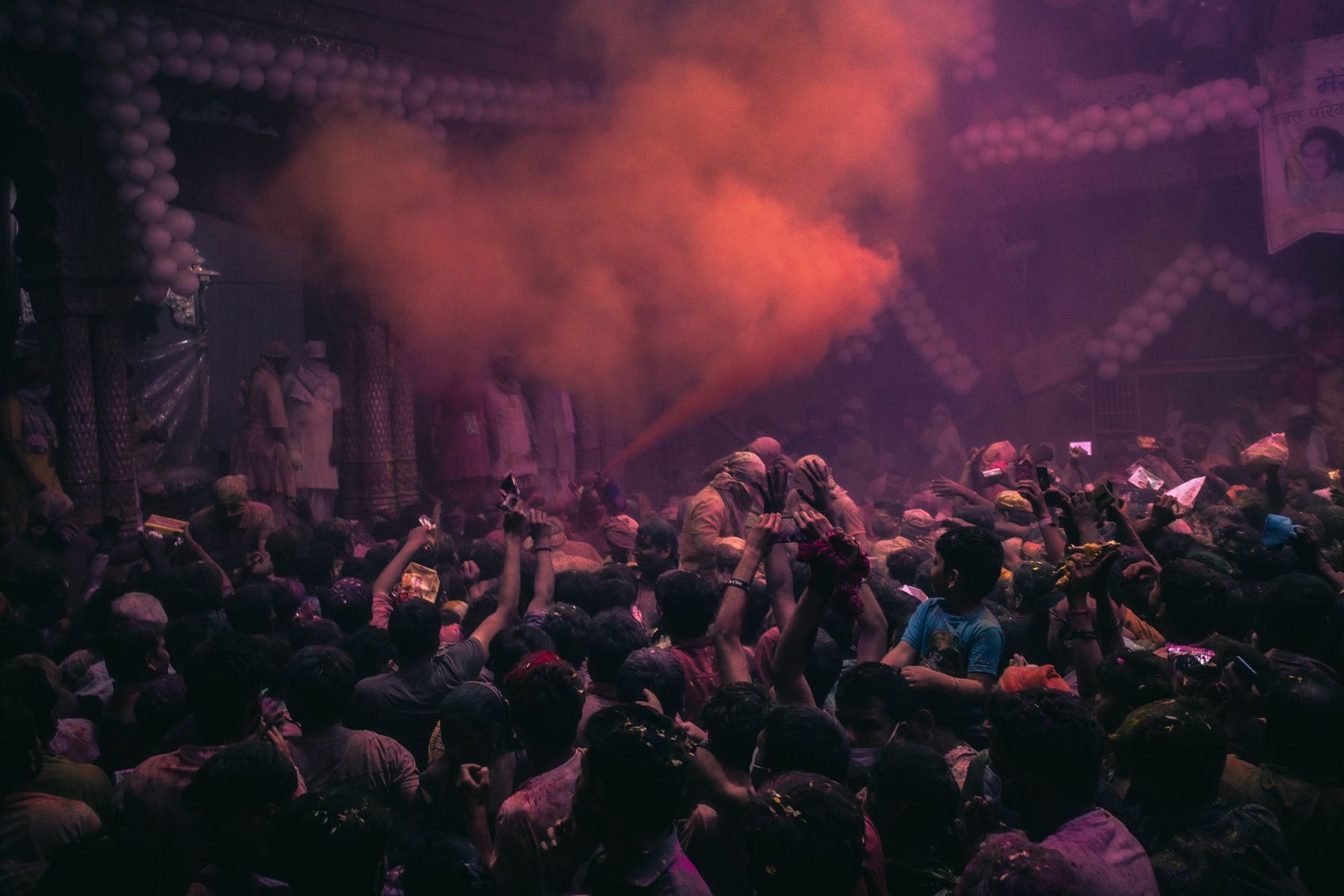
Have your driver drop you at the edge of Vrindavan's old town; the lanes to the temple are too narrow for a car.
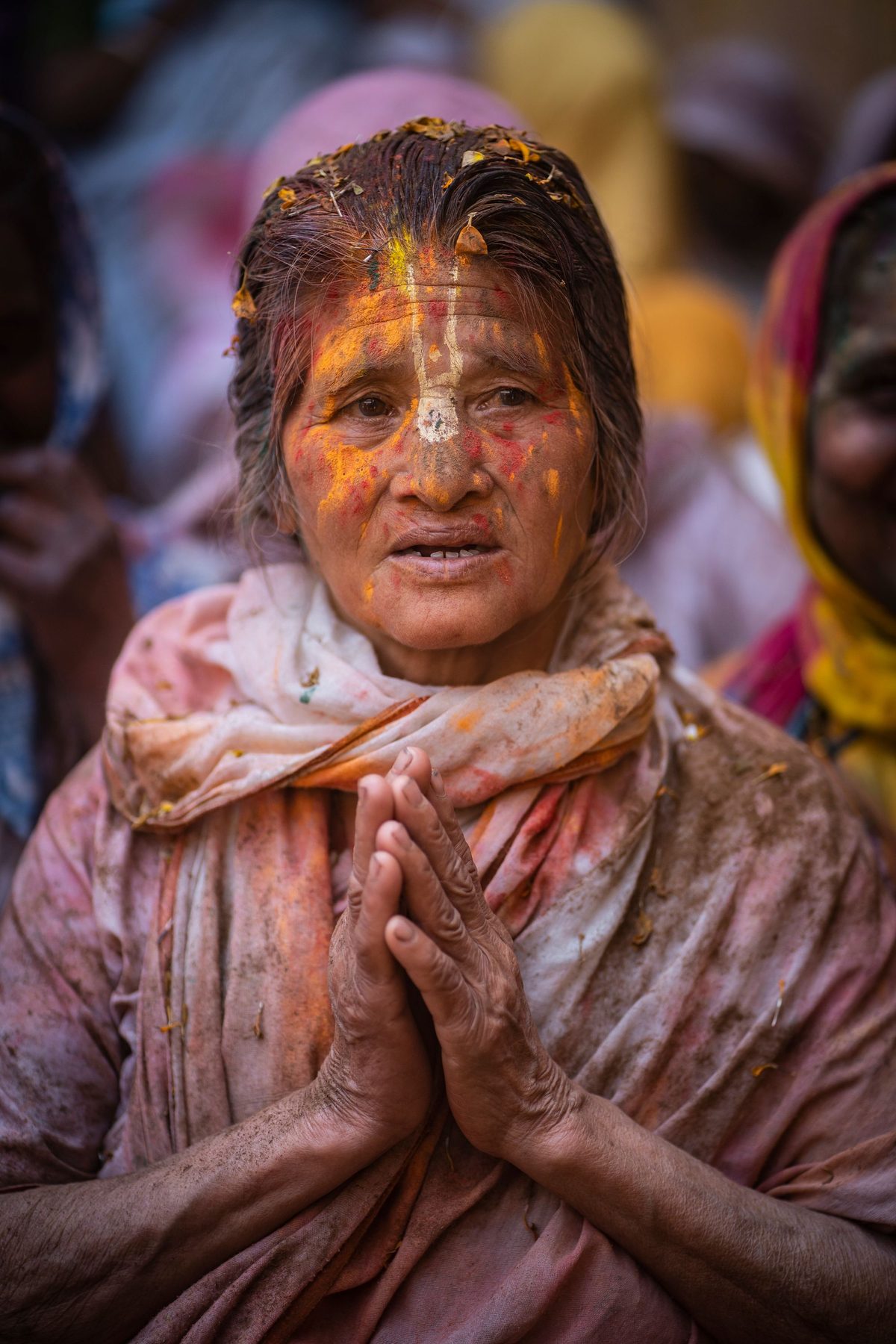
Two quieter Holis share the Friday. At Gokul, across the Yamuna from Mathura, the women carry light sticks for the Chhadi Mar Holi in the temples of Krishna's childhood, and the mood is devotional, with none of Barsana's roughness. In Vrindavan the widows' ashrams hold a Holi of their own; ask your hotel where and when, since the venue changes.
The organisers set both dates each year and announce them close to the time. Keep the Friday free for them and ask your hotel on arrival which day each falls.
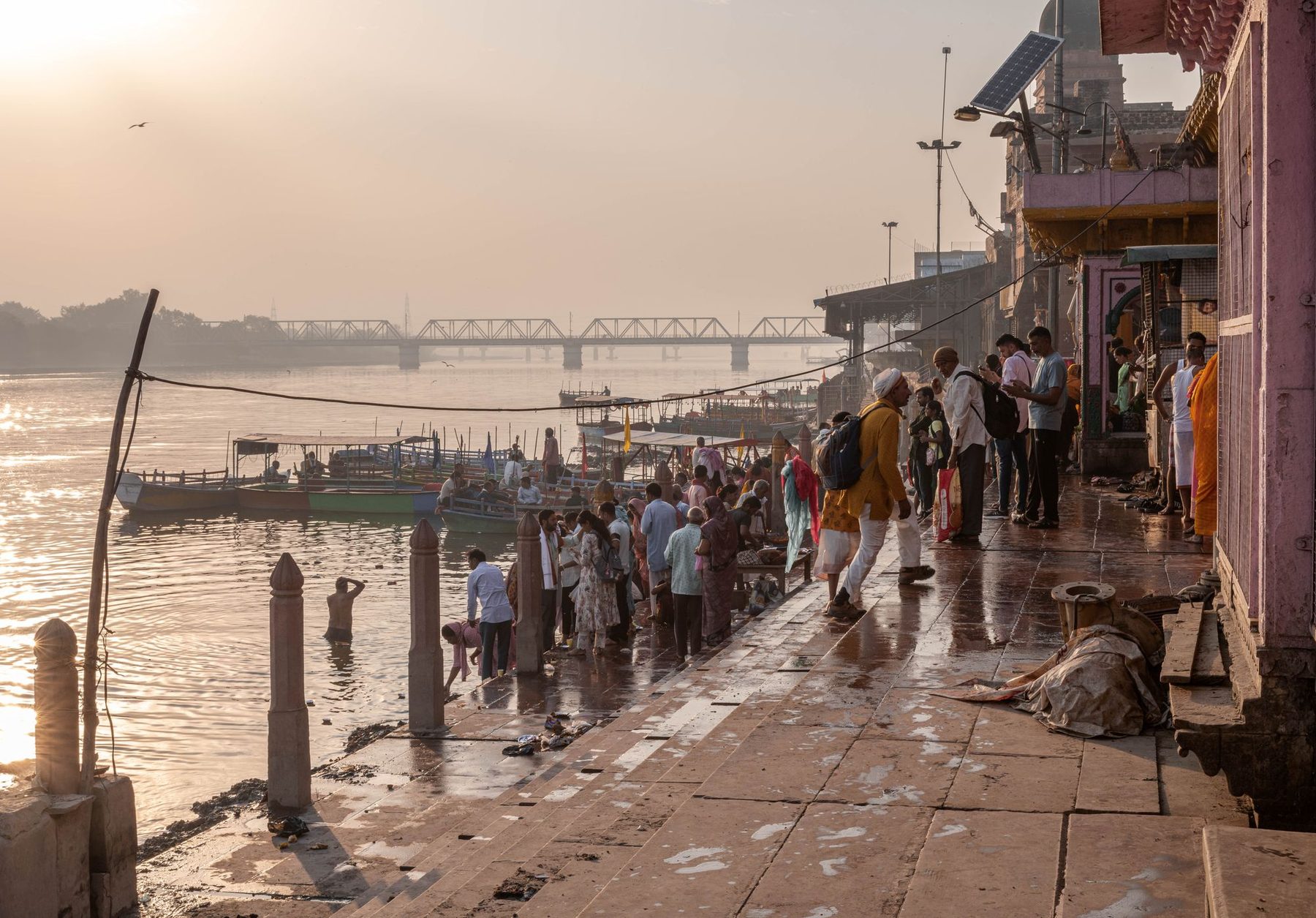
On the night of the full moon the bonfires are lit across Mathura and Vrindavan, with the biggest gatherings near Vishram Ghat and the Dwarkadhish temple in Mathura. Families walk round the fire, throw grain into it and take embers home.
Go to Vishram Ghat before sunset, then walk up to the Dwarkadhish temple, where the main gathering forms. Timings move from lane to lane, so ask where you are staying which fire to be at and when.
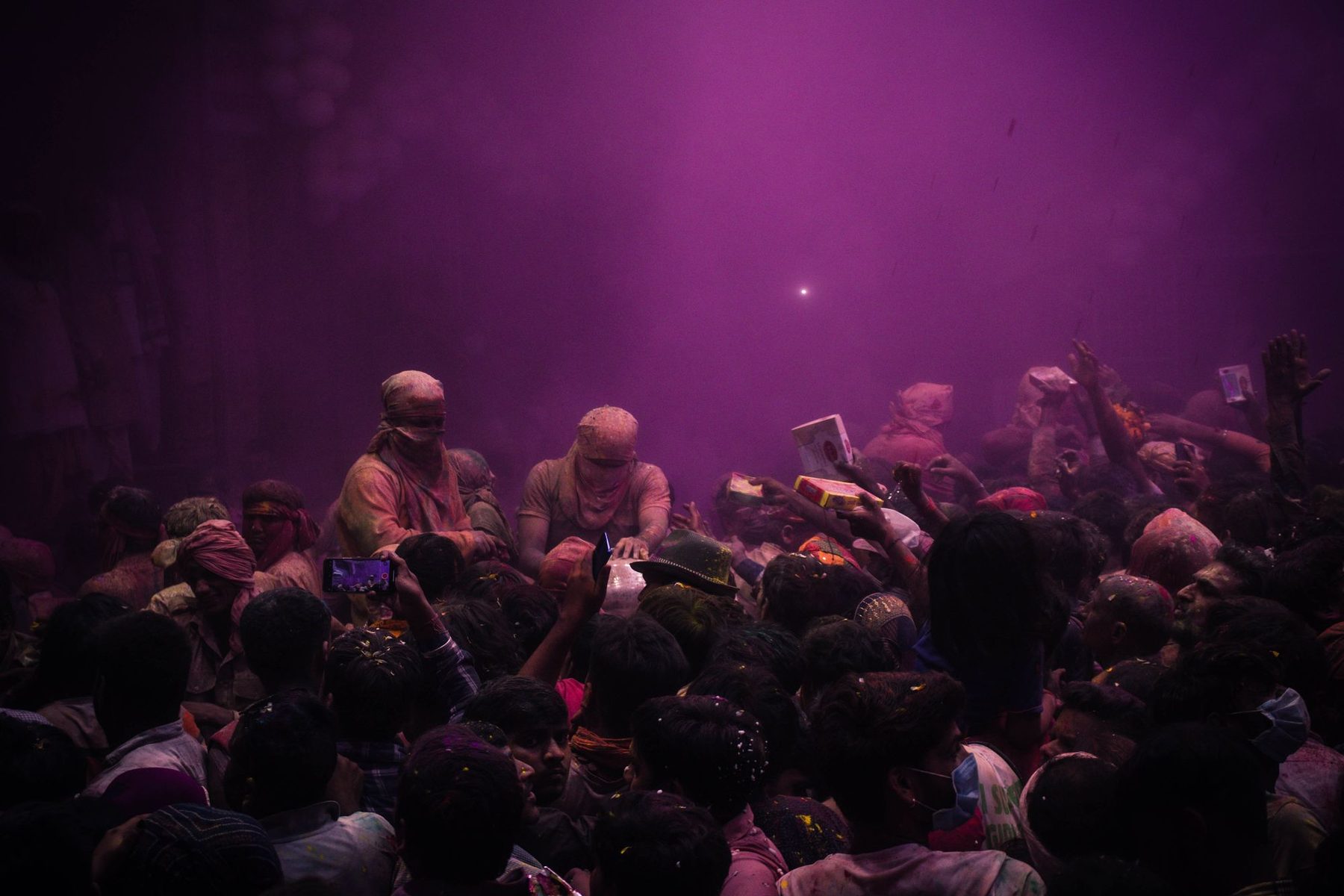
Treat every day as a crowd day: a sealed phone, no wallet, old clothes and a group around you.
Entry to every temple is free and the gates shut when a courtyard is full. Keep your phone and camera sealed in a waterproof pouch, carry no wallet or watch, and move as a group. Women get groped in these crowds, so do not walk the packed lanes alone.
Base yourself in Mathura, which has the better hotels and the railway station, and book months ahead. Buy dry gulal from the stalls by the temples and refuse the wet colour, oil your hair and skin before you go out, and ask before you drink thandai: in Holi week it is often laced with bhang.
The roads back to Delhi jam for hours after the Monday, so leave on the Wednesday after Baldeo.
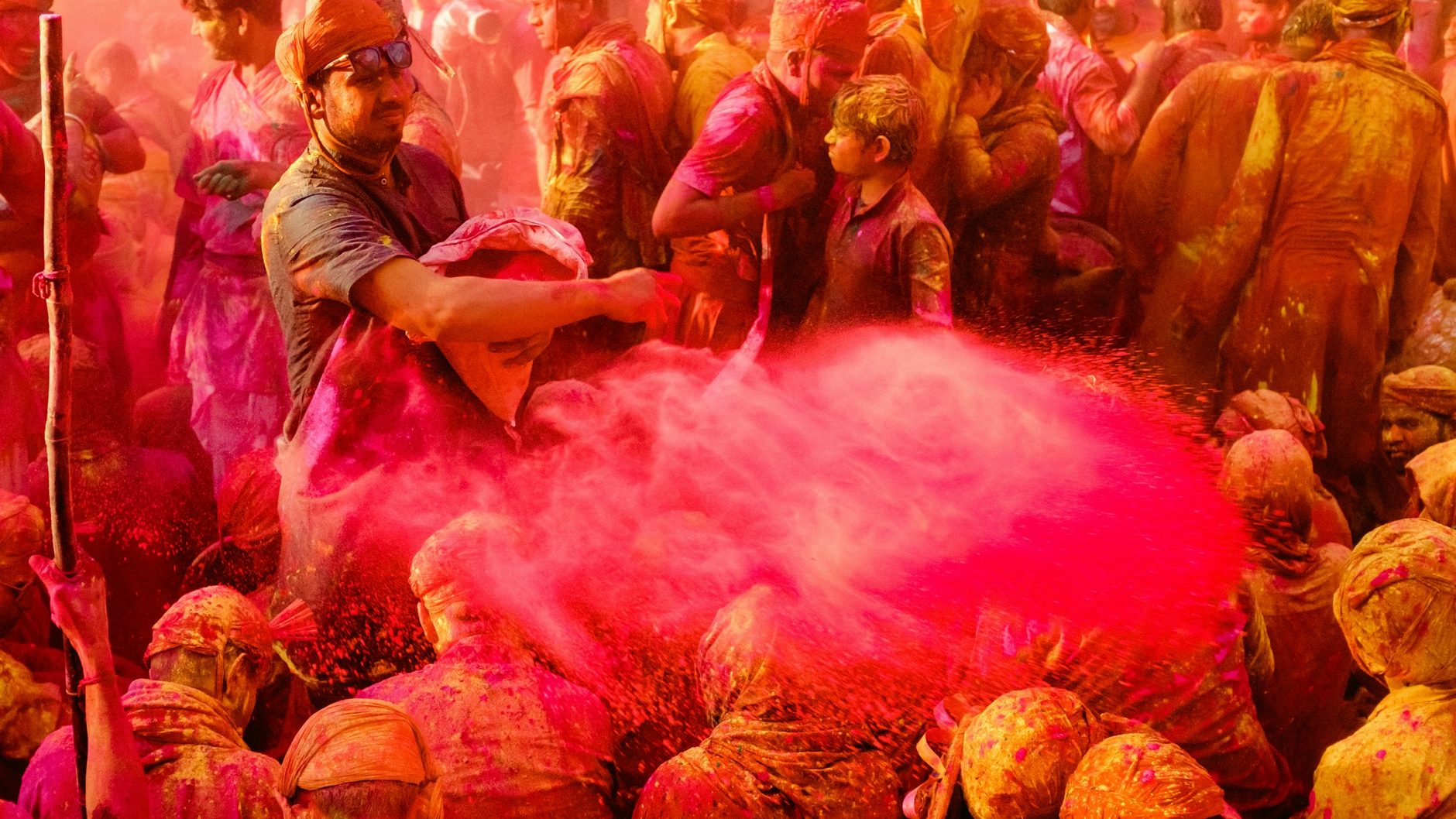
Monday is the main day of colour. From morning the Dwarkadhish temple in Mathura and the lanes around Banke Bihari in Vrindavan fill with powder, and by midday you cannot see across a street for the haze of it. Be out by nine, play until noon, and be back under a shower by two.
Dry gulal washes out and the wet colours do not, so wear white you will throw away, and keep the camera in its pouch until you are back indoors. Carry nothing else.
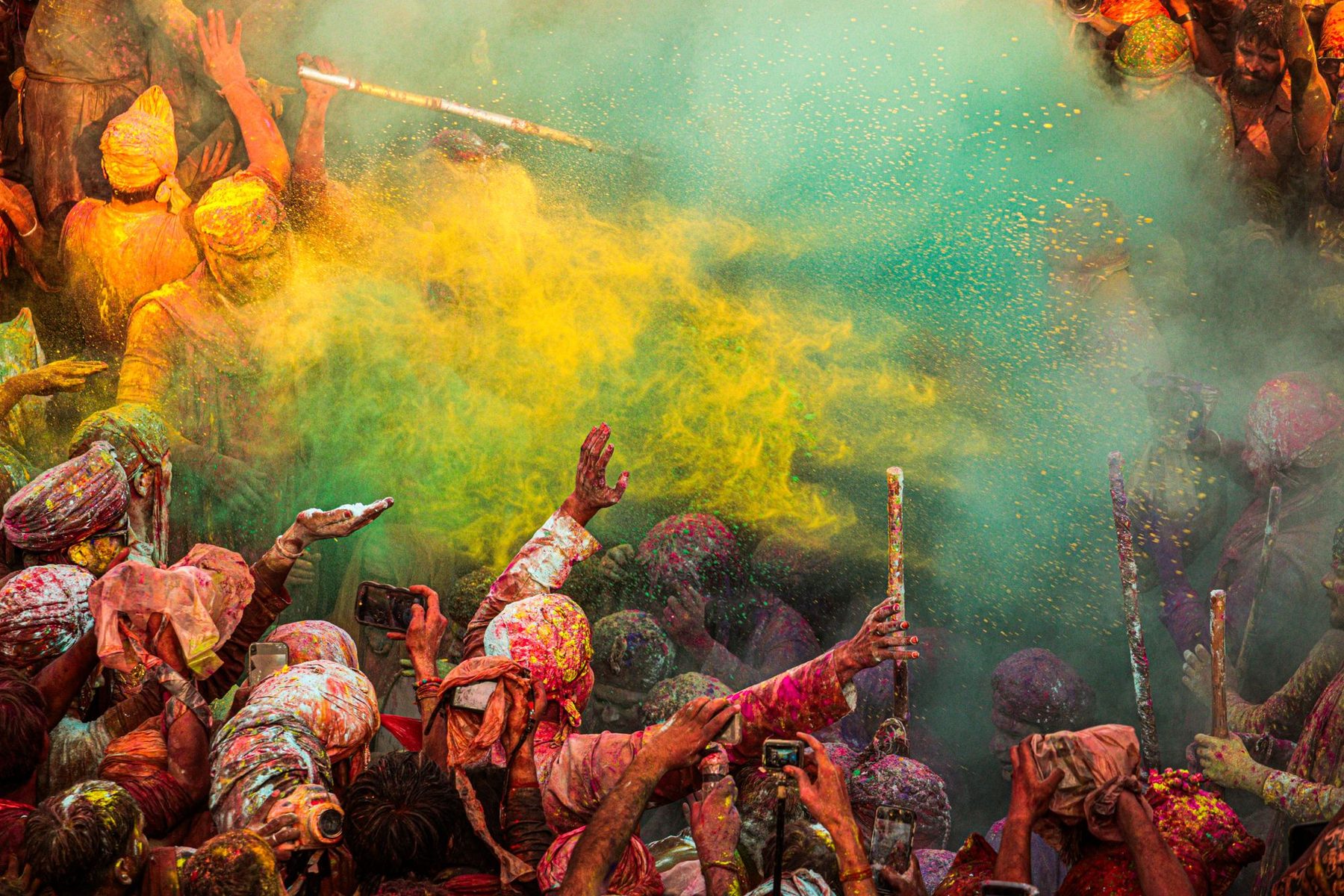
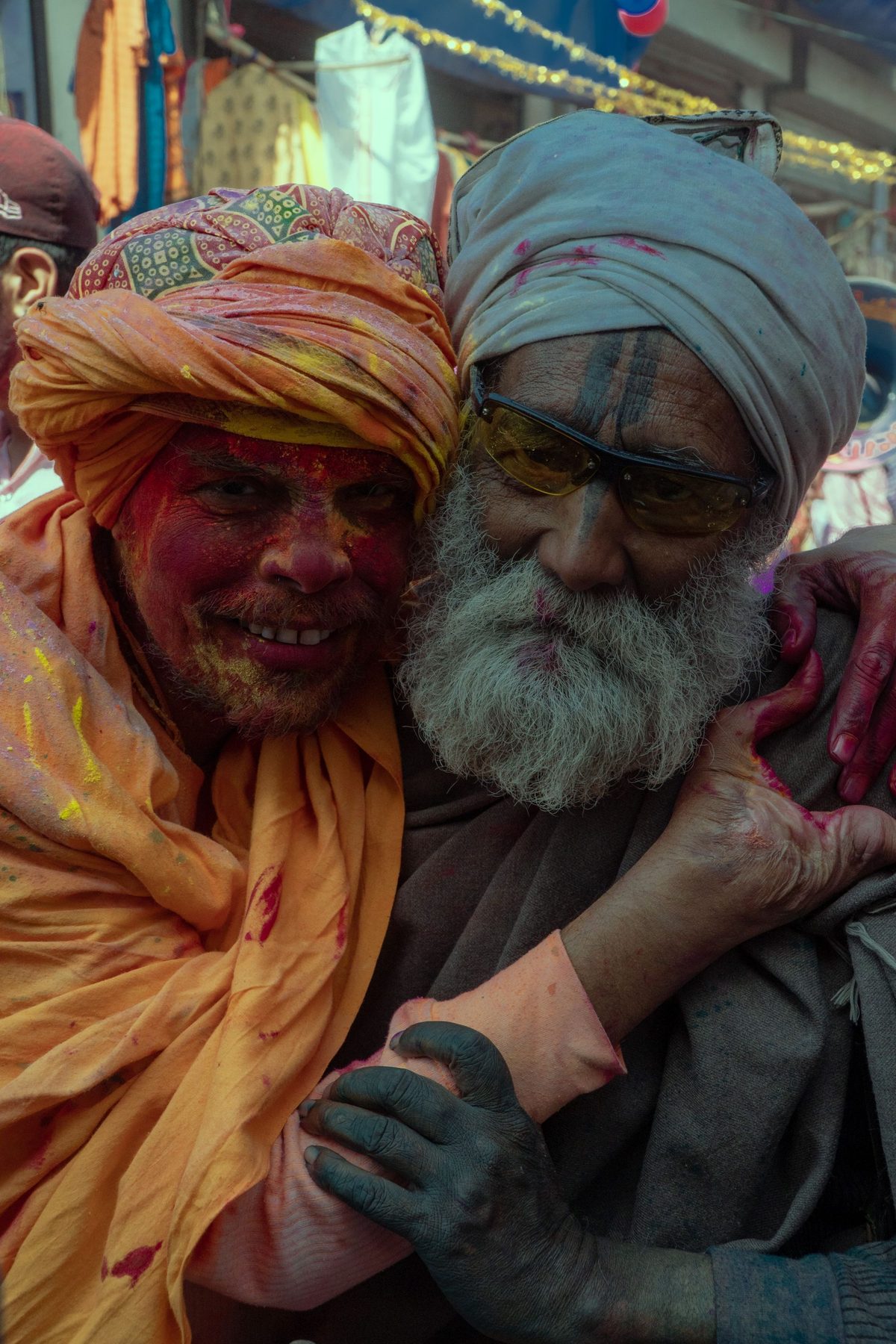
The last act is at the Dauji temple in Baldeo, about twenty kilometres from Mathura. The Huranga begins around noon: the women tear the men's shirts off and beat them with the wet cloth, the colour comes in buckets from the roof, and few foreign visitors make it this far.
Arrive by ten for a place on the courtyard edge. Baldeo closes the Braj Holi. Drive back to Delhi on the Wednesday, because on the Monday the road is jammed for hours.
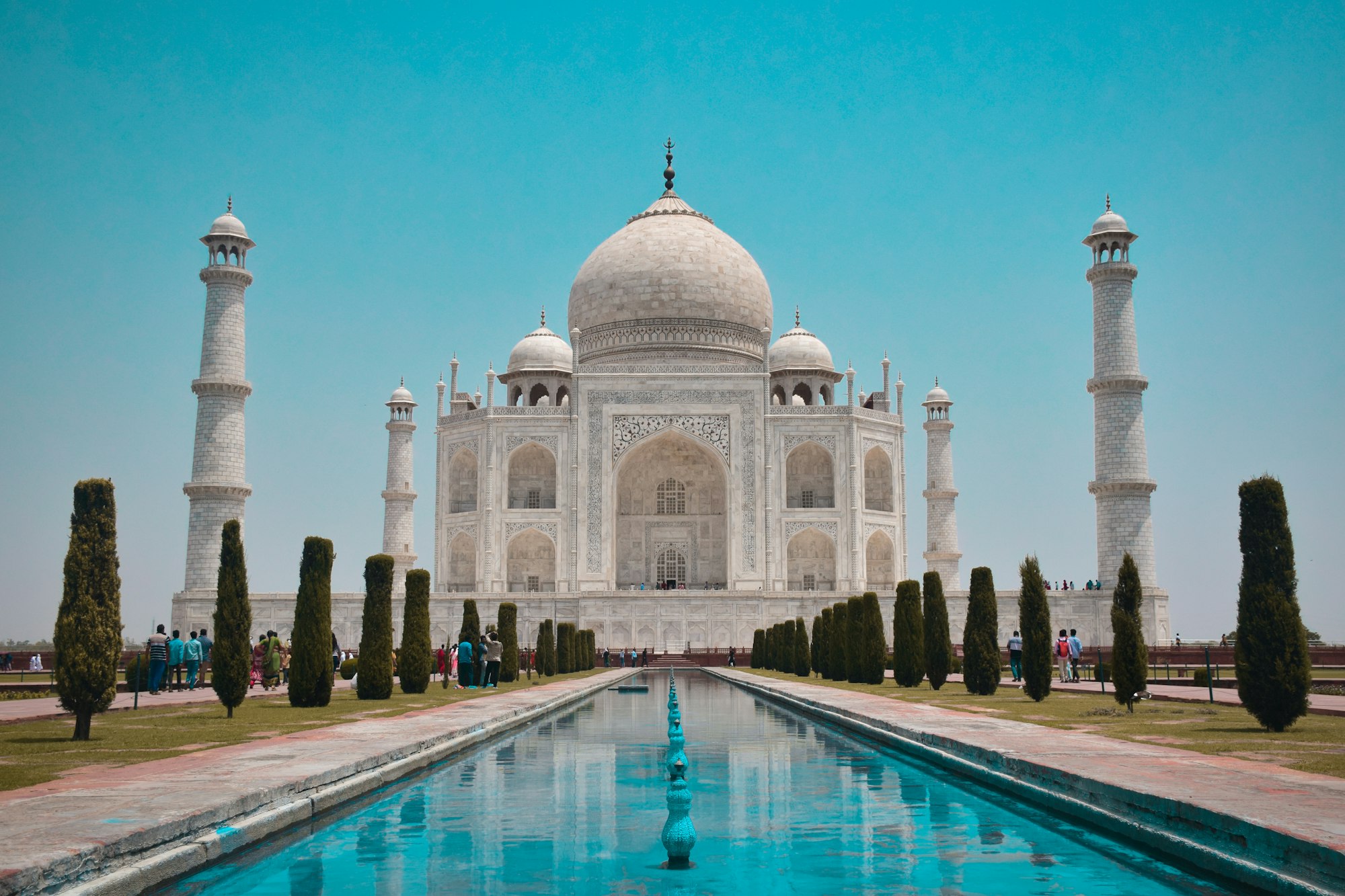
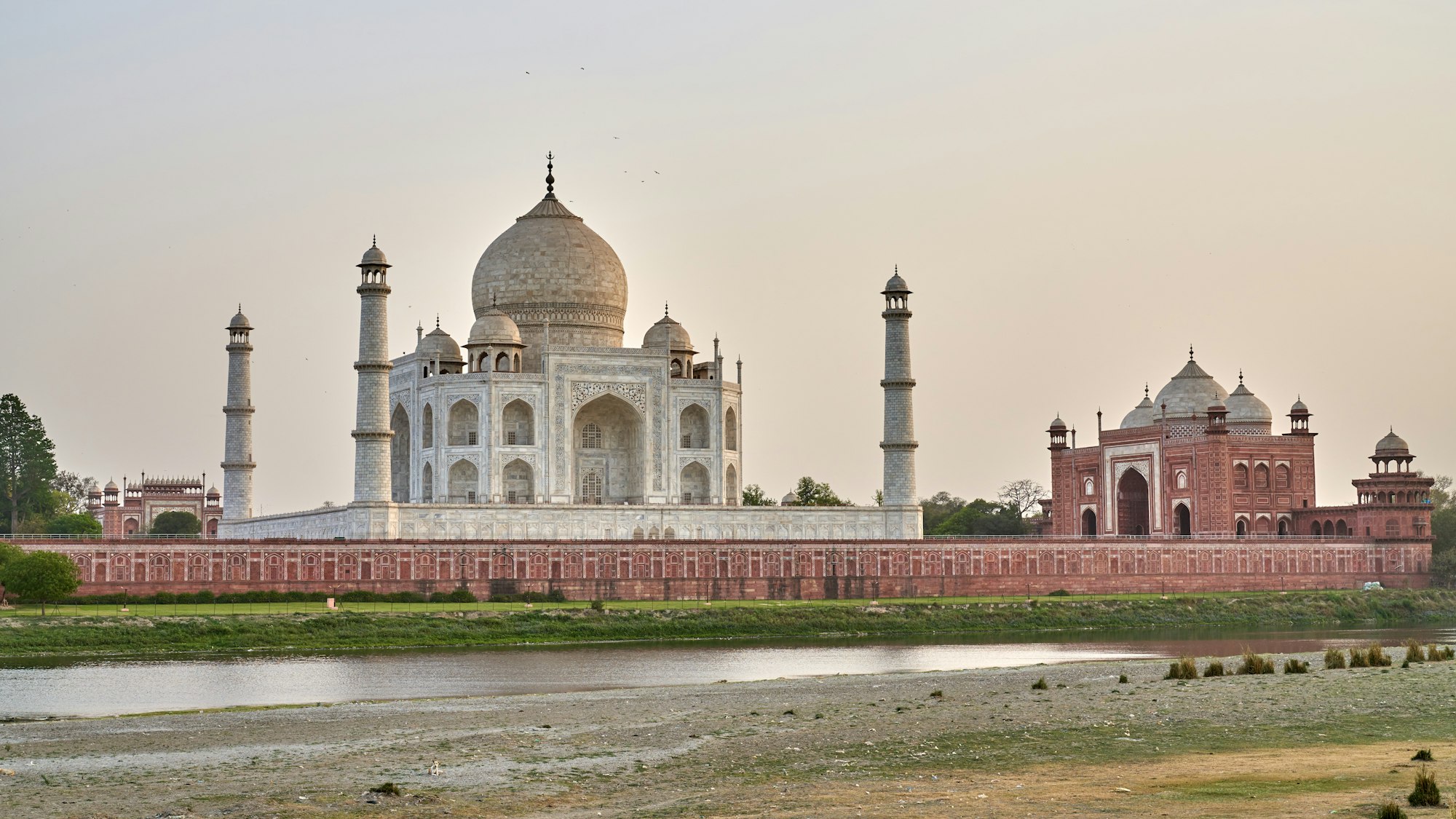
Agra is down the Yamuna from Mathura. Its own page: the gates, the Friday closure and the three-hour limit on every ticket.
Open the Taj Mahal page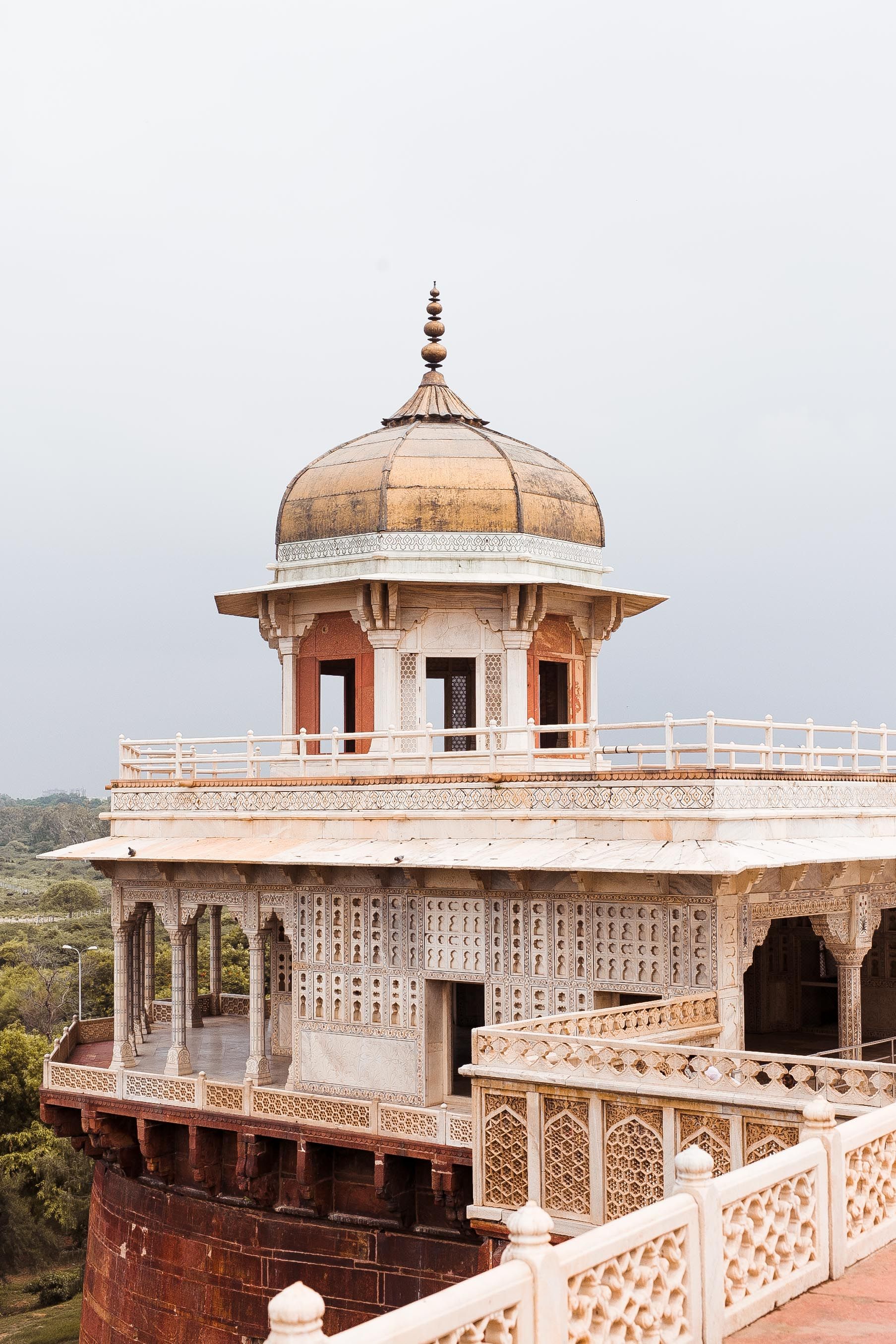
Base yourself in Mathura for the week, with the station and the better hotels, and go on down the Yamuna to Agra: the Taj Mahal, the fort and Fatehpur Sikri, each with its own page.
Open the Agra guideThe two ends of the trip.