Ninety seconds on Ponte Vecchio
Standing halfway across the Ponte Vecchio, you are on a medieval street of goldsmiths' shops built out over the Arno, still trading on the bridge as they have for four centuries.
On the bridge itself you walk a narrow street of jewellers' and goldsmiths' windows on both sides. Halfway over stands a bust of Benvenuto Cellini, the Renaissance goldsmith, where tour groups gather.
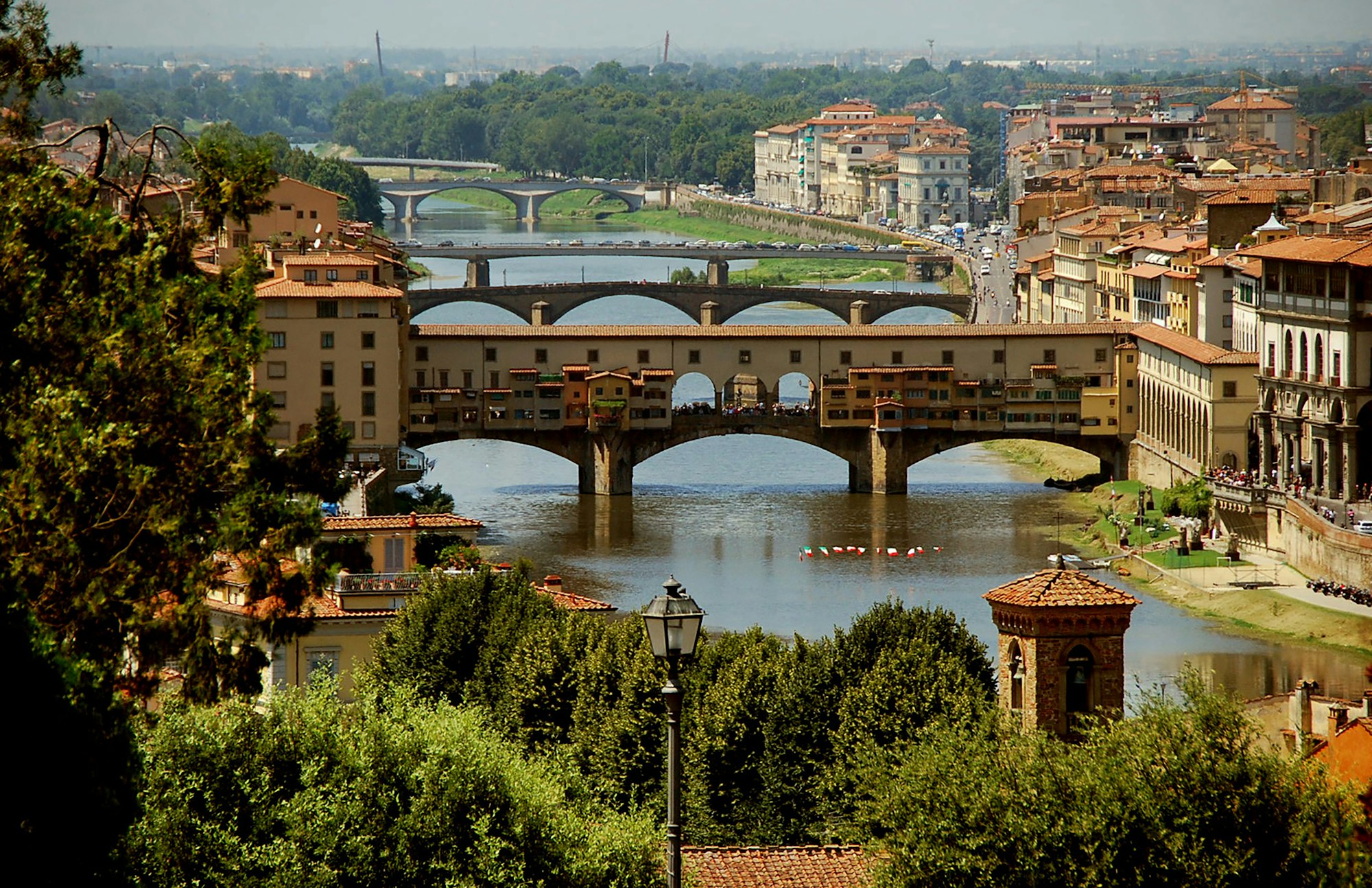
The view that made the bridge famous is from the river bank. From there you see the little shops hanging off its outer edges, out over the water. Above them runs the covered Vasari Corridor, which joins the Uffizi to the Pitti Palace.
Look under the shops at the arches. They are shallow segments rather than Roman half-circles, which kept the piers in the river few and made the climb easy for animal carts.
Butchers, tanners and farmers held the first shops, until a Medici decree cleared them out and gave the bridge to goldsmiths and jewellers, a rule still in force. In August 1944 the retreating German army destroyed every other bridge in Florence but left this one, blocking it instead by blowing up the buildings at both ends.
Free to walk, the bridge is a public street, so there is no gate, ticket or queue. Cross slowly, looking into the windows to your left and right.
At the Cellini bust halfway over, step to the side if you want to stop. Standing in the walkway, especially with a group, blocks the narrow passage. Carry on into the Oltrarno at the far end.
To see the bridge itself, walk along the river bank to Ponte Santa Trinita, the next bridge. From there you get the side view of the shops hanging over the water, and it is at its best in the half hour before sunset.
You need no guide to cross. If someone offers you a Ponte Vecchio ticket, check what it actually includes, because the bridge itself has no entry ticket.
A private guide makes more sense in the Vasari Corridor. Corridor groups are capped at 25 and come with Uffizi staff who escort but do not explain. A private guide takes one of those places.
The passage is packed from about 10:00 to 18:00, so come before 9:00 if you want to look in the windows without being jostled. If you buy, ask how long the shop has traded on the bridge: the most reputable have been here for generations.
The corridor above is a separate visit. A standard Uffizi ticket does not cover it: book one with the corridor supplement, and pick a corridor slot at least 30 minutes after your gallery slot.
You meet at Room D19 on the Uffizi first floor and walk one way to the Pitti side, with no way back. Leave backpacks and large umbrellas behind, keep your coat on you, and take photographs but no video.
Explore the rest of Florence
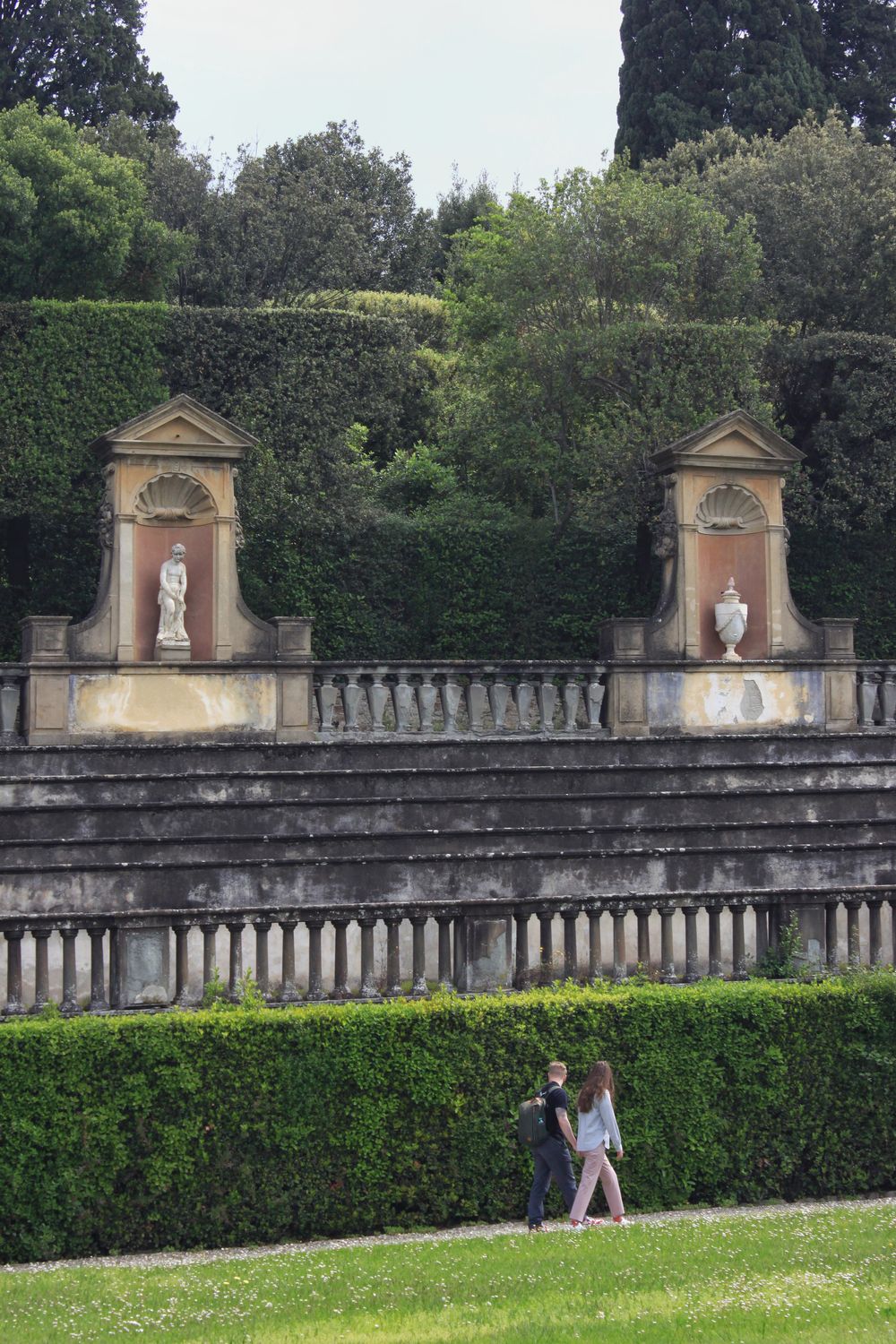
Grottoes, an amphitheatre cut into the hillside and long gravel avenues fill this formal garden behind the Pitti Palace. Enter from the…
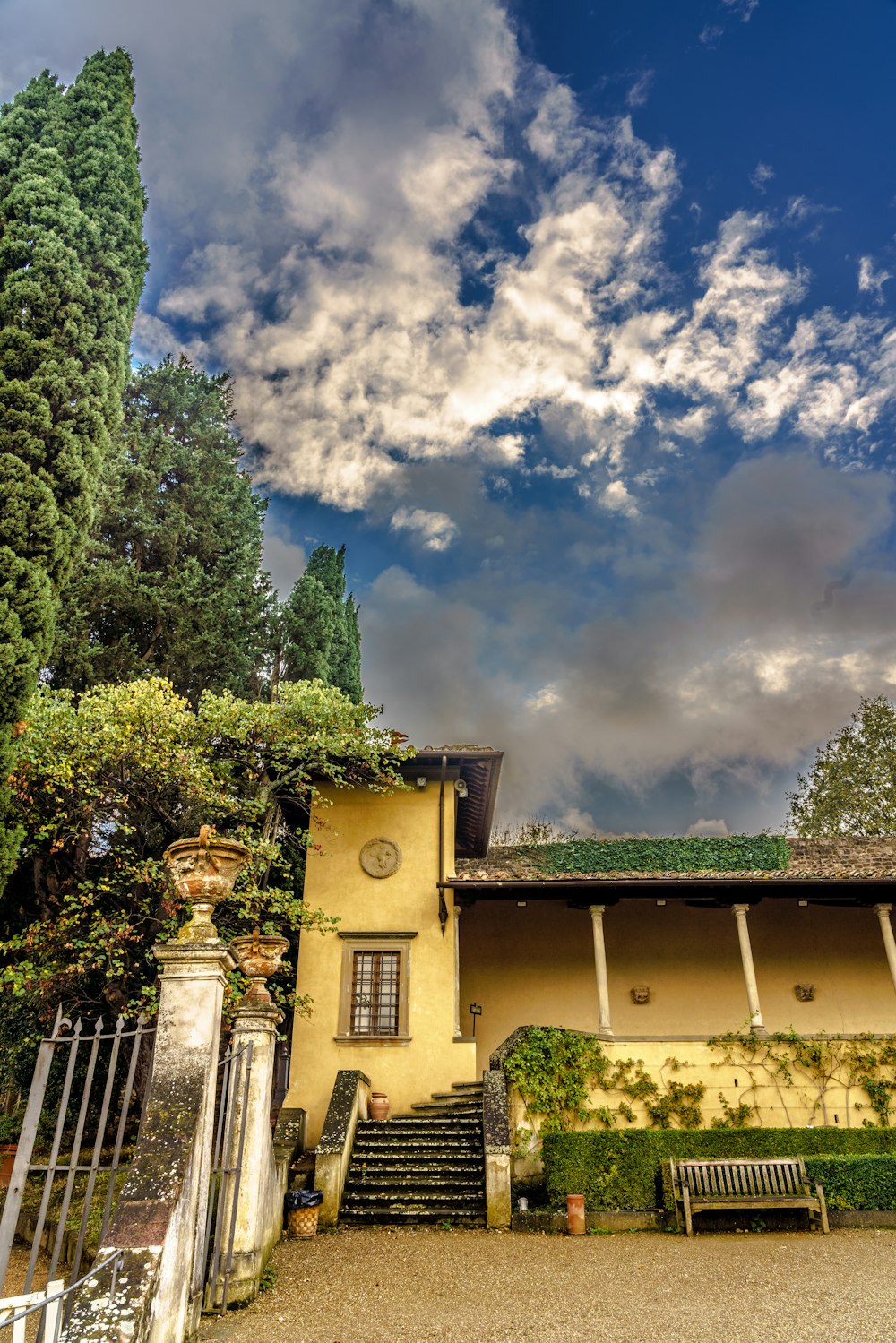
Come in April or May for the wisteria tunnel in flower; the rest of the year you come for the Baroque staircase, the fountains and the…
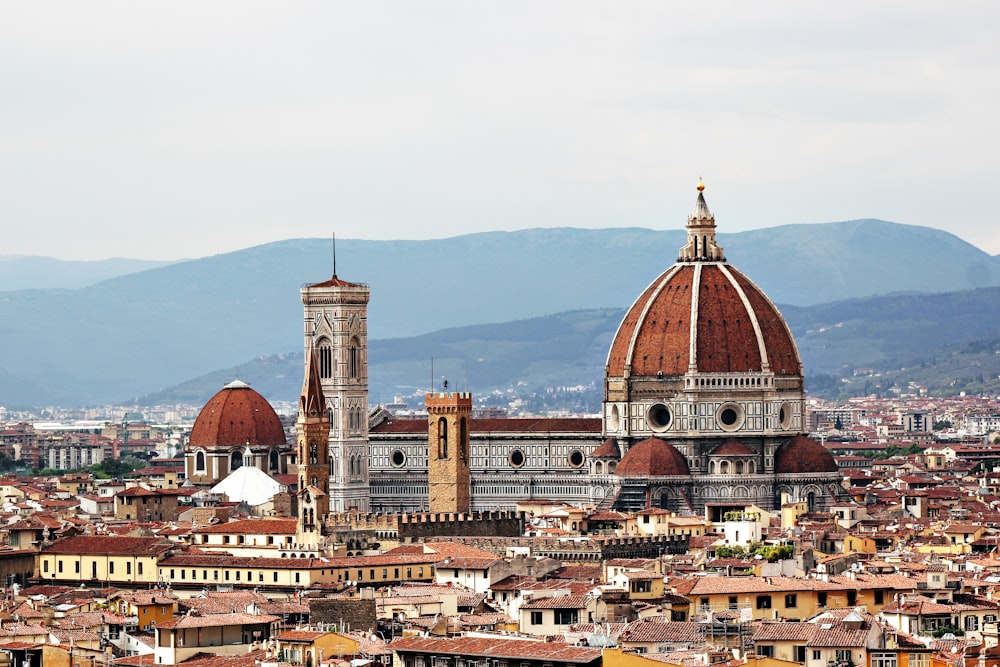
Inside the cathedral, look up into Brunelleschi's dome, the largest masonry dome ever built, painted on the inside with a vast Last…