Things to do
39-
Piazzale Michelangelo
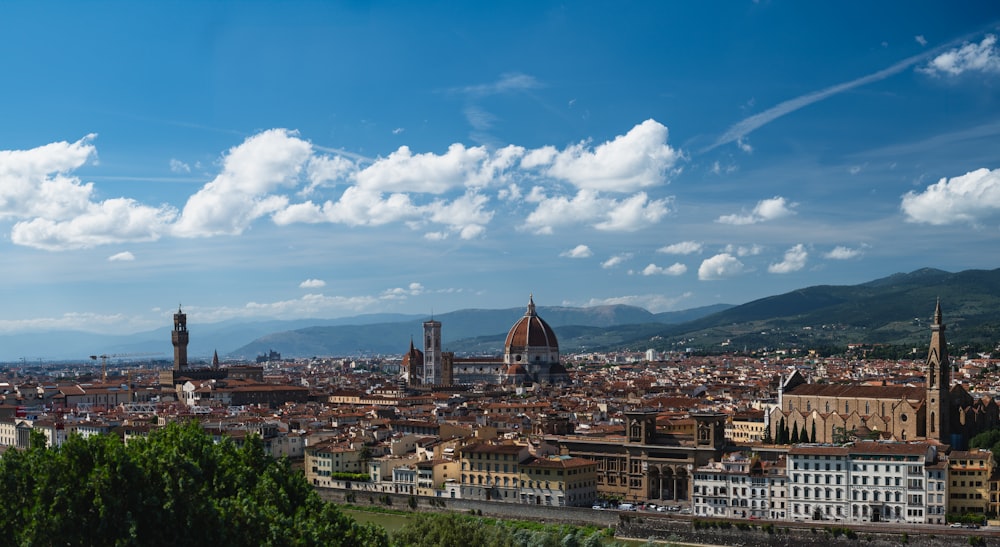
From this terrace on the south bank the whole city and the dome lie below, and its steps are the place to sit for sunset. Arrive well before the sun goes down to get a seat. Walk ten minutes higher to San Miniato for a second view.
-
Boboli Gardens
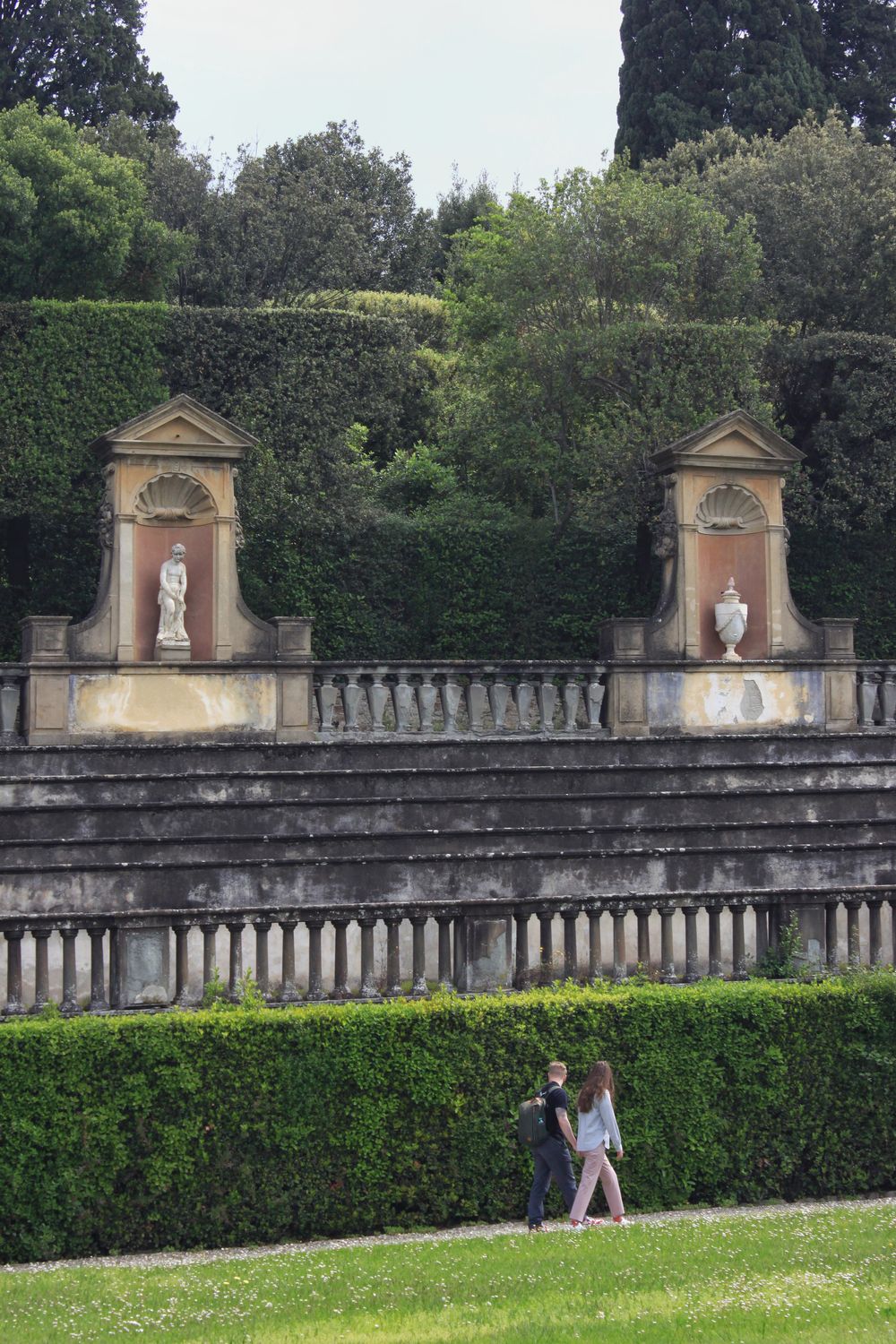
Grottoes, an amphitheatre cut into the hillside and long gravel avenues fill this formal garden behind the Pitti Palace. Enter from the palace courtyard. Seeing it properly takes about three hours, and it closes on the first and last Monday of each month.
-
Galleria dell'Accademia
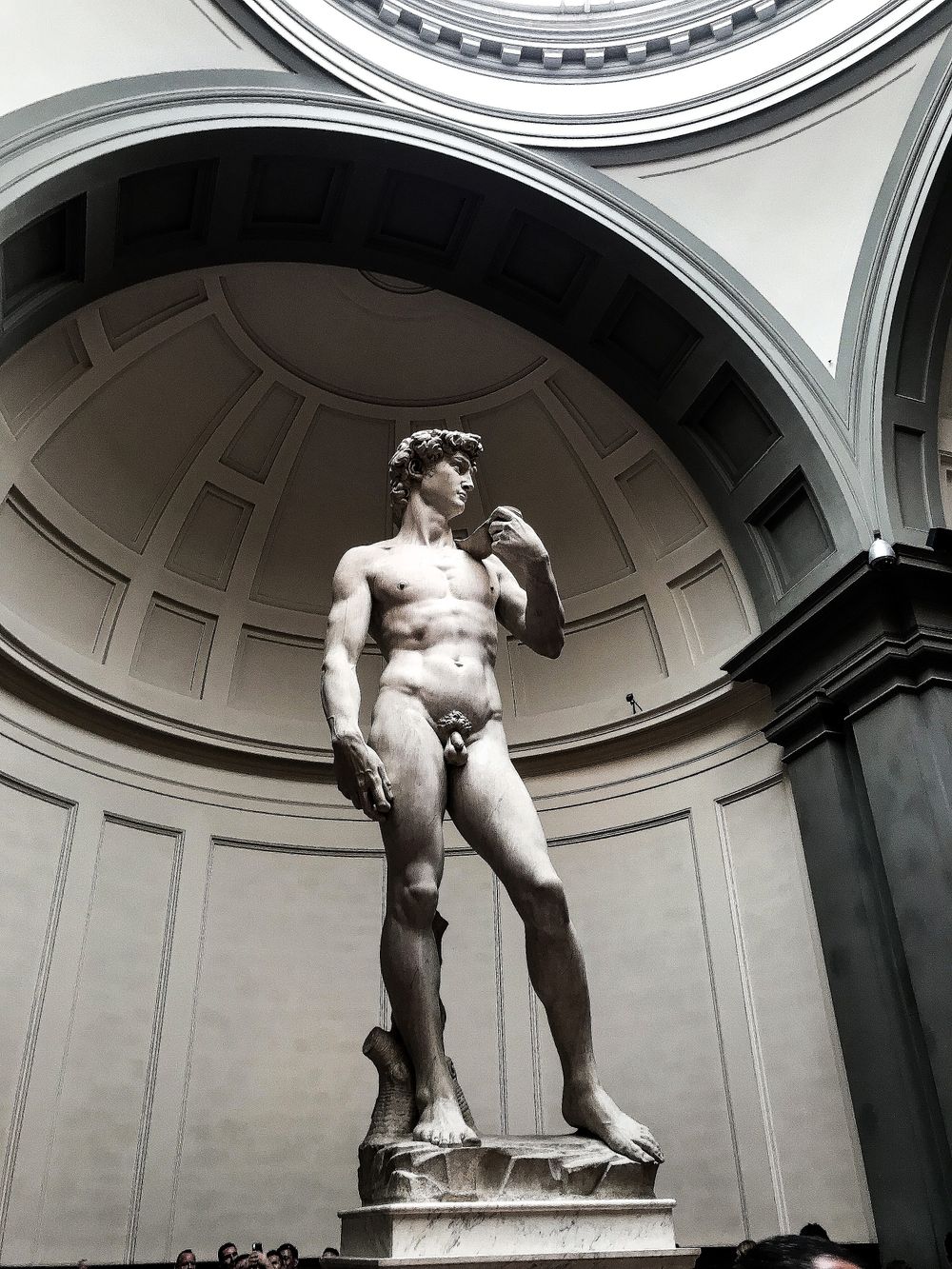
Michelangelo's David stands at the end of a long hall here, past the unfinished Prisoners, still half inside their blocks. Book a timed slot well ahead, and go at opening for room in front of the statue. The gallery is closed on Mondays.
-
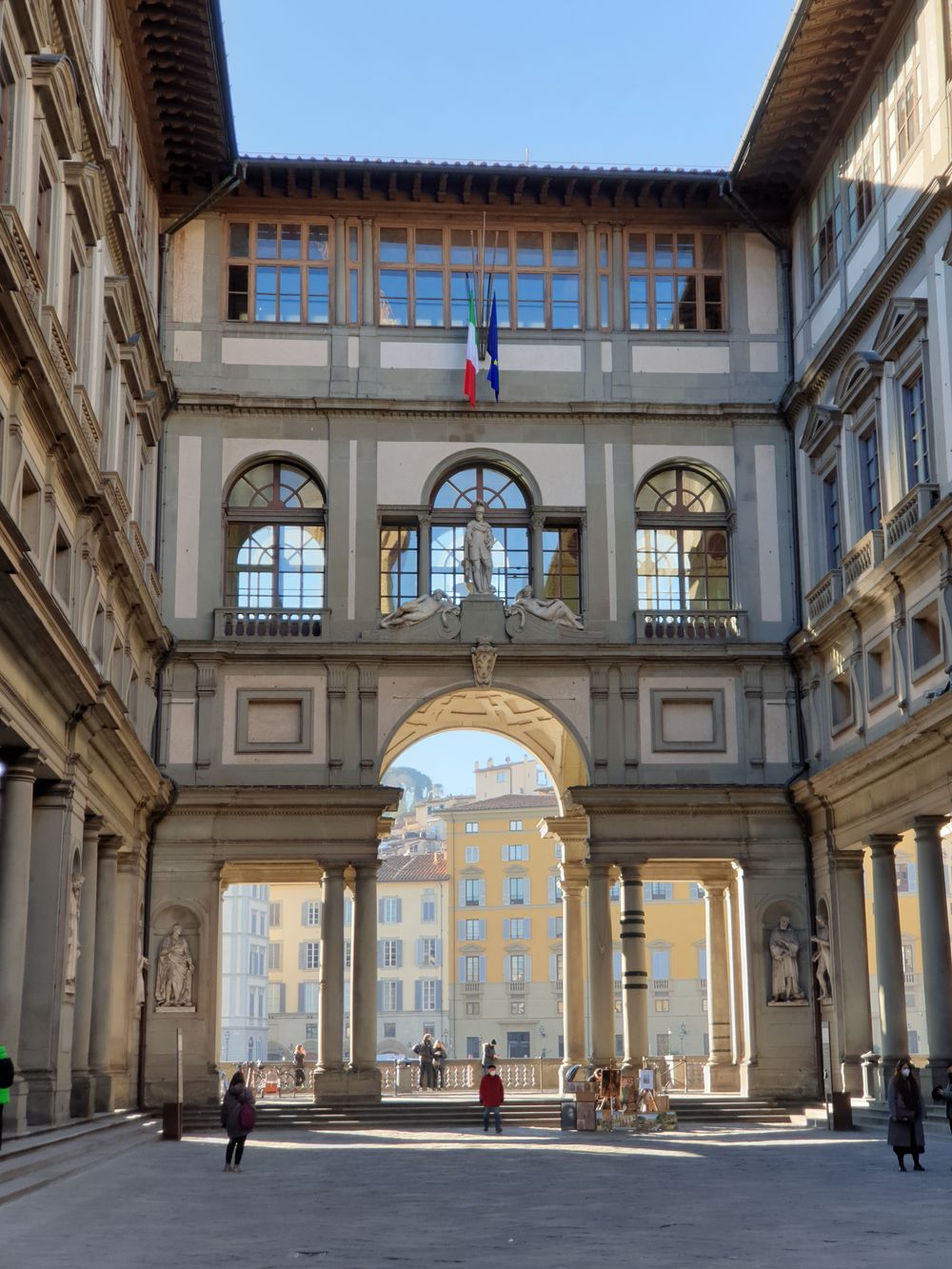
Uffizi Gallery
Botticelli's Birth of Venus and Primavera hang in this gallery of the Medici collection, beside Piazza della Signoria on the river. Book a timed entry on the official site and arrive 15 minutes before the slot. The gallery is closed on Mondays.
-
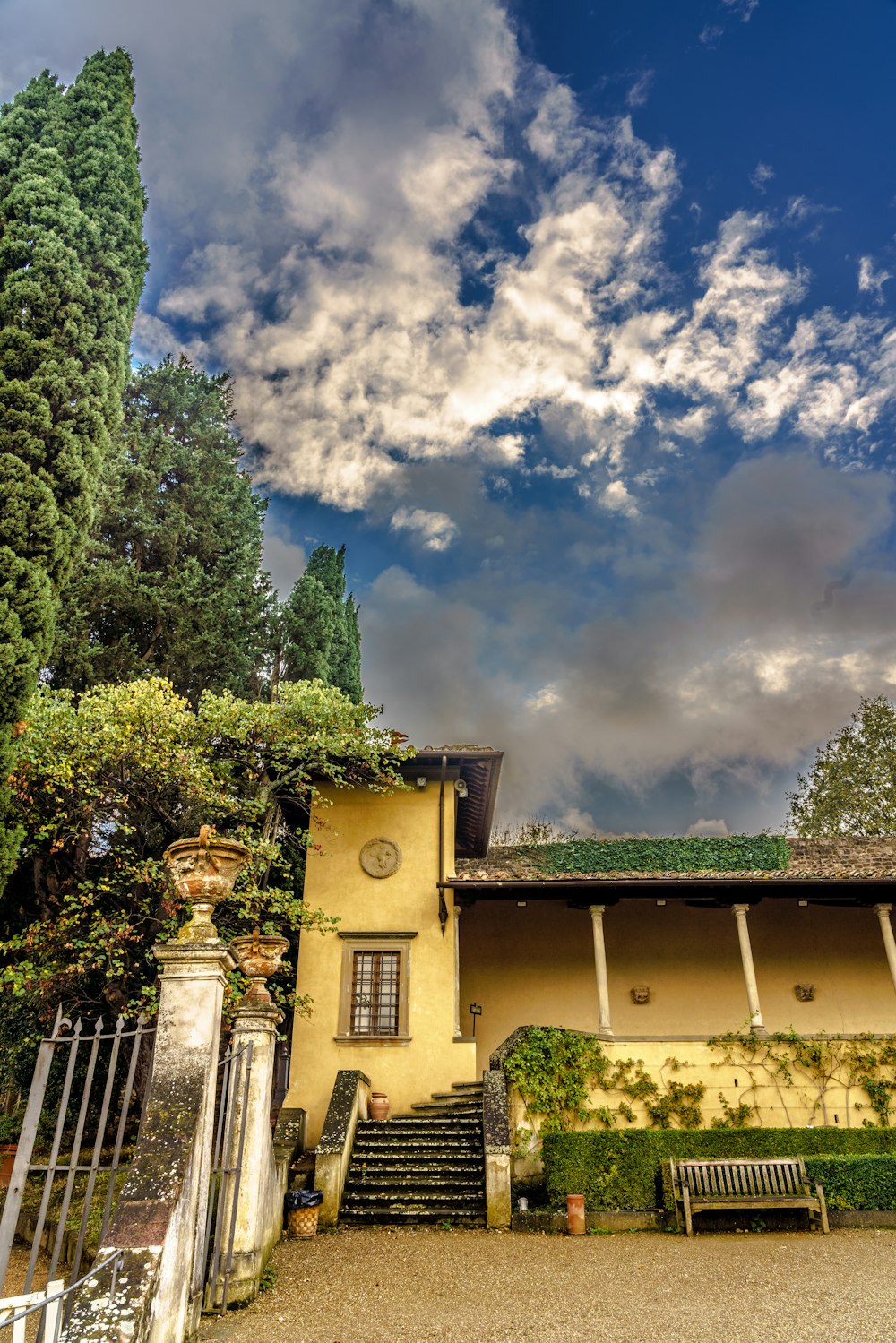
Bardini Garden
Come in April or May, when the wisteria walkway in this terraced garden is in flower; outside those weeks it has finished. The garden climbs a steep hillside in the Oltrarno, on the south bank, with views over the city from the upper terraces. Wear shoes that grip on the slopes.
-
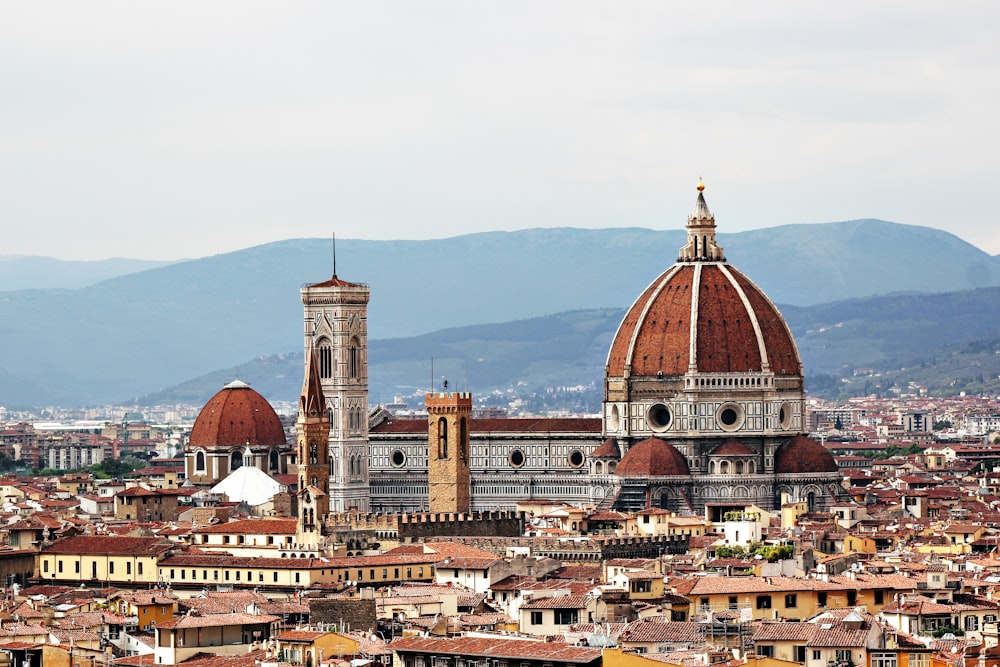
Florence Cathedral
Inside the cathedral, look up into Brunelleschi's dome, the largest masonry dome ever built, painted on the inside with a vast Last Judgement. Arrive before opening, because the queues build through the day. Cover shoulders and knees and take hats off: the dress rule is enforced at the door.
-
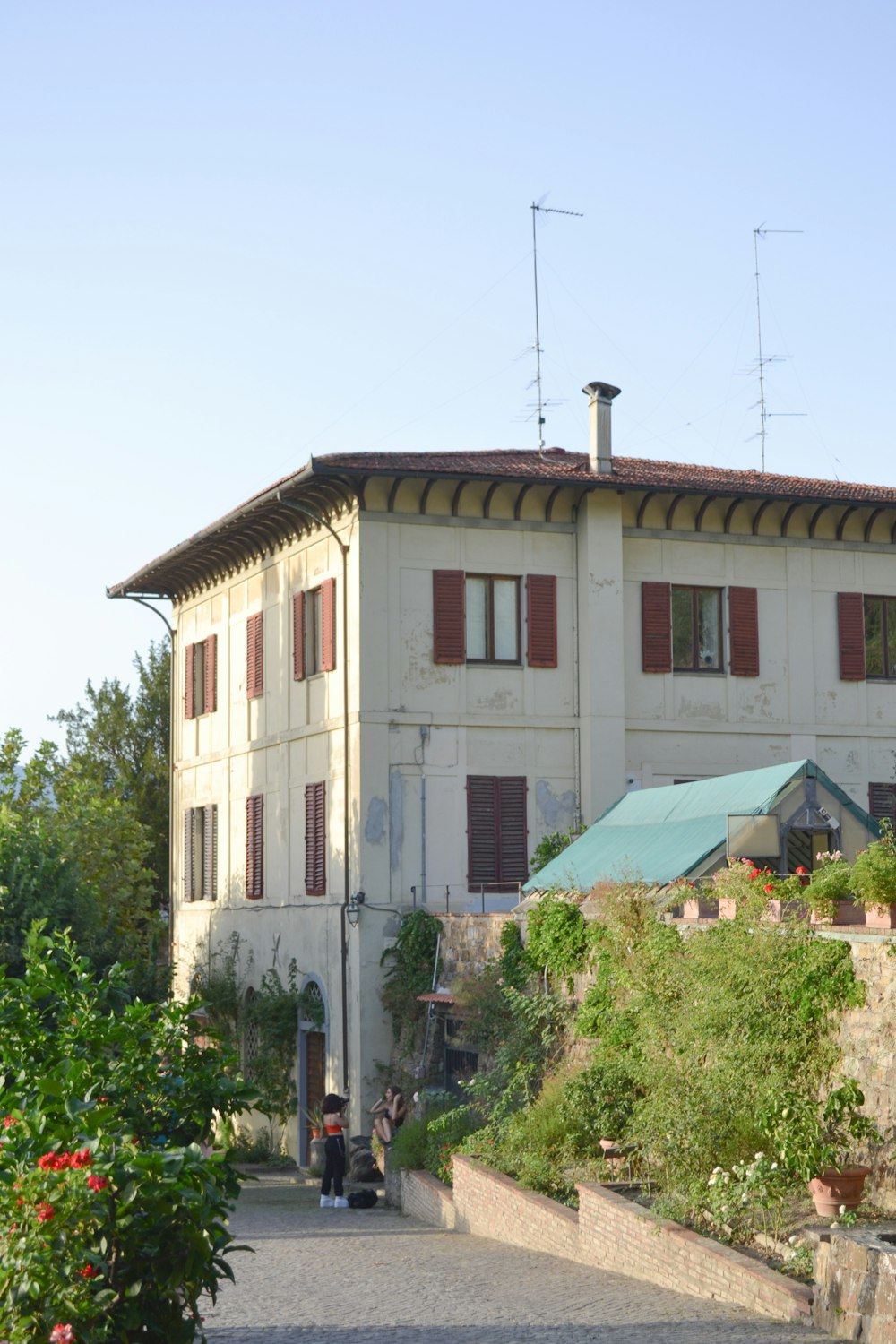
Giardino delle Rose
Spring is the season for this terraced rose garden on the slope below Piazzale Michelangelo, when the beds are in flower. It looks out over the city, and it can be entered from the piazzale side. Reaching it from the river means a climb, with some steps on the way.
-
National Archaeological Museum
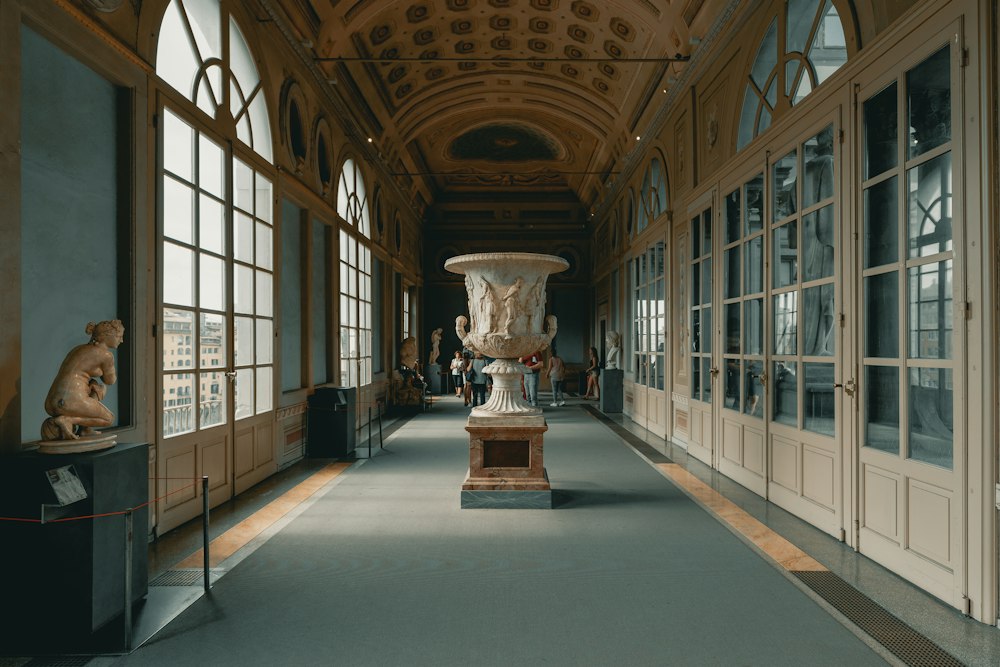
Etruscan bronzes are the strength of this museum a short walk from Piazza della Santissima Annunziata, north east of the Duomo, alongside Roman and Egyptian collections. Find the Chimera of Arezzo, the best known of the bronzes, then work outward through the rest of the Etruscan rooms.
-
Ponte Vecchio
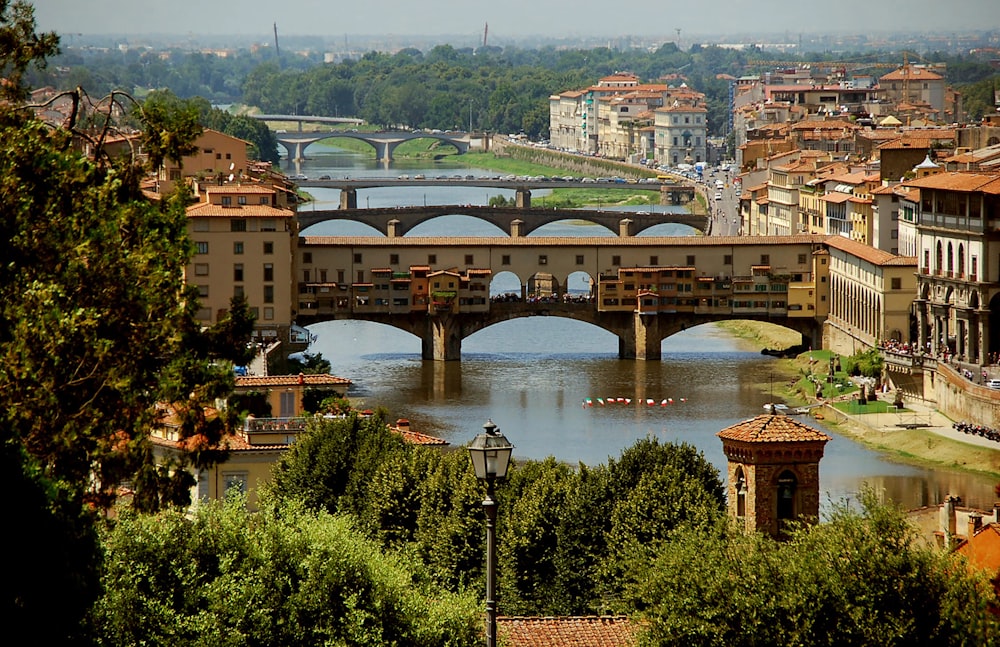
Goldsmiths and jewellers have lined this bridge since the sixteenth century, and the Vasari Corridor runs above their shops. Cross it at sunset for the light on the river, or before breakfast when it is emptiest. Shop here only for serious gold or silver.
-
Basilica di Santa Croce
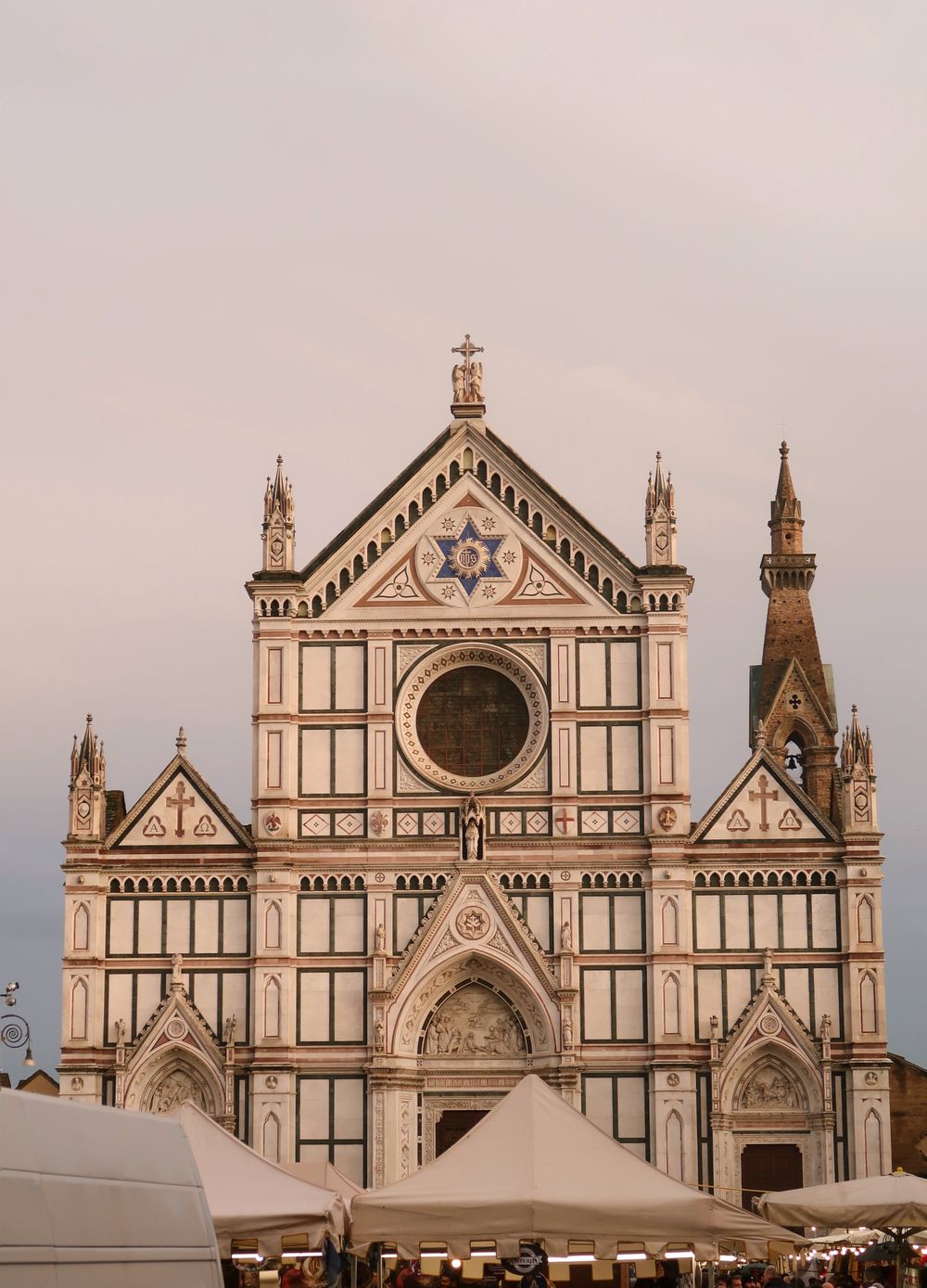
Michelangelo, Galileo and Machiavelli are buried in this Franciscan church east of the centre, and Giotto's frescoes fill the chapels beside the high altar. Brunelleschi's Pazzi Chapel opens off the cloister. A leather school still works in the old friary rooms behind the sacristy.
-
Mercato Centrale
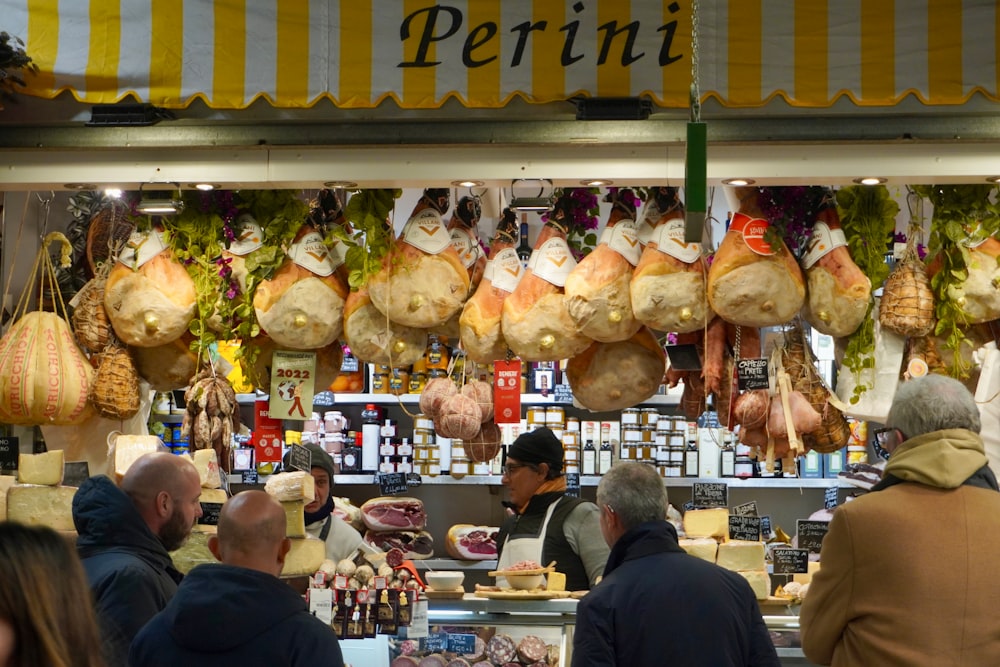
Produce stalls and butchers trade on the ground floor of this cast-iron market hall near San Lorenzo, and a food hall upstairs runs into the evening. Eat lunch upstairs. Skip the souvenir stalls outside and go in for the working market.
-
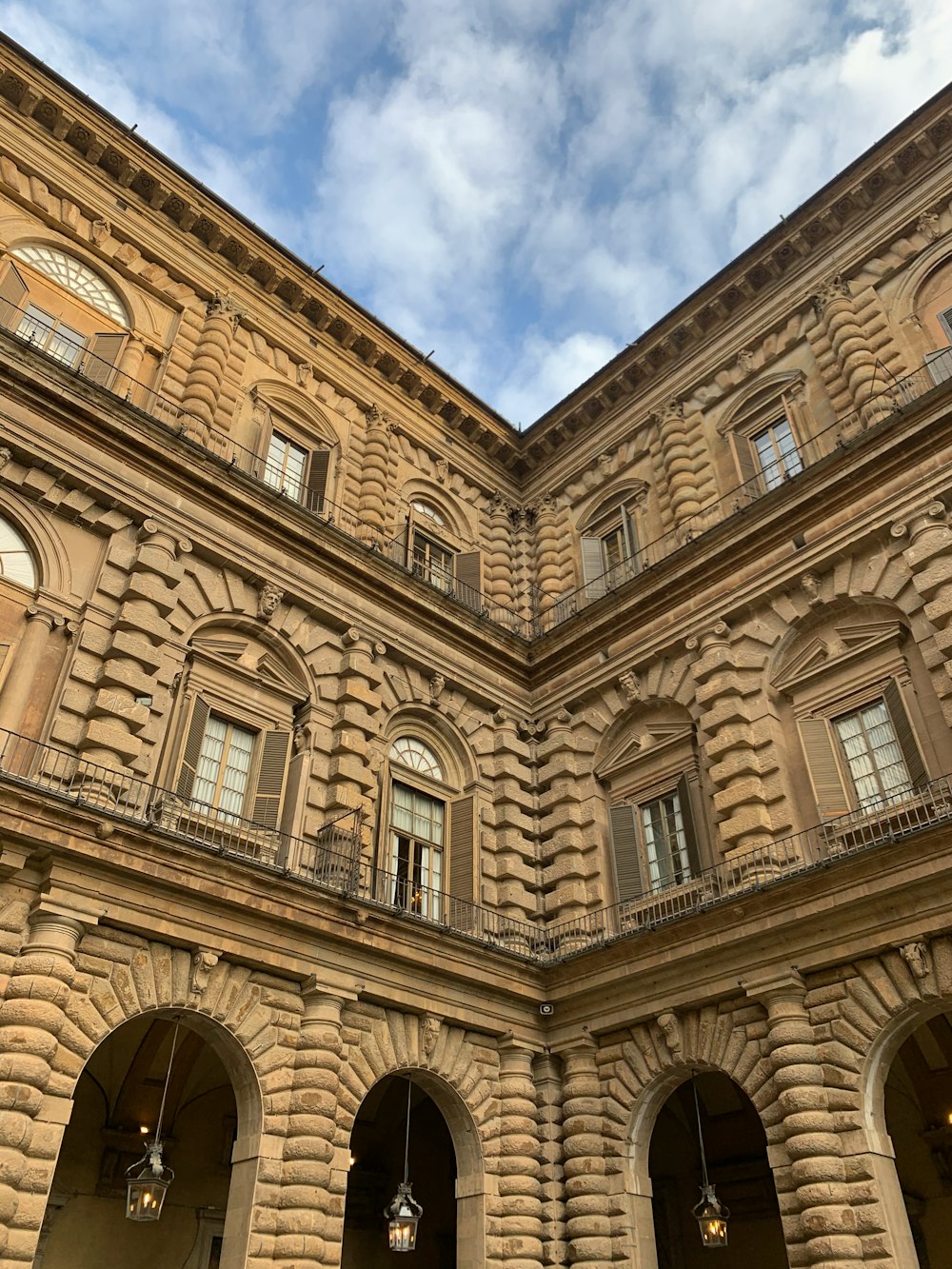
Palazzo Pitti
Paintings hang frame to frame in the Palatine Gallery, one of the museums in this palace across the river. The palace is closed on Mondays. The Boboli Gardens behind it take a separate ticket.
-
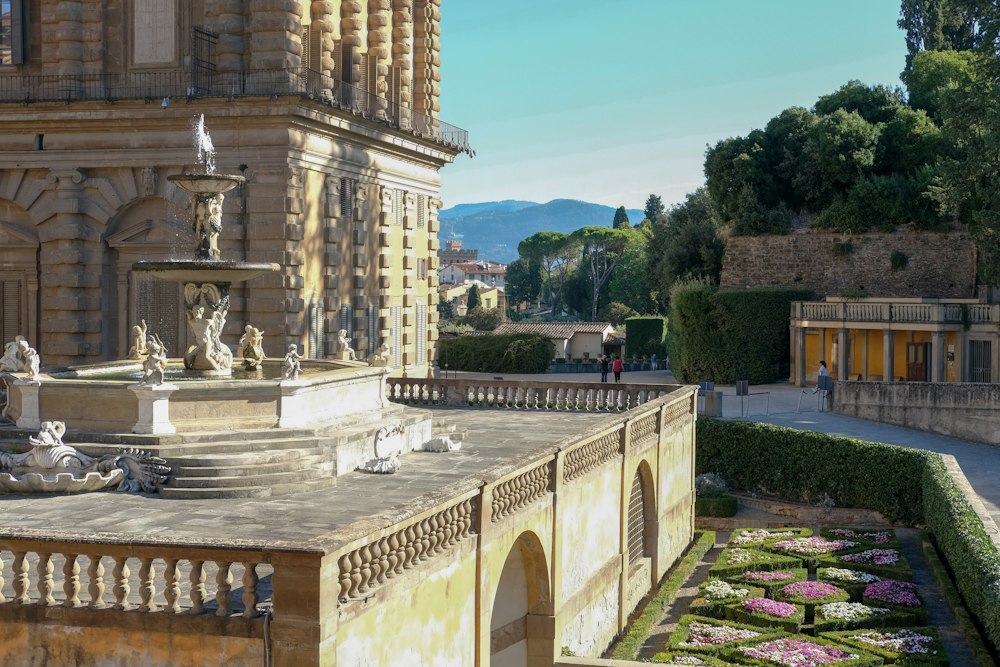
San Miniato al Monte
Ten more minutes uphill from Piazzale Michelangelo, this basilica has its own viewing spot beside the church, over the whole city. Its green and white marble front faces the river. Come in the evening, and ask at the church for the time of vespers, which the monks sing in Latin.
-
Bargello National Museum
Donatello's bronze David stands in this museum of Renaissance sculpture, set in a fortified medieval palace. Find the two competition panels Ghiberti and Brunelleschi made for the Baptistery doors. Book a timed entry to skip the queue; it closes on the second and fourth Sunday and the first, third and fifth Monday of each month.
-
Oltrarno
Across the Arno from the centre, the Oltrarno spreads around Piazza Santo Spirito and the Palazzo Pitti, with gilders, frame makers and leather workshops at work in its streets. Masaccio's frescoes are in the Brancacci Chapel on Piazza del Carmine. On the second Sunday of each month a market fills Piazza Santo Spirito.
-
Centro Storico
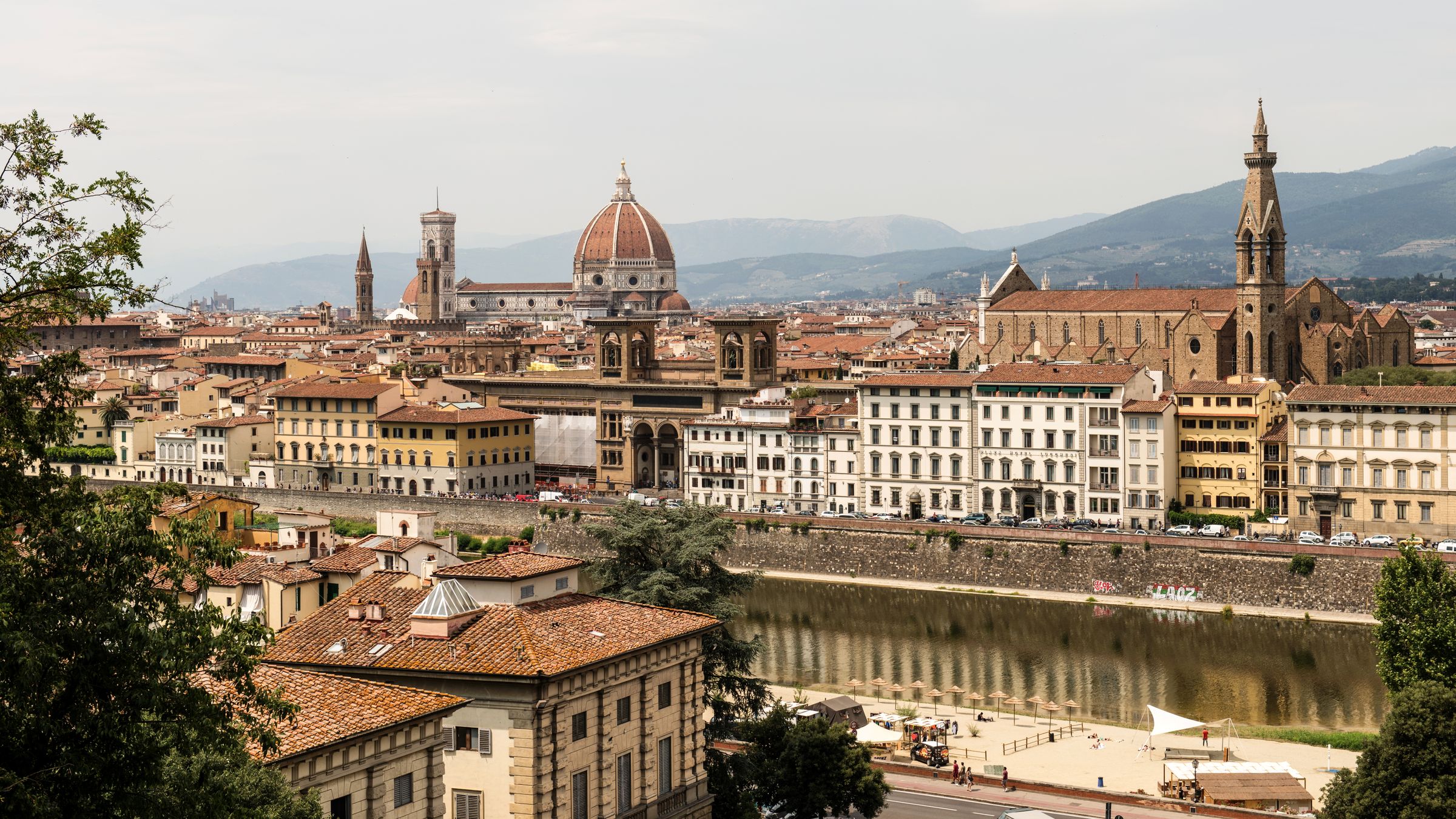
Most of what a first visit is for sits in this compact centre on the north bank of the Arno: the cathedral, the Uffizi, Piazza della Signoria, San Lorenzo and the Accademia. There is no metro or tram here, so the way round is on foot, and the stone lanes are loud at night.
-
Forte di Belvedere
A Medici fortress stands on the hill above the Oltrarno, near the Boboli Gardens, with open terraces that look across the whole city. It opens from early June to mid October and closes on Mondays. The paths up are steep, so carry water in summer.
-
Giardino dei Semplici
The city's botanical garden sits a short walk north of the Accademia, in the university quarter. Its name refers to medicinal plants, and beds of them grow among greenhouses and old trees. Go there for a quiet green block between the galleries.
-
Giardino dell'Orticoltura
A large iron and glass greenhouse stands at the heart of this public garden north of the centre, beyond the ring of avenues that circles the old city. Sloping lawns and shade trees surround it. Walk out to it for a break from the museum crowds.
-
Medici Chapels
Michelangelo's tombs for the Medici fill the New Sacristy in these burial chapels behind the Basilica of San Lorenzo. The entrance is separate from the church, at the back of the building, and booking ahead is optional. The larger Chapel of the Princes is lined in coloured marble.
-
Museo dell'Opera del Duomo
The original sculpture and bronze doors taken in from the cathedral, the Baptistery and the bell tower are kept in this museum on Piazza del Duomo. Go after the dome climb to see up close the work made for the buildings outside. It closes on the first Tuesday of each month.
-
Museo Galileo
Telescopes linked to Galileo are the pieces to find in this museum of scientific instruments, on the river beside the Uffizi. Globes, clocks and the instruments collected by the Medici fill the galleries. Pair it with the Uffizi next door, on the same morning or the next.
-
Museum of San Marco
Fra Angelico painted the walls of the friars' cells in this convent north of the Duomo, near the Accademia. The upper corridor runs past one small frescoed cell after another, and his Annunciation hangs at the top of the stairs.
-
Palazzo Strozzi
Large temporary exhibitions fill this Renaissance palace a block west of Piazza della Repubblica, changing through the year, so there is no permanent collection to plan around. The courtyard is open to walk into between shows. Check the current exhibition before going.
-
Parco delle Cascine
The largest park in the city runs in a long strip along the north bank of the Arno, west of the centre beyond the main station. Avenues of trees shade its paths for running, cycling and walking. Go for shade on a hot afternoon.
-
San Frediano
West along the south bank, between Santo Spirito and the old city gate, San Frediano is a working quarter of artisan shops, small squares and neighbourhood restaurants. It lies in the Oltrarno, a short walk from the Brancacci Chapel. Walk it in the early evening, while the workshops are still open and the restaurants start serving.
-
San Niccolò
The walks up to Piazzale Michelangelo and the Rose Garden start in this small quarter on the south bank, east of Ponte Vecchio. Its tower gate stands at the foot of the climb. Come in the late afternoon, walk up for sunset, then come back down for dinner.
-
Sant'Ambrogio
East of the Duomo and north of Santa Croce, this residential quarter is built around the Mercato di Sant'Ambrogio and the church square. It has few big sights and many neighbourhood shops. It makes a quieter base within walking distance of the centre.
-
Baptistery of San Giovanni
Look up once inside the octagonal Baptistery: the ceiling is covered in mosaic, and it is the thing to see after the bronze doors outside. The building faces the front of the cathedral on Piazza San Giovanni, across a short stretch of paving from the cathedral doors.
-
Basilica di San Lorenzo
Brunelleschi designed the Old Sacristy inside this church, the Medici family's parish church a short walk from the Mercato Centrale. Its brick front was never faced in marble. The cloister and the Laurentian Library above it are reached from the side door on the square, and the Medici Chapels have their own entrance at the back.
-
Basilica di Santo Spirito
A wooden crucifix carved by the young Michelangelo hangs in the sacristy of this basilica on Piazza Santo Spirito, in the Oltrarno. The sacristy and cloister are on a separate ticketed route. The church opens every day except Wednesday, and on Sundays it closes over the middle of the day.
-
Basilica of Santa Maria Novella
Beside the main railway station, this Dominican basilica has a marble front and a museum route through its cloisters. It opens daily, on Sundays in the afternoon only, and last admission is an hour before closing. Tickets are sold at the basilica office on the day, with no booking needed.
-
Brancacci Chapel
Book online before travelling: entry is by timed reservation only, capped at ten per slot. The chapel sits inside Santa Maria del Carmine on Piazza del Carmine, in the Oltrarno. Masaccio's Tribute Money and his Expulsion from the Garden of Eden are the frescoes to stand in front of.
-
Giotto's Campanile
For the best view of the dome itself, climb the bell tower that stands beside the cathedral on Piazza del Duomo. The way up is by stairs only. Only some of the combined Duomo passes include it, so check the pass before queuing.
-
Orsanmichele
Statues fill the niches on the outer walls of Orsanmichele, a church between the Duomo and Piazza della Signoria. Thirteen of the original fourteen figures are now shown up close in its museum. The church is open to walk into; the museum is ticketed.
-
Palazzo Davanzati
This medieval merchant's house in the historic centre is kept furnished as a museum of how a wealthy family lived. Climb to the third floor to see the kitchen. It opens in the morning only and closes on the second and fourth Sundays of each month.
-
Palazzo Medici Riccardi
The Chapel of the Magi on the first floor is the reason to enter this palace a block from San Lorenzo. Benozzo Gozzoli covered its walls with the procession of the Magi, and small groups go in for about fifteen minutes each. The route up crosses the Michelozzo courtyard.
-
Palazzo Vecchio
The fortified town hall on Piazza della Signoria still houses the city government. Inside, the Salone dei Cinquecento is painted from wall to ceiling, and the tower can be climbed on a separate ticket. Another route goes down to the Roman theatre under the building.
-
Vasari Corridor
An enclosed passage runs from the Uffizi over Ponte Vecchio to Palazzo Pitti, restored and open again to visitors. Entry is by reservation in timed groups, sold with the Uffizi ticket, Tuesday to Sunday. On Friday evenings until late November 2026 it also opens on a separate evening ticket.