 Submit a photo
Ninety seconds on Mount Etna
From Catania, the route to the Rifugio Sapienza is 35 km and takes about an hour by road, via the SS114 and then the SP92 through Nicolosi. An AST bus also connects Catania's bus station with the refuge, leaving in the morning and returning in the afternoon. Only one or two services run each day.
The operator runs the service every day of the year from 8.30am to 3.15pm, and the final descent is at 5.15pm. Bad weather or technical problems can halt it on the day.
The operator sells three tickets: a round-trip Fast Track cable car ticket, a round-trip ticket for the 4x4 bus or, in winter, the snowcat, and an open ticket that is valid all day.
Access to the highest slopes and the summit craters is allowed only with an authorised volcanological guide, under ordinances from the Mayor of Nicolosi and civil protection. During intense eruptive activity those ordinances can lower the height that may be reached without a guide.
May, June, September and October suit a visit best, with milder temperatures and clearer views than in midsummer. July and August can be very crowded and hazy. Even in May and June, temperatures above 2,000 metres can be 5 to 12 degrees with wind.
The standard cable car tour lasts around two and a half hours. The summit crater excursion, which walks the last stretch with guides, takes about five hours.
By mid-morning you can be walking among the craters of 2002, high on Etna's south side, after a cable car and an off-road bus from Rifugio Sapienza. It is the easiest way onto the upper slopes of Europe's highest active volcano.
Most of the ground you walk on the south side is young. The Silvestri Craters below Rifugio Sapienza are a ring of red-black scoria built in 1892 by an eruption that threw lava up to 400 metres high for 173 days.
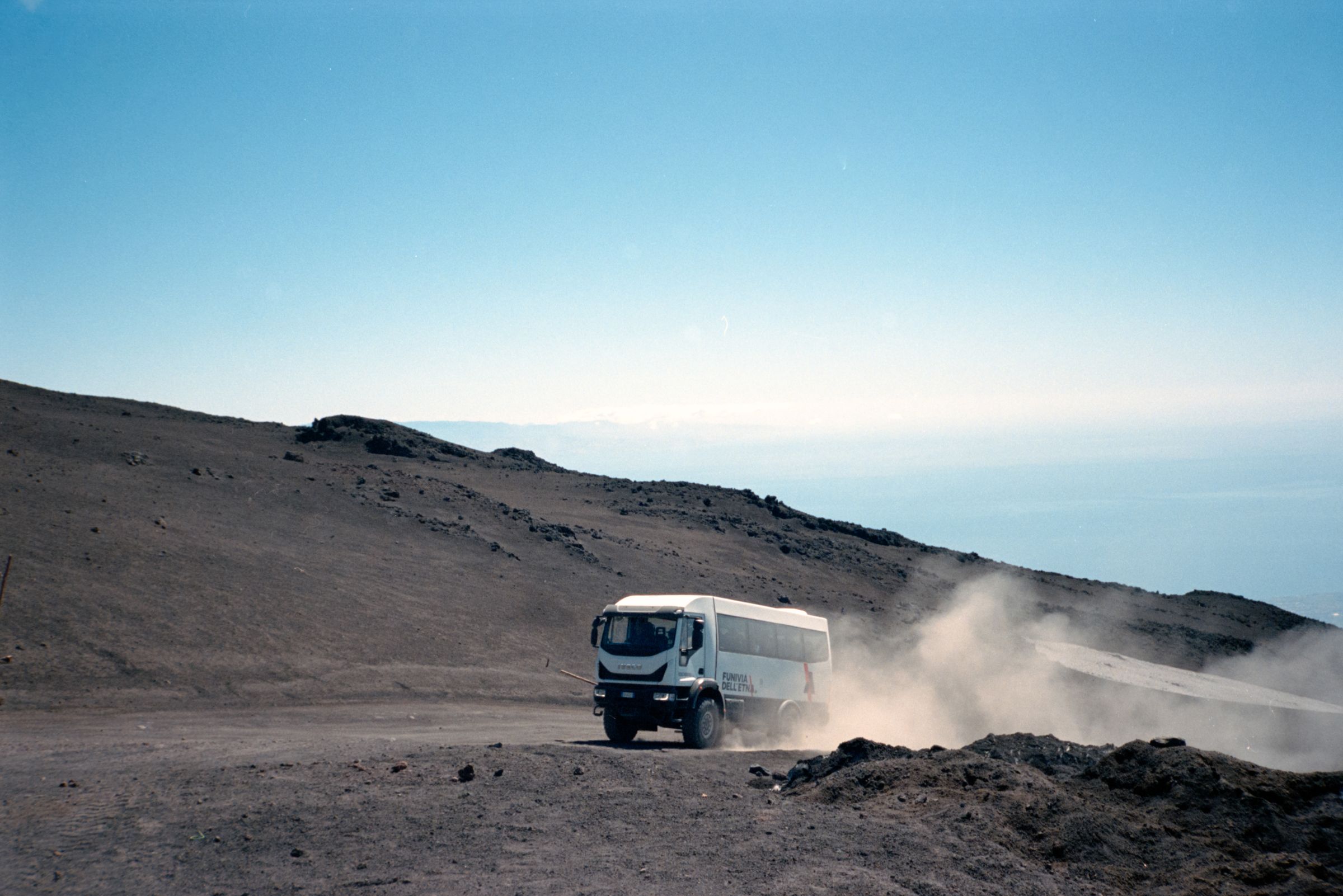
Higher up, the 4x4 buses climb through the craters of 2002 towards the Torre del Filosofo. The dark ground around them includes the lava flows of May 2023.
On a guided walk to Barbagallo, a side crater near 3,000 metres, you go inside one of those lava channels. You then walk down to a mound looking over the Valle del Bove, a valley on the mountain's flank, and on a fine day the view runs from the Ionian coast to the interior of Sicily.
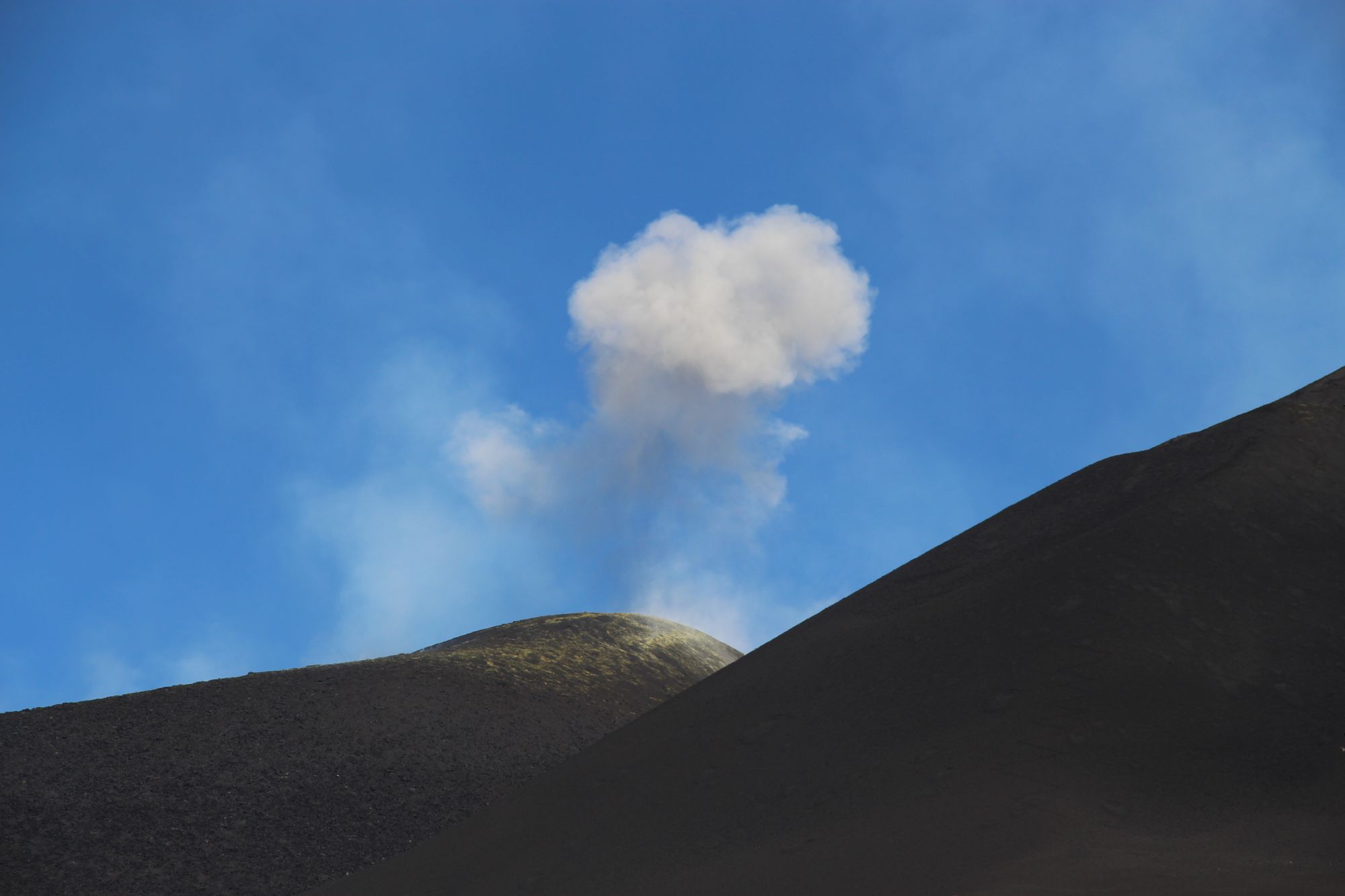
Above everything are the summit craters, the main vents, where most of Etna's eruptions begin.
From the car park at Rifugio Sapienza, the cable car climbs from about 1,900 to 2,500 metres in roughly fifteen minutes, over extinct craters with the coast below. The tour ticket covers both rides, up and back, and stays valid all day. Rent boots and a windbreaker at the upper station if you came up in trainers.
From there, the buses follow the only road towards the Torre del Filosofo. At the last stop the operator's volcanological guides walk the group among the 2002 craters before the ride back down. The last car down leaves at 5.15pm.
On the way up or down, stop at the Silvestri Craters below the car park. An easy half-hour path with benches follows the rim of the lower crater.
Leave slack in the afternoon, because wind can delay the day or change its route.
Carry plenty of water and a snack, because nothing is sold above the refuge. Wear long trousers against the fine volcanic sand that blows about, and bring a hat, sunglasses, sun cream and a windproof layer: even in summer it can be 5°C with strong wind at the top.
Nicolosi, and further afield
The southern base town for Etna, at about 700 metres on the volcano's flank, where the guides and the cable-car road start. Catania is half…
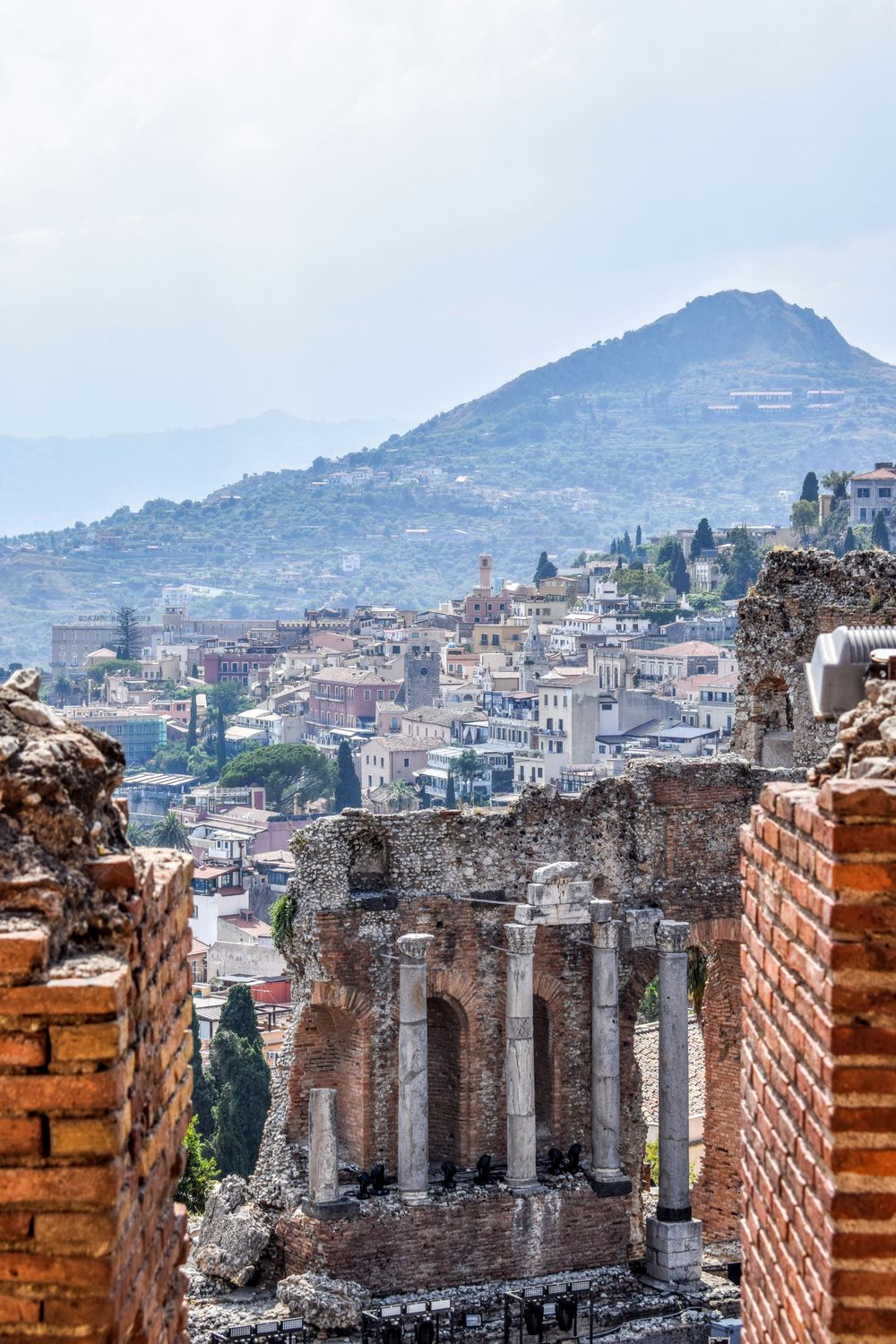
A terrace town on the Sicilian east coast, two hundred metres above the sea with Etna filling the view south. It has been a grand tour stop…
Last updated