 Submit a photo
Ninety seconds on Wadi Rum Protected Area
Wadi Rum is reached from the Desert Highway: a narrow road runs 22 kilometres from the turn-off to the visitor centre, and Rum village sits 7 kilometres beyond it. The drive from Petra covers about 100 kilometres and takes around 90 minutes. Without a car, one bus a day goes to the visitor centre, and local buses run every day except Friday.
Entry is ticketed. Tickets come from the ticket desk inside the visitor centre alone, and nobody else there should be paid. Jordan Pass holders still have to register at the centre and show the pass before driving on to the village.
Private cars may enter the desert only if they are a suitable 4x4 with permission. Beyond Rum village the tarmac gives way to open sand with no roads, and drivers new to it get stuck. Hikes, climbs and camel treks also need an official guide, so most visitors leave the car in the village.
Spring, from February to May, and autumn, from September to November, are the best months and also the busiest. Summer days in the reserve can top 40°C, while winter brings cold nights.
Most visits last one night: a half-day jeep tour, sunset and sunrise from a desert camp, and departure the next morning. Shorter two-hour tours and full-day tours of seven or eight hours also exist, all on a fairly fixed route.
The best-known group is in Khazali Canyon, a narrow cleft about 100 metres long that nearly every jeep tour visits. Its walls carry carved people, animals and footprints, along with Thamudic, Nabataean and Islamic inscriptions. Figures with raised arms are taken to show people praying.
From sunset to sunrise is the reason to come: you spend the night in a camp among red dunes and sandstone cliffs, under a sky that ranks among the best on earth for stargazing.
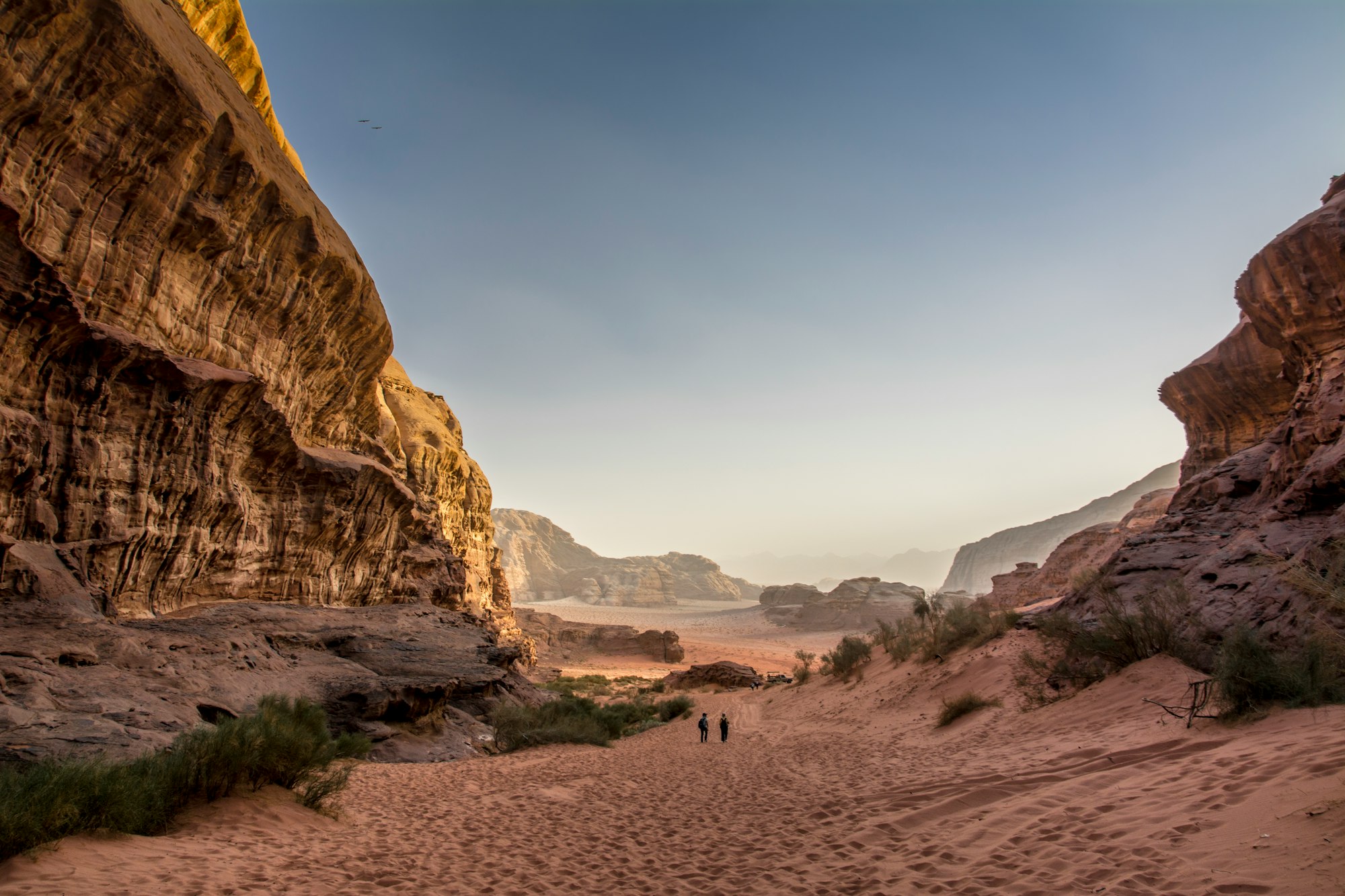
Wind and weather have worked the sandstone here into towers, cut it with narrow gorges and opened it into natural arches. The cliffs stand over red sand, and a jeep tour spends most of its time threading between them.
The reserve also protects some 25,000 carvings and 20,000 inscriptions, which record 12,000 years of life in this desert. Khazali Canyon, a cleft about 100 metres long, is where you see them up close: people, animals and footprints cut into the walls, beside lines of Thamudic, Nabataean and Islamic script. Look for the human figures with their hands raised, which are read as people at prayer.
The desert is shown to you by the Bedouin who live in it. Jeep tours are run by local Bedouin as licensed operators, and many of the reserve's own staff are Bedouin too. Hospitality is central to Bedouin culture, and your camp's hosts will feed you in the evening.
Drive in past the visitor centre to Rum village, where your camp's driver meets you. From there you and your bags ride into the sand in an open 4x4.
The jeep tour comes next. Tours are sold by length, from two hours to a full day of seven or eight, and all follow much the same route, so choose by time rather than by itinerary. Almost every tour, short or long, takes in the Red Sand Dune, Khazali Canyon, Lawrence Spring and a small rock bridge, with a short walk or a light scramble at each stop.
A full day adds Um Fruth rock bridge, the most photographed stop and the most crowded. Ask your driver to time the tour so you reach camp by sunset, then eat, look up and sleep.
Book the jeep through your camp, and check that it is a licensed operator before you pay. The reserve's staff license and train tour operators, and unlicensed camps have spread fast across the desert.
Burdah Rock Bridge also needs a guide, so ask for it by name when you book. It is a strenuous climb of four to five hours, with scrambling and one short section of rock climbing. Skip it if heights or cliff edges bother you.
Book your camp before you land in Jordan, and earlier still for a bubble tent in spring or autumn, the two busy seasons. Camps run from goatskin tents with a thin mattress on the floor to domes with air conditioning and private bathrooms. Whichever you choose, the camp also handles your pickup, the jeep and dinner.
From December to March, pack a fleece, a windproof layer and a warm hat for the nights. Save the Burdah climb for spring or autumn: summer is too hot for it, and winter can bring snow.
Explore the rest of Wadi Rum
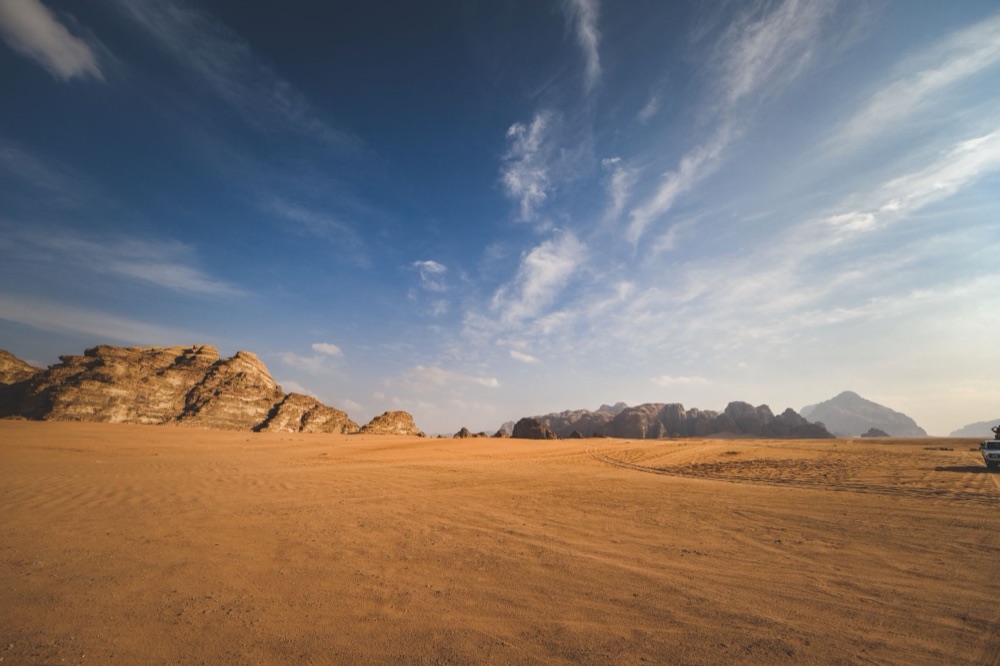
A shallow bowl of sand beneath Jebel Rum holds the Bedouin settlement that fronts the protected desert of southern Jordan, a valley of…
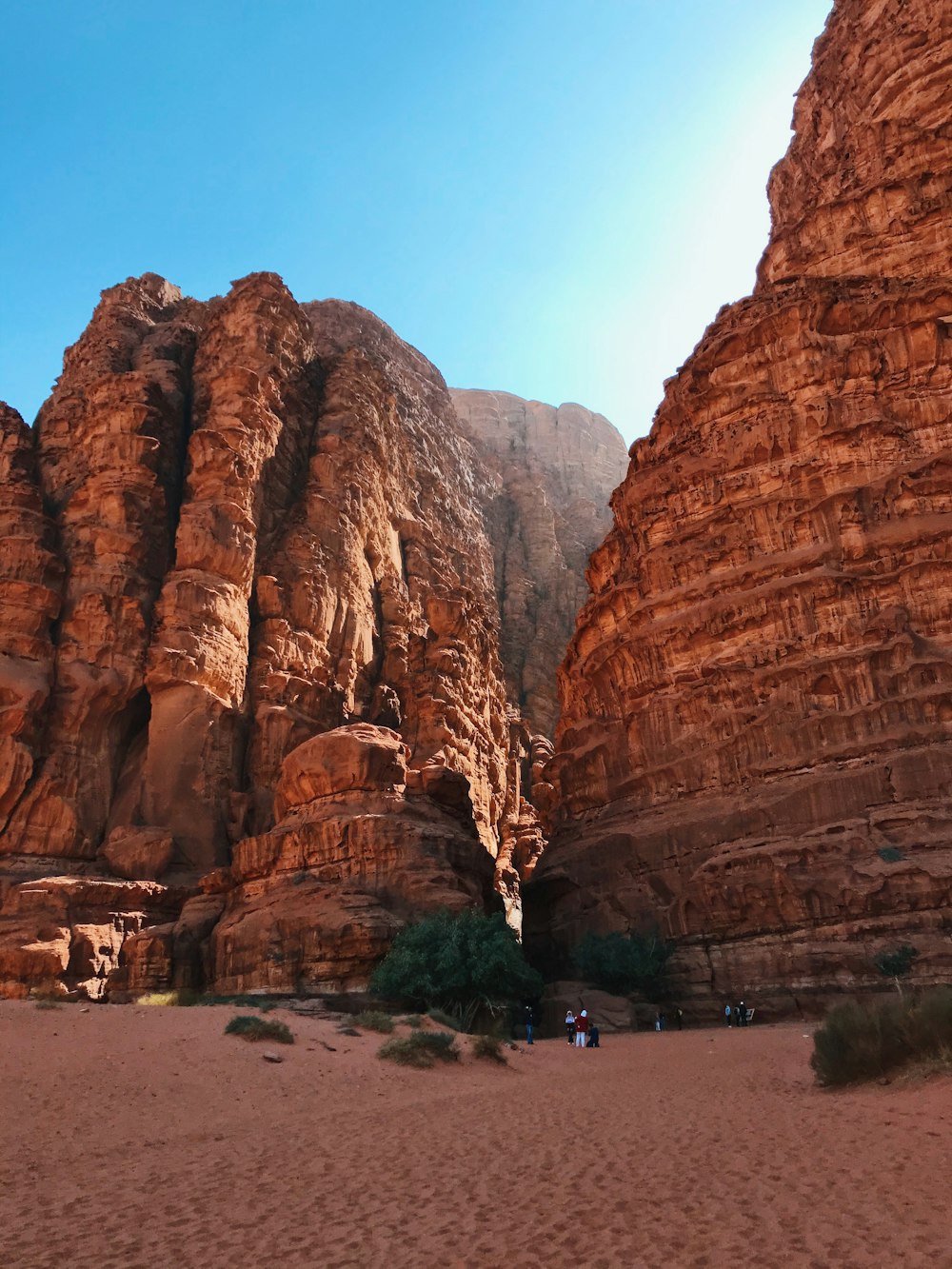
The Bedouin village at the foot of Jabal Rum, about 8 km past the Visitor Centre and the end of the local bus line from Aqaba. Some camps…
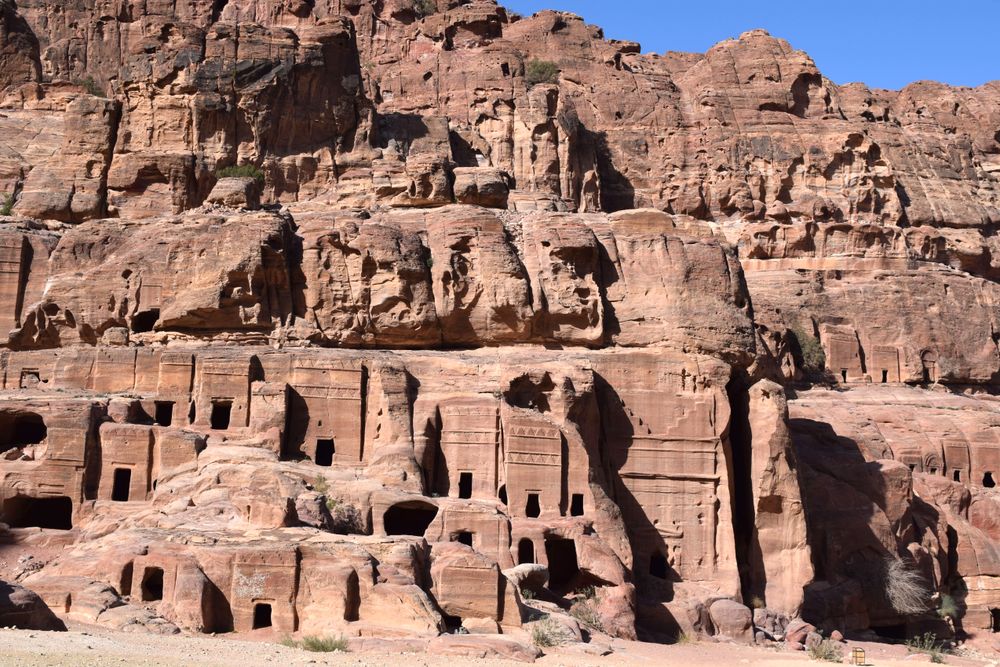
Carved into rose sandstone by the Nabataeans from the fourth century BC, the capital of a caravan kingdom spreads across canyons and ridges…
Jordan's one stretch of coastline sits at the head of the Red Sea gulf, a duty-free port city facing Eilat across the water and Egypt and…
Hotels, restaurants and tour offices climb a series of switchbacks above the entrance to Petra, in a hill town whose spring is tied to…
The official pages this guide was checked against.
Last updated