
Walk the paved main street of a Roman city whose houses still keep their mosaic floors in place, then stand under the Arch of Caracalla, which looks out over the farmland of the plain below.
Archaeological Site, Meknes. Meridian Dispatch.
A self-guided visit to the main monuments takes about two to three hours. The site has enough mosaic and carved detail to fill a whole day for anyone who wants to look closely.
As of November 2026, the site opens daily from 08:30 except on Eid al-Adha. It closes at about 19:00 in summer and 17:30 in winter.
No, the ruins have no shade at all. Summer temperatures from June to August can reach 38 to 42°C, so a hat and water are essential, and the middle of the day is the hardest time to be on the site.
By road, Volubilis is about 35 km from Meknes on the Sidi Kacem road, turning right after 8 km toward Moulay Idriss. From Fes it is about 70 km over the Zagota pass. Buses from the station near Bab el Khemis in Meknes, and grand taxis, run to Moulay Idriss or to the site itself.
Yes. Several official guides work at the entrance, and a personalised visit can be arranged at the ticket window. Unofficial guides also approach visitors, so agree the terms with any guide before the visit starts.
Moulay Idriss lies about 4 km from Volubilis. The walk takes 30 minutes to an hour each way in mild weather, along the one signed road out of town in that direction.
Volubilis is a Roman town of about 40 hectares near Meknes, listed by UNESCO as a World Heritage Site. Archaeologists reckon that roughly half of it has still never been dug.
The mosaics are the reason to come, and they lie where they were laid, in the floors of the grand houses. Most are in colour, each built around a central scene inside geometric or floral borders.
The House of Orpheus, in the southern quarter, is named for its large floor of the god playing his harp to trees, animals and birds. Look at the beasts: they come in different sizes and face every way.
In the House of the Labours of Hercules, the twelve tasks of the hero sit in medallions around a dining room. The House of Venus lost its Venus floor to a museum in Tangier. Two of its other mosaics can be seen from the walking path.
At the centre stands the basilica, the largest building on the site, its eight arched bays facing the forum. Climb the 13 steps to a raised platform ringed by tall Corinthian columns.
The Arch of Caracalla closes the western end of the Decumanus Maximus. The richest houses lined this street, set back behind rows of shops under an arcade.
Toilets are at the entrance. The main monuments carry signs with a short description, so the site works without a guide.
A natural order is the southern quarter first, for the House of Orpheus, then up to the forum and the basilica. From there, pass under the Arch of Caracalla onto the Decumanus Maximus.
Walk up the main street between the house fronts to the Tangier Gate at the far end, where the whole town spreads out below. Come back down the same street to the entrance. A café-restaurant inside the site serves sandwiches and tagines.
Keep small change in the car: parking at the entrance is free in principle, but attendants will usually ask for a coin.
Without a car, the usual route runs through Moulay Idriss Zerhoun: from there, walk on to the ruins or take one of the taxis waiting in town. Agree any grand taxi fare before you leave Meknes.
Explore the rest of Meknes
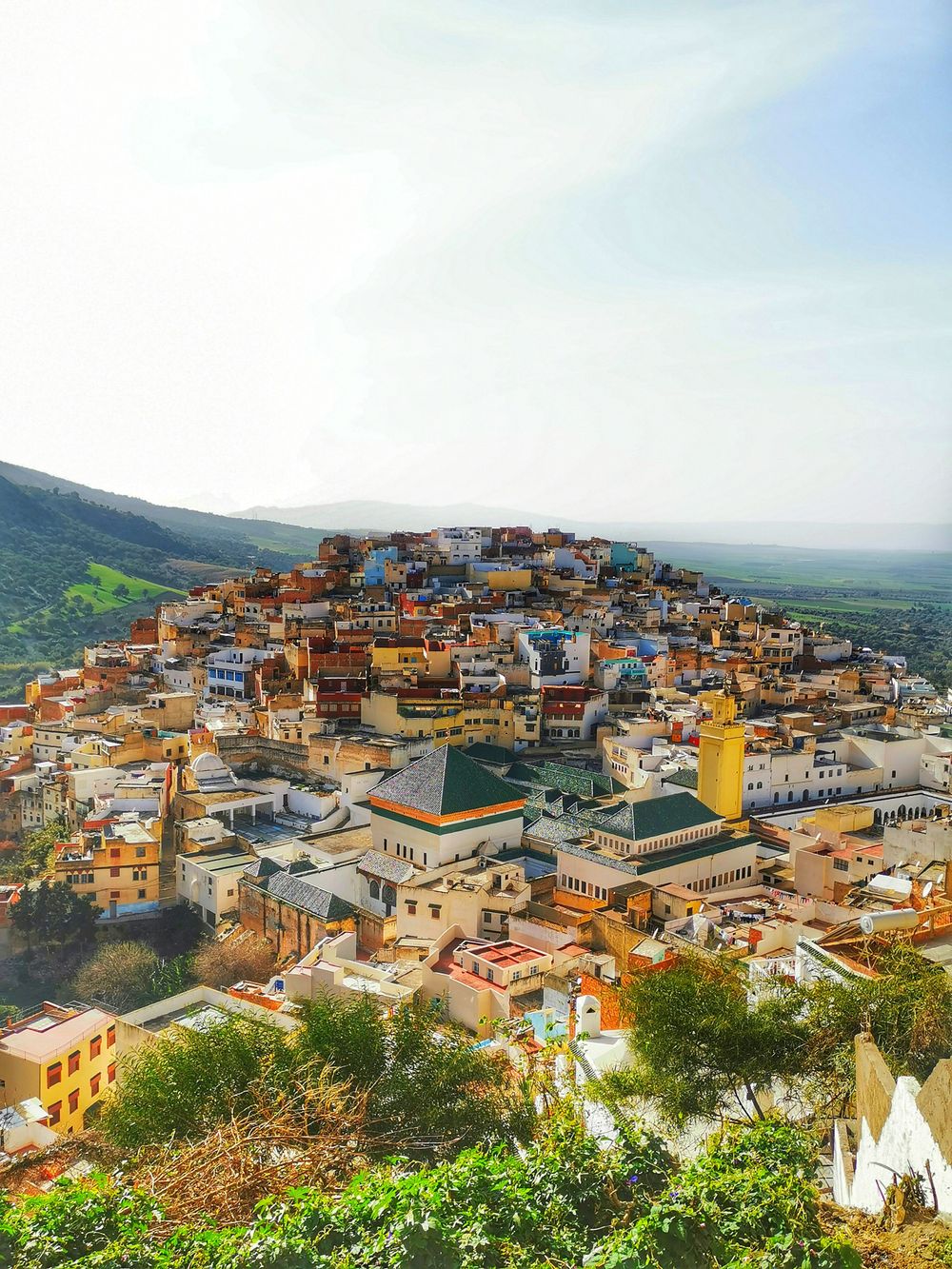
Above the shrine, a small platform looks down on the green roofs of the zawiya and the white houses spilling down both hills. Steps and…
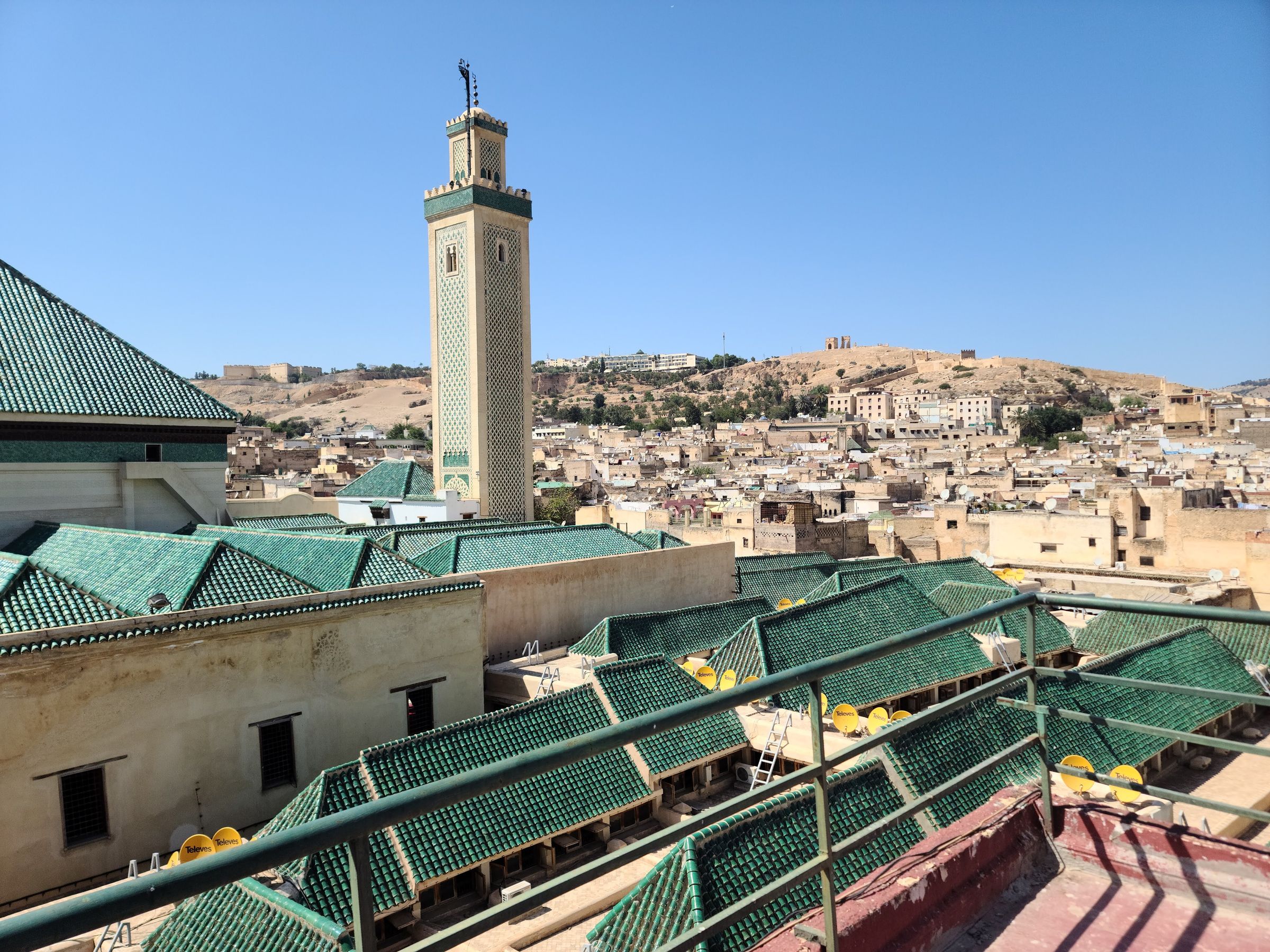
Founded on a river in a bowl of hills in northern Morocco, this imperial city keeps a medieval walled quarter closed to cars, and works as…
A gate faced in green tile and a broad square front a quieter imperial city than Fez, with a compact medina, a royal quarter of granaries…
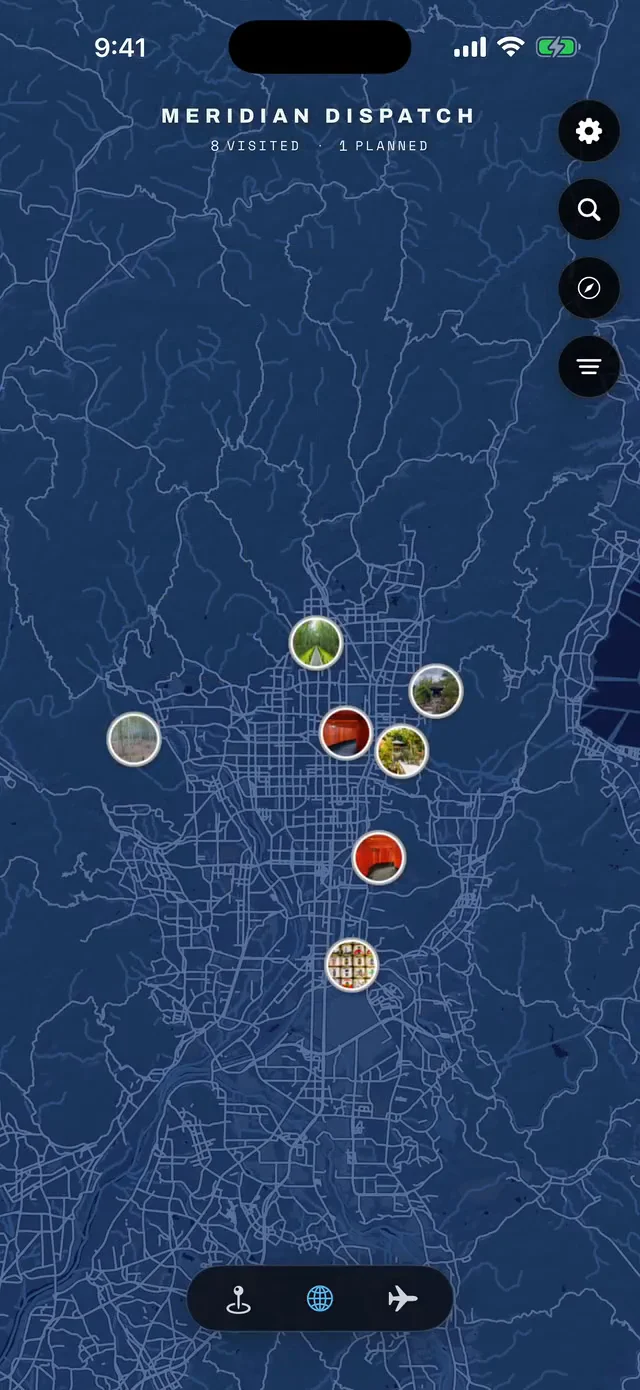
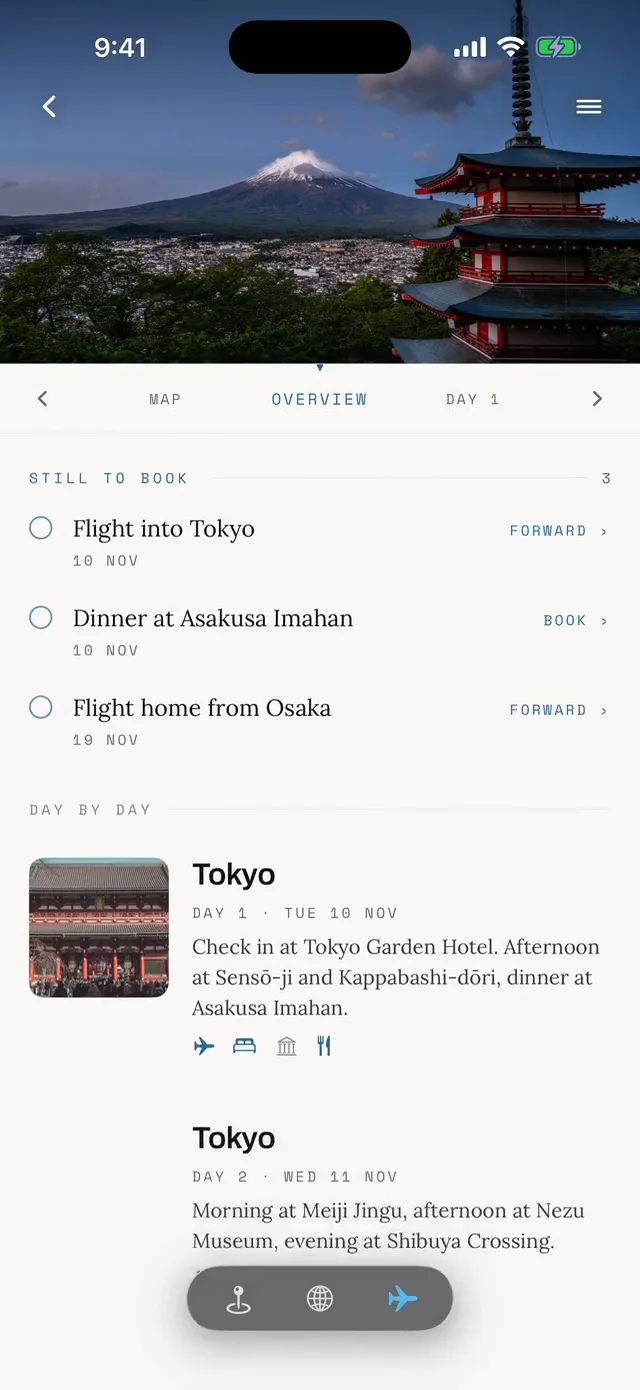

Save Volubilis to your Morocco trip in the Meridian Dispatch app and build the day around it, with the best of Meknes pinned on one map.
Download on the App StoreLast updated